Abundant Health

Up to date health information tailored for you

  • Home
  • Blog
  • Recipes
  • Shop
  • Contact
You are here: Home / Archives for Diseases / Digestive Diseases

Digestive Diseases

When Milk Becomes a Problem

January 9, 2022 by Esther Neumann - [rt_reading_time label="Reading Time:" postfix="minutes" postfix_singular="minute"]

Wenn Milch zum Problem wird

As early as 400 years before the birth of Christ, Hippocrates described painful gastrointestinal reactions after consuming milk. Flatulence, colic, diarrhea, nausea, bloating, chronic fatigue and blemished skin – all of this is associated with milk when you can no longer tolerate it for a very specific reason. Globally, around 2.3 billion adults and 600 million children and adolescents are affected. When they drink milk they swell up like a yeast braid.

When Milk Becomes a Problem

Breast milk is the first nourishment for mammals as well as humans. Milk sugar or lactose, as it is called by the technical term, is a component of every mammalian milk. Chemically speaking, milk sugar is one of the carbohydrates. It is a double sugar or a disaccharide. In the small intestine, the lactose is broken down into galactose and glucose by the digestive enzyme lactase and absorbed into the blood through the intestinal wall. As a result, it is then converted into energy. If too little or no lactase is available in the small intestine, the lactose ingested with the food is only partially or not at all broken down and absorbed. We are dealing with lactose intolerance.

Lactose Intolerance

It is estimated that around 80 to 90 percent of the world’s population is affected. In Europe and North America, milk and dairy products are among the most important staple foods. In Asian and most African countries, it is rarely used. Worldwide, there is a north-south and a west-east divide in lactose intolerance. In the Scandinavian countries, the proportion of people affected is only around five percent, in Greece already 75 percent and in parts of Africa and Asia between 80 and 100 percent. In the US, about 25% of the white population is considered lactose intolerant, while among black, Native American, and Asian American populations, the prevalence of lactose intolerance is estimated at 75-90%. There is a high number of unreported cases. Mostly adults are affected. The cause of the complaints often remain unknown for years and the patients pass through a long path of suffering before the correct diagnosis is finally made.

Colon Problems

If the lactose in the small intestine is not completely or not at all broken down and absorbed, it reaches the large intestine undigested. There it is broken down by the intestinal bacteria. The gases hydrogen, carbon dioxide and methane are produced as waste products during this bacterial fermentation. Acids are also formed. This leads to gas and bloating. The milk sugar binds a lot of water, this leads to an increase in osmotic pressure, water retention and increased intestinal peristalsis. Bloating, diarrhea and gas are the consequences.
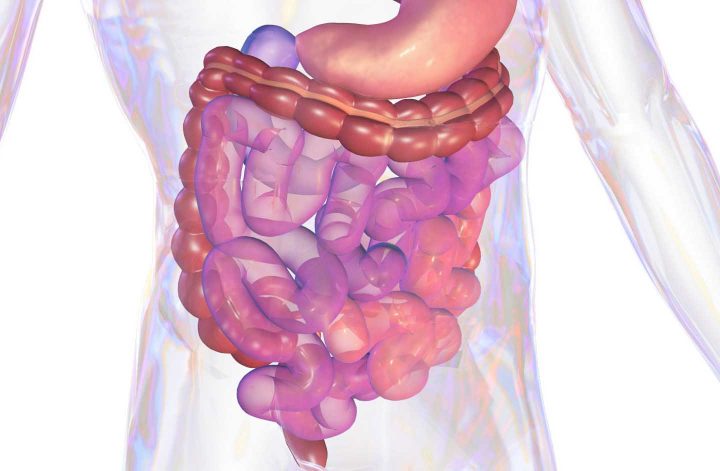
Intestines
Ilustration by Blausen.com via Wikimedia CC BY 3.0

Indefinite Clinical Picture

The symptoms can vary from day to day. It always depends on how many dairy products are consumed. Often there are hidden dairy products that you don’t even think about. They are found in sausages, baked goods, sauces, chocolate and industrially produced foods. Psychological factors such as stress, excitement and fear of the unknown also have a negative impact on well-being. Often, lactose intolerant patients also have fructose intolerance. They not only suffer from symptoms of irritable bowel syndrome, but often also from depression. Chronic lactose intolerance can lead to bacterial overgrowth in the small intestine.

The chronic digestive problems damages the entire enzyme-bearing intestinal mucous membrane. This in turn can cause further digestive problems. Unfortunately, the treating physicians rarely examine specifically lactose intolerance in the case of diffuse gastrointestinal complaints. The consequence of this is a long ordeal until the correct treatment is finally carried out. Self-observation is always good when one suffers from indefinite indigestion. If you leave out all dairy products for two weeks and the symptoms subside and come back when you consume milk again, you can make the doctor aware of the problem in a targeted manner.

Secure Diagnosis

The hydrogen breath test is a good tool for diagnosing lactose intolerance. Milk sugar is dissolved in water. The patient drinks this solution and the amount of hydrogen in the exhaled air is measured regularly for the next three hours. If the proportion of hydrogen in the exhaled air increases, there is a lactose intolerance.

The increase in blood sugar after drinking the lactose solution can also be measured. If there is a lactase deficiency, there is little or no increase in blood sugar level. This method is not entirely reliable, however. Mucous membrane samples by means of a colonoscopy can also provide information about the condition of the small intestinal wall.

Nowadays there is also a gene test available. But it is quite expensive. Another new test involves simply taking a saliva sample and examining it in the laboratory using a special test kit.

Severity and Forms

The lactose intolerance is divided into “light”, “medium” and “severe” depending on the severity. In the light form, 8 to 10 grams of lactose are easily tolerated, in the medium form around 1 gram and in the severe form no lactose at all.

The most common form is primary lactase deficiency. In this form, the lactase activity in the small intestine decreases continuously with increasing age. The newborn infant has the highest lactase activity. That is understandable, since he normally only feeds on breast milk. If the baby is weaned, the enzyme is significantly reduced in the first few years of life. In adulthood, only about a tenth of the original activity remains.

Older people normally don’t tolerate dairy products very well. This is a completely natural process that can be observed in almost everybody.

With secondary lactase deficiency, the deficiency is a side effect of another disease in the digestive tract such as celiac disease, Crohn’s disease, ulcerative colitis or acute gastroenteritis. Treatments with antibiotics or cytostatics (cell poisons) can also temporarily damage the intestinal mucosa and its enzymes. When these original diseases are healed, sufficient lactase can usually be produced again.

An extremely rare form is the congenital lactase deficiency. The infants already suffer from a lactase deficiency shortly after birth.

Therapy

Therapy depends on the severity of the disease. Everyone concerned has to find out for themselves how much lactose they can tolerate. With a low-lactose diet, where around 8 to 10 g of lactose can be tolerated, cheese and sour milk products can be eaten in small quantities. Dishes containing milk can be prepared with soy milk or other alternative types of milk. Sour milk products are better tolerated because the lactose-breaking enzymes in the lactobacilli from which they are made continue to work in the digestive tract and can break down milk sugar.

Cashew milk - Photo by Polina Tankilevitch from Pexels

There are also lactose-free products on the food market. Lactase is added to the milk or milk product, which already breaks down the milk sugar. This milk is much sweeter because lactose is not as sweet as the broken down glucose and galactose.

As a result of better consumer protection, since 2005 all ingredients in a food that are classified as allergy triggers or intolerance reactions have had to be listed on food labels across Europe. Since 2006 in the US the Food Allergen Labeling And Consumer Protection Act is in effect with the same purpose. Allergy labeling also includes lactose. It is not uncommon to find lactose in products in which one would not expect it. In the event of intolerance or allergies, the lists of ingredients must always be carefully studied. Often there are also manuals available in which the products that are lactose-free are listed.

Calcium Supply

Calcium can be easily obtained from plant sources. These include broccoli, fennel, nuts, sunflower seeds, sesame seeds, nettles, calcium-rich mineral waters, calcium-fortified fruit juices, and soy milk. You can definitely live without dairy products if you are interested in nutrition and think about where else the calcium can be found in the food. Nowadays, when mass livestock farming leads to all sorts of problems and we have just shown how problematic dairy products are for many people, it is worthwhile to think about a diet that is free or at least poor in animal products.

Broccoli as calcium source - Photo by Castorly Stock from Pexels

Wrong Development Aid

Lactose intolerance is particularly widespread in countries receiving development aid. What kind of goods are being sent there? For a large part they are surplus products from the industrialized nations. This also includes powdered milk. It is distributed in large quantities to sections of the population who do not tolerate dairy products at all.

Take the Indians in their reservations as an example. They also belong to the group that is genetically determined to be almost 100% lactose intolerant. They receive powdered milk deliveries with great regularity. Fortunately, the Indians know that they would rise like a yeast braid if they were to drink this milk. But what do you do with the milk powder? Some use it to mark the playing fields on their sports grounds.

But if milk is distributed in parts of Africa where small children are already suffering from lactose intolerance, it is like throwing gasoline into the fire. The little ones, who are already suffering from edema from hunger and have bulging stomachs, get diarrhea and colic after consuming milk.

Conclusion

Today, lactose intolerance no longer requires giving up the consumption of dairy products because we have medicines and lactose-free dairy products at our disposal. But even better is a balanced dairy free diet and lots of exercise. There are entire population groups who cannot tolerate and do not consume milk and dairy products and are still well nourished with healthy bones. We can belong to this group if we eat a balanced diet, exercise a lot and adopt a sensible lifestyle. To this end, God, our Creator, gave us the power of reasoning. It is our privilege, even our responsibility, to be concerned about some sensible, healthy lifestyle changes.

Healthy Fruits

Stay Always Up to Date

Sign up to our newsletter and stay always informed with news and tips around your health.

Sign Up Now!

Filed Under: Digestive Diseases, Diseases, Nutrition

Celiac Disease – An Intestinal Problem

September 5, 2021 by Esther Neumann - [rt_reading_time label="Reading Time:" postfix="minutes" postfix_singular="minute"]

Zöliakie - eine Darmerkrankung

Celiac disease is a condition like a chameleon. The symptoms are very versatile and the number of unreported cases is high. About one in every hundred is affected. It can take years for the correct diagnosis to be made. If the disease is not detected in time, it leads to severe malnutrition with many secondary diseases such as osteoporosis, anemia, tooth enamel damage, muscle spasms, edemas and even cancer.

Celiac Disease - An Intestinal Problem

Definition

Celiac disease is a chronic disease. It breaks out after the consumption of the pathogenic substance gliadin, which is one of the components of gluten. Of course, gluten is only pathogenic if there is an intolerance. With the technical term, the disease is called “gluten-sensitive enteropathy”. Very specific types of protein from wheat, rye, triticale, barley, oats, spelt, einkorn, emmer and kamut lead to damage to the mucous membrane of the small intestine, called villous atrophy.

The surface of the small intestine is greatly increased by villi and crypts, so that it can come to an intimate contact with the chyme. This allows the nutrients to be optimally absorbed. In patients with celiac disease, incorrectly composed protein bodies are found in the innermost lining of the intestinal wall. Gliadin, a type of protein from the cereals, is bound to these. This either has a direct damaging effect or it leads to a defensive reaction against the gliadin-carrying body cells with subsequent damage to the intestinal mucosa. The villi regress strongly, making the absorption area for the nutrients much smaller.

The cereal proteins lose their pathogenic properties neither through cooking nor through enzymatic breakdown in the gastrointestinal tract. Genetic conditions favor the development of the disease. The white race is the main target of the disease, and prevalence differs widely from country to country. A study in the US found a prevalence of 1 case in 133 persons of the general population.((Fasano A. et.al. Prevalence of celiac disease in at-risk and not-at-risk groups in the United States: a large multicenter study. Arch Intern Med. 2003 Feb 10;163(3):286-92. DOI: 10.1001/archinte.163.3.286 )) A UK study found a prevalence of 1 in 166.(( El-Hadi S, et.al. Unrecognised coeliac disease is common in healthcare students. Arch Dis Child. 2004 Sep;89(9):842. DOI: 10.1136/adc.2003.041459 )) In Australia it seems to be 1 in 70. It is very rare in Japan and sub-Saharan Africa.

The Clinical Presentation

The disease can occur at any age. There are two distinct peaks. One occurs in infancy, the other between the ages of 30 and 40. Girls and women are more often affected. Diagnosis is quicker in toddlers than in adults, because the pathogenic types of protein are usually introduced into the diet between the ages of 4 and 6 months in the form of cereal porridge, biscuits, crackers and bread.

A toddler eating a cereal - Photo by Yan Krukov from Pexels

In case of intolerance, the symptoms become visible after a few weeks or months. The toddler no longer thrives and there is no weight gain. Often it unlearns what has already been acquired. The thin arms and legs and the missing buttocks stand in striking contrast to the bloated belly. The stools are mushy, bulky and smelly. The face remains round for a long time. The skin color is pale.

What happened? The intestinal villi have largely disappeared. The size of the surface of a healthy intestine could be compared to a tennis court, that of a patient with untreated celiac disease to a table tennis table. This leads to severe deficiency symptoms because the nutrients such as protein, fat, carbohydrates, vitamins and minerals cannot be absorbed in the required amount.

 Diagnosis in adults is more difficult. Often, he wanders from one examination to another, is treated for various diseases such as lactose intolerance, osteoporosis or anemia. The typical textbook picture of the disease usually only appears at a late stage. Silent celiac disease is also known, in which the course is symptom-free and there is still a change in the mucous membrane.

Diagnosis

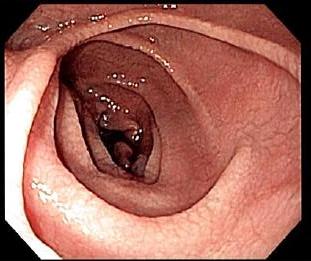
The most important diagnostic measure is the direct examination of the intestinal mucosa. In the past a small metal capsule attached to a thin tube was swallowed in order to extract a tissue sample. Today an endoscopy is used to examine the appearance of the duodenum and obtain 4 to 8 samples for biopsy. A microscopic examination can determine whether there is damage to the mucous membrane or not. Immunological tests support the diagnosis. In case of disease, antibodies to gluten are found in the blood serum. Other deficiencies in the blood can also be detected, such as iron, hemoglobin, vitamin and mineral deficiencies. The diagnosis of celiac disease is then the sum of all the available information.

Endoskopie von einem Zwölffingerdarm mit Zöliakieschäden - Foto by Samir from Wikipedia
Endoscopy of a duodenum with celiac damage. Samir at wikipedia, CC BY-SA 3.0

Treatment

Basically, the treatment consists in avoiding the substance recognized as harmful, and this for life. With a gluten-free diet, the mucous membrane of the small intestine gradually recovers and can then no longer be distinguished from a healthy one. However, in adults, recovery can take much longer than in children, who have a much higher rate of cell renewal.

It is difficult to avoid all foods containing gluten. For this reason, working groups have been formed in many countries that have meticulously asked the manufacturers for the exact formulations of many products. The results are summarized and continuously updated in thick manuals with many grocery lists, as the aim is to avoid even the tiniest traces of gluten.

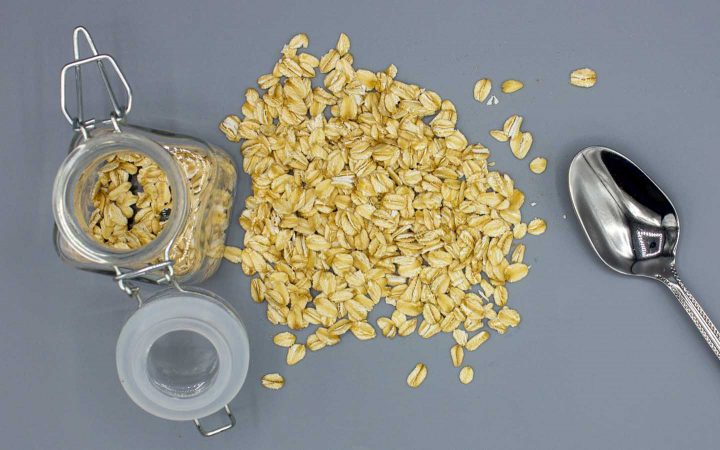
There are gluten free oats on the market that are free from gliadin contamination, but they still contain avenin which can trigger an inflammatory response in some susceptible people. If you do not want to do without oats, a new biopsy should be done after three months of use. In case of doubt it is safer to avoid oats altogether.((Oats and the gluten free diet. Coeliac Australia))

Oat flakes - Photo by Juliet King from Pexels

Traded gluten-free products are specially labeled with a crossed-out cereal ear. Just studying the ingredient list of a product does not help, because a compound ingredient does not have to be declared if less than 25% of it is contained in the final product. Gluten can also be added to products for technological reasons, such as a processing aid or as a carrier.

Celiac Societies

If celiac disease is diagnosed, contact with the local celiac society is established if desired. The affected person receives a manual with a precise description of the clinical picture and with many practical tips for cooking with gluten-free products. A list of restaurants, hotels and health resorts is enclosed that cook gluten-free if required. There are also many tips for dealing with authorities, because a gluten-free diet is expensive and time-consuming. That is why there are increased family allowances and tax allowances in many countries.

I have Celiac Disease – And What do You Have?

People with celiac disease are considered healthy when maintaining a gluten-free diet and completely normal in every respect. Of course, especially with children who would love to eat what other children eat, there are occasional grievances. Why he can’t bite into a tempting doughnut to his heart’s content? Why does he always have to take his special things to eat at a birthday party? The diagnosis of celiac disease for a child and his or her parents is certainly not a trivial matter. Parents, grandparents, acquaintances and friends shouldn’t feel sorry for the poor child all the time, but should encourage them, show them that celiac disease is sometimes an unpleasant thing, but nothing devastating.

Contacts

Celiac Disease Foundation (USA)
www.celiac.org

National Celiac Association
www.nationalceliac.org

Canadian Celiac Association
www.celiac.ca

Coeliac Australia
www.coeliac.org.au

Coeliac New Zealand
www.coeliac.org.nz

Coeliac UK
coeliac.org.uk

Recipes

Rice Cake

  • ⅔ cup brown rice
  • ⅔ cup orange juice ( (juicing 4 large oranges))
  • ⅓ cup honey
  • 1 tbs dry yeast
  1. Hydrate ⅔ cup brown rice for 12 hours. Makes about 1 cup of hydrated rice.

  2. Blend the ingredients for a few minutes.

  3. Grease a mold with oil, pour the dough and let it rise for 40 minutes to 1 hour depending on weather, until doubled in volume.

  4. Bake at medium heat for about 1 hour.

Dessert
American
Gluten Free

Chickpea Flour Pancake

  • 1 banana
  • 1 cup chickpea flour
  • 2 Tbsp tapioca flour (sweet)
  • 1 Tbsp honey
  • ½ tsp salt
  1. Blend everything with 1 cup of water.

  2. Pour the right amount into the skillet and spread with a spoon or spatula.

  3. Wait until golden and forming bubbles. Loose the pancake with the help of a spatula to flip it over.

  4. Let the other side brown.

  5. Use your preferred filling. Serve still hot.

Cassava Cake

  • 1 lbs cassava root ( (½ kg))
  • ½ cup honey
  • 1 small coconut
  • 1 pinch of salt
  1. Grate raw cassava or crush in the food processor.

  2. Blend the coconut with 1 cup of water.

  3. Mix all the ingredients, adding water if necessary to reach the consistency of cake batter. Taste the dough to check appropriate sweetness.

  4. Grease a mold and spread the dough to a thickness of 1-2 inch. (3-5 cm)

  5. Bake on medium heat until golden.

The cake tastes better the next day.

Dessert
Gluten Free

Corn Bread

  • 2 cups corn flour
  • 1 cup tapioca flour (sweet)
  • 4 Tbsp olive oil
  • 1 Tbsp honey (or brown sugar)
  • 1 Tbsp dry yeast
  • ½ tsp salt
  • sunflower seeds (for decoration)
  1. Mix all dry ingredients.

  2. Add 1 cup of lukewarm water little by little and stir until you get a liquid and homogeneous dough.

  3. Pour the dough into a greased pan.

  4. Let it rise for about 1 hour or until it doubles in volume.

  5. Preheat oven and bake over medium heat for about 1 hour.

  6. Allow it to cool down for a few minutes and remove from pan in order for the bread not to sweat.

  7. Wrap in a cloth to cool.

Wait at least 6h before eating for all yeast to die.

Diabetic, Gluten Free, Vegan

Recipes with Oats

Like we stated, not all with celiac disease can use even gluten free oats. If you have made a test that you can use them, here are some interesting recipes that can serve you.

Oat Bread

This bread is the product of a mistake. Because of an oversight I mixed the wrong ingredients, and it worked out really well!

  • 2 cups oat flour
  • 1 cup tapioca flour (sweet)
  • 4 Tbsp olive oil
  • 1 Tbsp honey (or brown sugar)
  • 1 Tbsp dry yeast
  • ½ tsp salt
  • sunflower seeds (for decoration)
  1. Mix all dry ingredients.

  2. Add 1 cup of lukewarm water little by little and stir until you get a liquid and homogeneous dough.

  3. Pour the dough into a greased pan.

  4. Let it rise for about 1 hour or until it doubles in volume.

  5. Preheat oven and bake over medium heat for about 1 hour.

  6. Allow it to cool down for a few minutes and remove from pan in order for the bread not to sweat.

  7. Wrap in a cloth to cool.

Wait at least 6h before eating for all yeast to die.

Peanut Oat Cookies

Delicious! Children will love these tasty cookies!

  • 3 cups oats
  • 1 pinch of salt
  • 1/3 cup honey
  • 1 cup roasted peanuts
  1. Beat the peanuts in a blender with a little water to form a cream.
  2. Pour into a bowl and put the remaining ingredients, mix well.
  3. Make cookies in the format you want.
  4. Bake in moderate heat until golden brown.
Dessert
Gluten Free, Vegetarian

Coconut Rice Bread

We really love to invent in the kitchen! Coconut bread with brown rice flour. Delicious bread with different flavor and super easy to make =)

  • 1 cup coconut flour
  • 1 cup brown rice flour
  • 1 Tbsp dry yeast
  • 1 cup rolled oats
  • 1/2 cup coconut flakes
  • 1 tsp salt
  1. Mix the flours well with the yeast.

  2. Add salt and mix again.

  3. Add the rolled oats and mix again.

  4. Add 1½ cups of water and mix more until it forms a very homogeneous mass.

  5. Put the dough in a form.

  6. Bake for 1 hour at 390°F (200ºC).

  7. Turn off the oven and let it cool down.

Wait at least 6h before eating for all yeast to die.

Oat Pizza

  • 3 cups fine rolled oats
  • 1 tsp salt
  • 1 chopped onion
  • 2 cloves of garlic
  • 2 chopped tomatoes
  • Oregano and parsley
  • 6 chopped olives
  • Sesame and sunflour for decoration
  1. Put all the ingredients in a container and mix everything, adding water until forming a dough.

  2. Place on a pizza sheet.

  3. Decorate with oregano, sesame and sunflower. If you like, top with vegan cheese.

  4. Bake over medium heat until golden.

Healthy Fruits

Stay Always Up to Date

Sign up to our newsletter and stay always informed with news and tips around your health.

Sign Up Now!

Filed Under: Digestive Diseases, Digestive Tract, Diseases, Nutrition

Primary Sidebar

Social Channels

Coronavirus Immunity Challenge

Boost your immune system to be bullet-proof for the pandemic.

I Want to Participate

Recent Posts

  • 5 Habits to Live Longer
  • Better Sleep Can Protect Against Dementia
  • Finding Peace In Your Crazy-Busy World
  • Flaxseed – An Ancient Plant Rediscovered
  • Platelets – Triggers for Life or Death
  • Boderline Personality Disorder
  • In Praise of Almonds and Nuts
  • Are You Stuck in the Clutter Trap?

Categories

  • Body Systems (16)
    • Cell Function (2)
    • Circulatory System (1)
    • Digestive Tract (10)
    • Immune System (4)
  • Diseases (27)
    • Cancer (2)
    • Cold (1)
    • COVID-19 (11)
    • Dementia (1)
    • Diabetes (1)
    • Digestive Diseases (2)
    • Heart Disease (2)
    • Kidneys (1)
    • Metabolic Syndrome (2)
    • Skin (1)
  • Healthy Lifestyle (42)
    • Exercise (11)
    • Gardening (2)
    • Sleep (7)
    • Sunlight (2)
    • Temperance (14)
    • Water (4)
  • Mental Health (87)
    • Addictions (6)
    • Anxiety (7)
    • Burnout (1)
    • Depression (7)
    • Psychosomatic Diseases (6)
    • Stress Management (45)
    • Trust (6)
  • Nutrition (56)
  • Obesity (9)
  • Phases of Life (14)
    • Adults (3)
    • Babies and Infants (1)
    • Children (3)
    • Seniors (5)
    • Teenagers (3)
  • Therapies (7)
    • Herbs (5)
    • Hydrotherapy (1)
  • Uncategorized (3)

Archives

  • January 2025 (1)
  • March 2024 (5)
  • February 2024 (4)
  • January 2024 (4)
  • December 2023 (5)
  • November 2023 (4)
  • October 2023 (5)
  • September 2023 (4)
  • August 2023 (3)
  • July 2023 (2)
  • June 2023 (4)
  • May 2023 (4)
  • April 2023 (5)
  • March 2023 (4)
  • February 2023 (4)
  • January 2023 (4)
  • December 2022 (4)
  • November 2022 (4)
  • October 2022 (5)
  • September 2022 (4)
  • August 2022 (4)
  • July 2022 (5)
  • June 2022 (4)
  • May 2022 (5)
  • April 2022 (4)
  • March 2022 (4)
  • February 2022 (4)
  • January 2022 (5)
  • December 2021 (3)
  • November 2021 (4)
  • October 2021 (6)
  • September 2021 (4)
  • August 2021 (4)
  • July 2021 (5)
  • June 2021 (4)
  • May 2021 (3)
  • April 2021 (5)
  • March 2021 (4)
  • February 2021 (4)
  • January 2021 (5)
  • December 2020 (3)
  • November 2020 (4)
  • October 2020 (5)
  • September 2020 (5)
  • August 2020 (3)
  • July 2020 (1)
  • June 2020 (1)
  • May 2020 (1)
  • April 2020 (1)
  • March 2020 (1)

Copyright © 2026 · Abundant Health - Privacy Policy - Medical Disclaimer