Abundant Health

Up to date health information tailored for you

  • Home
  • Blog
  • Recipes
  • Shop
  • Contact
You are here: Home / 2023 / Archives for February 2023

Archives for February 2023

How to Treat Anxiety Without Medications

February 26, 2023 by Dr. Cesar Vasconcellos de Souza - [rt_reading_time label="Reading Time:" postfix="minutes" postfix_singular="minute"]

Tratando Ansiedade

Many are wanting to treat their anxiety only with tranquilizers. People are becoming more and more medicalized, and living under the influence of synthetic drugs. Is there a better way?
How to Treat Anxiety Without Medications

Many are wanting to treat their anxiety only with tranquilizers. People are becoming more and more medicalized, and living under the influence of synthetic drugs. Is there a better way?

In fact, it is not just tranquilizers, but drugs in general, because it is easier to take a pill, thinking it will cure everything, instead of working to change our lifestyle, which involves food, exercise, the way you think, how you deal with emoticons, breathing pure air, drinking pure water and getting sunlight.

So there are general principles of lifestyle medicine that really should be applied, practiced in our lives constantly, and thus gradually improving our health, so that those who use medication, whatever it is, can with medical supervision reduce or even eliminate some of that medicine, precisely because they managed to modify the lifestyle so that it favors our body and our brain to function better.

So, the amount of prescriptions for anxiolytics, which are medications to reduce excessive anxiety, is frightening. What can help to prevent abuse of this medication in people who have excessive anxiety?

An anxious man with a huge amount of tranquilizers

Remembering that, this excessive anxiety manifests itself differently for different people. Some people have a lot of anxiety and this leads to a panic attack. Others will have a phobia, simple phobia or social phobia. Others will have some somatization, and their body ends up suffering because they have exaggerated emotional stress of high anxiety. So there are several ways in which excessive anxiety manifests itself in people. It also manifests itself explicitly, purely with anxiety, the person is anxious, nervous, and distressed all the time.

So what can you do to not become dependent on anxiety medication? First, it is important to accept that there may be something in your life that produces excessive anxiety and to understand and accept that there may be conflicts in your life that increase your anxiety. Accepting is not agreeing, accepting is admitting the reality.

The person may have excessive anxiety about some conflicts, and run away from them, not wanting to face and resolve them. But with the guidance of a professional and with God’s help, your choice and determination to understand why that conflict arose, it will certainly resolve itself. Could it be something from your past life that you’ve carried into your adult life, often adding current conflicts there?

You have to stop to think, analyze, and pray about the matter so that your mind is clear. And then you will begin to realize that there may be some things you can do, in the way you think, feel and deal with people, in the expectation of receiving attention and affection from others. Perhaps you will need some adjustment in these behaviors and attitudes so that the anxiety can gradually subside.

It is important to remember that excessive anxiety can be a red light, indicating that there may be some situation in your way of functioning as a person that needs change, adjustment, or repair.

A red warning light on the dashboard of a car

It could also be that you have always been a person with an anxious profile and that you have a tendency to have anxiety in your personality structure. We call this trait anxiety, which is different from state anxiety. State anxiety is when a person is experiencing a somewhat tense situation and their anxiety increases for a while, but after that stressful event passes, anxiety returns to its normal level. Trait anxiety, on the other hand, is when the person has high anxiety almost all the time, perhaps since childhood.

So, the first step is this: if there is a problem in your life that you need to accept, which is a reality, although it is hard to accept, instead of running away, or not thinking about it, admit that this is a reality that you are living. Second, it’s important that you look outside of yourself instead of focusing on the feeling of anxiety you may experience.

Try to think that you are not the anxiety; it’s just something on your mind. Think that you can use the healthy side of your mind to learn how to deal with it. So, don’t freak out. Take a deep breath and think, “I’m overly anxious here. Let me think where that comes from.” You are not anxiety; anxiety is something that is disturbing you excessively, but you can think, you can work, and you can study. So even though your mind has an anxious side, there’s also another healthy side that’s working.

Also, think that everyone has anxiety. Therefore, the aim is not to eliminate anxiety, but to see how it can be diminished if it is exaggerated. If there is, for example, tension in a relationship, what can you do to resolve it? What is depending on you? Exaggerated anxiety can be explicit, that is, appear as restlessness, a feeling of emptiness, or a tightness in the chest, or it can arise through another disorder such as phobia, which is exaggerated fear; obsessive-compulsive disorder, which are obsessive thoughts, that lead to compulsive acts disrupting the proper functioning of the person. Excessive anxiety can appear through a panic attack, which is an overflow of anxiety. But it can manifest itself in other ways as well.

Another thing that helps you work on your life and avoid becoming dependent on tranquilizers is to take action instead of doing nothing to resolve, and freaking out with exaggerated anxiety or distress. For example: Decrease the pace of work, do not despair, and perform your tasks more slowly on that day when you are most anxious. Of course, as far as possible, without demanding from yourself that you have to perform the same as before the anxiety disorder.

Breathing can also help. Very anxious people often breathe poorly. Therefore, throughout the day, breathe deeply and slowly, about five or six times in a row, pulling air through your nose and letting it out through your mouth very slowly. This extra oxygenation helps the brain to function better.

Deep breathing to control anxiety

Also, check how your diet is doing. Caffeinated beverages, for example, can make anxiety worse. Therefore, eliminate these substances, or reduce their consumption as much as possible. In the case of caffeine, it is better to eliminate it. Doing some exercise, especially outdoors, such as hiking, also contributes to the relief of excessive anxiety. Preferably exercise in nature, because you will reach the benefits of fresh air, Sunshine and a calming landscape! Nature calms down.

Finally, examine your thoughts. Think about what you have been thinking about most often. A person with excessive anxiety often exaggerates things and tends to focus on problems that haven’t happened, and probably never will. So, don’t anticipate tragic events that possibly won’t happen. Check whether your most frequent thoughts, which increase anxiety, have a real basis. Are they reasonable? Are they based on truth or an assumption? Do you have proof? Do you have concrete evidence that this thought that comes into your head, which generates anxiety, is true, or is it just produced by an anxious mind that imagines things?

You can keep imagining countless negative, tragic, catastrophic things, which have no basis in reality, and which may never happen. So, analyze the reason for the catastrophic thoughts, your pessimistic thoughts of tragedy. If you cultivate them, it will increase anxiety. Then you can choose what kind of thought you will allow to linger in your mind. We call this psychoeducation, or education of thoughts.

Seek to develop your spiritual life and your faith. Scientific studies show that prayer, meditation on a biblical text, and helping others for free, on a voluntary basis, help us become more serene. Attitudes like this, practiced with perseverance, insisting with patience, with humility and determination, will help to reduce anxiety. The person who practices this may not even need a tranquilizer, or if he does, he may use it for less time and without needing a high dose. As you practice these principles and ask God for help, you can overcome this excessive anxiety.

Healthy Fruits

Stay Always Up to Date

Sign up to our newsletter and stay always informed with news and tips around your health.
Sign Up Now!

Filed Under: Anxiety, Mental Health Tagged With: tranquilizers

How to Restore your Microbiome After You’ve Been on Antibiotics

February 19, 2023 by Clare Collins - [rt_reading_time label="Reading Time:" postfix="minutes" postfix_singular="minute"]

Restoring the Microbiome after Antibiotics

Antibiotics treat infections caused by bacteria. But they can also destroy the good bacteria in your gut. For some people, this results in an upset stomach and diarrhea.

How to Use Probiotics After You’ve Been on Antibiotics

One UK review of the research looked at changes in gut bacteria after antibiotics commonly prescribed for respiratory and urinary tract infections found that after treatment, the numbers and diversity in bacteria types rapidly declines.((Elvers KT, et.al. Antibiotic-induced changes in the human gut microbiota for the most commonly prescribed antibiotics in primary care in the UK: a systematic review. BMJ Open. 2020 Sep 21;10(9):e035677. doi: 10.1136/bmjopen-2019-035677.))

It also found some types of “bad” microorganisms increased while some “good” ones decreased.

For most people, once antibiotic treatment was stopped, the gut bacteria recover to some degree. But other studies suggest some antibiotics can have long-lasting effects on the balance of microorganisms.((Zimmermann P, Curtis N. The effect of antibiotics on the composition of the intestinal microbiota – a systematic review. J Infect. 2019 Dec;79(6):471-489. doi: 10.1016/j.jinf.2019.10.008.))

It’s important to use antibiotics only when needed, and definitely not for viral infections, because antibiotics can’t kill viruses such as the common cold or COVID-19.

So what should you eat after a course of antibiotics? You might have heard of probiotics and prebiotics, but what are they, and what evidence is there to show they’re beneficial?

Probiotics contain ‘good gut bacteria’

Probiotics are foods, typically yoghurts and yoghurt drinks, that contain “good gut bacteria”: live microorganisms that can recolonize the gut or improve your gut health.

To be called a probiotic, they must be able to resist stomach acid and digestive processes, and then be able adhere to the gut walls and grow, while not causing any issues for the gut wall. They must also be tested for safety and efficacy in controlled trials.((Martinez RC, Bedani R, Saad SM. Scientific evidence for health effects attributed to the consumption of probiotics and prebiotics: an update for current perspectives and future challenges. Br J Nutr. 2015 Dec 28;114(12):1993-2015. doi: 10.1017/S0007114515003864.))

To be called a probiotic, the dose of microorganisms needs to be sufficient to help restore the “good” bacteria, by elbowing out the “bad bacteria”.

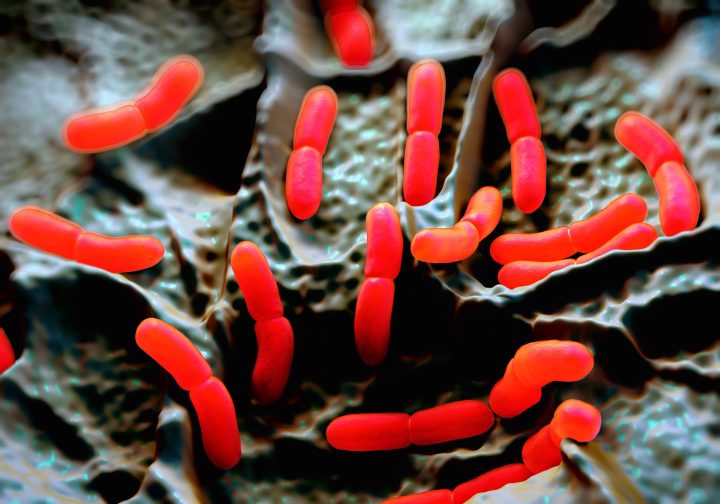
An illustration of gut bacteria

Most yoghurts contain “good bacteria” but not all can survive the acidity of the stomach acid or the bacteria won’t grow in the bowel, so there is no probiotic benefit.

For probiotics to exert these beneficial effects, they not only have to make it to the large bowel, but once there they need the right fuel to help them grow well. That’s where prebiotics come into play – but more on them shortly.

What does the science say about probiotics?

Probiotics are widely promoted as being good for your overall health. The science on that has been mixed, but it does suggest people who are likely to get diarrhea after antibiotics may benefit from consuming them.((Moles L, Otaegui D. The Impact of Diet on Microbiota Evolution and Human Health. Is Diet an Adequate Tool for Microbiota Modulation? Nutrients. 2020 Jun 2;12(6):1654. doi: 10.3390/nu12061654.))

One review of the evidence found probiotics may be useful for those at high risk of antibiotic-associated diarrhea, such as the elderly and people in hospital.((Goldenberg JZ, Yap C, Lytvyn L, Lo CK, Beardsley J, Mertz D, Johnston BC. Probiotics for the prevention of Clostridium difficile-associated diarrhea in adults and children. Cochrane Database Syst Rev. 2017 Dec 19;12(12):CD006095. doi: 10.1002/14651858.CD006095.pub4.))

The review found side effects were common when taking antibiotics and include taste disturbances, nausea, abdominal cramping, soft stools, fever and flatulence. But people taking probiotics reported fewer side effects, suggesting they may be helpful in countering some of the side effects.

So what are prebiotics?

Prebiotics are compounds that help beneficial gut microorganisms grow and survive. Prebiotic foods contain complex carbohydrates that can’t be digested and dietary fibers that resist digestive processes in the stomach and small intestine.((Martinez RC, Bedani R, Saad SM. Scientific evidence for health effects attributed to the consumption of probiotics and prebiotics: an update for current perspectives and future challenges. Br J Nutr. 2015 Dec 28;114(12):1993-2015. doi: 10.1017/S0007114515003864.))

They pass undigested into the large bowel where they are fermented by the healthy “good” bacteria.

To be called a prebiotic, they need to undergo the processes above, and be shown in clinical trials to selectively improve the microorganism composition in the gut.((Martinez RC, Bedani R, Saad SM. Scientific evidence for health effects attributed to the consumption of probiotics and prebiotics: an update for current perspectives and future challenges. Br J Nutr. 2015 Dec 28;114(12):1993-2015. doi: 10.1017/S0007114515003864.))

Not all dietary fibers are prebiotic. Common ones include complex carbohydrates called fructo-oligosaccharides, inulin and resistant starch.((Kaur AP, Bhardwaj S, Dhanjal DS, Nepovimova E, Cruz-Martins N, Kuča K, Chopra C, Singh R, Kumar H, Șen F, Kumar V, Verma R, Kumar D. Plant Prebiotics and Their Role in the Amelioration of Diseases. Biomolecules. 2021 Mar 16;11(3):440. doi: 10.3390/biom11030440.))

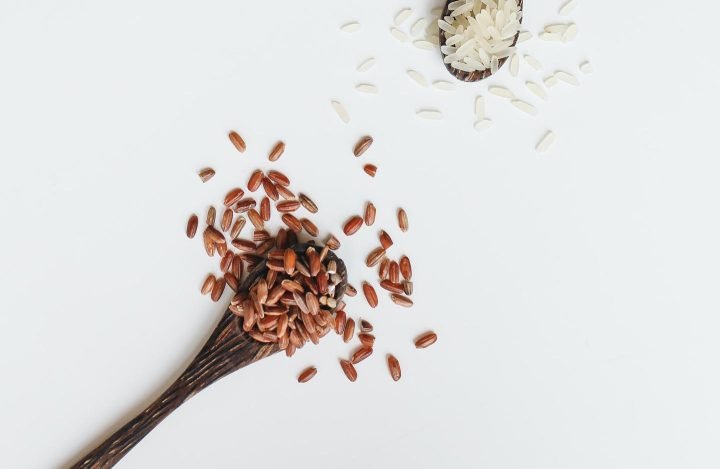
whole wheat and white rice

You can find foods at the supermarket with added prebiotics, but non-digestible carbohydrates occur naturally in many everyday foods, including:((Prebiotic diet – FAQs, Monash University))

  • grains: barley, rye bread, rye crackers, pasta, gnocchi, couscous, wheat bran, wheat bread, oats
  • legumes: chickpeas, lentils, red kidney beans, baked beans, soybeans
  • vegetables: artichokes, asparagus, beetroot, chicory, fennel bulb, garlic, green peas, leek, onion, shallots, spring onion, snow peas, sweetcorn, savoy cabbage
  • fruit: nectarines, white peaches, persimmon, tamarillo, watermelon, rambutan, grapefruit, pomegranate, dates, figs
  • nuts: cashews, pistachios.

Additional sources of resistant starch include under-ripe bananas, cooked and cooled rice, corn flour, cooked and cooled potatoes.

For babies, breast milk is naturally rich in oligosaccharides.

So who should have them?

Prebiotic foods are good for everyone, contain a range of nutrients and help promote a healthy bacterial gut environment.

The benefits of probiotics for a range of health conditions are unclear – they’re likely to be small, and depend on what is being taken and the underlying health issues.

But people at high risk of diarrhea after antibiotics may benefit from consuming probiotic – as well as prebiotic – foods daily.

There is also emerging evidence that combining specific probiotics and prebiotics can increase the beneficial effects of both. Both the pro- and prebiotics could be added to the one food, termed a “symbiotic”, or they could be from separate sources but eaten together.((Martinez RC, Bedani R, Saad SM. Scientific evidence for health effects attributed to the consumption of probiotics and prebiotics: an update for current perspectives and future challenges. Br J Nutr. 2015 Dec 28;114(12):1993-2015. doi: 10.1017/S0007114515003864.))

When it comes to antibiotics, the bottom line is to only take them when prescribed for bacterial infections. Take them according to instructions from the manufacturer, your pharmacist and your doctor.

Healthy Fruits

Stay Always Up to Date

Sign up to our newsletter and stay always informed with news and tips around your health.
Sign Up Now!

This article is republished from The Conversation under a Creative Commons license. Read the original article.

The Conversation

Filed Under: Body Systems, Digestive Tract, Nutrition Tagged With: antibiotics, microbiome, prebiotics, probiotics

Utilize the Power of Prayer for Stress Relief

February 12, 2023 by Martin Neumann - [rt_reading_time label="Reading Time:" postfix="minutes" postfix_singular="minute"]

Utilize the Power of Prayer for Stress Relief

Stress is sometimes getting us unaware. We are suddenly facing a crisis and do not know how to handle it. Other times it will creep on us in small increments until we feel that life spins out of control. Stress will hit us harder when we are overtired, being sick or passing through tragedies. Few people think about prayer as a stress reliever when the schedule is tight. But a growing body of research shows that it could be a useful tool to get your stress under control.

Utilize the Power of Prayer for Stress Relief

Research on Stress and Spirituality

The link between spirituality and health is starting to get the interest of several researchers. In the forefront is the research of Harald Koenig, MD, associate professor of medicine and psychiatry at Duke University, who surveyed more than a thousand studies showing the link between spirituality and health. In his book Handbook of Religion and Health he found that people attending church regularly have 1/3 of the time of hospitalization compared to the non-active group. He also found that religious people have 14 times higher chances to recover after heart surgery compared to the non-religious group. These are just some of the impressive findings of the relationship between spirituality and health.

Dr. Roberta Lee speaks about the relation of prayer and stress relief in her book The Superstress Solution. She says: “Research shows that people who are more religious or spiritual use their spirituality to cope with life,… They’re better able to cope with stress, they heal faster from illness, and they experience increased benefits to their health and well-being. On an intellectual level, spirituality connects you to the world, which in turn enables you to stop trying to control things all by yourself. When you feel part of a greater whole, it’s easy to understand that you aren’t responsible for everything that happens in life.”

Practice Stress Relief Prayer the Effective Way

Not every prayer is equal. Some people just go through the motions without really feeling the liberating effects of genuine prayer. In order to be effective in lifting your load, there are some vital principles to include in your prayer experience.

1. Recognize a Power Higher than You

When you are in a tight spot, it is a liberating thought that there is a higher power taking care of you. Put things into the right perspective. Who are you in comparison to the universe? Do not think it is all your responsibility to save the world, because the world is much bigger than you can grasp. And don´t think your problems are the worst one within the universe either.

When you do not find a way out, you need to trust that you have a heavenly father who is able to take care of you. Some people are believing this religion thing is just for emotionally weak people who need a crutch in order to get something they can hang on to. There are a lot of skeptical people out there. For me, it is as real as it can get. When you are sincerely interested in experience the presence of God, He will have a way to show you how He is acting in Your life. I have experienced it over and over. And it is very reassuring to know that there is somebody bigger than you, who is able to help you out when you are in a tight spot.

A poor elderly woman praying

2. Be Authentic

When something is bothering you, it is not the moment to recall a prayer you have memorized as a child, or recite 10 times the Lord’s Prayer. It is the moment to speak to God as to a friend. Be honest about what is bothering you. And you do not need to wait for the right moment, present your request to God as soon as you feel a need. Be very specific about what is your problem, if you are formulating it into words, the undefined and abstract is becoming something concrete that you can put a handle on. The Christian Author Ellen White expresses it nicely in her book Steps to Christ:

“Keep your wants, your joys, your sorrows, your cares, and your fears before God. You cannot burden Him; you cannot weary Him. He who numbers the hairs of your head is not indifferent to the wants of His children. “The Lord is very pitiful, and of tender mercy.” James 5:11. His heart of love is touched by our sorrows and even by our utterances of them. Take to Him everything that perplexes the mind. Nothing is too great for Him to bear, for He holds up worlds, He rules over all the affairs of the universe. Nothing that in any way concerns our peace is too small for Him to notice. There is no chapter in our experience too dark for Him to read; there is no perplexity too difficult for Him to unravel. No calamity can befall the least of His children, no anxiety harass the soul, no joy cheer, no sincere prayer escape the lips, of which our heavenly Father is unobservant, or in which He takes no immediate interest. “He healeth the broken in heart, and bindeth up their wounds.” Psalm 147:3. The relations between God and each soul are as distinct and full as though there were not another soul upon the earth to share His watchcare, not another soul for whom He gave His beloved Son.”

E. G. White. Steps to Christ, p. 100

3. Pray With and For Others

Nobody is an island. If you can share your concerns with your friends then go for it. But instead of just be sorry and whine, use the moment to present your problems together with your friends to your Heavenly Father. Sometimes the faith of your friend can inspire you to take courage. It can relieve your stress if you can share your challenges and get some upbeat to put you on the right track.

Some other times you can pray for some of your friends, neighbors or even strangers you meet at the road. Praying for the need of others makes you realize, that other people around you may face even larger challenges then you, and your problem may not be that big after all.

4. Take Action

By now you have identified your problem and you have submitted yourself to the care of God. You see some light at the end of the tunnel, you have hope to get your life under control, but there are things that still remain for you to do. Maybe you need some rest, take time to restore your body and mind. Get for real with a stress management plan. Get your priorities right, examine your diet and exercise plan. If you are working through some loss or tragedy, you may need to give you some time to heal and restore.

There are moments we need to take action, and other moments where we need to be just quiet. Reinhold Niebuhr is expressing it quite on the spot in his famous Serenity Prayer:

God, grant me the serenity to accept the things I cannot change,
Courage to change the things I can,
And wisdom to know the difference.

A man at sunset sitting on a stone at a beach, expressing serenity

Elements of a Prayer for Stress Relief

You need no model or script to follow in your prayer life, like you do not need a script to have a chat with your friend. But there are some elements that can make your prayer experience more meaningful.

  1. Take time to talk openly about your life. Talk about the good, the bad, even the things you think are irrelevant to God. How are you talking to a friend? Are you worried that he is bored when you relate what is happening in your life? Probably not. So just take some time to be real.
  2. Analyze your actions. What did you do right, where did you fail? Where did you hurt somebody? What do you have to get straight? Confess your mistake and take responsibility for things you did the wrong way. Decide with whom you need to reconcile. And ask forgiveness for your wrong attitudes. In 1. John 1:9 we have the promise: “If we confess our sins, he is faithful and righteous to forgive us our sins, and to cleanse us from all unrighteousness.” You will feel a burden being taken off from your shoulders, and life will get so much easier.
  3. Surrender yourself to God. He is your Heavenly Father and will surely care for you. But sometimes His plans for you may be higher than yours. God says to you in Isaiah 55:9: “For as the heavens are higher than the earth, So are My ways higher than your ways, and My thoughts higher than your thoughts.” Trust that your Heavenly Father has the best intentions for you, and try to understand what He is trying to do in your life.
  4. Ask God for help. Be specific on what is going wrong and what you need. And when you have surrendered it to God, rest assured that He will take good care of you. Maybe the outcome is not always like you expected, but sometimes it is even better than you thought.
  5. Pray with Promises. The Bible is full of promises, and you can claim them within your prayer session. If you find a promise that applies to your situation, it is alright to claim it. If you are burdened with troubles, you can claim Mattew 11:28-30: “Come to me, all of you who are weary and carry heavy burdens, and I will give you rest. Take my yoke upon you. Let me teach you, because I am humble and gentle, and you will find rest for your souls. For my yoke fits perfectly, and the burden I give you is light.”. Or you may like to claim Psalms 4:8: “I will lie down in peace and sleep, for you alone, O LORD, will keep me safe.”
  6. Express your gratitude and praise. When we start to catalog the things we are thankful for, our list of challenges is less intimidating. It gets things into perspective. Life is not all bad, there are a lot of things to be thankful for. Look at the psalms. They are full of sincere talk with God, but they are also full of thanksgiving and praise. And it helps a lot to remember that God still cares for us. Remember how He has brought you through in the past, and you will gain courage to face the future.

Now you have a number of tools to make your moments of prayer an opportunity to release stress from your lives. Once you apply them, you adapt those principles to make them something meaningful for yourself. It is good to create habits. Start out right in the morning, surrendering yourself and your plans in the hands of God. In the evening spend some special moments to reflect on the day, what was good and what needs to change. And whenever you face a problem, make it a habit to turn it over to somebody higher than you, so you have less on your plate to worry about.

Do you need a guide to help you understand how to cope with Stress in an all inclusive approach? Learn how to combat stress, mentally, physically, emotionally and strategically in your life.

Get Me the Guide

Filed Under: Mental Health, Stress Management

Super Foods That Fight Cancer

February 5, 2023 by Vicki Griffin - [rt_reading_time label="Reading Time:" postfix="minutes" postfix_singular="minute"]

Foods fighting cancer

Cancer. The very word strikes fear, and with good reason. Each year nearly 14 million people worldwide are diagnosed with cancer, and 7.6 million die from the disease.((http://www.cancer.gov/about-cancer/what-is-cancer/statistics)) However, evidence shows that 30-40 percent of these deaths are preventable, and one-third can be cured through early diagnosis and treatment.

Super Foods That Fight Cancer

We look for a magic bullet, a single cause and cure, but in vain. Cancer is not just one disease — it is a group of more than 100 diseases. There are many factors — genetic, environmental, lifestyle, some mysterious. The search for a cure is a multi-billion dollar industry, ranging from conventional to exotic.

An important weapon is found in the produce department of your grocery store. It is nature’s “Department of Defense.” Foods high in saturated fat and low in plant fiber increase the risk of numerous types of cancer and obesity.((Food, Nutrition, Physical Activity, and the Prevention of Cancer. AICR Report.
Acta Biomed 2006; 77(2):118-123.)) Fight back! Eat plenty of fresh fruits, vegetables, whole grains, and beans to reduce your risk of developing cancer and help you fight a better battle if cancer does occur.

Research published by the American Institute for Cancer Research (AICR) and others show several categories of nutrients and foods that have been shown to provide powerful benefits in preventing and fighting certain cancers.((Food, Nutrition, Physical Activity, and the Prevention of Cancer. AICR Report.)) According to the AICR, at least two thirds of your plate should contain colorful, cancer-fighting vegetables, fruit, whole grains, and/or beans.((AICR report: Foods That Fight Cancer. 2007)) AICR has an online nutrition guide.((A Cancer Nutrition Guide—American Institute for Cancer Research.)) Here are just a few cancer-fighting superheroes featured in a recent AICR report, Foods That Fight Cancer:((http://www.aicr.org/foods-that-fight-cancer/))

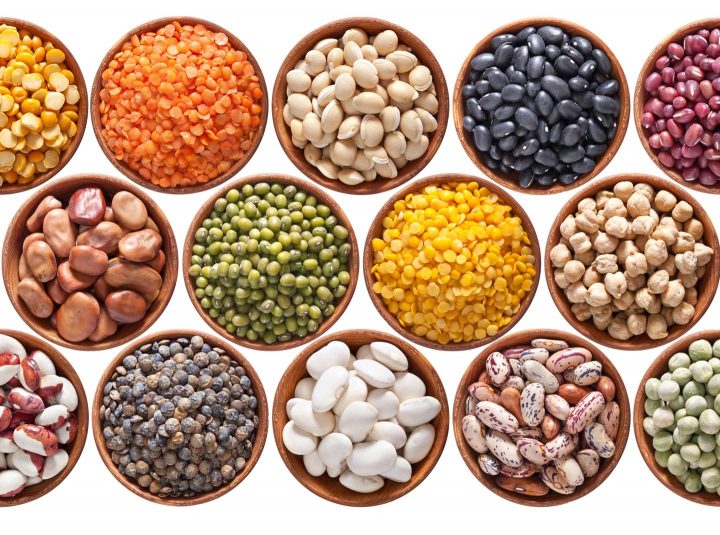
Beans. This includes all bean varieties (pinto, black, chickpeas/garbanzo, lima, soybeans, etc.), peas (green peas, split peas), and lentils. These high-fiber winners contain saponins, protease inhibitors, and phytic acid. Also known as phytochemicals, they protect cells from genetic damage that can lead to cancer. Protease inhibitors slow the division of cancer cells, and phytic acid slows tumor progression. The soluble fiber in beans helps regulate insulin and blood sugar.

Bowls with different beans and legumes

Berries and Grapes. Berries are rich in fiber and vitamin C. They also contain phytochemical ellagic acid (especially strawberries and raspberries). Ellagic acid has shown protective benefits against cancers of the skin, bladder, lung, and esophagus in laboratory studies. Its antioxidant properties can deactivate certain cancer-causing agents and slow cancer cell growth.

Blueberries contain compounds that reduce DNA damage. Red grapes, and to a lesser extent grape juice, contain resveratrol, a compound that has been shown to slow cancer cell growth and inhibit tumor formation in lymph, liver, stomach, skin, and breast cells.

Cruciferous Vegetables. These include broccoli, cauliflower, cabbage, Brussels sprouts, bok choy, and kale. They contain numerous compounds called phenols that activate enzyme systems that detoxify cells, diffuse cell damage, and inhibit tumor growth. Human studies link high intake of these vegetables with lower risk for lung, stomach, colorectal, prostate, and bladder cancer.

Dark Leafy Greens. Spinach, kale, romaine and leaf lettuce, mustard and collard greens, and Swiss chard pack a punch when it comes to fiber, folate, minerals, and carotenoids such as lutein and zeaxanthin. Carotenoids not only help prevent cancer via antioxidant protection, they also may inhibit the growth of certain types of breast and skin cancer cells. They are also associated with lower lung and stomach cancer incidence. Folate is linked to lower colorectal and ovarian cancer risk. Try lightly steamed greens with a drizzle of olive oil, lemon, and salt for a tasty treat.

Tomatoes. Tomatoes form part of a tasty team of red foods that contain lycopene, a powerful carotenoid that fight cancer. Other members of this flashy family include red or pink fruits such as watermelon, papaya, pink guava, and pink grapefruit. Lycopene in tomatoes shows inhibitory effects on breast, lung, and endometrial cancer cells.

Fresh and dried tomatoes

Whole Grains. Whole wheat products, brown rice, whole grain oats, corn, and kasha are high in fiber and nutrition, but low in calories. They contain varying amounts of antioxidants, phenols, lignans, phytoestrogens, and saponins, which decrease cancer risk in general. Data from 40 different studies showed a 34 percent lower risk of cancer overall in those who have a generous intake of whole grains compared to those who eat very little whole grains.

Positive lifestyle steps can help prevent cancer. Fill your cart with a wide variety of fruits and vegetables — nature’s cancer fighters. They’re colorful, tasty, and inexpensive.

Other strategies. Foods high in saturated fats and low in fiber, obesity, and sedentary habits are all linked to increased cancer risk and lower survival rates when cancer does occur.((Am J Clin Nutr 2006; 84(6):1456-62.)) Fight back! Healthy lifestyle habits to fight cancer include not only healthful foods but also daily exercise, sunshine (for vitamin D), maintaining a healthy weight, stress management, social support, adequate rest, and leaving alcohol and tobacco alone.

The Living Word

We live in a world of trouble and sin where bad things happen that we do not understand. But God has given us principles that promote health and invites us to Him with our trials and fears. He promises:

Strength and comfort when sickness occurs. “The LORD will strengthen him on his bed of illness; You will sustain him on his sickbed.” Psalm 41:3

Wisdom and guidance for each day. “I will instruct you and teach you in the way you should go; I will guide you with My eye.” Psalm 32:8

Hope and healing for the future. For the believer, the promise of the resurrection and earth made new guarantee healing beyond the uncertainties we face here. “And no inhabitant will say, ‘I am sick’; the people who dwell there will be forgiven their iniquity.” Isaiah 33:24 “And God will wipe away every tear from their eyes; there shall be no more death, nor sorrow, nor crying. There shall be no more pain, for the former things have passed away.“ Revelation 21:4

Call to Action

God invites you to put your trust in Him for physical, mental, and spiritual health knowing that eternal life with no more pain and suffering is sure to come!

Healthy Fruits

Stay Always Up to Date

Sign up to our newsletter and stay always informed with news and tips around your health.
Sign Up Now!

This article was originally published on the Time to Get Ready website.

Visit LifestyleMatters.com for more resources.

Filed Under: Cancer, Diseases, Nutrition Tagged With: super foods

Primary Sidebar

Social Channels

Coronavirus Immunity Challenge

Boost your immune system to be bullet-proof for the pandemic.

I Want to Participate

Recent Posts

  • 5 Habits to Live Longer
  • Better Sleep Can Protect Against Dementia
  • Finding Peace In Your Crazy-Busy World
  • Flaxseed – An Ancient Plant Rediscovered
  • Platelets – Triggers for Life or Death
  • Boderline Personality Disorder
  • In Praise of Almonds and Nuts
  • Are You Stuck in the Clutter Trap?

Categories

  • Body Systems (16)
    • Cell Function (2)
    • Circulatory System (1)
    • Digestive Tract (10)
    • Immune System (4)
  • Diseases (27)
    • Cancer (2)
    • Cold (1)
    • COVID-19 (11)
    • Dementia (1)
    • Diabetes (1)
    • Digestive Diseases (2)
    • Heart Disease (2)
    • Kidneys (1)
    • Metabolic Syndrome (2)
    • Skin (1)
  • Healthy Lifestyle (42)
    • Exercise (11)
    • Gardening (2)
    • Sleep (7)
    • Sunlight (2)
    • Temperance (14)
    • Water (4)
  • Mental Health (87)
    • Addictions (6)
    • Anxiety (7)
    • Burnout (1)
    • Depression (7)
    • Psychosomatic Diseases (6)
    • Stress Management (45)
    • Trust (6)
  • Nutrition (56)
  • Obesity (9)
  • Phases of Life (14)
    • Adults (3)
    • Babies and Infants (1)
    • Children (3)
    • Seniors (5)
    • Teenagers (3)
  • Therapies (7)
    • Herbs (5)
    • Hydrotherapy (1)
  • Uncategorized (3)

Archives

  • January 2025 (1)
  • March 2024 (5)
  • February 2024 (4)
  • January 2024 (4)
  • December 2023 (5)
  • November 2023 (4)
  • October 2023 (5)
  • September 2023 (4)
  • August 2023 (3)
  • July 2023 (2)
  • June 2023 (4)
  • May 2023 (4)
  • April 2023 (5)
  • March 2023 (4)
  • February 2023 (4)
  • January 2023 (4)
  • December 2022 (4)
  • November 2022 (4)
  • October 2022 (5)
  • September 2022 (4)
  • August 2022 (4)
  • July 2022 (5)
  • June 2022 (4)
  • May 2022 (5)
  • April 2022 (4)
  • March 2022 (4)
  • February 2022 (4)
  • January 2022 (5)
  • December 2021 (3)
  • November 2021 (4)
  • October 2021 (6)
  • September 2021 (4)
  • August 2021 (4)
  • July 2021 (5)
  • June 2021 (4)
  • May 2021 (3)
  • April 2021 (5)
  • March 2021 (4)
  • February 2021 (4)
  • January 2021 (5)
  • December 2020 (3)
  • November 2020 (4)
  • October 2020 (5)
  • September 2020 (5)
  • August 2020 (3)
  • July 2020 (1)
  • June 2020 (1)
  • May 2020 (1)
  • April 2020 (1)
  • March 2020 (1)

Copyright © 2026 · Abundant Health - Privacy Policy - Medical Disclaimer