Abundant Health

Up to date health information tailored for you

  • Home
  • Blog
  • Recipes
  • Shop
  • Contact
You are here: Home / 2023 / Archives for October 2023

Archives for October 2023

Microgreens – The Health-giving Shoots Explained

October 29, 2023 by Carol Wagstaff - [rt_reading_time label="Reading Time:" postfix="minutes" postfix_singular="minute"]

Microgreens

Many of us germinated cress seeds on a bit of wet tissue at primary school, giving us a first introduction to edible microgreens. Recent interest in more diverse ways of getting flavor and nutrition into the vegetable components of our diets has increased the focus on the potential these crops have to offer.
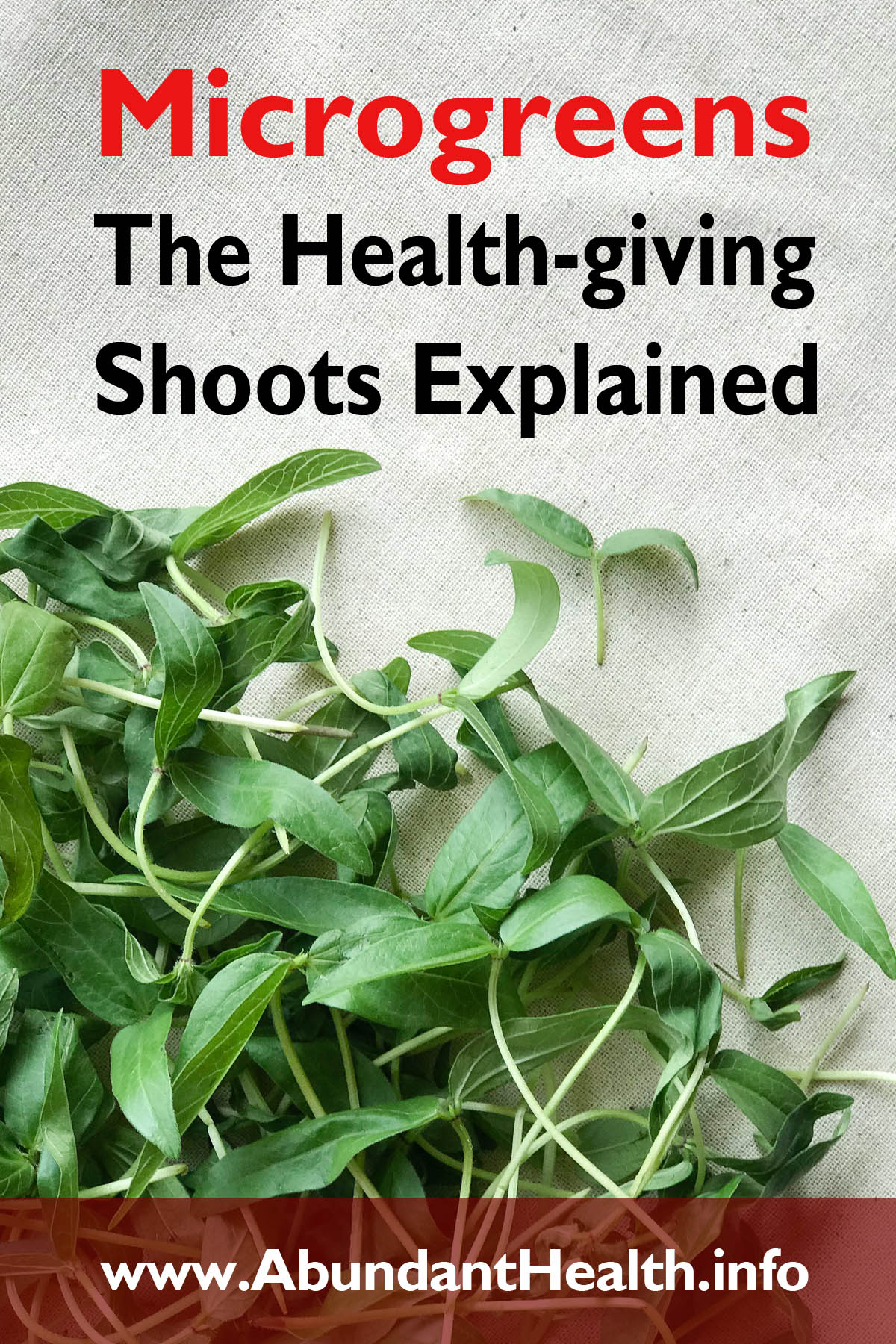
Microgreens - The Health-giving Shoots Explained

There are now a growing number of horticultural businesses operating at a significant commercial scale to deliver a wide variety of microgreens to the market. In most cases, sales are to the food service industry, rather than retail, meaning you are likely to find them in your sandwich or as garnish on a restaurant dish. Microgreens are simply the cotyledons, or seed leaves, that first emerge from a seed when it germinates. If the seedlings were left to mature, they would eventually become full-sized leafy vegetable and herb crops.

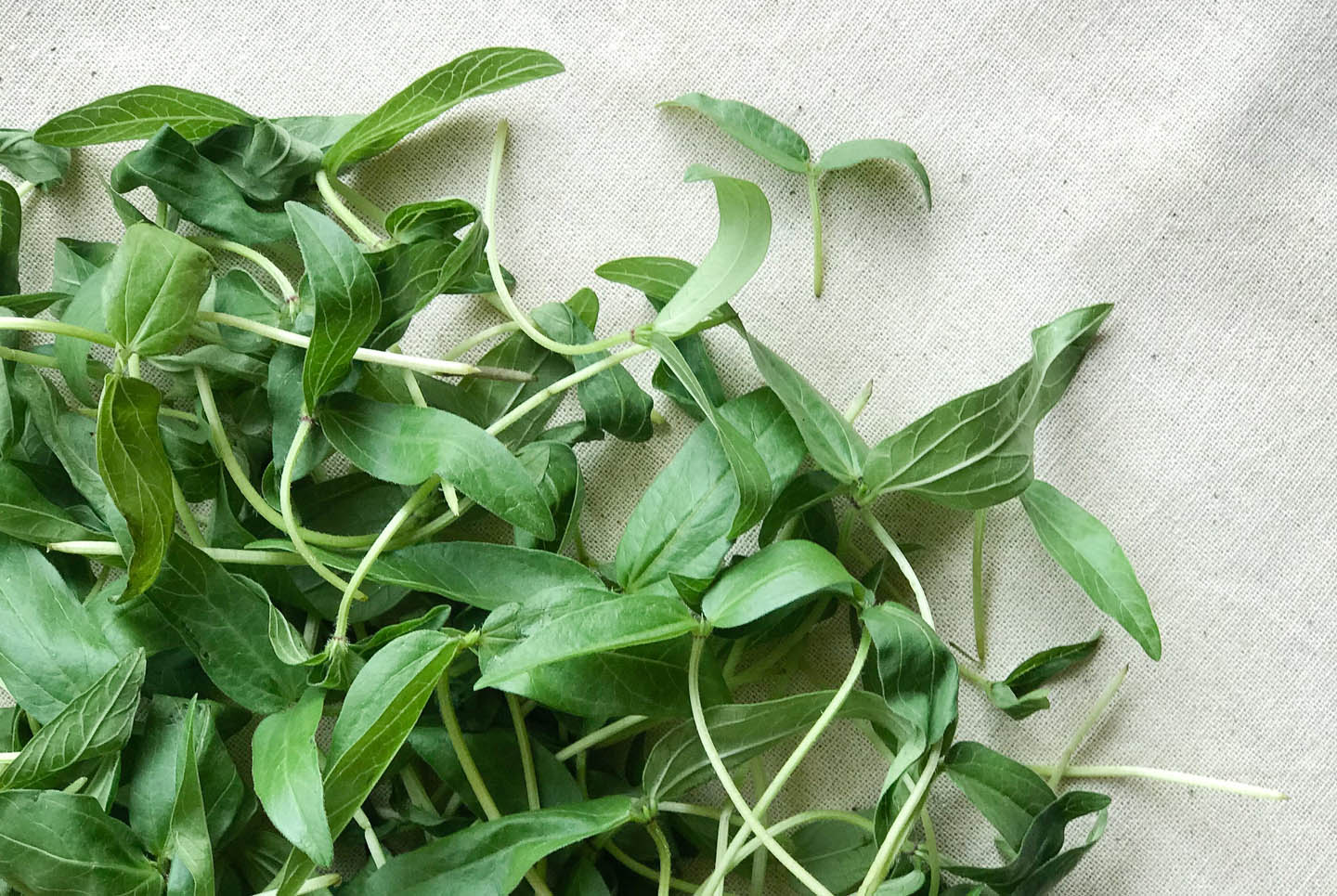
These miniature leafy salad crops pack a lot of nutritionally beneficial and flavorsome goodies into a small space. Seedlings of plants such as beetroot, radish, rocket, basil and coriander come in many shades of red and green. They give a real zing to a dish with their distinctive flavors and contain biologically active compounds, such as glucosinolates and polyphenols, that are known to reduce the risk of some cancers and cardiovascular disease.((Bhaswant M, Shanmugam DK, Miyazawa T, Abe C, Miyazawa T. Microgreens—A Comprehensive Review of Bioactive Molecules and Health Benefits. Molecules. 2023; 28(2):867. https://doi.org/10.3390/molecules28020867))

Recent research has shown that the “bioavailability”, that is, the ease with which the human body can access all the nutrients locked up in the plants we eat, is better in some microgreens than others.((Abellán Á, Domínguez-Perles R, García-Viguera C, Moreno DA. In Vitro Evidence on Bioaccessibility of Flavonols and Cinnamoyl Derivatives of Cruciferous Sprouts. Nutrients. 2021; 13(11):4140. https://doi.org/10.3390/nu13114140)) Red radish sprouts had higher bioavailability of polyphenols than red cabbage, broccoli and white mustard, even though the concentrations found in the radish were lower. These findings show just how important it is for us to understand the digestibility of the food we eat, and not simply the concentration of different compounds within it.
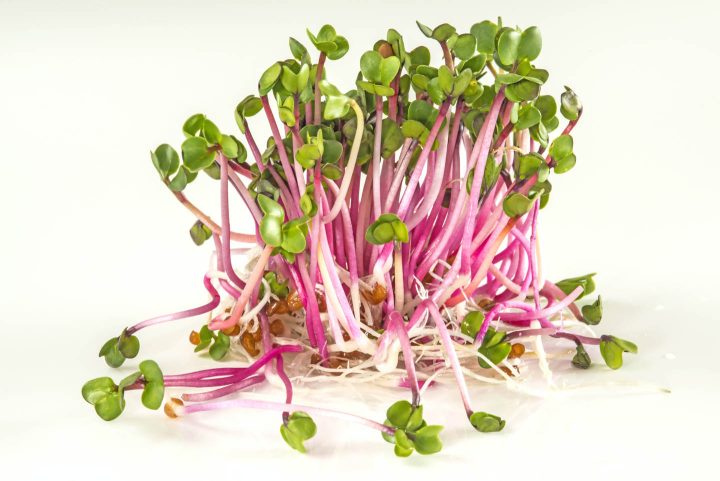
Radish sprouts

Although microgreens are more nutrient-dense than their fully-grown relatives,((Weber CF (2017) Broccoli Microgreens: A Mineral-Rich Crop That Can Diversify Food Systems. Front. Nutr. 4:7. doi: 10.3389/fnut.2017.00007)) the portion sizes offered still tend to be very small. While microgreens are still treated as a garnish instead of a valuable component of a diet, people will not get as much of the nutritional benefits as they could.

Grown indoors

Microgreens can easily be grown indoors and don’t require much space. Indoor growing has its challenges, as the energy demand is often high to provide the lighting and temperatures that the plants need. However, if the energy used is from renewable sources, indoor growing becomes sustainable.

Researchers in Canada also discovered that using continuous LED lighting both increased the yield of microgreens and reduced the energy costs associated with production compared with using traditional light/dark cycles.((Lanoue J, St. Louis S, Little C and Hao X (2022) Continuous lighting can improve yield and reduce energy costs while increasing or maintaining nutritional contents of microgreens. Front. Plant Sci. 13:983222. doi: 10.3389/fpls.2022.983222))

Microgreens are harvested within days of germination, meaning that they don’t need additional fertilizer supply, and they suffer very few problems of pests and diseases that affect plants grown to greater maturity because they are grown in such clean indoor environments. All they need is a bit of water to sustain them.
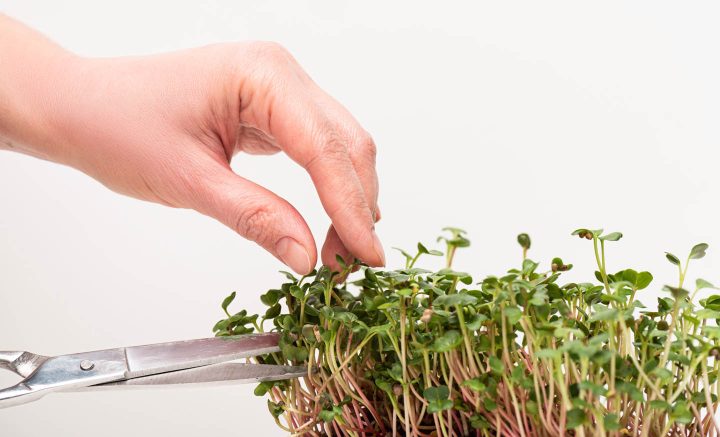
Harvesting microgreens with a scissor

However, the indoor growing environment also offers the potential for fortification of microgreen crops, ensuring that they are even richer sources of the nutrients that we are often deficient in. A 2022 study from the Slovak University of Agriculture in Nitra, showed that a range of different varieties of microgreens could be more than 100-fold enriched with selenium by including it in the growing medium.((Mezeyová I, Hegedűsová A, Golian M, Andrejiová A, Šlosár M, Mezey J. Influence of Microgreens Biofortification with Selenium on Their Quantitative and Qualitative Parameters. Agronomy. 2022; 12(5):1096. https://doi.org/10.3390/agronomy12051096)) Selenium is an essential nutrient that lowers the risk of developing cancer.

The biggest challenge that remains is to improve the shelf-life of these seedlings. Many of the things that make them attractive as crops, such as tender texture and growing in a highly protected environment, make them unable to withstand the conditions they are exposed to after harvest.((Gupta A, Sharma T, Singh SP, Bhardwaj A, Srivastava D and Kumar R (2023) Prospects of microgreens as budding living functional food: Breeding and biofortification through OMICS and other approaches for nutritional security. Front. Genet. 14:1053810. doi: 10.3389/fgene.2023.1053810)) The rise in popularity of these crops will encourage plant breeders to invest in developing varieties that are specifically adapted to cultivation as microgreens.

The low-input, indoor-friendly production of microgreens provides opportunities to have leafy veg grown in towns and cities, or even in people’s own homes. These short supply chains mean that the product reaching people’s plates is fresh and of good quality.

When production is more local to the point of consumption people feel more connected to their food supply and are more likely to incorporate these sustainable, healthy and tasty little leaves into their diets.

Healthy Fruits

Stay Always Up to Date

Sign up to our newsletter and stay always informed with news and tips around your health.

Sign Up Now!

Filed Under: Nutrition Tagged With: microgreens

An Effective Process to Deal with a Financial Crisis

October 22, 2023 by Martin Neumann - [rt_reading_time label="Reading Time:" postfix="minutes" postfix_singular="minute"]

Dealing with Financial Crisis

Financial Stress can cause you sleepless nights and can be devastating. For dealing with that you need to have a good plan.

An Effective Process to Deal with a Financial Crisis

There are varying degrees of financial stress. For example, consider the stress levels in these statements:

  • “How will we pay for the vacation in Hawaii this year?”
  • “We don’t have enough money to go eat out in the restaurant, but we can have Pizza Palace deliver.”
  • “We can pay the electric bill or the gas bill, but we can’t pay both. Remember that the bank said we’d lose the car if we don’t make a payment by the 10th of the month.”

Some people are fortunate enough to have never been in the last situation, but many people aren’t so lucky. Desperate times are highly stressful times.

The good news is that it is possible to get out of a financial crisis! Alleviating such financial pressure requires a cool head and a plan.

Follow this process to reduce your financial stress and see brighter days ahead:

Gather information

Get an accurate picture about your situation. It’s easy to make yourself more upset than necessary. Ensure that you have a factual representation of what’s going on.

  • How much money are you making?
  • What are your bills?
  • How much debt do you have?
  • What resources are available to you?

Focus on solutions

If you focus on the problem, your mind is easily getting stuck in negative self-pity. You will find it hard to see a light at the end of the tunnel if you focus on the wrong thing. Commit yourself to finding solutions.  Most of us tend to focus on comfort, which is a big mistake. Nothing happens when you make yourself comfortable. You’re just distracted. Spend the vast majority of your time looking for and working on solutions.

  • You can take it easy at night before bed and focus on making yourself comfortable then to help you have a good night’s sleep.

Eliminate every unnecessary expense

Most people have several expenses that provide little to no value. Do you have a gym membership you never use? Magazine subscriptions? Expensive cell phone plan?

  • Get rid of every expense you don’t truly need. Of course, you must pay for your housing, utilities, food, medicine, and insurance. However, everything else is optional.

Determine what you can and cannot influence

Most of us worry about things we can’t control. There’s actually very little you can control. You can control your thoughts, attitude, and actions. And if you can’t do anything about it, then just accept that it is out of your hands.

  • Focus on what you can influence and avoid worrying about the rest.

Determine how every penny is being spent

When you’re under serious financial stress, it’s important to know where all of your money leaks are occurring. Discover where every cent is going each month. Track it all.

Doing accounting of the expenses

Work on a plan to boost your income

If you had enough money, your financial stress would go away. There’s always a way to make more money if you’re committed to providing more value to the world.

  • You might want to get a second job or a side hustle. It might be time to start an online business or to look for a better-paying job.

Budget

Do you have a budget? Most people don’t. Choose where your money is going before you spend it. Make a spending plan and stick to it.

Find ways to relax

The solution to stress is to either remove the source of the stress or to relax. Plan relaxation time into your schedule each day. If you’re too stressed for too long, you’re likely to end up sick. Too much stress reduces your ability to function optimally.

  • Experiment with various relaxation methods to find out what works best for you. Some healthy options include listening to your favorite music, taking a warm bath, engaging in a hobby that pleases you, playing with your kids or pets, going for a walk, or hiking on a nature trail.

Ask for help

It might be time to ask for help. Friends, family, your employer, your banker, or even your creditors can all be of help during financial challenges.

Financial stress is a leading cause of divorce, suicide, and many health issues. Financial issues can be an overwhelming challenge. Ensure that you’re working with accurate information, scaling back, boosting your income, and making a plan. Ask for help if you need it. There is a way out, although it might be challenging. Never give up!

Do you need a guide to help you understand how to cope with Stress in an all inclusive approach? Learn how to combat stress, mentally, physically, emotionally and strategically in your life.

Get Me the Guide

Filed Under: Mental Health, Stress Management Tagged With: financial crisis

Change Your Mindset: Change Your Life

October 15, 2023 by Vicki Griffin - [rt_reading_time label="Reading Time:" postfix="minutes" postfix_singular="minute"]

Change Your Mindset

Mindset Matters. It’s in the news — whether you’re battling a cold, bouncing back after a big blunder, beating the blues, or braving a new and challenging task — mindset matters more than you may think. God has created these marvelous brains of ours with a capacity to improve in function, ability, and attitude with proper treatment, use, and exercise. The brain constantly re-shapes itself according to what it learns, thinks, feels, and expects. Neuroscientist John Ratey explains: “Experiences, thoughts, actions, and emotions actually change the structure of our brains.”((Ratey J.  User’s Guide to the Brain, Vintage Books, New York; 2001. p. 17.)) “But,” he cautions, “one necessary precursor to change, though, is often a change of attitude.”((Ibid, p. 356.))

Change Your Mindset: Change Your Life

Attitude can be more important than facts when it comes to conquering life’s mountains. When we pack a bad attitude, we may expend a lot of energy mountain-climbing over molehills but find ourselves unprepared when we need the mental mettle to scale a genuine peak of difficulty.

Fixed Mindset: Fixed Results. Social psychologist Carol Dweck has studied what she terms the “fixed” versus the “growth” mindset in children and adults.((Dweck C. Mindset. Random House, New York; 2006.)) Fixed mindsets believe that traits such as intelligence, ability, personality, and competence are inborn and basically unchangeable. They believe that the need to “work” at improving means there is a basic lack of intelligence or ability. They tend to view themselves as smart or dumb; strong or weak; winners or losers.

Children with this mindset will choose easy puzzles instead of hard ones in order to reassure themselves that they are competent. Because of the strong need to “be smart” instead of “get smart”, the fixed mindset individual tends to avoid challenges. They give up easily when confronted with an obstacle and view “effort” as fruitless. They ignore criticism and find other people’s success threatening. A fixed mindset student who gets a poor grade on a test sees himself as “dumb” instead of needing to study harder or plan better. This attitude makes him more likely to give up on his goals.

In marriage, the fixed mindset believes that “love conquers all.” A good marriage should not require work; it should be smooth sailing and self-adjust over time. Marriage partners should be able to read each other’s minds, and flaws indicate deep problems. The fixed mindset individual tends to be negative; they suffer from more anxiety and depression, and find it difficult to forgive others because they are so tough on themselves.

A man with fixed mindset mentality an a critical look

Sociologist Benjamin Barber concluded: “I don’t divide the world into the weak and the strong, or the successes and failures, those who make it or those who don’t. I divide the world into learners or non-learners.” It is possible to have a fixed mindset in certain areas but not others. The good news is that the fixed mindset is “fixable”!

Growth Mindset: Growth Results. Growth mindsets believe that although people may differ in basic aptitudes, interests, and temperament, everyone can change, grow, and improve. They have a passion for stretching and growing, even when they are making mistakes and facing challenges. Children with a growth mindset will choose hard puzzles over easy ones because they enjoy the challenge.

The growth mindset person may not “feel” smart but they are interested in “getting smart.” They tend to embrace challenges and they persist in the face of obstacles. They see effort as the path to mastery and learn from criticism. They find others’ success inspiring. The growth mindset individual tends to be positive. They are able to trust others and “bounce back” when difficulties get them down. They tend to be more forgiving of others. A growth mindset student who gets a poor grade on a test will re-assess his study habits, join a study group, or re-take the class if necessary. He is determined to “learn” and therefore is less likely to give up his goals.

In marriage, the growth mindset believes that love needs a lot of practical help; problems are a part of life, and good relationships require effort and maintenance. Couples rarely agree on everything and certainly cannot read each other’s minds! They believe the relationship will deepen and grow and challenges are met and conquered — and they are right!

A man being challenged in climbing a mountain

Change Your Mindset. Victor Frankl was a Jewish psychiatrist who was imprisoned in Auschwitz during World War II. He lost his family, career, freedom, and health. When he was finally released, he wrote: “Everything can be taken from a man but one thing: the last of the human freedoms — to choose one’s attitude in any given set of circumstances.”((Frankl V.  http://www.brainyquote.com/quotes/authors/v/viktor_e_frankl.html)) Choosing a new way of thinking is like changing any other habit — it takes practice, perseverance, and patience. “What we learn to do, we learn by doing. Excellence, then, is not an act — but a habit.”((Aristotle. http://www.goodreads.com/author/quotes/2192.Aristotle))

Do you come from a long line of naysayers? No worries. Neuroscientist John Ratey encourages: “We are not prisoners of our genes or our environment. Poverty, alienation, drugs, hormonal imbalances, and depression don’t dictate failure. Wealth, acceptance, vegetables, and exercise don’t guarantee success. Genes set boundaries for human behavior, but within these boundaries there is immense room for variation determined by experience, personal choice, and even chance. We always have the ability to remodel our brains.”

Jesus promises to implant a new mind set, motives, and attitude in the heart of those who surrender to Him as Lord and Savior. “Therefore if anyone is in Christ, he is a new creation…” (2 Corinthians 5:17). We receive this new beginning as spiritual seed. God helps us identify and overcome faulty habits of thinking and grow in stability and strength over time as we learn more from His Word and through prayer.

Call to Action

First, learn to spot fixed thinking. Second, determine to replace faulty internal monologues. Third, read the Bible for direction and power. Jesus said: “Learn of Me.”((Matthew 11:29.)) Learning new and better ways of living and thinking is possible. So practice a new attitude — it will help you achieve greater altitude when meeting life’s challenges!

Healthy Fruits

Stay Always Up to Date

Sign up to our newsletter and stay always informed with news and tips around your health.

Sign Up Now!

Filed Under: Mental Health Tagged With: mindset

10 Tips for Sleeping Well Without Medicine

October 8, 2023 by Dr. Cesar Vasconcellos de Souza - [rt_reading_time label="Reading Time:" postfix="minutes" postfix_singular="minute"]

10 Tips for Sleeping Well Without Medicine

Do you sleep well? Do you wake up rested? Do you have insomnia? Is sleep really important for our mental health? Let’s think for a moment about some important issues in relation to sleep.

10 Tips for Sleeping Well Without Medicine

Levels of cortisol, the hormone produced by the adrenal glands, are highest in the morning because it is important for our body to function during the day. When night comes, cortisol levels drop so that we can rest. And, opposed to cortisol, at the end of the day, when it gets dark, if the person remains in a dark environment when sleeping, the production of a neurohormone increases, which is melatonin.

Sleep is essential for proper rest of mind and body. Melatonin, then produced by the pineal gland in our brain, plays a fundamental role during sleep. Serotonin and melatonin alike are produced from an amino acid called tryptophan, obtained from foods such as nuts, legumes, bananas, brown rice, potatoes, beans, lentils, nuts, avocados, soybeans, and derivatives. Tryptophan is transformed into serotonin, and this turns into melatonin.

The concentration of serotonin is increased during the day in the pineal gland while there is light, contrary to what occurs with melatonin. When light enters our eyes and travels towards our retina, which is the back of the eyeball, the optic nerve and its connections carry this information to the pineal gland, inhibiting the production of melatonin. The peak of melatonin production occurs between two and three o’clock in the morning, with a normal lifestyle and a dark environment. The less melatonin there is, the worse your sleep will be, and consequently the more tired you will be.

Melatonin is an antioxidant, capable of crossing the blood brain barrier, being able to perform functions in brain cells, called neurons. As melatonin levels drop, there may be a simultaneous decline in brain function. Sleep disorders can also be one of the effects of decreased melatonin. As we age, the pineal gland starts to function less and there is a drop in melatonin production. This ends up causing some elderly patients to complain about their sleep quality or insomnia. However, they may easily fall asleep when they shouldn’t during the day, for example while watching TV.

A senior falling asleep in front of the TV

Sleep is produced by specific brain activities. Certain bodily functions change during sleep. Blood pressure and heart rate decrease, growth hormone is secreted in stage 4 Sleep, called non-REM. Body temperature in the later stages of sleep also drops. Sleep is divided into two categories: REM (Rapid Eye Movement) sleep, and non-REM sleep. This non-REM sleep is classified into four phases. The majority of dreams occur during REM sleep and correspond to between 20% and 25% of total sleep.

Sleep specialists at Oxford University reported a study in which they chose four volunteers who tend to sleep deeply. They were hooked up to devices that track sleep quite accurately. They slept for 8 hours straight on the first three nights, when they didn’t have to go through any kind of interruption in that experiment. Over the next three nights, they slept only 4 hours, as their sleep was interrupted by the study team. The scientists filled out a questionnaire each day to identify any emotional changes and recorded daily videos of these participants in the scientific experiment.

Do you know the result? It was found that there was an increase in anxiety, depression and stress. There was also an increase in paranoia and a feeling of distrust towards other people. The scientists were amazed that after just three nights of sleep deprivation these symptoms appeared. Three of the four volunteers found the experience to be unpleasant, but one participant said he was unaffected and felt fine. However, in the questionnaires it was found that positive feelings decreased significantly after two nights of interrupted sleep, while negative feelings began to increase. In other words, although he said he was feeling well, there were signs that his mental health was beginning to suffer by having his sleep interrupted on three nights.

An irritated woman

The research, considered the largest controlled study of psychological treatment for mental health, strongly suggests that insomnia can cause mental health problems, rather than insomnia simply being a consequence. Daniel Freeman, Professor of Clinical Psychology at Oxford University, who led the study, believes that one of the reasons sleep deprivation is so harmful to our brains is because it encourages repetitive negative thinking. He said: “We have more negative thoughts when we are sleep deprived, and what’s more, we get caught up in them.” He did not state, however, that a few nights of poor sleep mean that the person will develop a mental illness, but that the risk, in fact, increases. Sleeping well protects your mental health.

Do you want some tips to sleep better? So first, get just enough sleep to feel good. Staying in bed longer than necessary can lead to superficial sleep the following night. Second, avoid coffee, black tea, Cola soft drinks, and chocolate, as caffeine impairs sleep. What’s more: stop smoking, as nicotine can have a stimulating effect and disturb your sleep. Exercise daily, as it promotes muscle relaxation and contributes to better quality sleep. Seek treatment for sinusitis, rhinitis and asthma, as they can disrupt sleep, causing many nighttime wake ups. Another point that helps you sleep better is maintaining regular times for going to bed and getting up, as this helps maintain the regularity of your biological rhythm.

Avoid heavy meals at night. It is best to have your last meal two hours before going to bed. It is also important to avoid watching TV in the bedroom. I know a lot of people do it, but it’s best to avoid it. Sounds, light and temperature can interfere with sleep quality. Your body needs a pleasant temperature, quiet and dark environment for good sleep. The best time to produce restful sleep is between nine in the evening and six in the morning. And one last thing: only use sleeping pills under medical advice. I hope you have a good sleep today!

Healthy Fruits

Stay Always Up to Date

Sign up to our newsletter and stay always informed with news and tips around your health.

Sign Up Now!

Filed Under: Healthy Lifestyle, Mental Health, Sleep

How to Swap Meat for Nutritious Alternatives

October 1, 2023 by Ruth Fairchild - [rt_reading_time label="Reading Time:" postfix="minutes" postfix_singular="minute"]

How to Swap Meat for Nutritious Alternatives

Are you toying with the idea of eating less meat, but unsure whether it’s the right choice nutritionally and how best to do it?

How to Swap Meat for Nutritious Alternatives

If so, you’re not alone. Many people are now looking to eat fewer animal products because of the desire to eat sustainably, and moving towards a plant-based diet is indeed an admirable goal.((Plant-based diets. British Nutrition Foundation))

It’s better for our health, lowering the risk of chronic diseases such as obesity, type 2 diabetes, cardiovascular disease and some cancers. And it helps our planet.((Plant-based diet lowers risk for chronic diseases, weight gain, death. healio.com June 11, 2018))

A 2019 report on healthy diets from sustainable farming systems concluded that reducing meat and fish consumption – and replacing required calories with plant-based food – are the best methods to reduce greenhouse gas emissions, environmental degradation and biodiversity loss.((EAT-Lancet Commission Summary Report.))

As nutrition experts we’re all too aware that transforming eating habits can require difficult behavior changes.

So, we emphasize small steps. A plant-based diet (as opposed to a plant-only diet) does not mean the total absence of animal products and allows for greater food flexibility and choice than a vegan diet. Or you could take the flexitarian approach, where small amounts of quality animal-based food are consumed alongside significant amounts of plant foods.((Derbyshire E. Flexitarian Diets and Health: A Review of the Evidence-Based Literature. https://doi.org/10.3389/fnut.2016.00055))

Here are some of the basic principles of good nutrition which can help you to eat healthily while reducing your meat intake.

Protein is easy

Amino acids are the building blocks of protein, and essential amino acids (EAAs) are those which the body cannot make itself.

It’s a common misconception that we all need the high-quality protein contained in meat, In fact, we can exist very well with protein from other sources.

To meet protein needs from plant foods alone – such as grains, legumes, nuts, seeds, tubers, fruit and vegetables – a larger amount of plant foods may need to be eaten, especially if eaten in isolation.((Protein. British Nutrition Foundation))

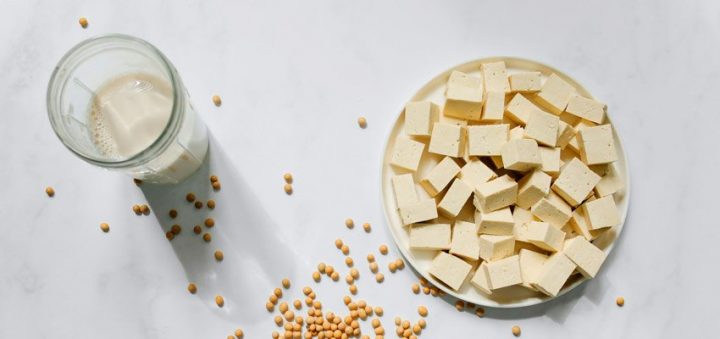
For instance, an average boiled chicken egg, weighing 50 grams, will provide seven grams of protein and all the EAAs in plentiful amounts. And a small 87 gram portion of soya bean tofu will give you the same amount of protein and all the EAAs in lesser, but adequate, amounts to meet nutritional needs. But you would need to eat a 250 gram portion of boiled white rice, or 130 grams of peas (four to five tablespoons), to get seven grams of protein.

Soy Milk and Tofu

In reality though, meals are rarely made up of one type of food alone. The concept of complementary proteins means that a diet which completely lacks animal foods will be sufficient in protein and EAAs, as long as it contains a varied range of plant based foods.((Protein. British Nutrition Foundation)) The white rice and peas mentioned above is a classic example: the EAA lysine, in short supply in grains, is plentiful in pulses, whereas the methionine in short supply in pulses, is plentiful in grains.

So, the daily mixing of grains, pulses, nuts and seeds within meals will ensure a full complement of EAA. In short, there is little evidence of protein-deficiency among vegetarians, vegans or plant-based diet-eaters in the UK.

Micronutrient needs

Micronutrient (vitamins and minerals) deficiency can be a problem though, so care must be taken to ensure you meet your dietary requirements.((Vitamins and minerals. British Nutrition Foundation))

Red meat is a rich source of dietary iron. But in fact, the consumption of red meat only once or twice a week – or loss of it – will not make much difference to your overall iron status (how much is in your body).((Top dietary iron sources in the UK. British Journal of General Practice))

Although the type of iron in plant foods is not as available to the body as haem iron provided by meat, regularly eating a variety of plant sources (green vegetables, pulses and nuts) will improve iron intake, particularly if combined with a vitamin C source to improve absorption.((Iron: Food Fact Sheet. Association of UK Dietitians)) Key sources of vitamin C include salad vegetables (fresh tomatoes and peppers) and lightly cooked green vegetables and potatoes.

Tomatoes and lemon as vitamin C sources

Other major sources of iron are fortified staples, such as flour products and breakfast cereals, and – if you’re not going vegan – oily fish such as salmon, mackeral or sardines.

And don’t forget..

Animal products provide excellent amounts of calcium, zinc, iodine and omega-3 anti-inflammatory oils,((Omega 3 fats. Heart UK)) so if you’re cutting out dairy and fish as well as meat and a adopting a plant-only diet you need to take care you get sufficient quantities of these nutrients.((Vegetarian, vegan and plant-based diet: Food Fact Sheet. Association of UK Dietitians))

Iodine is particularly challenging to meet through plants alone.((Iodine: Food Fact Sheet. Association of UK Dietitians)) Iodised salt is not commonly available in the UK, (but readily available in the US and other countries) so seeking out other sources would be prudent. Dietary seaweeds (kombu, wakame, laver bread and nori) can be used in soups, stews, salads and sushi a few times a week.

Omega-3 oils can be obtained from a variety of plant based oils.((Omega 3 fats. Heart UK)) And zinc content is highest in nut butters as well as unrefined flours and pulses, such as wholegrains and green or brown lentils.

The only natural source of B12 is animal products, but there are other sources include nutritional yeasts and fortified products such as breakfast cereals. A supplement may be required for those following a plant-only diet.

Eating Healthily and Sustainably

The key to healthy eating is a balanced diet,((The Eatwell Guide. NHS)) predominantly plant-based((Vegetarian, vegan and plant-based diet: Food Fact Sheet. Association of UK Dietitians)) and minimally processed.((Fairchild R. Why forgotten food manufacturers deserve our thanks too. The Conversation, June 5, 2020)) Highly processed foods are a major source of fats, salt and sugar, whether plant-based or animal-based.

Reducing our meat-based consumption, even for one day a week, will make a difference to our health and the planet. And if we do consume meat, looking for more sustainable sources will ultimately encourage less intensive farming of animals.((8 ways to eat more sustainably without giving up meat. Country Living))

Healthy Fruits

Stay Always Up to Date

Sign up to our newsletter and stay always informed with news and tips around your health.

Sign Up Now!

This article is republished from The Conversation under a Creative Commons license. Read the original article.

The Conversation

Filed Under: Nutrition

Primary Sidebar

Social Channels

Coronavirus Immunity Challenge

Boost your immune system to be bullet-proof for the pandemic.

I Want to Participate

Recent Posts

  • 5 Habits to Live Longer
  • Better Sleep Can Protect Against Dementia
  • Finding Peace In Your Crazy-Busy World
  • Flaxseed – An Ancient Plant Rediscovered
  • Platelets – Triggers for Life or Death
  • Boderline Personality Disorder
  • In Praise of Almonds and Nuts
  • Are You Stuck in the Clutter Trap?

Categories

  • Body Systems (16)
    • Cell Function (2)
    • Circulatory System (1)
    • Digestive Tract (10)
    • Immune System (4)
  • Diseases (27)
    • Cancer (2)
    • Cold (1)
    • COVID-19 (11)
    • Dementia (1)
    • Diabetes (1)
    • Digestive Diseases (2)
    • Heart Disease (2)
    • Kidneys (1)
    • Metabolic Syndrome (2)
    • Skin (1)
  • Healthy Lifestyle (42)
    • Exercise (11)
    • Gardening (2)
    • Sleep (7)
    • Sunlight (2)
    • Temperance (14)
    • Water (4)
  • Mental Health (87)
    • Addictions (6)
    • Anxiety (7)
    • Burnout (1)
    • Depression (7)
    • Psychosomatic Diseases (6)
    • Stress Management (45)
    • Trust (6)
  • Nutrition (56)
  • Obesity (9)
  • Phases of Life (14)
    • Adults (3)
    • Babies and Infants (1)
    • Children (3)
    • Seniors (5)
    • Teenagers (3)
  • Therapies (7)
    • Herbs (5)
    • Hydrotherapy (1)
  • Uncategorized (3)

Archives

  • January 2025 (1)
  • March 2024 (5)
  • February 2024 (4)
  • January 2024 (4)
  • December 2023 (5)
  • November 2023 (4)
  • October 2023 (5)
  • September 2023 (4)
  • August 2023 (3)
  • July 2023 (2)
  • June 2023 (4)
  • May 2023 (4)
  • April 2023 (5)
  • March 2023 (4)
  • February 2023 (4)
  • January 2023 (4)
  • December 2022 (4)
  • November 2022 (4)
  • October 2022 (5)
  • September 2022 (4)
  • August 2022 (4)
  • July 2022 (5)
  • June 2022 (4)
  • May 2022 (5)
  • April 2022 (4)
  • March 2022 (4)
  • February 2022 (4)
  • January 2022 (5)
  • December 2021 (3)
  • November 2021 (4)
  • October 2021 (6)
  • September 2021 (4)
  • August 2021 (4)
  • July 2021 (5)
  • June 2021 (4)
  • May 2021 (3)
  • April 2021 (5)
  • March 2021 (4)
  • February 2021 (4)
  • January 2021 (5)
  • December 2020 (3)
  • November 2020 (4)
  • October 2020 (5)
  • September 2020 (5)
  • August 2020 (3)
  • July 2020 (1)
  • June 2020 (1)
  • May 2020 (1)
  • April 2020 (1)
  • March 2020 (1)

Copyright © 2026 · Abundant Health - Privacy Policy - Medical Disclaimer