Abundant Health

Up to date health information tailored for you

  • Home
  • Blog
  • Recipes
  • Shop
  • Contact
You are here: Home / Archives for Diseases / Heart Disease

Heart Disease

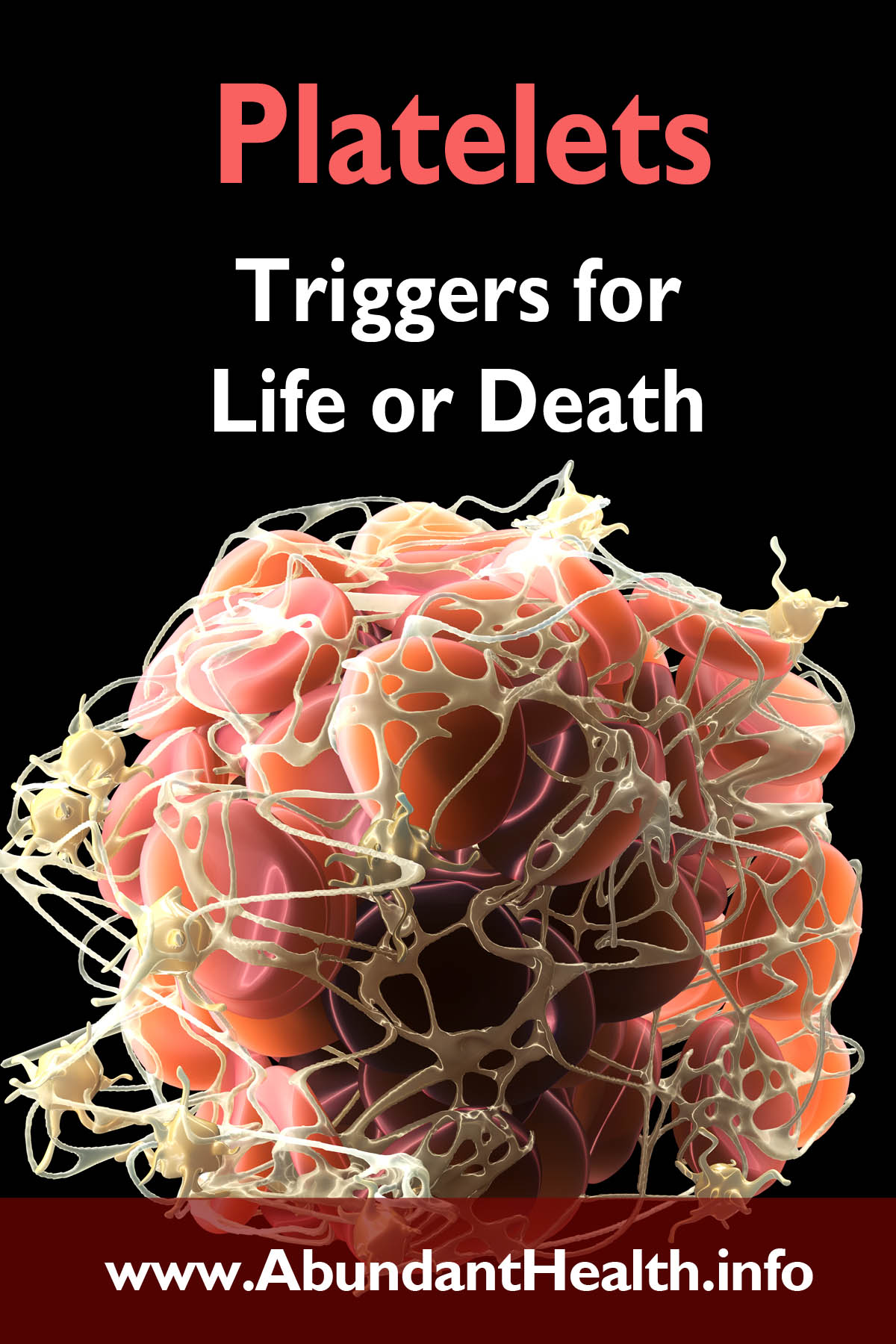
Platelets – Triggers for Life or Death

March 10, 2024 by Bernell Baldwin - [rt_reading_time label="Reading Time:" postfix="minutes" postfix_singular="minute"]

Platelets – Triggers for Life or Death

President Eisenhower was astonished. Two fitness scientists, Kraus and Webber, had just shown that American young people were flabby. On average, they were less flexible, had less endurance, and were weaker. Being more active, European youth easily outclassed Americans. it got to lke. None of this second-class status for Americans! He would arise and mount a national fitness campaign that would make Americans first in the world for physical fitness. So he flew to Colorado, played 27 holes of golf in one day! Ate a couple of big hamburgers meanwhile. And … got a heart attack that shocked and shook the nation. What triggered a coronary heart attack in this vigorous man? And why, later, did he suffer a stroke that grazed the speech center in his brain? Why? Largely PLATELETS, that’s why.
Platelets – Triggers for Life or Death

What are these platelets and why are they so important in heart attacks and strokes? Let’s take a look at the applied physiology of these tiny floating Band-Aids in the blood. We should have about 150,000 to 400,000 of them in every cubic millimeter of our blood. That adds up to about a trillion per person. What are they good for?

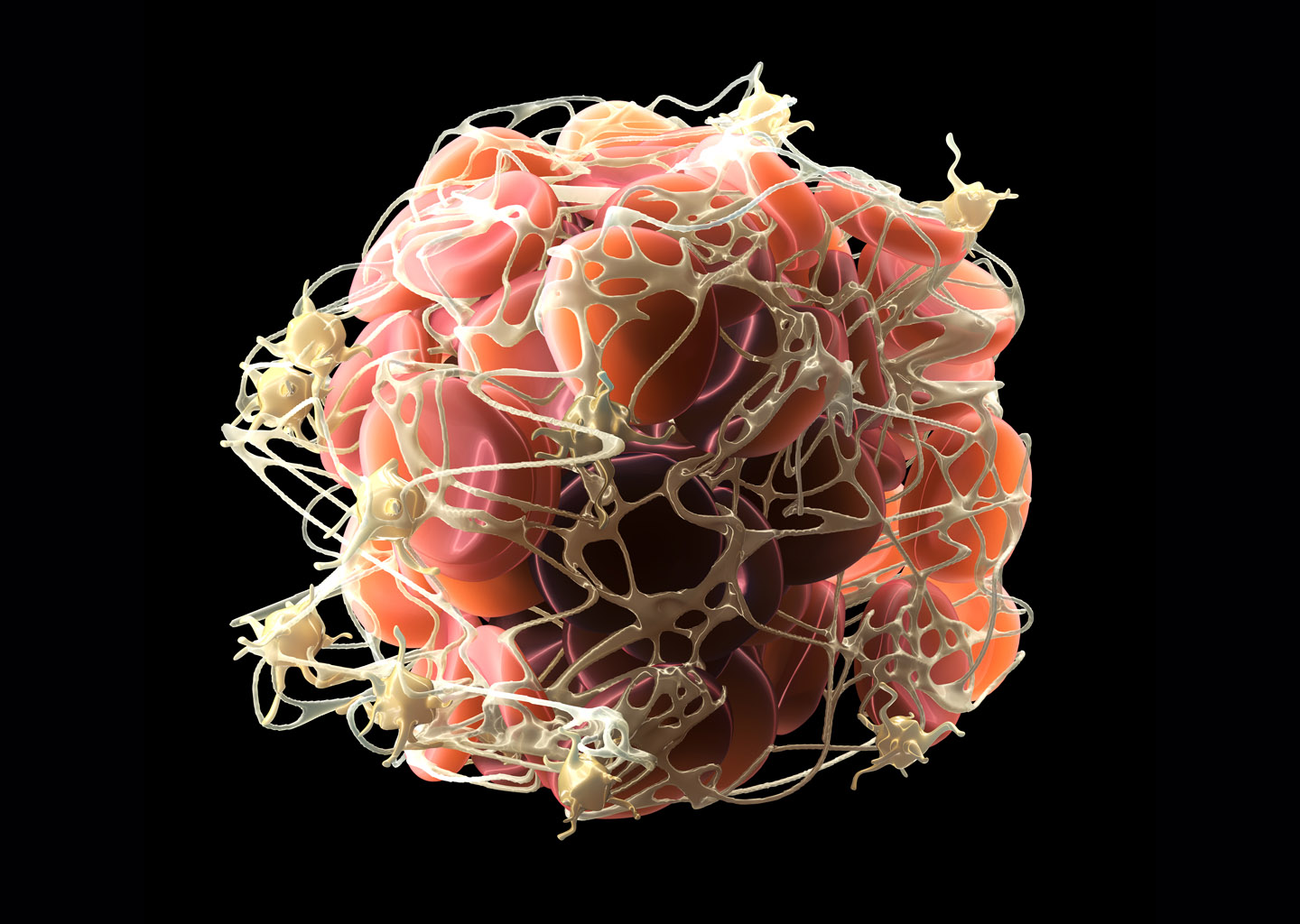
They keep us from bleeding to death when we cut ourselves. They go to work instantly to initiate blood clotting. First, they reach out sticky fingers and grab other platelets. Then they lock arms with myriads of other platelets. They also anchor to nearby wounded blood vessels or non-vascular tissues. immediately they eject clot-forming substances that unleash a cascade of enzymatically propelled reactions that change fluid blood into a semi-solid plug laced with a network of fibrin strands to stabilize it. Normally the resulting clot stops the hemorrhage or repairs tiny defects inside any of our blood vessels.

In health, when platelets are not trigger-happy, this clot should be just the right size to deal with the extent of the injury. In combination with healthy blood and normal vessels, balanced platelet function should repair, not ruin.

When platelets are deficient in number or power we may hemorrhage, even bleed to death. And on the other hand, when platelets are excessively stimulated we can get abnormal, even disastrous clotting which produces thrombosis or embolism. Thrombosis is the formation of an abnormal clot within a blood vessel. An embolus is a floating clot, abnormal tissue, or other material. In this case it is a clot that has broken loose from a thrombus, and sails at high speed down the blood vessel to jam in another, narrower, place. Thrombosis is all too common in heart attacks and strokes; excessive platelet function can ruin us for good.

We used to think that high cholesterol constituted the heart-attack problem. No more. True, excess fat, especially animal fat and cholesterol, smoking, high blood pressure, diabetes, or 20 other diseases, deficient exercise, and aging can add up to dangerous plaques that can so narrow the insides of crucial arteries that they make for trouble. But now we realize that the most common cause of the final plugging of a vessel in the heart or brain is a new injury to an already existing plaque. It cracks or splits open, launching an enlarged clot or thrombus that jams the blood vessel shut. This leads all too often to a painful or even deadly heart attack. Because of their crucial role as triggers of coagulation, these mighty little midgets (platelets) are at the center of concern for this role in the deaths of thousands of people and the crippling of millions of others.

What are platelets like?

Off-duty platelets float around in the circulation from eight to twelve days, like smaller leaves in the edge of a stream. But under the microscope, they look like navy beans compared to walnut-sized red blood cells. The more they are studied the more interesting and complicated they become. Full of machinery for starting, sustaining, and anchoring clots, they also have built-in power plants called mitochondria, membrane pumps to stay viable, and projectile-like guns to shoot clotting chemicals at damaged areas. Platelets are also equipped with micro-muscles poised to pull blood vessels or tissues together after they have anchored into them. And then when the emergency is all over and their job is done they contain lysosomes ready to dissolve themselves.
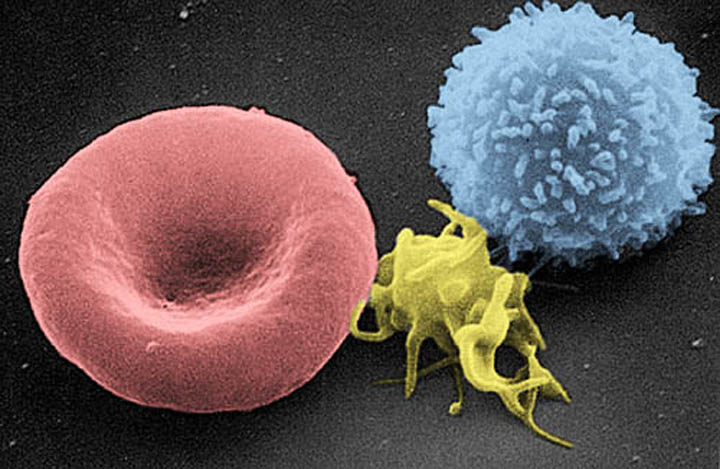
A platelet together with red and white blood cells
A platelet (in yellow) between a red and white blood cell

Life spans of platelets

The life span of red blood cells is about 120 days. Platelets live one-tenth as long. By isotopic labeling, we have learned that under the best of conditions human platelets can live 12 days. In smokers they survive only 10 days on average. This means the extra making and handling of about 80 billion platelets per day. If vegetable fat is consumed liberally, survival goes down to nine days. But if animal fat is emphasized, then down to eight days.((Fitzgerald GA, Jennings LK, and Patrono C, Eds. Platelet-Dependent Vascular Occlusion. The New York Academy of sciences, New York, NY, 1994, pp 1-328.))

The spleen should monitor platelet quality. Ideally, if platelets can’t be cleaned up enough for front-line duty they are disassembled. In view of their crucial role, not only in normal clotting or repair of blood vessels, but also their ominous role in life-threatening heart attacks and crippling strokes, there is a most significant question:

How can we keep our platelets cool instead of inflamed?

We can do much to avoid premature or damaging platelet activation by keeping our heads cool. Anger flushes the blood with hormones that irritate platelets. Calm people tend to have calm blood. ((Wenneberg SR, Schneider RH, et al. Anger on correlates with platelet aggregation (abs). .Behav Med 22(4): 174-177, 1997)) Severe stress also can aggravate stickiness of platelets, thus pushing them in the direction of dangerous blood clots.

Tobacco smoke

Either active or passive smoking is poisonous to platelets. These little midgets get angry and ready to fight – too sticky.((Rama Sastry BV and Gujrati VR. Activation of PAF-Acetylhydrolase by Nicotine and Cotinine and Their Possible Involvement in Arterial Thrombosis. Dept of Anesthesiology and Pharmacology y, Vanderbilt University Medical Center, Nashville, TN 37232-2125, p 312-314)) Trouble! There is more than just clotting involved. Platelet-derived growth factor (pDGF) can overdrive cell growth in the walls of coronary arteries over a period of months or years, which pushes overgrowth inside of cholesterol/fat plaques. This overgrowth inside of a coronary artery can strangle its internal diameter, a process called stenosis. In the heart this contributes to pain in the chest or angina pectoris. Recent research has shown that besides platelets, several other cell types can also make pDGF. In any case, keeping platelets cool is a wise objective in healthful living.

Alcohol rebound

When people drink alcohol on the weekend and then sober up to face the week of work, the platelets show ALCOHOL REBOUND. They react by getting too sticky. ((Ruf JC. Platelet rebound effect of alcohol withdrawal and wine drinking in rats. Relation to tannins and lipid peroxidation (abs). Artherioscler Thromb Vasc Biol 15 (1). 140-4, 1995))

Overexertion can be deadly

The New England Journal of Medicine, the most prestigious medical journal in the world, for December 2, 1993 has two lead articles, one first editorial and five letters, all about excessive exercise. They cite over two thousand cases that indicate that jogging or any exercise of six METS or more (one MET, metabolic equivalent = 3.5 ml of oxygen used per kg body weight per minute) is dangerous. They think excess exertion triggers 25,000 heart attacks per year VIA PLATELETS. ((Mittleman MA, et al. Triggering of Acute Myocardial Infarction by Heavy Physical Exertion. The New Eng J of Med 329- 1677-83, 1993.
Willich SN, et al. Physical Exertion as a Trigger of Acute Myocardial Infarction, The New Eng J of Med 329. 1684-1690, 1993)) These authors show that over-exertion doubles heart attack risk in the most fit exercisers, but increases the risk for weekend over-exercisers 120 times. Jogging or overexertion as in snow shoveling, pushing a car by yourself, competitive tennis, basketball, and racquet ball, to mention a few huffing and puffing activities, can kill people by several mechanisms. This newer evidence indicates that overexertion is dangerous, especially to the very people who need exercise the most – those at risk.

An exhausted soccer player exaggerating in his exercise levels

Excessive exercise markedly increases the output of hormones that activate platelets. In addition, deficient blood flow to the liver impairs its ability to make a clot-dissolving enzyme called PLASMIN. These two mechanisms add up to a double whammy for the predisposed coronary artery. Marathoners commonly show 300% excess clotting factors in their blood, and have dramatic elevations of platelet counts and adhesiveness. ((Rock G, Tittley P and Pipe A. Coagulation factor changes following endurance exercise (abs). Clin Sport Med 7 (2). 94-9, 1997.))

Tradition claims that the first marathoner died at the conclusion of his run. Modern imitators all too often die in running shoes. Keep your platelets cool!

More moderate exercise can help balance your autonomic nervous system while you are getting your workout for the whole person instead of just your muscles, heart, and lungs. New exercise is whole-person oriented.

Cool diet for cooler platelets

In the still-current and active health laws given by Moses anciently, the Bible declares: “It shall be a perpetual statute for your generations throughout all your dwellings, that YE EAT NEITHER FAT NOR BLOOD.” Leviticus 3:17. And years after Pentecost, and after the first generally assembled conference, chairman James declared to the empowered Holy-Spirit-led New Testament church, “Therefore l judge that we should not trouble those from among the Gentiles who are turning to God, but that we write to them to abstain from things polluted by idols, from sexual immorality, from things strangled, and FROM BLOOD.” Acts 15:19.20 NKJ. Also see verse 29. Today everyone knows the manifold dangers of animal fat, but most eat meat with the blood regularly, not realizing that dead platelets in the meat are dangerous. Platelet Factors 3 and 4 are both thermostable (not destroyed by heat).((Wintrobe AM, Lee GR, et al. Glinical Hematology. Lea & Febiger, Philadelphia PA, 1974, p 397-398)) Even thorough cooking cannot destroy the platelet-inflaming properties of the blood in the meat. Furthermore, tissue juices of animal flesh are dangerous to the delicate balance of blood coagulation.
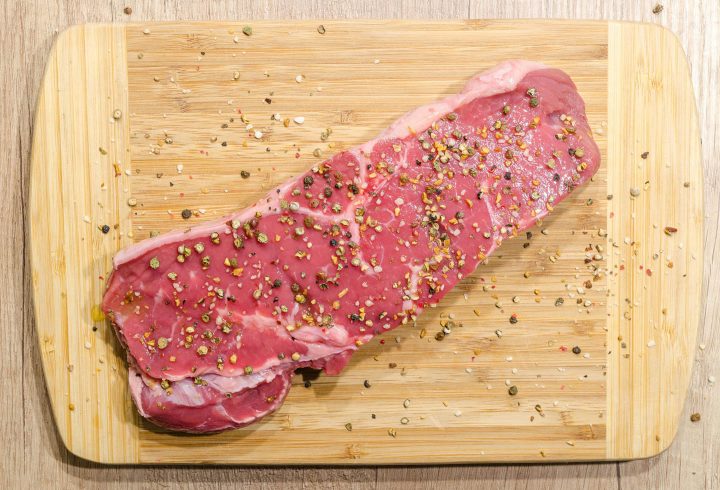
A piece of raw meat on a cutting board containing plenty of blood

‘No wonder one meal of meat increases the number AND the stickiness of platelets. ((Ratnaff OD and Forbes CD. Disorders of Hemostasis, 3rd ed, Saunders, Philadelphia, PA, 1996, p 12.)) Meat is procoagulant; even kosher meat is highly saturated and cholesterol-laden. Ordinary steaks, chops, chicken, and even fish have the blood left in them for two reasons, flavor and profits. What we need to understand is that to eat blood is a violation of health principles of both Acts 15:20,29 in the New Testament and Leviticus 3:17 of the Old Testament, as well as a serious violation of the physiological laws of hemostasis (maintaining healthful balance of blood coagulation and control of bleeding). Such conventional and presumptuous behavior imagines that our platelets in this stressful world are made of stainless steel, our coronaries are Teflon, and our hearts will never die!

Other factors that can over-stimulate blood clotting are high levels of homocysteine, promoted by inadequate dietary intake of certain vitamins; folate, and sometimes vitamin B-6, or pyridoxine, rarely by B-12. Incriminated also are drinking five or more cups of coffee per day, and by that villain of health – smoking. Combining these risk factors elevates the homocysteine to dangerous levels,((Best CH and Taylor NB. The Physiological Basis of Medical Practice, The Williams & Wilkins Co, Baltimore, MD, 1950, p 100)) and that is not to mention also: obesity, hypertension, blood sludging, trauma, foreign or otherwise damaged or eroded surfaces, inflammation, and of course imbalances in coagulation factors. These powerful substances must always be kept in check and balance, otherwise an avalanche of coagulation can strike in the most vulnerable of places – heart or brain.

Summary

It is becoming more obvious by the month, that President Eisenhower probably suffered his famous heart attack as did thousands of others, by years of conventional living, and then came that fateful day which converged the clot-pushing factors of big stress, massive overexercise, and meat eating. His platelets must have gone wild. The results derailed a great national fitness program but launched heart research into the modern era. For society at large, we all must learn that cutting corners can cut the heart and wound the brain. We must live wisely to keep living abundantly.

Healthy Fruits

Stay Always Up to Date

Sign up to our newsletter and stay always informed with news and tips around your health.
Sign Up Now!

Filed Under: Body Systems, Circulatory System, Diseases, Heart Disease

Prevent a Deadly Clot

April 30, 2021 by Elizabeth Hall - [rt_reading_time label="Reading Time:" postfix="minutes" postfix_singular="minute"]

Prevent a Deadly Clot

Someone in the United States dies from a blood clot every five minutes! One in four people worldwide dies from conditions caused by thrombosis (blood clot).  Clots are common in persons who have severe COVID-19. Most clots are preventable.

Prevent a Deadly Clot

Unfortunately, sudden death is the first symptom in about 25% of the individuals who have a pulmonary embolism. One-third (about 33%) of people with DVT/PE (deep vein thrombosis/pulmonary embolism)will have a recurrence within 10 years.((Data and Statistics on Venous Thromboembolism. www.cdc.gov/ncbddd/dvt/data.html))

Deep Vein Thrombosis

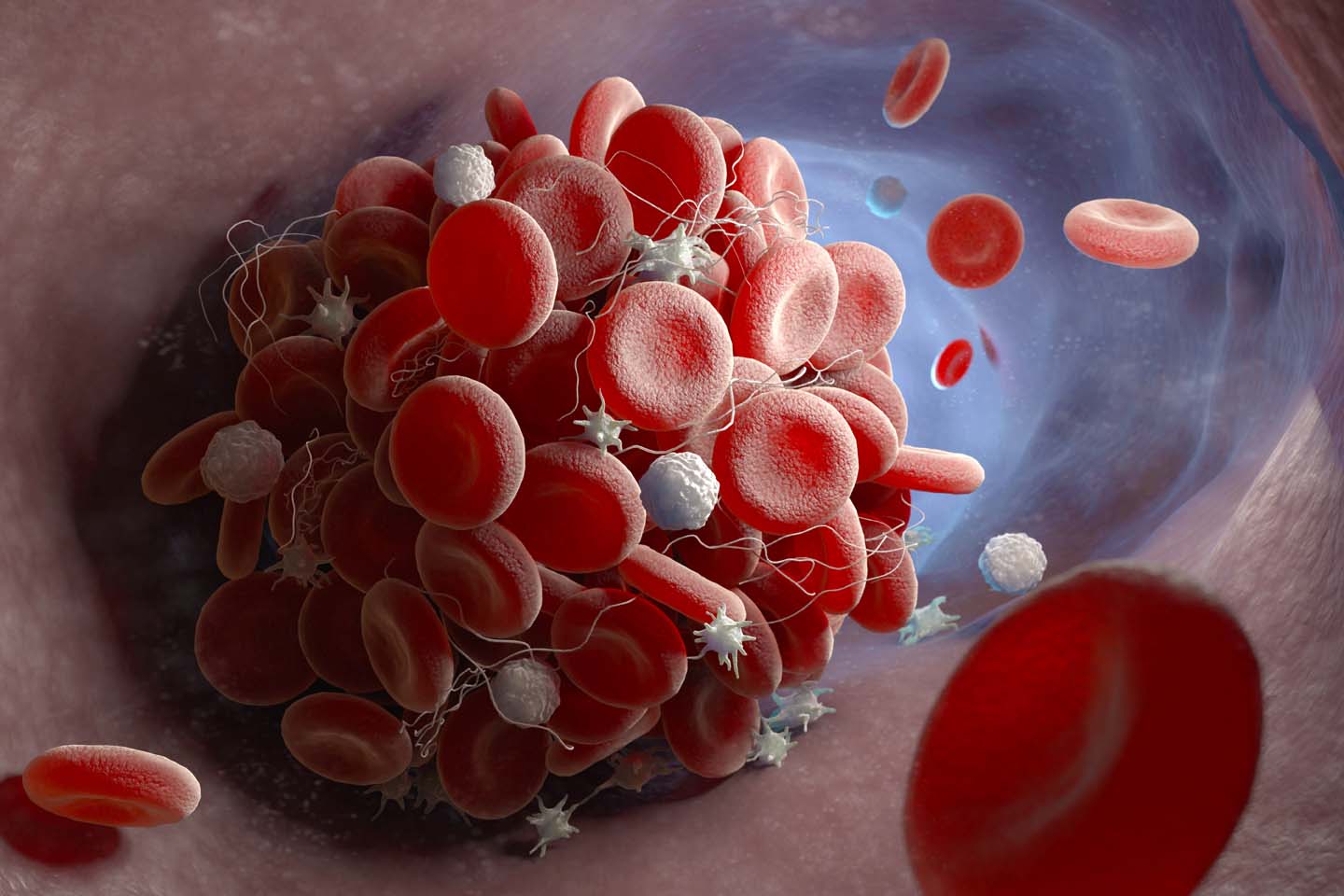
In fact, each year more people die from deep vein thrombosis than the total number who die from AIDS, breast cancer, and motor vehicle accidents combined.  What is DVT? It is the formation of a blood clot in a deep vein, usually in the lower leg or in the thigh. A clot is composed of a meshwork of fibrin threads that entrap plasma, red blood cells, and platelets.

Dangers from DVT

A thrombus is a blood clot that forms within a vessel and remains stationary. It obstructs and slows down blood flow. A clot can dislodge from a deep vein in a leg and travel to the lungs! If not treated promptly, it causes death! Of course, we want our blood to clot when we cut a blood vessel. What we do not want is undesirable clotting which occurs when a clot forms at a site where there is no bleeding, resulting in obstructed blood flow. A clot just the size of a sharpened pencil tip can significantly reduce blood flow. Even worse, clots can dislodge and travel to the lungs or rarely, to the circulation of the heart.

Signs and Symptoms of DVT

Pain, tenderness, swelling, and discoloration in a leg can be signs and symptoms of DVT. More than 70% of individuals who develop DVT will not experience any symptoms until it is too late and the clot has dislodged! Sometimes these symptoms remain and do not disappear with treatment.

Who is at Risk for Clots?

DVT has come to the public’s attention over the past few years after airline passengers on cramped, long-haul flights developed clots in what some have called “economy-class syndrome.” In fact, French studies show that riding in a car or truck for four to five hours without stopping for an exercise break increases the risk of DVT four times.

An extensive database revealed that DVT was twice as high after an acute lung infection. Pulmonary embolisms also doubled after an acute urinary tract infection.((Smeeth, L. The Lancet, 367:1075-079, April 1, 2006.)) Men are 50% more likely than women to develop another blood clot after having the first episode of DVT. The overall frequency of recurrent blood clots in men is 25% within a period of five years.((http://news.bio-medicine.org/medicine-news-3/Men-more-at-risk-of-recurrent-blood-clots-than-women-3748-1/)) Another authority states that 1/3 of individuals with DVT will have a re-occurrence within ten years.

More Risk Factors!

Within the human body there is a balance of anti-clotting and pro-clotting factors. Major surgery, trauma, systemic infection, atherosclerosis, atrial fibrillation, heart attack, certain cancers, inflammatory bowel conditions, HIV, prolonged bed rest, physical inactivity and immobility, fractures of the pelvis, hip, or leg, varicose veins, pregnancy, and estrogen-containing pills or patches increase the risk of developing DVT. Unfortunately, the typical Western diet and lifestyle, obesity,((Web, M.D., Obesity ups the risk of Pulmonary Embolism, DVT, Sept 9, 2005.
Rissanen, P., et al, Weight change and blood coagulability and fibrinolysis in healthy obese women. Int J Obes Relat Metab Disord, 25(2):212-218, 2001.)) and diabetes((https://www.lifeclinic.com/focus/Diabetes/Stroke)) also encourage undesirable clotting by increasing pro-clotting chemicals, making the platelets abnormally sticky and promoting other pro-clotting conditions within the body. Also, these conditions decrease the natural inhibitors of undesirable clot formation.

Clots inside Arteries

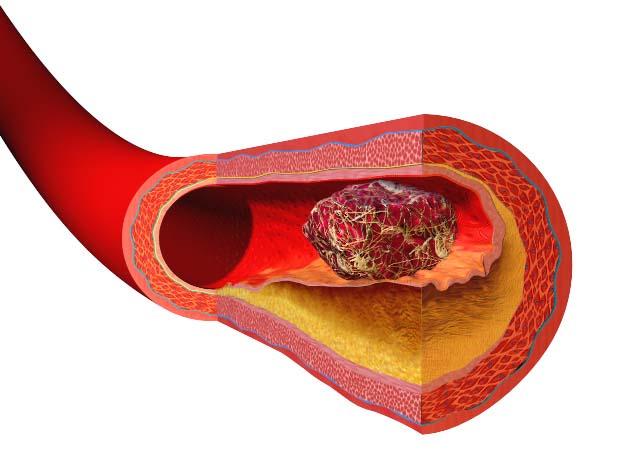
Clots often form when the fibrous cap of an atherosclerotic plaque cracks in the arteries. This condition reduces blood flow through that specific artery even more. Undesirable clotting in one of the coronary arteries blocks the blood flow in an arterial branch that supplies the heart muscle and contributes to more than 80% of heart attacks. Clots are also involved in the majority of strokes.

Formation of a blood clot on an arterial plaque - Blausen.com staff (2014). WikiJournal of Medicine 1 (2). DOI:10.15347/wjm/2014.010 - Free use under Creative Commons
Illustration from Blausen.com on Wikimedia CC BY 3.0

COVID-19 and Clots!

As previously mentioned, both infection and inflammation increase the risk of unwanted blood clots. Individuals who have severe COVID-19 infection are at higher risk of developing blood clots in the veins and arteries. Studies from France and the Netherlands found that 30-70% of severe COVID-19 experienced blood clots in the deep leg veins or the lungs.((Klok F et.al. Incidence of thrombotic complications in critically ill ICU patients with COVID-19. https://doi.org/10.1016/j.thromres.2020.04.013
Llitjos J et.al. High Incidence of venous thromboembolic events in anticoagulated severe COVID-19 patient. DOI: 10.1111/jth.14869)) One-fourth of all COVID-19 patients that are admitted to ICU wards will develop a life-threatening pulmonary embolism. In severe COVID-19 infection, abnormal, small clotting also occurs within the small vessels of the lungs, the kidneys, and the gut. A low dosage of blood thinners is prescribed for individuals who have serious COVID-19 infections. For those who have several risk factors for clots, any infection, including influenza, puts them at greater risk for clots. Many of the same lifestyle practices and natural remedies that reduce one’s risk for blood clotting also help optimize the immune system and reduce inflammation!

How Can We Reduce the Risk of Undesirable Clotting?

Win While You Lose!

To prevent a blood clot, reach and maintain your ideal weight. Obesity increases certain pro-clotting factors in the blood.  Researchers at St. Joseph Mercy Oakland Hospital in Pontiac, Michigan, and Wayne State University found that obese patients were 2.5 times more likely to have DVT and 2.2 times more likely to have a pulmonary embolism.((Ibid, Web, M.D.)) Fortunately, appropriate weight loss reduces elevated pro-clotting and pro-inflammatory agents in obese individuals.

Don’t Smoke.

Tobacco smoking damages the lining of the blood vessels and increases the clumping of platelets, which in turn, increases the risk for undesirable clot formation.((Davis, J.W., et al, Effects of tobacco and non-tobacco cigarette smoking on endothelium and platelets. Clin Pharmacol Ther, 37(5):529-533, 1985.
Zhang G. Smoking and risk of venous thromboembolism: a systematic review. Southeast Asian J Trop Med Public Health. 2014 May; 45(3):736-45. www.ncbi.nlm.nih.gov/pubmed/24974658))

We should mention here that any factor like smoking which increases the risk for atherosclerosis also increases the likelihood of undesirable clot formation. Even a brief encounter with second-hand smoke can make the platelets sticky and more likely to clot especially in susceptible people.((Second hand smoke. www.nhsinform.scot/healthy-living/stopping-smoking/reasons-to-stop/second-hand-smoke))

Adopt a Healthful, Plant-Based Diet!

Meat and saturated fats increase the risk of clotting by decreasing prostacyclin (a prostaglandin that inhibits platelet clumping and increases clot-encouraging compounds).((Zhang C. The effects of saturated fatty acids on endothelial cells. www.thrombosisresearch.com/article/0049-3848(92)90226-Z/fulltext)) As platelets become stickier, the risk of developing undesirable clotting significantly increases. Regular meat consumption fuels inflammation.((Hruby Dietary Protein and Changes in Biomarkers of Inflammation and Oxidative Stress in the Framingham Heart Study Offspring Cohort.  Current Developments in Nutrition, Volume 3, Issue 5, May 2019. academic.oup.com/cdn/article/3/5/nzz019/5421623
Ley SH. Associations between red meat intake and biomarkers of inflammation and glucose metabolism in women. Am J Clin Nutr. 2014 Feb;99(2):352-60. https://www.ncbi.nlm.nih.gov/pubmed/24284436
Seah JY. Consumption of Red Meat, but Not Cooking Oils High in Polyunsaturated Fat, Is Associated with Higher Arachidonic Acid Status in Singapore Chinese Adults. Nutrients. 2017 Jan 31;9(2). pii: E101. www.ncbi.nlm.nih.gov/pubmed/28146136
Chaturvedi P. High Methionine Diet Poses Cardiac Threat: A Molecular Insight. J Cell Physiol. 2016 Jul; 231(7):1554-61. www.ncbi.nlm.nih.gov/pubmed/26565991)) Inflammation plays an integral role in most clot formation.((Brian R. Branchford. The Role of Inflammation in Venous Thromboembolism. Front Pediatr. 2018; 6: 142. www.ncbi.nlm.nih.gov/pmc/articles/PMC5974100/))

Foods that Reduce Your Risk!

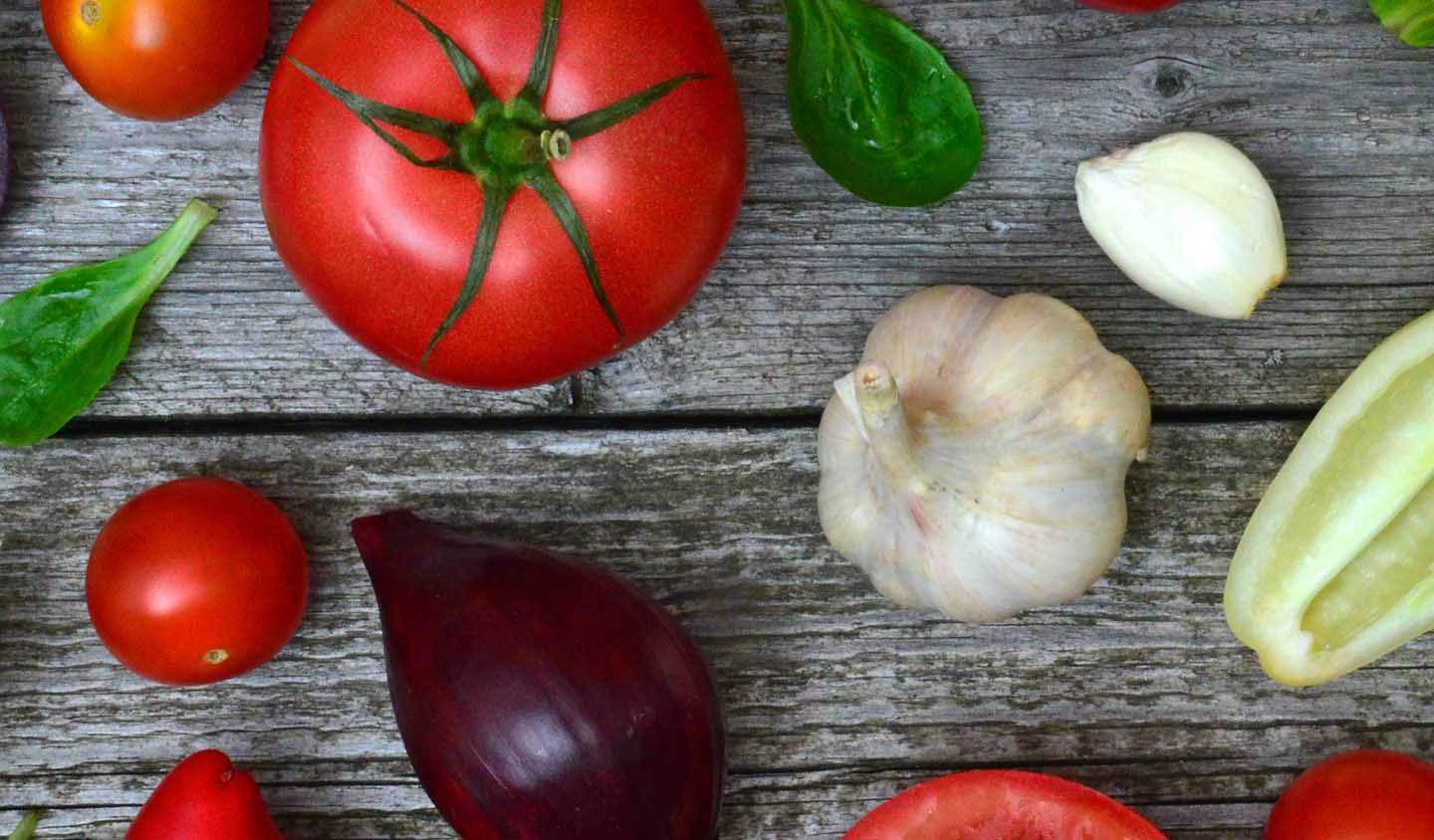
In contrast, frequent consumption of foods that contain phytochemicals that inhibit platelet clumping like garlic, ginger, onions, tomatoes, red grapes, berries((McEwen B. The Influence of Diet and Nutrients on Platelet Function. Seminars in Thrombosis and Hemostasis. 40 (2). February 2014. www.researchgate.net/publication/260108030_The_Influence_ofDiet_and_Nutrients_on_Platelet_Function)) citrus,((Attaway, J.A., et al, Antithrombogenic and antiatherogenic effects of citrus flavonoids. Contributions of Ralph C. Robbins. Adv Exp Med Biol. 439:165-73, 1998.)) kiwi,((Duttaroy, A.K. Effects of kiwi fruit consumption on platelet aggregation and plasma lipids in healthy human volunteers. Platelets, 15(5):287-92, 2004.)) pomegranates,((Aviram, M., et al, Pomegranate juice consumption reduces oxidative stress, atherogenic modifications to LDL, and platelet aggregation: studies in humans and in atherosclerotic apolipoprotein E-deficient mice. Am J Clin Nutr, 71(5):1062-1076, 2000.)) olives((Massaro, M., et al, Vasculoprotective potential of olive oil components. Mol Nutr Food Res, 51(10):1225-34, 2007.)) and flaxseed((Ristić-Medić. Alpha-linolenic acid and cardiovascular diseases. Med Pregl, 56(Suppl 1):19-25, 2003.)) help to reduce the risk of undesirable clotting.

Foods that protect against deep vein thrombosis - Photo by Adonyi Gábor from Pexels

Be Sure Your B-12 Is in Normal Range!

While it is true that several studies show that a vegetarian diet lowers the risk for cardiovascular disease and may even reverse coronary artery disease, a vegetarian diet without adequate amounts of vitamin B-12 increases the risk for developing an undesirable clot.((Remacha AF. Vitamin B12 deficiency, hyperhomocysteinemia and thrombosis: a case and control study. Int J Hematol. 2011 Apr; 93(4):458-464. www.ncbi.nlm.nih.gov/pubmed/21475950)) Vegans, vegetarians, and the elderly are at risk for vitamin B-12 deficiency.

Check Your Homocysteine Level!

Homocysteine is an amino acid produced by the body. It is usually a byproduct of meat consumption. Elevated homocysteine injures the cells that line the arteries and stimulates the unhealthy growth of arterial smooth muscle cells. Both processes contribute to atherosclerosis. It also increases the risk for undesirable clotting. When elevated, homocysteine enhances the risk of unwanted clotting and blood vessel constriction. Low intake of both vitamin B12 and folic acid increases the risk for elevated homocysteine levels. Vegetarians should have their B12 levels checked every six months if they do not take a vitamin B12 supplement. Kidney disease and low thyroid levels increases one’s risk for elevated homocysteine. There is very early evidence that suggests that having a good vitamin D level may help to keep homocysteine in the normal range.

Engage in Moderate Exercise!

Regular moderate exercise is one of the most important methods for preventing a blood clot.  Indeed! Engaging in moderate daily exercise is great preventive and restorative medicine! Sluggish circulation is a major risk factor in developing clots. Moderate exercise increases fibrinolysin which dissolves tiny clots, improves blood flow, and decreases fibrinogen, a plasma protein involved in clot formation. Perform foot exercises while riding in a plane or car. Take exercise breaks during long trips.

Caveats: Extremely competitive and long endurance exercises actually increase the risk of clot formation because they increase the hormone epinephrine. Epinephrine makes platelets sticky and consequently increases the risk of clotting.

Although you might have your daily period for longer exercise, it is essential to get up and walk for at least five minutes every two hours if you are primarily sedentary. Why? Prolonged sitting substantially reduces the blood flow to the legs and increases your risk for the undesirable clot formation.((https://wildwoodhealth.com/blog/how-5-or-10-minutes-can-improve-your-health/))

A couple walking on the beach - Photo by Arthur Ogleznev from Pexels

Stay Hydrated!

Drink water. Adequate hydration and deep breathing also improve blood flow. These two preventive measures are especially important for those with limited mobility. Dehydration thickens the blood. Skip the energy drinks high in caffeine as they can increase the risk for clots.((McEwen B. The Influence of Diet and Nutrients on Platelet Function. Seminars in Thrombosis and Hemostasis. 40 (2). February 2014. https://www.researchgate.net/publication/260108030_The_Influence_ofDiet_and_Nutrients_on_Platelet_Function))

Enjoy Healthful Herbs!

Turmeric, ginger, and ginkgo biloba inhibit platelet clumping as well. Thyme and rosemary have significant antithrombotic factors.((Yamamoto, J., Testing various herbs for antithrombotic effect. Nutrition, 21(5):5, 2005. www.ncbi.nlm.nih.gov/pubmed/15850964
Zbinden, S. Phytotherapy in cardiovascular medicine. Ther Umsch, 59(6):301-306, 2002.
McEwen B. The Influence of Diet and Nutrients on Platelet Function. Seminars in Thrombosis and Hemostasis. 40 (2). February 2014. www.researchgate.net/publication/260108030_The_Influence_ofDiet_and_Nutrients_on_Platelet_Function)) However, people who use blood thinners, have low platelet counts, or have bleeding problems should consult their physician before using medicinal amounts of these herbs.  Pregnant women should not consume any herb medicinally without prior approval from a knowledgeable, qualified healthcare professional. Blood-thinning herbs, if used medicinally, should usually be discontinued two weeks before any surgery or dental work.

Maintain a Cheerful Outlook.

Acute stress and mental depression can increase the risk of forming an undesirable clot. Major depression, for example, increases platelet aggregation and the risk for cardiovascular events.((Ziegelstein, R.C., et al, Platelet function in patients with major depression. Intern Med J, 39(1):38-43, 2009. www.ncbi.nlm.nih.gov/pubmed/19220540))

A cheerful lady - Photo by Monstera from Pexels

Keep Your Blood Sugar within Normal Range.

Nearly 80% of individuals who have diabetes will eventually die of clot-related causes. Emphasize low-glycemic foods that may reduce the risk for undesirable clot formation.

Know Your Heart Health.

Certain irregular heart rhythms (i.e.. atrial fibrillation, first-degree heart block, etc.) or heart attack increases one’s risk for undesirable clotting. Heart failure occurs when the heart does not pump enough blood to keep up with the demands of the body. Consequently, the blood flows more slowly. When this happens, the risk for clot formation increases. Atherosclerosis elevates the risk for blood clotting. Hypertension also increases the risk for deep vein thrombosis.

Emergency!

Clots can be deadly. If you suspect a DVT, see your doctor immediately. Shortness of breath accompanied by sharp chest pain, cough, or anxiety indicate a life or death situation. Possible other signs of pulmonary embolism include light-headedness, blood-stained sputum, or a bluish tint in the skin. Medical treatment consists of anticoagulant medication and thrombolytic therapy designed to break up or dissolve the clot. Time is of the essence here. A clot in the lungs can kill a person within minutes.

Clots in the coronary arteries or inside the brain can prove deadly. So follow your doctor’s instructions!

Conclusions

Some medical epidemiologists state that between one and two million Americans develop DVT annually. One expert predicts that one to three individuals out of a thousand in the United Kingdom will get DVT. What are your chances of developing DVT? It greatly depends on your lifestyle. The good news is that most clots are preventable. If they are caught early, often they are treatable. Better yet, see your health care provider if you are at risk for DVT!

Healthy Fruits

Stay Always Up to Date

Sign up to our newsletter and stay always informed with news and tips around your health.
Sign Up Now!

This article was originally posted on the Wildwood Institute website and is used by permission.

Filed Under: Diseases, Heart Disease

Primary Sidebar

Social Channels

Coronavirus Immunity Challenge

Boost your immune system to be bullet-proof for the pandemic.

I Want to Participate

Recent Posts

  • 5 Habits to Live Longer
  • Better Sleep Can Protect Against Dementia
  • Finding Peace In Your Crazy-Busy World
  • Flaxseed – An Ancient Plant Rediscovered
  • Platelets – Triggers for Life or Death
  • Boderline Personality Disorder
  • In Praise of Almonds and Nuts
  • Are You Stuck in the Clutter Trap?

Categories

  • Body Systems (16)
    • Cell Function (2)
    • Circulatory System (1)
    • Digestive Tract (10)
    • Immune System (4)
  • Diseases (27)
    • Cancer (2)
    • Cold (1)
    • COVID-19 (11)
    • Dementia (1)
    • Diabetes (1)
    • Digestive Diseases (2)
    • Heart Disease (2)
    • Kidneys (1)
    • Metabolic Syndrome (2)
    • Skin (1)
  • Healthy Lifestyle (42)
    • Exercise (11)
    • Gardening (2)
    • Sleep (7)
    • Sunlight (2)
    • Temperance (14)
    • Water (4)
  • Mental Health (87)
    • Addictions (6)
    • Anxiety (7)
    • Burnout (1)
    • Depression (7)
    • Psychosomatic Diseases (6)
    • Stress Management (45)
    • Trust (6)
  • Nutrition (56)
  • Obesity (9)
  • Phases of Life (14)
    • Adults (3)
    • Babies and Infants (1)
    • Children (3)
    • Seniors (5)
    • Teenagers (3)
  • Therapies (7)
    • Herbs (5)
    • Hydrotherapy (1)
  • Uncategorized (3)

Archives

  • January 2025 (1)
  • March 2024 (5)
  • February 2024 (4)
  • January 2024 (4)
  • December 2023 (5)
  • November 2023 (4)
  • October 2023 (5)
  • September 2023 (4)
  • August 2023 (3)
  • July 2023 (2)
  • June 2023 (4)
  • May 2023 (4)
  • April 2023 (5)
  • March 2023 (4)
  • February 2023 (4)
  • January 2023 (4)
  • December 2022 (4)
  • November 2022 (4)
  • October 2022 (5)
  • September 2022 (4)
  • August 2022 (4)
  • July 2022 (5)
  • June 2022 (4)
  • May 2022 (5)
  • April 2022 (4)
  • March 2022 (4)
  • February 2022 (4)
  • January 2022 (5)
  • December 2021 (3)
  • November 2021 (4)
  • October 2021 (6)
  • September 2021 (4)
  • August 2021 (4)
  • July 2021 (5)
  • June 2021 (4)
  • May 2021 (3)
  • April 2021 (5)
  • March 2021 (4)
  • February 2021 (4)
  • January 2021 (5)
  • December 2020 (3)
  • November 2020 (4)
  • October 2020 (5)
  • September 2020 (5)
  • August 2020 (3)
  • July 2020 (1)
  • June 2020 (1)
  • May 2020 (1)
  • April 2020 (1)
  • March 2020 (1)

Copyright © 2026 · Abundant Health - Privacy Policy - Medical Disclaimer