Abundant Health

Up to date health information tailored for you

  • Home
  • Blog
  • Recipes
  • Shop
  • Contact
You are here: Home / 2022 / Archives for November 2022

Archives for November 2022

The Power of Trust

November 27, 2022 by Dr. Cesar Vasconcellos de Souza - [rt_reading_time label="Reading Time:" postfix="minutes" postfix_singular="minute"]

The power of Trust

Mental health has much to do with trust. Trust can release us from stress and anxiety. It is important to understand how we can build that trust.
The Power of Trust

If you don’t trust, you build walls between yourself and others. These walls serve, say the suspicious, to protect against being deceived; but living in isolation impedes recovering from personal behavioral difficulties. It is true that the solution is not to trust blindly, but to discern who is trustworthy and who is not. Trusting serious, ethical and honest people never leads us to problems, but if you trust people of bad character, problems arise in your life. Many of us may have been practicing this for a long time, and therefore suffering unnecessarily.

You should not demand of yourself unshakable loyalty to someone who is not trustworthy. Trust is something to be earned, acquired. We should not blindly trust others, but to patiently wait to see if the other person has learned, and values being trusted because of following our good example. Our goal should be to discern wisely who is trustworthy and who is not.

Interestingly, Jesus Christ alerted us to how we should behave in contact with others:

Therefore be wise as serpents and harmless as doves.

Matthew 10:16

When we are afraid, we usually act in control, or try to control. We want to control events, destiny, people, which increases stress and frustrates us even more. When we don’t trust God, or what you believe to be a higher power, the tendency is to control. But the best way to resolve fear is to trust. Understanding and accepting that good and bad things happen in our life, whether or not we have control.

To face fear and for it to gradually disappear, you need to cultivate trust in yourself, in God – the Creator of the Universe, and trust in the support of people who like you. You can learn to trust that when things don’t work out the way you want, the Creator will have something better planned. We can trust that the Creator of the Universe will give us the right direction we need; and that whatever we need on our journey will come to us.

A man contemplating about life and the providence of his Creator

We won’t get everything we need for the journey of a lifetime today. We will receive today’s supply for today, and tomorrow for tomorrow. The manna that fell from heaven to feed the Israelite people in the desert was in the right portion for each person and for that day. Only on Friday it fell twice as much, so that it would not be harvested on Sabbath. The Creator God does not allow your burdens to be carried today to be too heavy, beyond what you can bear. Think about it! He is in control and he is the only being capable of controlling things and people in a healthy and liberating way.

Learning to trust requires cultivating patience and to wait. I saw in the news about a young man who got impatient when facing traffic that was very slow. He lost emotional self-control and fired shots at the car in front, killing an innocent young woman. His argument at the police station for having shot and killed the young woman was his impatience with the traffic. The Bible warns us of the following:

Whoever has no rule over his own spirit Is like a city broken down, without walls.

Proverbs 25:28

To live better, it is necessary to learn to wait. Have you noticed how impatient and irritated people are? Some people base their calm and patience on depending on the effect of some drug or medication. They didn’t understand, or understood but didn’t want to change, that the most important thing to deal with impatience is not the medication, but knowing how to deal well with the emotion of impatience.

A man impatiently looking at his watch

One truth of life is that we can’t always have what we want when we want it. Could it be that one of the motivations of people who became multimillionaires could have been that, when they got rich, they could have whatever they wanted, whenever they wanted it? Many young adults, men and women pass through burnout, because they struggle with obsession to achieve things before their time. And usually it’s the money. Years ago in Japan, young entrepreneurs died suddenly from an illness called karoshi, which is a type of sudden death from exhaustion. They wanted to reach 30 years of age as millionaires. You can burn yourself out by trying to get today what will come in a healthy way later.

Waiting is not a waste of time. Things in life only happen when we are ready. There’s no way to speed up and maintain sanity of mind. For everything there is a timing. Timing means the right thing at the right time. You are not going to stop your life by having to wait. Other things continue and you will get involved in them; in the meantime, cultivate gratitude and acceptance of what is possible. There’s a life to live while you’re waiting for what you want. Coping with frustration and impatience is important in learning to wait and trust.

Emotional healing is a process of learning to trust. Trusting God, trusting people you can trust, trusting the healthy part of yourself. Trust grows slowly! It’s just like that. We cannot trust overnight. Trust is built one day at a time.

It’s interesting that the Creator of the Universe comes to help us, and even though He’s the one who keeps us alive, He respects our decision, our defenses, our timing. The Bible says that He knocks at the door and waits. He doesn’t invade our lives. By knocking He makes an invitation, not an invasion! Some people enter without knocking, they don’t respect the boundaries. Some think that, because they are from the same family, they can invade your privacy; but they shouldn´t; don’t allow it.

God knocks and waits. In our maturity we can for one day only hear Him knocking, but later we can say: who is there? And further on, since He doesn’t give up on us and knock again, maybe we can let Him in and sit with Him and enjoy His loving presence that instructs us, teaches us to be patient, to wait and to trust.

Healthy Fruits

Stay Always Up to Date

Sign up to our newsletter and stay always informed with news and tips around your health.

Sign Up Now!

Filed Under: Mental Health, Trust

Healing Benefits of the Hot Foot Bath

November 20, 2022 by Elizabeth Hall - [rt_reading_time label="Reading Time:" postfix="minutes" postfix_singular="minute"]

This simple and effective hydrotherapy procedure boosts the immune system, helps to lower high blood pressure, improves sleep, and relieves pain from congestive headaches!  Discover how it works.

Healing Benefits of the Hot Foot Bath

What is the Hot Foot Bath?

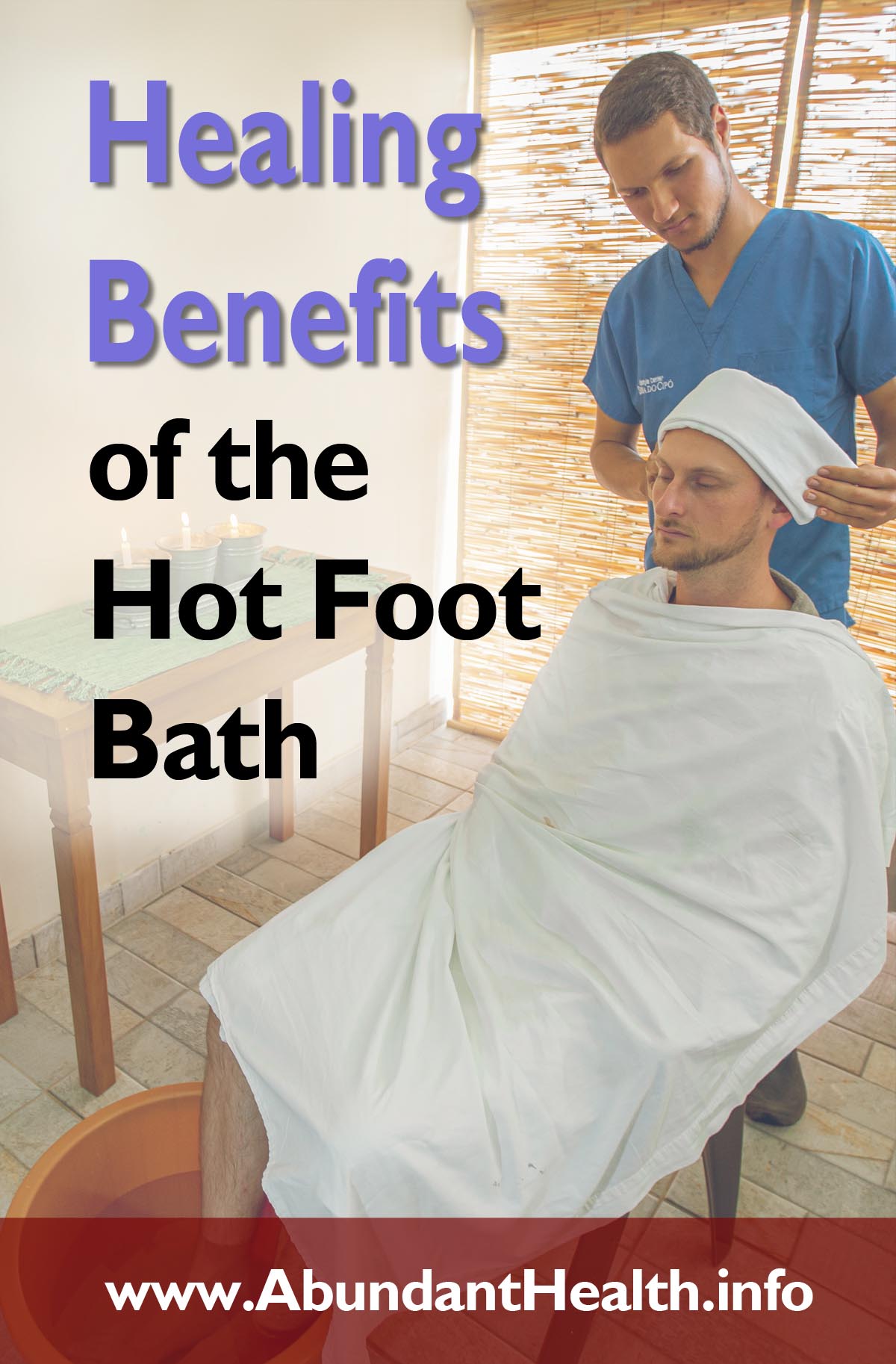
The hot foot bath consists of placing the feet in hot water (starting at 100 to 104⁰F / 38 to 40⁰C) and applying a cold compress to the head for 15-20 minutes. It is given at temperatures ranging from 100 to 115⁰F (38 to 46⁰C). This treatment can be given with the patient sitting in a chair or lying down. Either way, you need to protect the mattress or floor with a plastic sheet.

Health Benefits:

This treatment helps to balance circulation and decrease congestion in the head, lungs, pelvic organs, and internal organs. The treatment acts as a derivative. A derivative effect happens when heat is applied to a large area of skin and its effect is to draw blood away from a distant internal organ. A hot foot bath draws congested blood away from the brain, lungs, and pelvis. If prolonged, it can elevate the body’s temperature which will increase the mobility of white blood cells. For that purpose, you would want to cover and tuck in a blanket around the patient so that body heat will not be lost.

Indications for a Hot Foot Bath:

Generally, a hot foot bath helps to relieve congestive headaches, chest congestion, pelvic congestion, stop a nosebleed, aid relaxation and comfort, abort or shorten a common cold, influenza, and painful menstruation.((Dail. C. and Thomas, C. Hydrotherapy: Simple Treatments for Common Ailments, Teaching Services, 1989.)) The hot foot bath is useful for osteoarthritis in the feet if there is no pronounced swelling. We have found at our Lifestyle Center that the hot foot bath, when combined with a fomentation to the kidneys, reduces elevated blood pressure. Not only does a hot foot bath balance the circulation, it also increases parasympathetic nerve activity.((Saeki Y. The effect of foot-bath with or without the essential oil of lavender on the autonomic nervous system: a randomized trial. Complement Ther Med. 2000 Mar;8(1):2-7. https://pubmed.ncbi.nlm.nih.gov/10812753/))

Benefits of a Warm Footbath:

Coronary Artery Disease and Hypertension 

A warm footbath has a temperature range between 92 to 100⁰F (33 to 38⁰C). A warm footbath can improve blood flow in the coronary arteries in individuals with mild to moderate coronary artery disease.((Yoon SJ. Echocardiography. 2011 Nov; 28(10):1119-24.)) A warm footbath with red ginger has been found to reduce both elevated systolic and diastolic pressures in elderly hypertensive individuals.((Fithriyani, Putri,et.al. Effect of Hydrotherapy Warm Red Ginger to Reduce Blood Pressure on Elderly at Panti Werdha Budi Luhur, Jambi. Indian Journal of Public Health Research & Development. Mar 2020, Vol. 11 Issue 3, p1968-1972. 5p))

Warm Footbath & Diabetes

In a randomized clinical trial of 60 diabetic individuals, a warm footbath that contained 5 liters of warm, tolerable water with 250 grams of dissolved mineral salts reduced pain from diabetic neuropathy.((Vakilinia SR, et al. Evaluation of the efficacy of warm salt water foot-bath on patients with painful diabetic peripheral neuropathy: A randomized clinical trial. Complement Ther Med. 2020 Mar; 49:102325. https://pubmed.ncbi.nlm.nih.gov/32147053/))

Improved Sleep and Traumatic Brain Injury

Hot or warm footbaths are useful in cases of insomnia. Several studies suggests that when the feet are warmed before retiring to bed, a person falls asleep faster and the sleep is deeper.((Sinclair, Marybetts, Hydrotherapy for Massage Therapist, Lippincott, Williams, and Wilkins, 2008, p. 130-132.)) This could be very helpful for the anemic patient who has insomnia. A warm footbath can also improve the sleep of those who have the chronic phase traumatic brain injury.((Chiu HY. A Feasibility Randomized Controlled Crossover Trial of Home-Based Warm Footbath to Improve Sleep in the Chronic Phase of Traumatic Brain Injury. JNeurosci Nurs. (2017) https://pubmed.ncbi.nlm.nih.gov/29117035/))

A woman sleeping

Contraindications for a Hot Foot Bath:

  • Circulatory disturbances, peripheral arterial disease
  • Impaired sensation (neuropathy)
  • Blood vessel disorders
  • Swelling in feet and legs
  • Varicose veins
  • Skin rashes on legs
  • Rheumatoid or gouty arthritis in the feet when the joints are “hot” and swollen
  • Diabetes

Note: Warm foot baths can be tolerated by most diabetic individuals. If there are good foot pulses present, diabetic individuals can usually tolerate a 102°F (39⁰ C) foot bath.

Equipment Needed:

  • Chair
  • Water bath thermometer
  • Plastic “sheet” (or try a clean large trash bag)
  • Foot tub with hot water in it. A five gallon galvanized bucket is ideal.
  • Bath towel
  • Blanket
  • Pitcher with hot water
  • Small pitcher
  • Basin of ice water and two washcloths
  • A hand towel

Extra Tips:

  1. It is so much easier to give this treatment in the kitchen or bathroom where running water is available.
  2. Be sure the room is warm and draft free. If the room is cool, the effectiveness of a hot foot bath is compromised.
  3. Adding epsom salts to the hot water could help relieve sore feet even more.
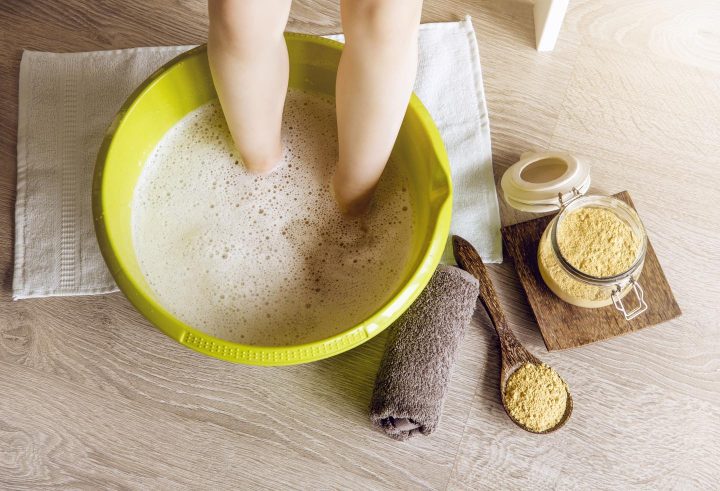
  4. Adding two teaspoons of mustard powder or 1 teaspoon of powdered ginger per two gallons (8 liter) of water will increase the vasodilation effect of the hot foot bath.
  5. A short cold footbath (five minutes) can reduce uterine bleeding.
  6. Giving a hot herbal tea before the treatment will help raise the temperature. This would be important if the hot foot bath is given to stimulate the immune system.
Hot Foot Bath with mustard

Procedure for Hot Foot Bath:

  1. Cover the bed mattress with plastic sheet under the bottom sheet to protect the bed.
  2. Have patient undress and lie down on the bed, covering patient with sheet and blanket. Please keep patient modest at all times. Depending on the condition of the patient, you can have him sitting in a chair.
  3. Fill foot tub ¼ full of water at 103-104⁰F (39 to 40⁰C). For individuals without diabetes, neuropathy, peripheral vascular disease, the water temperature is gradually increased. You may fill the tub before patient comes for treatment or while patient is getting undressed.
  4. Place patient’s feet in tub. See that edge of tub does not touch the calves of the patient’s legs. Be sure to drape a sheet over the legs in the tub to keep out drafts.  Don’t let the sheet dip into the water.
  5. Apply cold compress to patient’s head once the person begins to sweat or gets hot. Renew compress approximately every 2-3 minutes.
  6. Have patient put one foot upon the other, moving the feet to one side of the tub of water. Pour in hot water carefully while mixing with your hand, making it hotter to patient’s tolerance or per doctor’s orders. Add hot water gradually until the temperature is 110 to 115⁰F (43 to 46⁰C). Always keep one of patient’s feet in the tub so they may tell you when water is hot enough. You might need to remove some of the “old water” with a small pitcher before adding more water.
  7. Finish the treatment by pouring cold water over feet and dry feet thoroughly. Or, you may dry the feet without the cold water pour if you immediately place socks on the dried feet. If sweating has occurred, patient should dry off completely.
  8. Have the patient rest in bed for 20-30 minutes. While resting in bed, patient should be covered with a blanket to keep warm.
  9. However, if the patient is still perspiring after he has rested, cool him down with an alcohol rub or a tepid shower. If the patient is weak, you will need to help him dry off.
  10.  Please note: If one is just giving the hot foot bath for other purposes than for stimulating the immune system, blankets are not needed.
Healthy Fruits

Stay Always Up to Date

Sign up to our newsletter and stay always informed with news and tips around your health.
Sign Up Now!

This article was originally posted on the Wildwood Institute website and is used by permission.

Filed Under: Hydrotherapy, Therapies Tagged With: hot foot bath, immune booster

How Fasting Improves Mental Health and Stress Control

November 13, 2022 by Martin Neumann - [rt_reading_time label="Reading Time:" postfix="minutes" postfix_singular="minute"]

Fasting can improve Mental Health

There are many different motives why people choose to do fasting. Some will do it to lose weight, others to clean the body, and often it is done for religious purposes. While all of that can be achieved when done properly, many do not realize that fasting has a positive effect on our mental health and stress control.

How Fasting Improves Mental Health and Stress Control

What is Fasting?

Fasting is a routine whereby you decide not to eat food for a certain time. Several metabolic adjustments occur during fasting. Some forms of fast restrict even liquid intake, which can get detrimental to the health very quickly. A fast for health reason is often done in the form of intermittent fasting, where food intake is alternated with a few hours of fasting.

Skipping food for some hours can help increase the level of ketones in your body. They are produced when energy from carbohydrates is used up and the liver depends on breaking down fat to supply energy in form of ketones. They are not only influencing health and aging, but are also beneficial in improving brain health. However, fasting offers still some more advantages. It has a great benefit to our mental health in a way that is not well known by many people.

Common Types of Fasting

Before we go into full detail about how fasting helps mental health, it is important to state the different types of fasting. The most common types of fasting are:

16/8 fasting: 16/8 fasting is very common and is all about fasting and eating intermittently. Every day you eat within an allowed period of eight hours, after which you will fast for the next 16 hours.

5:2 Approach: The 5:2 approach is about eating regularly five days every week. For 2 days of the week (not in a row), you would then limit your food to a single very light meal of about 500-600 calories.

Alternate-Day Fasting: That is the toughest form of intermittent fasting, where you alternate between days where you eat what you want and days where you eat nothing at all. It can lead to weight loss and improved health, but it is hard to stick to this protocol for the long run.

Intermittent Fasting Concept

The Dangers of Improper Fasting

Fasting is fine when done correctly, but if done in the wrong way, it can do more harm than good. If we go into long fasting periods, metabolism will slow down and make it more difficult to shed those extra pounds in the long run. Pregnant women, breastfeeding mothers, children and very frail people should be more cautious with fasting, and diabetics should be closely monitored to avoid complications. It is important to learn how to fast correctly in order to reap the maximum benefits.

Fasting to Help Increase Your Mental Health

Fasting can be used to increase your mental health in various ways. From improving brain function to reversing mild cognitive impairments in older people, fasting has several benefits to mental health.

Here are 6 ways fasting can improve your mental health:

Enhances mental functioning: Each time we fast, our bodies have fewer toxic materials passing through the lymphatic and blood systems. This way, we can think clearly. During fasting, the energy which the body usually uses for food digestion will then be used by the brain. Initially, you will not be able to detect any change until a few days into the fasting. This is because the body usually takes some time to adjust to the new routine. Also, when you first begin fasting, you may suffer headaches or other pains. But as soon as the body adapts to the new routine, your brain will begin functioning optimally. This will result in better memory, clearer thoughts, and enhanced functioning of other body senses.

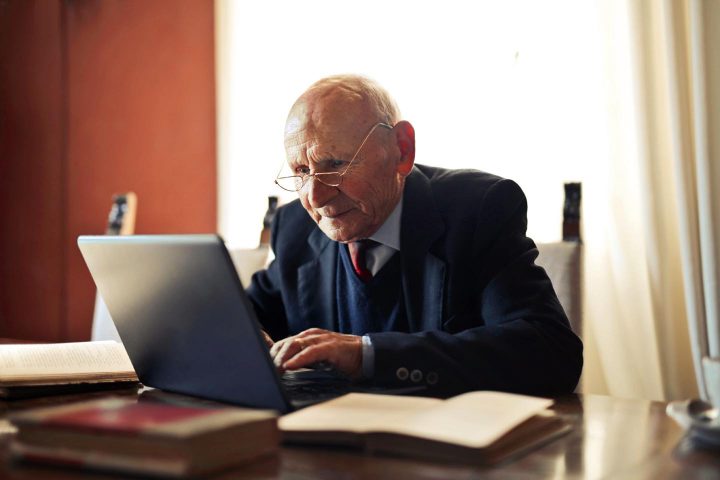
Improves brain function among older adults: Fasting can improve specific parts of brain function as people grow older. This works especially with mild cognitive impairment, which is usually associated with seniors as this is a phase they experience before dementia. It can cause problems with thinking or memory and is reversible. Clinical studies have confirmed that mild cognitive impairment can be reversed with fasting.

A smart elderly person working on a computer

Empowers the brain: Fasting can lead to a short-term restriction on calories. This can help the brain produce more anti-depressant chemicals. Since fasting causes the body to produce ketones from available fats, our brains use this as fuel. With the brain being boosted by ketones, intermittent fasting can be used to treat the symptoms of Alzheimer’s disease, Parkinson’s disease, as well as many other neurodegenerative diseases.

Helps with autophagy: Fasting is also important to mental health due to its ability to trigger autophagy. This is a necessary process whereby the brain cleanses itself from all the trash it accumulates during the day. Autophagy is a process of self-cleaning whereby the all cells of the body, including the brain are cleaning themselves and get rid of old debris and damaged cells. Autophagy is a process that happens efficiently after a fasting period of 16-20 hours, which is easily achieved with intermittent fasting. It helps the brain to create healthier and newer cells.

Improve your memory: It has been proven clinically that our memory is improved significantly when we restrict the hours we eat. Some studies have shown that intermittent fasting can help improve memory in humans.

Reduce stress and anxiety: Fasting has been proven to help improve issues of mental health, which include depression, anxiety, and stress. A recent study conducted was able to prove that people who fasted during a certain period like Ramadan showed improvements in anxiety, stress, as well as symptoms of depression. Any kind of intermittent fasting will give you this benefit. The study revealed that the depression and anxiety levels of the participants went down after intermittent fasting.

Conclusion

Intermittent fasting is good for our health, increases longevity and is beneficial for our brain. When we are stressed, we should think more often about intermittent fasting as a way to deal with the challenges in a more efficient way. It is easy to implement and can give you a long-lasting benefit in your stress control. With that many benefits, what are you waiting for?

Do you need a guide to help you understand how to cope with Stress in an all inclusive approach? Learn how to combat stress, mentally, physically, emotionally and strategically in your life.

Get Me the Guide

Filed Under: Healthy Lifestyle, Mental Health, Stress Management, Temperance Tagged With: Intermittent Fasting, Stress Control

Exercise – Intensity or Duration?

November 6, 2022 by Franklin V. Cobos II - [rt_reading_time label="Reading Time:" postfix="minutes" postfix_singular="minute"]

Intensity or Duration?

When you start an exercise program, you will begin slowly and build up gradually. This increases can be in exercise duration, or in intensity of the exercise routine. When do you go for longer duration, and when do you want to increase exercise intensity? And how do you go practically to maximize the benefits of your exercise program, while your fitness levels are improving?

Exercise - Intensity or Duration?

I left you last time with the simple instructions to walk for 5–10 minutes, once or twice daily. Now, I had asked you to simply walk. I know that’s nothing fancy, nothing hard; just walking. But I did that for a simple reason. Let me explain. 

The rationale behind the time and frequency recommendations I made at first is that by committing to the necessary time required to exercise, you are more likely positioned for success regardless of what activity you chose to do during that time. Think about this: if you have no regular time available, then it matters not what activity you plan to do… because you won’t actually be doing it anyway! So, let’s move forward assuming you now have a new habit of spending time in physical activity every day. And currently, for you, that activity is walking.

There are many, many people who, if they simply keep walking, and regularly increase the duration and/or intensity of that walking, will see very impressive results in their overall health. Further, because it can be done at nearly anytime, under nearly any weather condition, by people of nearly any physical status, with virtually no additional cost for equipment, it is an ideal choice for anyone starting out with an exercise program. This includes those who are carrying excess weight, who have diabetes, hypertension and have trouble sleeping. 

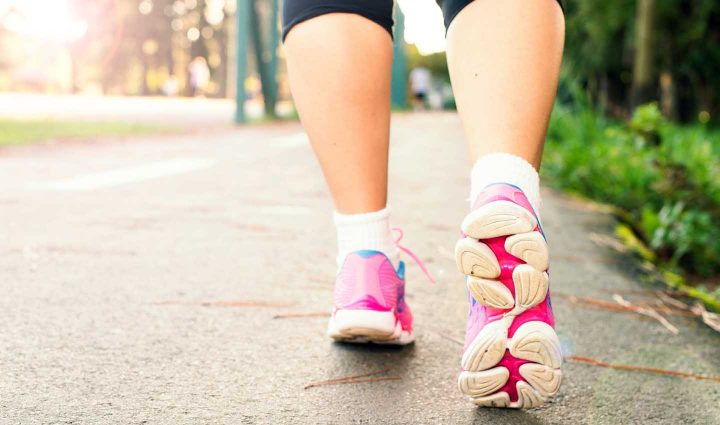
Walking in a park

On the other hand, there is a large second group of people who are either naturally more energetic or carry no medical diagnoses at all. They will find that walking is not an ideal exercise. For them, it may not be sufficiently challenging to provide any internal psychological sense of accomplishment, indue visible external physical improvements in their physique, or increase their level of performance.

No matter what group you find yourself in, let me offer some instruction that will be universally applicable. Once you successfully commit to both regularly spending some time exercising and then choose a specific activity, then it’s time to alter either the duration or the intensity of your exercise. You have to do this because both the mind and the body will adapt quicker than you wish they would to these types of challenges. That adaptation will lead to you experiencing a performance plateau… and your improvements will stall. You don’t want that to happen. All of us can do better, all the time, even if it’s just a little bit better.

Duration

In the case of walking, you can increase the duration of time you walk in several different ways to fit your personal schedule. Focus on picking a pattern that is practical for your life’s routine. Try a few ways that in your assessment are most likely to work well and not be unnecessarily challenging to implement. Eventually, as you increase the duration of your walks, there will be a limit you reach that no longer allows adding more time.

For example, imagine you start walking a bit after breakfast and before you go to work. Or, maybe on your lunch break. There is a finite amount of time you can add to those periods of your day before you are creating a conflict with previous, higher obligations. That’s fine, no problem. Recall that the healthful effects of exercise are cumulative, right? You can put more minutes in wherever they fit best in your schedule. Don’t feel bad if you have to break up your walking sessions. So long as you walk more minutes this week than you walked last week, you have succeeded in increasing the duration portion of your exercise routine. Strong work! 

A family walking in the fresh air

But perhaps you couldn’t find a way to increase the time spent each day walking, Monday through Friday? Well, you could add some time walking during the weekend when time restraints are maybe not so tight. Maybe like me, you regularly have to take call at work, at irregular calendar intervals, making life routinely fall out of any recognizable rhythm. So, you hit it hard on your pre-call day, or take time on your post-call day off to make up for any deficiencies that occurred because you got slammed at work and spent absolutely no meaningful time exercising at all during those 36 hours at work. You were just happy to sleep, let alone get exercise, right? Again, no problem. Don’t get discouraged, and don’t let that break your habit of exercising. The benefits can still accumulate over time, you can make it up. 

Intensity

Now, moving on from the strategy of increasing your duration of physical activity, let’s talk about adjusting the intensity. For walking, two easy ways of doing that include going up hills or carrying some extra weight while you walk. I tend to caution against combing both early on in a new exercise program. Focus on sustainability.

If you don’t have any hills to walk up, weight can be added by simply carrying a full water bottle or two in some way as you walk (in your hands, in a day pack). You could consider buying special ankle weights, small handheld dumbbells, or weighted vests, but I suggest first considering a low-cost solution like a forgotten day pack in the closet filled with increasing amounts of water bottles or cans of beans as added weights. If you can stick to something easy like that and you like it… then revisit the idea of spending a little extra money on yourself for those other items in a month or two.

Call to Action

Keep up with your consistent walking regimen! And find some ways to step up with your exercise regimen, so to reap the benefits you are looking for!

Healthy Fruits

Stay Always Up to Date

Sign up to our newsletter and stay always informed with news and tips around your health.

Sign Up Now!

This article was originally published on the Time to Get Ready website.

Filed Under: Exercise, Healthy Lifestyle

Primary Sidebar

Social Channels

Coronavirus Immunity Challenge

Boost your immune system to be bullet-proof for the pandemic.

I Want to Participate

Recent Posts

  • 5 Habits to Live Longer
  • Better Sleep Can Protect Against Dementia
  • Finding Peace In Your Crazy-Busy World
  • Flaxseed – An Ancient Plant Rediscovered
  • Platelets – Triggers for Life or Death
  • Boderline Personality Disorder
  • In Praise of Almonds and Nuts
  • Are You Stuck in the Clutter Trap?

Categories

  • Body Systems (16)
    • Cell Function (2)
    • Circulatory System (1)
    • Digestive Tract (10)
    • Immune System (4)
  • Diseases (27)
    • Cancer (2)
    • Cold (1)
    • COVID-19 (11)
    • Dementia (1)
    • Diabetes (1)
    • Digestive Diseases (2)
    • Heart Disease (2)
    • Kidneys (1)
    • Metabolic Syndrome (2)
    • Skin (1)
  • Healthy Lifestyle (42)
    • Exercise (11)
    • Gardening (2)
    • Sleep (7)
    • Sunlight (2)
    • Temperance (14)
    • Water (4)
  • Mental Health (87)
    • Addictions (6)
    • Anxiety (7)
    • Burnout (1)
    • Depression (7)
    • Psychosomatic Diseases (6)
    • Stress Management (45)
    • Trust (6)
  • Nutrition (56)
  • Obesity (9)
  • Phases of Life (14)
    • Adults (3)
    • Babies and Infants (1)
    • Children (3)
    • Seniors (5)
    • Teenagers (3)
  • Therapies (7)
    • Herbs (5)
    • Hydrotherapy (1)
  • Uncategorized (3)

Archives

  • January 2025 (1)
  • March 2024 (5)
  • February 2024 (4)
  • January 2024 (4)
  • December 2023 (5)
  • November 2023 (4)
  • October 2023 (5)
  • September 2023 (4)
  • August 2023 (3)
  • July 2023 (2)
  • June 2023 (4)
  • May 2023 (4)
  • April 2023 (5)
  • March 2023 (4)
  • February 2023 (4)
  • January 2023 (4)
  • December 2022 (4)
  • November 2022 (4)
  • October 2022 (5)
  • September 2022 (4)
  • August 2022 (4)
  • July 2022 (5)
  • June 2022 (4)
  • May 2022 (5)
  • April 2022 (4)
  • March 2022 (4)
  • February 2022 (4)
  • January 2022 (5)
  • December 2021 (3)
  • November 2021 (4)
  • October 2021 (6)
  • September 2021 (4)
  • August 2021 (4)
  • July 2021 (5)
  • June 2021 (4)
  • May 2021 (3)
  • April 2021 (5)
  • March 2021 (4)
  • February 2021 (4)
  • January 2021 (5)
  • December 2020 (3)
  • November 2020 (4)
  • October 2020 (5)
  • September 2020 (5)
  • August 2020 (3)
  • July 2020 (1)
  • June 2020 (1)
  • May 2020 (1)
  • April 2020 (1)
  • March 2020 (1)

Copyright © 2026 · Abundant Health - Privacy Policy - Medical Disclaimer