Abundant Health

Up to date health information tailored for you

  • Home
  • Blog
  • Recipes
  • Shop
  • Contact
You are here: Home / 2023 / Archives for June 2023

Archives for June 2023

Digestion – A Churning Question

June 24, 2023 by Vicki Griffin - [rt_reading_time label="Reading Time:" postfix="minutes" postfix_singular="minute"]

Digestion - A Churning Question

Gastronomic Warfare. It’s relaxing to watch the swirling, gurgling bubbles that fish thrive on in tropical fish tanks. But it’s a different matter when it is happening in your gut. Is there relief from the burping, belching, bloating, indigestion and bowel trouble that plagues up to 10 million Americans and 20 percent of adults worldwide? Many digestive and bowel disorders have their root in our cultural shift away from dietary fiber, exercise, and social connectedness. Frenzied, fast-paced, isolated lifestyles combined with fatty fast foods, sugary snacks, and inactivity has taken its toll on digestive health, causing a sharp rise in what are called “functional bowel disorders.”
Digestion - A Churning Question

“Functional bowel disorders” include irritable bowel syndrome, constipation, diarrhea, and bloating. There are many causes of bowel and digestive disorders. Always work with your physician for specific diagnosis and treatment of GI conditions. 

Digestion Basics. Our digestive system, like many systems in nature, works best in orderly rhythms and cycles. Regular hours for eating, sleeping, relaxation, exercise, and other routines promote mental, physical, and digestive health. The following practical tips can help improve digestion and bowel function — so you can enjoy the bubbles in your favorite fish tank — but not experience their distressing effects in your gut!

Menu Do’s and Don’ts. Dietary recommendations for functional bowel disorders include higher fiber intake combined with a lower fat diet.((American Society of Colon and Rectal Surgeons)) A diet rich in fresh fruit, vegetables, whole grains such as oatmeal, brown rice and other plant foods have a “bulking effect” that promotes regularity and reduces constipation and diarrhea.

Meals high in saturated fat and cholesterol promote gastritis, or inflammation of the stomach lining.((Arteriosclerosis, Thrombosis, and Vascular Biology 2001;21(6):991-6.)) Plant foods are high in nutrition and low in fat. Dietary fiber reduces the risk of gastritis and risk for inflammatory bowel disease. These foods provide an environment for healthier gut bacteria, called microbiome, that enhance gut, brain and immune health.

Hot spicy foods, alcohol, caffeine, and high sodium promote inflammation and work against digestive health. Regular times for eating combined with a high fiber diet and exercise lower inflammation and promote healthy peristalsis, the wavelike movements that move digested matter along the GI tract.

Chili Pepper

Meal Timing and Other Tips

  • Regularity. Skipping breakfast and frequent snacking tend to increase total calorie intake and add pounds. Frequent eating interferes with the ability of the stomach to process the next meal.((Appetite 2007;48(2):199-205.)) This can cause indigestion, discomfort, and gas. Frequent eating at all hours is linked to colon cancer,((Int J of Cancer 2011, April 25 [epub].)) and night-time eating is associated with acid reflux and poor quality sleep. A large evening meal can worsen blood sugar levels in type 2 diabetics the next morning.((J Diabetes Comp 1998;12(2):61-64.))
    – Try this…  Eating a hearty, whole grain breakfast with fresh fruit and nuts and reducing food in the evening is linked with better weight control, mood and mental function.((Am J Epidem, Jan 2008; J Am Diet Assoc 2005;105(9):1383-9.)) The old adage is: “Eat breakfast like a king, lunch like a queen, and supper like a pauper.”
  • Rapid eating. “Wolfing down” a meal is a common cause of indigestion and stomach upset.  It is also linked with poor blood sugar control((Prev Med 2008;46(2):154-9.)) and stomach cancer.((Oncology Reports 1998;5(5):1191-4.))
    – Try this…  People who eat more slowly eat less and therefore consume up to 200 fewer calories a day. Chewing food well is linked with better mental function and mood. Nutrient availability and digestion are also improved with slower-paced eating and well-chewed food.
  • Reduce portions. Studies show that when we eat “just a little bit less” than what it would take to feel completely full it aids digestion and even extends life. Eating less reduces indigestion and acid reflux.
    – Try This…  Take smaller portions and stop eating before your stomach feels “stuffed” or even just shy of completely full.  You will notice less of a “mental fog” or feeling of listlessness after meals.
  • Replenish water. Drinking water between meals instead of consuming large amounts of fluid at mealtime leaves more room for healthy food choices and aids digestion.
    – Try This…  “Charge” your system with a glass of warm or room temperature water each morning.  Add a little lemon for zest.  To reduce acid reflux, experts recommend waiting an hour after eating before taking liquids, and eating and drinking no later than three hours before bedtime.((WebMD 2000 Health News.))

Lemon Water

Mood and Motion. There is a strong “brain-gut” connection that links emotional health with digestive health. Chronic stress, anxiety, and depression are associated with IBS, abdominal pain, diarrhea, constipation, and stomach ailments. Managing stress, relaxation exercises, and physical exercise help lower stress, improve mood and mental processing, and ease depression — all of which are good for mood-related GI problems.

Intense exercise such as running can worsen IBS symptoms. Gentle yet cardio-stimulating exercise is best, such as brisk walking.  Find times for exercise when your intestines are the “quietest” and increase duration and intensity slowly.

Call to Action: The Living Word

The Bible teaches us that there is a “time and a season” to every purpose under heaven. Regularity in eating times, healthy choices, controlling stress, and connecting with positive people all work together to create emotional and digestive stability. Just as systems in nature and biology have orderly patterns and an ultimate plan, God has a wonderful plan and purpose for your life. He invites you now: “Behold, I stand at the door and knock. If anyone hears my voice and opens the door I will come in to him and dine with him, and he with Me” (Revelation 3:20). In the same way that eating good food at regular intervals eases digestive ailments, feeding on the Word of God every day will help smooth out life’s path and connect you with the Source of eternal life.

Healthy Fruits

Stay Always Up to Date

Sign up to our newsletter and stay always informed with news and tips around your health.

Sign Up Now!

This article was originally published on the Time to Get Ready website.

Visit LifestyleMatters.com for more resources.

Filed Under: Body Systems, Digestive Tract, Nutrition Tagged With: bloating, functional bowel disorders

How to Avoid 5 Thoughts That Can Lead to Depression

June 18, 2023 by Dr. Cesar Vasconcellos de Souza - [rt_reading_time label="Reading Time:" postfix="minutes" postfix_singular="minute"]

How to Avoid 5 Thoughts That Can Lead to Depression

Depression is a very common mental illness in today’s reality. An estimated 21 million adults in the U.S. had at least one episode of depression in their lives. That represents 8.4% of all U.S. adults. Among women, that number was rising to 10.5%, and the age range of 18-25 years had a 17% prevalence of depression. We need to know how to deal with this disease more appropriately.

How to Avoid 5 Thoughts That Can Lead to Depression

A person experiencing sadness and decreased interest or loss of pleasure in day-to-day activities, which has been going on for at least two weeks straight, also having changes in appetite, sleep disturbances, lack of energy, difficulty making decisions, suicidal thoughts and feelings of guilt, indicates the presence of depression. The most important mental factor for someone depressed being at risk for suicide is hopelessness. That is, the person sees no way out of their suffering, so they start thinking about killing themselves to end the pain.

Before thinking that someone is depressed, if there are physical diseases, such as thyroid problems, chronic infections, tumors, and encephalitis, among others, it is necessary to treat them, because these diseases can produce depressive symptoms. In addition, it is common for people to have comorbidities, where they present more than one disease at the same time.

For example, it seems that about 50% of people diagnosed with depression also suffer from excessive anxiety. Some may have exaggerated anxiety, depression, and alcoholism, for example. A person may begin to become depressed because of already being a socially withdrawn person for years, as well as depression contributes to the individual withdrawing himself from social life.

Other people experiencing pressure at work, going into burnout syndrome, or suffering moral abuse in the company, can also become depressed. When a person has gone through a depression and the depressive state has produced important losses in his life, he may have been left with a negative signal in his mind, and when some triggering factor happens years later, he may go back into depression.

For example, if a person became depressed because he suffered from moral abuse in the company and when he could no longer bear this suffering at work, he ended up quitting, even though it was causing economic turmoil, it is a situation that could trigger a depression. By coming out of the situation that was causing the suffering and receiving effective treatment, he became well. But if after some time he has the feeling that some kind of abuse against him may occur again, the depressive state may begin to return. Therefore, it is important to be aware of the triggering factors that can trigger painful thoughts and feelings in the person’s mind.

A man being bullied at work

There are different types of depressive states, such as clinical depression, in contrast to dysthymia, which is a type of chronic depression, only milder. There is also bipolar affective disorder, in which the person, in addition to euphoric episodes, suffers from depressive periods. Another type of depression is seasonal, which occurs more in regions of long winter, with a long time without sunlight. Still another is postpartum depression which happens shortly after the baby is born. Some suffer from psychotic depression, which includes delusions, hallucinations, and important changes in the perception of reality.

One of the psychological factors that favors the onset of depression is the tendency to cultivate thoughts of complaint, pessimism, defeat, personal contempt, and hopelessness. Some are hard on themselves, blame themselves too much for failures that have occurred in life, and also attack themselves when they perceive flaws or mistakes in their behavior. In these cases, these individuals need to cultivate self-compassion instead of self-deprecation and learn to forgive themselves instead of blaming themselves all the time.

One factor that produces depression is the very sociable person, but who places too much emphasis on their self-worth in relationships. Thus, when problems arise, such as a financial loss or a divorce, he may fall into depression precisely because he had based his self-worth on something outside himself, on another person, or on some external acquisition. In these cases, the individual can be helped not to fall into depression, correcting this attitude in life of centering their self-respect and self-worth on objects, acquisitions, and external relationships.

It is well known that traumatic experiences throughout childhood greatly increase the risk of depression later in life. This includes the child being a victim of abuse, having suffered illnesses that required hospitalization, divorce from the parents, and death of one of the parents, especially the one with whom the child had more attachment, all happening until the third year of life. In addition, children of depressed mothers have a higher risk of depression in adulthood.

A young girl with marks of abuse

In therapy, it is common for a person to say that he started to have depression since, for example, he discovered that his son was using illicit drugs. But the truth is that this fact may be one of many problems that the person has been experiencing over the years and would then be the triggering factor of depression, but not the only cause of it. It may have been the last straw for him to become depressed.

He may have suffered from the death of loved ones in recent years before the depression hit, he may have been fired, he may live in a place of violence, he may have marital difficulties and all this may have accumulated and ended up bursting into depression.

Factors that can prevent going into depression are having good social support, having friends and relatives who give a helping hand, a healthy lifestyle with regular exercise, a healthy diet, the elimination of toxic substances from the brain, adequate water intake, sun exposure, the practice of faith and a purpose for life.

For the treatment of depression, it is important to understand that lifestyle change needs to be made, rather than just using medications. This includes personal work on the thought patterns the person nurtures most, battling tragic, dysfunctional and hopeless thoughts, and cultivating a mindset of gratitude, hope and meaning in life.

Some want to know which antidepressant works best. There is not one remedy that works best for everyone who suffers from depression. The same drugs produce different results for different people. Many depressed may improve with any antidepressant, while others do not improve long-term with any of them.

Some studies show that depressed people who have undergone psychotherapy with cognitive behavioral therapy may be less likely to have depression again than those who have only used antidepressants without psychotherapy. A challenge for us psychiatrists when treating a patient with depression who has, for example, a lot of insomnia and anxiety, is that by prescribing a tranquilizer, as it is a central nervous system depressant, the depressed person may sleep better and have their anxiety decreased, but may become more lethargic or sluggish.

Finally, if a person with depression says that they prefer psychotherapeutic treatment without medication, it is important to respect this and see how they will evolve when undergoing psychotherapy only.

A psycotherapy session

If you have always cultivated thoughts and negative beliefs about yourself, about your life, about trusting others, predominating in your mind the lack of hope and solutions, you are more likely to have a depressive state than the individual who is optimistic, who cultivates healthy thoughts, trust and hope.

Individuals who are emotionally dependent find themselves inadequate in almost everything, and so they feel they need to have someone to cling to in order to live. These people have a higher risk of developing depression. And when the person to whom you attach yourself in an exaggerated way, fails, leaves, cheats, or dies, this can be enough to trigger depression.

With this, we learn that, from an early age, the child needs to be taught to have some independence, rather than being raised too attached to the father, mother, or other caregiver. We need to release our children to life, otherwise they won’t believe they can face reality by themselves. So, whenever possible, encourage your children to do things that feed them the thought that they are smart, capable, and autonomous.

Of course, we educate children well, helping them not to go into depression later in life when we combine tasks for them, which they can solve on their own with other tasks that require the help of others to complete. And when it comes to activities in which it is normal to ask others for help, we pass them the idea that it is all right to ask for help and praise them for those they have done alone.

A good number of people develop depression because having failed to obtain love and acceptance from important people in their lives, they come to feel that they are full of flaws and unworthy of receiving love. This can become a pattern of thinking, which maintains the depressive state.

Some become very hung up on attention. This can be a trap that favors the depressive state because not everyone can pay attention all the time, and not receiving this, they depreciate themselves and become depressed, instead of looking at reality and thinking that the people around them are not responsible for what they lacked in childhood, and even the present people in their life cannot offer everything all the time, what they want in terms of affection.

In these cases, this person who consciously or unconsciously nurtures the idea that he needs attention from others all the time so as not to fall into depression, if he wants to get improve, he will need to change this psychological belief, understanding that he must be liked by some, but that it is not possible to receive from them a perfect love.

You need to lower your expectations of receiving attention, affection, and care from others. When the depressed person begins to think that in his mind there are negative beliefs such as wanting the attention of others all the time to feel good, it is his responsibility to fight against it instead of not wanting to think about these things, and thinking that the remedy, the medication will fix everything.

The depressed can learn to have new and better thoughts without having to stick with the old ways of thinking that push them into depression. Managing to change negative psychological core beliefs can be difficult without professional help, but it’s not impossible.

Changing thought patterns

If psychological treatment is needed, it will be useful in helping the depressed person to perceive his pessimistic or faulty way of thinking, encouraging him to resist it, and cultivating thoughts of gratitude, realistic optimism, compassion and forgiveness. This is important in the treatment of depression because the way a person interprets what happens to him is more important than what actually happens. When events are interpreted negatively, pessimistically with hopelessness, this produces anxious and depressive feelings and makes everything worse.

Of course, when there is a real painful loss, it is normal for negative thoughts of sadness, anger, and pain to arise, but this is different from keeping distorted thoughts in the mind by assessing reality in an unhealthy way. If you are a family member of the depressed and need to deal with that individual’s depression, it is important to understand that even if they say things that seem like they are strong to overcome the depressive state, talking is different from having the strength to do so. Some depressed people push themselves to please others by saying things that give the idea that they will know how to get out of depression, but that’s not always the truth.

In these cases, the family member, and of course, the professional who attends to the depressed, can teach some social or personal skills for the depressed to improve, and not only listen to what he says. Some depressed people are even experiencing very difficult situations, which do not seem to have a short-term solution. In these cases, there is no distortion of reality, but a real difficulty that can lead to hopelessness.

Then the person himself or someone else can help by remembering situations from their past, which seemed insoluble, but that solutions emerged, or remembering that those that did not have a good solution were faced and the person survived. Depressed people usually focus their attention on their feelings, which can be sadness, anger, fear, guilt, or shame. But it is important to force the mind to think about the kind of thinking that is causing the feeling.

A smilie inside a box, representing a positive change in emotions

Understanding thought is fundamental to the solution of what one feels because it all begins in the thoughts. What we think produces what we feel, and feelings lead to actions. If the thought has been distorted, then it needs to be corrected because it influences the feeling that the person will experience.

Taking medicine to improve the painful feeling without changing negative and tragic pessimistic thinking does not solve the underlying problem. Distortions of thoughts are based on exaggerated or unrealistic ways of reasoning. People can’t always find the thought that is behind what they feel, it’s true.

In these cases, he needs to better analyze what is going on in his mind to find the thought that produced that emotion, because it is there in the mind. Too bad a good part doesn’t want to think. You can reason like this: But what thought can be behind this feeling? Or you can think: Did something happen to me today that made me think something bad, and with that, I was left feeling bad? Could it be that I’ve been cultivating a way of thinking that is always negative and makes me depressed?

A problem that can harm the person and cause him not to improve from depression is that he may have become so accustomed to thinking in a bad, negative and pessimistic way, that on one hand, he says he wants to get better, but on the other hand, he feels it is difficult to change his way of thinking.

Incredible as it may seem, we can get used to suffering, and find it difficult to take action to get out of it. This happens even with people undergoing psychiatric and psychological treatment, which is when they sabotage the improvement they could have. Several times I gave the person tasks to do at home, and I put in writing what was to be done until the next appointment. In the next consultation, when I asked about what he had managed to do with that list I had given, some patients said that they had lost the list or forgotten about the tasks. Improving depression and other mental illnesses does not depend on the professional alone. The person needs to be committed to the treatment. And changing thoughts is often already half the way to healing.

Healthy Fruits

Stay Always Up to Date

Sign up to our newsletter and stay always informed with news and tips around your health.

Sign Up Now!

Filed Under: Depression, Mental Health Tagged With: Thought Patterns

The Relation Between COVID, Long COVID and Your Gut Microbiome

June 11, 2023 by Dr. Samuel White - [rt_reading_time label="Reading Time:" postfix="minutes" postfix_singular="minute"]

The Relation Between COVID, Long COVID and Your Gut Microbiome

A vast combination of microorganisms live in our gut, including bacteria, fungi and viruses. Collectively, we refer to this as the microbiome. Despite their tiny size, these microbes have significant effects on our health and wellbeing. In fact, the microbiome is often referred to as the “second brain” due to the extensive relationship it has with the body’s organs and systems.

The Relation Between COVID, Long COVID and Your Gut Microbiome

One role in particular the microbes in our gut play is supporting immune function. They help to control local and systemic inflammation, the process by which the immune system protects us from harmful pathogens.((Zheng, D et. al. Interaction between microbiota and immunity in health and disease. https://doi.org/10.1038/s41422-020-0332-7))

So it’s not entirely surprising that research has shown the make-up of bacteria in the gut may influence the severity of a COVID infection.((Kageyama, Y et.al. Lactobacillus plantarum induces innate cytokine responses that potentially provide a protective benefit against COVID‑19: A single‑arm, double‑blind, prospective trial combined with an in vitro cytokine response assay. Experimental and Therapeutic Medicine, 23, 20. https://doi.org/10.3892/etm.2021.10942)) At the same time, evidence is beginning to suggest a COVID infection could affect the balance of bacteria in the gut, which might go some way to explaining why some people have persistent symptoms after a COVID infection.((Bernard-Raichon, L et.al. Gut microbiome dysbiosis in antibiotic-treated COVID-19 patients is associated with microbial translocation and bacteremia. https://doi.org/10.1038/s41467-022-33395-6))

The microbes in our gut provide essential signals for our immune responses across the body, including in the lungs. A “healthy” gut microbiome comprises a broad range of bacteria, though is not identical in every person. Studies have previously shown that a healthy gut microbiome can improve the immune response to respiratory infections by regulating immune cells and messages.((Shanahan F et. al. The Healthy Microbiome—What Is the Definition of a Healthy Gut Microbiome? https://doi.org/10.1053/j.gastro.2020.09.057))

On the flip side, evidence shows a poorer composition of gut bacteria increases susceptibility to influenza infections in the lungs,((Looft T, Allen H. Collateral effects of antibiotics on mammalian gut microbiomes, Gut Microbes, 3:5, 463-467, https://doi.org/10.4161/gmic.21288)) and leads to reduced clearance of germs from the lungs in mice.((Fagundes C et. al. Transient TLR Activation Restores Inflammatory Response and Ability To Control Pulmonary Bacterial Infection in Germfree Mice. J Immunol 1 February 2012; 188 (3): 1411–1420. https://doi.org/10.4049/jimmunol.1101682))

With COVID, it similarly appears that the make-up of the gut microbiome can influence the course of disease. Research has shown an association between the microbiome profile and levels of inflammatory markers in patients with COVID, where patients with a poorer combination of gut bacteria show signs of too much inflammation. This suggests the microbiome influences the severity of a COVID infection via effects on the immune response.((Yeoh YK, Zuo T, Lui GC, et al. Gut microbiota composition reflects disease severity and dysfunctional immune responses in patients with COVID-19. Gut 2021;70:698-706. https://gut.bmj.com/content/70/4/698))

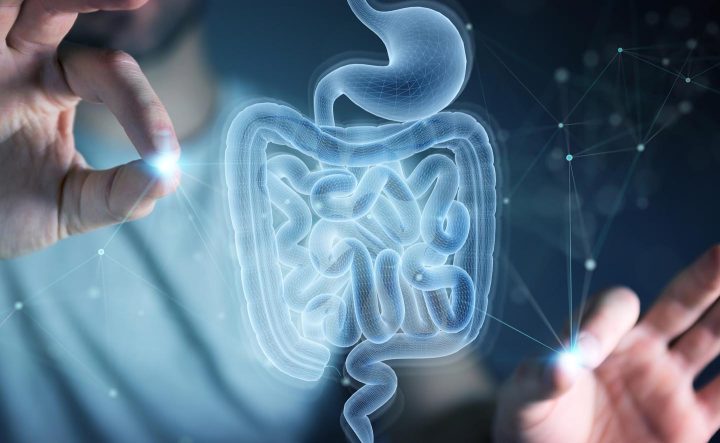
A wire model of a digestive system in the hand of a therapist.

Unbalancing the microbiome

Just as the composition of our gut bacteria appears to influence how we fare with COVID, the reverse might also be true – a COVID infection could affect the make up of our gut bacteria. Specifically, it seems COVID might throw off the balance between “good” and “bad” microbes in a person’s microbiome.

Studies have shown a significant difference in the gut microbiome between COVID patients and healthy people.((Zuo T, Liu Q, Zhang F, et al. Depicting SARS-CoV-2 faecal viral activity in association with gut microbiota composition in patients with COVID-19. Gut 2021;70:276-284. https://gut.bmj.com/content/70/2/276)) We see a reduction in bacterial diversity in the gut in COVID patients – so a smaller range of species, as well as substantial differences in the species of bacteria present.((Bernard-Raichon, L., Venzon, M., Klein, J. et al. Gut microbiome dysbiosis in antibiotic-treated COVID-19 patients is associated with microbial translocation and bacteremia. Nat Commun 13, 5926 (2022). https://doi.org/10.1038/s41467-022-33395-6))

Notably, scientists have observed a reduction in a group known as commensal bacteria in COVID patients, which act on the immune system to help prevent invasion by pathogens.((Yeoh YK, Zuo T, Lui GC, et al. Gut microbiota composition reflects disease severity and dysfunctional immune responses in patients with COVID-19. Gut 2021;70:698-706. https://gut.bmj.com/content/70/4/698)) This may increase our risk of other infections after COVID. Simultaneously, there appears to be an increase in a variety of opportunistic pathogenic bacteria that are known to cause infections.

This “imbalance” is called dysbiosis, and these changes have been shown to still be present in patients 30 days post-infection.((Yeoh YK, Zuo T, Lui GC, et al. Gut microbiota composition reflects disease severity and dysfunctional immune responses in patients with COVID-19. Gut 2021;70:698-706. https://gut.bmj.com/content/70/4/698))

Recent studies have suggested gut dysbiosis is linked to the movement of gut bacteria into the blood during a COVID infection.((Bernard-Raichon, L., Venzon, M., Klein, J. et al. Gut microbiome dysbiosis in antibiotic-treated COVID-19 patients is associated with microbial translocation and bacteremia. Nat Commun 13, 5926 (2022). https://doi.org/10.1038/s41467-022-33395-6)) In mice, COVID caused changes in a variety of parameters associated with gut barrier permeability, meaning things can theoretically move more easily through the gut wall.

In 20% of human COVID patients in this same study, certain bacteria from the gut had migrated into the bloodstream. This group was at higher risk of developing a secondary infection in the blood.

Research is now also showing that dysbiosis following COVID may contribute to long COVID,((Lantinga MA, Mönkemüller K. COVID-19 in gastroenterology and hepatology: Where will we be? United European Gastroenterol J. 2021 Sep;9(7):743-744. https://doi.org/10.1002%2Fueg2.12121)) with gut dysbiosis more prevalent in patients presenting with long-term COVID symptoms.((Giannos, P. and Prokopidis, K. (2022), Gut dysbiosis and long COVID-19: Feeling gutted. J Med Virol, 94: 2917-2918. https://doi.org/10.1002/jmv.27684)) This makes sense because dysbiosis seems to put the body in a heightened and constant state of inflammation – something that’s associated with chronic COVID symptoms.((Yeoh YK, Zuo T, Lui GC, et al. Gut microbiota composition reflects disease severity and dysfunctional immune responses in patients with COVID-19. Gut 2021;70:698-706. https://gut.bmj.com/content/70/4/698))

Supporting your immunity

As we continue to develop a more comprehensive understanding of gut microbes and their role in inflammation, how can you help keep your immune system healthy to protect yourself against COVID and other infections?

Certain nutrients, including vitamins A, C, D and E as well as iron, zinc and omega-3 fatty acids, all have positive effects on immune responses against viral infection.((Zhang, L, Liu, Y. Potential interventions for novel coronavirus in China: A systematic review. J Med Virol. 2020; 92: 479– 490. https://doi.org/10.1002/jmv.25707))

A Mediterranean diet, which is rich in vitamins, minerals and dietary fiber, has an anti-inflammatory effect in the gut.((Ganesan, K.; Chung, S.K.; Vanamala, J.; Xu, B. Causal Relationship between Diet-Induced Gut Microbiota Changes and Diabetes: A Novel Strategy to Transplant Faecalibacterium prausnitzii in Preventing Diabetes. Int. J. Mol. Sci. 2018, 19, 3720. https://doi.org/10.3390/ijms19123720)) Interestingly, a strain of bacteria known as Faecalibacterium prausnitzii is key to immune regulation.((Nagpal R, Shively CA, Register TC, Craft S, Yadav H. Gut microbiome-Mediterranean diet interactions in improving host health. F1000Res. 2019 May 21;8:699. https://doi.org/10.12688%2Ff1000research.18992.1)) It’s frequently low in the western diet, but abundant in the Mediterranean diet.

A typical salad of a mediterranean diet

Ideally you should avoid too many refined cereals, sugars and animal fats, which can all heighten inflammation in the body.((Trompette, A., Gollwitzer, E., Yadava, K. et al. Gut microbiota metabolism of dietary fiber influences allergic airway disease and hematopoiesis. Nat Med 20, 159–166 (2014). https://doi.org/10.1038/nm.3444))

Probiotics, supplementary blends of live bacteria, may also have benefits. A blend of bacterial strains Lactiplantibacillus plantarum and Pediococcus acidilactici was shown to reduce the quantity of virus detected in the nasal passage and lungs, as well as the duration of symptoms in COVID patients.((Gutiérrez-Castrellón P et. al. Probiotic improves symptomatic and viral clearance in Covid19 outpatients: a randomized, quadruple-blinded, placebo-controlled trial, Gut Microbes,14:1,DOI: 10.1080/19490976.2021.2018899))

This combination also significantly increased the production of COVID-specific antibodies, suggesting probiotics act directly by interacting with the immune system, rather than solely changing the composition of the gut microbiome.

Finally, moderate exercise can also help support the immune system to fight COVID.((da Silveira MP et. al. Physical exercise as a tool to help the immune system against COVID-19: an integrative review of the current literature. Clin Exp Med. 2021 Feb;21(1):15-28. https://doi.org/10.1007%2Fs10238-020-00650-3))

Healthy Fruits

Stay Always Up to Date

Sign up to our newsletter and stay always informed with news and tips around your health.

Sign Up Now!

This article is republished from The Conversation under a Creative Commons license. Read the original article.

The Conversation

Filed Under: Body Systems, COVID-19, Digestive Tract, Diseases, Immune System Tagged With: microbiome

7 Top Tips To Reduce Stress at Home

June 4, 2023 by Martin Neumann - [rt_reading_time label="Reading Time:" postfix="minutes" postfix_singular="minute"]

7 Top Tips To Reduce Stress at Home

Are you feeling the pressure at home? Do you find it hard to unwind? Stress affects us all in different ways and can be damaging to our health.

7 Top Tips To Reduce Stress at Home

Fortunately, there are several steps we can take to manage stress, especially in the home. This is important as we spend a vast amount of our time at home, and identifying how to reduce stress in our home life can make other areas of our lives more productive.

The small steps we take can make a big difference. A significant factor in beating stress is to have a plan of action and not let it overwhelm you.

Consider these top tips to reduce stress at home:

Clean, tidy rooms make a difference

When you are trying to reduce stress, having a clean, organized environment can be crucial. Whether you clean once a week or spend some time each day putting things together, keeping your space free from clutter and dirt will positively impact your mood.

  • Having a specific space for your essential items and ensuring they’re within easy reach can enhance productivity and reduce stress.
  • Having a calm, clean space to relax and entertain can keep anxieties at bay and provide you with a safe, calming haven to retreat to.

Write down your thoughts

Sometimes our thoughts race and our minds become jumbled. Write down your most pressing worries in a journal. You could write about relationship concerns, money, or construct a to-do list for the next day.

  • Writing your thoughts down is a brilliant way to release your worries and organize your mind, so you can see things more clearly.
  • You’ll find your thoughts are less cluttered and you have more time to enjoy the present moment.

Eat properly

When we are out on the go, we can neglect our stomachs, grabbing a quick pick-me-up here and there and not paying attention to our nutritional needs.

  • Whatever your schedule looks like, take time in the home to cook meals. Plan nutritious meals rich in fruits, vegetables, whole grains, and nuts.
  • The act of cooking alone can de-stress you, as you can have fun and focus all of your energies entirely on creating a delicious dish at that moment.
  • Cook with friends, your partner, children, or visitors you have for the weekend! If you take time out at home to fuel your body, you will fuel your mind.
Fruits - Photo by Karolina Grabowska from Pexels

Get a garden

You may think that you have already enough on your plate and do not need to add any to your workload. But getting out into the garden and having a workout digging at your soil can be very relaxing. And if you have no backyard, even putting some pots on your balcony or your windowsill can be a good start.

  • Spending time in nature can be very relaxing. Even if it is just a few minutes a day, find a moment to get out and take care of your plants. Watch like your tomatoes are growing, flowering, and getting fruits.
  • Enjoy the moment of being outside and involved in a different activity. Forget about the worries of the day and be present in the moment when you unleash your creativity in developing your gardening space. Notice the scents, colors, textures, and sounds around you and the calming effect they have on your soul.
  • Feel the satisfaction and accomplishment of harvesting some fresh and organic food that you have grown with your own hands. Start slow and with easy to care varieties and step up as your experience grows.

Create a relaxing sleep environment

Getting proper sleep is so important in controlling your stress. It gives your body and mind an opportunity to rest and rejuvenate.  It regulates your hormones and improves your mood. Good sleep is extremely crucial for stress control.

  • Set up your bedroom to be a relaxing, peaceful environment. Get rid of any distracting clutter and distractions like TV. Your bedroom should be reserved for relaxation.
  • Create an environment conducive to sleep. During the night the room should be completely dark and silent, have a comfortable bed, and a temperature slightly cooler than the rest of the house. If needed, consider using eye shades and earplugs, in case you cannot create the environment you need to relax.
  • Limit your screen time before going to bed. The blue light emitted by screens can interfere with the production of melatonin. Avoid using electronic devices like Computers, TVs, tablets, and cell phones for an hour before bedtime and engage in screen-free activities that help you to relax.
  • Develop a relaxing bedtime routine. Involve in activities that are relaxing and signal your body to wind down. That can include a warm bath, relaxing music with candlelight, reading a book, having a chat with your partner, or drinking a calming tea.
  • Be sure to sort out your thoughts before hitting the bed, like resolving a conflict with your partner or paying an unpaid bill. If you are worried, pray to God and ask Him to give you peace and calmness.
A woman sleeping

Decorate your space

Get your creative mind in gear and turn your home into a tranquil paradise. Buy matching furnishings with the colors you love. Fill the room with plants and a few accessories that represent you. Even a few tweaks in decorating your space can make a huge impact.

  • We can’t always control how our workspaces look or the dull, joyless spaces we sometimes find ourselves in. We can, however, control how our abode looks, and this calming project can help you feel in control as you spruce up your space!

Separate work and home spaces

In a world where we’re increasingly working from home, one way to banish stress is to have a section in your home dedicated to work and separate areas dedicated to relaxing.

  • Avoid taking your laptop to bed with you or eating in the same space you associate with work. Keep them separate to keep your mind clutter-free.
  • Have set time for your work and know to switch off when you are in your free time.

There are so many effective ways to manage stress at home. When your professional life is stressful, create a safe, supportive home life where you can banish stress, unwind, and make memories that you want to remember for many days to come.

Do you need a guide to help you understand how to cope with Stress in an all inclusive approach? Learn how to combat stress, mentally, physically, emotionally and strategically in your life.

Get Me the Guide

Filed Under: Mental Health, Stress Management

Primary Sidebar

Social Channels

Coronavirus Immunity Challenge

Boost your immune system to be bullet-proof for the pandemic.

I Want to Participate

Recent Posts

  • 5 Habits to Live Longer
  • Better Sleep Can Protect Against Dementia
  • Finding Peace In Your Crazy-Busy World
  • Flaxseed – An Ancient Plant Rediscovered
  • Platelets – Triggers for Life or Death
  • Boderline Personality Disorder
  • In Praise of Almonds and Nuts
  • Are You Stuck in the Clutter Trap?

Categories

  • Body Systems (16)
    • Cell Function (2)
    • Circulatory System (1)
    • Digestive Tract (10)
    • Immune System (4)
  • Diseases (27)
    • Cancer (2)
    • Cold (1)
    • COVID-19 (11)
    • Dementia (1)
    • Diabetes (1)
    • Digestive Diseases (2)
    • Heart Disease (2)
    • Kidneys (1)
    • Metabolic Syndrome (2)
    • Skin (1)
  • Healthy Lifestyle (42)
    • Exercise (11)
    • Gardening (2)
    • Sleep (7)
    • Sunlight (2)
    • Temperance (14)
    • Water (4)
  • Mental Health (87)
    • Addictions (6)
    • Anxiety (7)
    • Burnout (1)
    • Depression (7)
    • Psychosomatic Diseases (6)
    • Stress Management (45)
    • Trust (6)
  • Nutrition (56)
  • Obesity (9)
  • Phases of Life (14)
    • Adults (3)
    • Babies and Infants (1)
    • Children (3)
    • Seniors (5)
    • Teenagers (3)
  • Therapies (7)
    • Herbs (5)
    • Hydrotherapy (1)
  • Uncategorized (3)

Archives

  • January 2025 (1)
  • March 2024 (5)
  • February 2024 (4)
  • January 2024 (4)
  • December 2023 (5)
  • November 2023 (4)
  • October 2023 (5)
  • September 2023 (4)
  • August 2023 (3)
  • July 2023 (2)
  • June 2023 (4)
  • May 2023 (4)
  • April 2023 (5)
  • March 2023 (4)
  • February 2023 (4)
  • January 2023 (4)
  • December 2022 (4)
  • November 2022 (4)
  • October 2022 (5)
  • September 2022 (4)
  • August 2022 (4)
  • July 2022 (5)
  • June 2022 (4)
  • May 2022 (5)
  • April 2022 (4)
  • March 2022 (4)
  • February 2022 (4)
  • January 2022 (5)
  • December 2021 (3)
  • November 2021 (4)
  • October 2021 (6)
  • September 2021 (4)
  • August 2021 (4)
  • July 2021 (5)
  • June 2021 (4)
  • May 2021 (3)
  • April 2021 (5)
  • March 2021 (4)
  • February 2021 (4)
  • January 2021 (5)
  • December 2020 (3)
  • November 2020 (4)
  • October 2020 (5)
  • September 2020 (5)
  • August 2020 (3)
  • July 2020 (1)
  • June 2020 (1)
  • May 2020 (1)
  • April 2020 (1)
  • March 2020 (1)

Copyright © 2026 · Abundant Health - Privacy Policy - Medical Disclaimer