Abundant Health

Up to date health information tailored for you

  • Home
  • Blog
  • Recipes
  • Shop
  • Contact
You are here: Home / Archives for Phases of Life

Phases of Life

Better Sleep Can Protect Against Dementia

March 31, 2024 by Andrée-Ann Baril - [rt_reading_time label="Reading Time:" postfix="minutes" postfix_singular="minute"]

Better Sleep Can Prevent Dementia

Dementia is a progressive loss of cognitive abilities, such as memory, that is significant enough to have an impact on a person’s daily activities. It can be caused by a number of different diseases, including Alzheimer’s, which is the most common form. Dementia is caused by a loss of neurons over a long period of time. Since, by the time symptoms appear, many changes in the brain have already occurred, many scientists are focusing on studying the risk and protective factors for dementia.

Better Sleep Can Protect Against Dementia

A risk factor, or conversely, a protective factor, is a condition or behaviour that increases or reduces the risk of developing a disease, but does not guarantee either outcome. Some risk factors for Alzheimer’s disease and dementia, such as age or genetics, are not modifiable, but there are several other factors we can influence, specifically lifestyle habits and their impact on our overall health.((Livingston G. et.al. Dementia prevention, intervention, and care: 2020 report of the Lancet Commission. https://doi.org/10.1016/S0140-6736(20)30367-6))

These risk factors include depression, lack of physical activity, social isolation, high blood pressure, obesity, diabetes, excessive alcohol consumption and smoking, as well as poor sleep.

We have been focusing our research on the question of sleep for over 10 years, particularly in the context of the Framingham Heart Study.((Framingham Heart Study (FHS) https://www.nhlbi.nih.gov/science/framingham-heart-study-fhs)) In this large community-based cohort study, ongoing since the 1940s, the health of surviving participants has been monitored to the present day. As researchers in sleep medicine and epidemiology, we have expertise in researching the role of sleep and sleep disorders in cognitive and psychiatric brain aging.

As part of our research, we monitored and analyzed the sleep of people aged 60 and over to see who did — or did not — develop dementia.

Sleep as a risk or protective factor against dementia

Sleep appears to play an essential role in a number of brain functions, such as memory. Good quality sleep could therefore play a vital role in preventing dementia.((Musiek ES, Ju YS. Targeting Sleep and Circadian Function in the Prevention of Alzheimer Disease. JAMA Neurol. 2022;79(9):835–836. doi:10.1001/jamaneurol.2022.1732))

Sleep is important for maintaining good connections in the brain.((Xie L. et. al. Sleep Drives Metabolite Clearance from the Adult Brain. https://doi.org/10.1126/science.1241224)) Recently, research has revealed that sleep seems to have a function similar to that of a garbage truck for the brain: deep sleep could be crucial for eliminating metabolic waste from the brain, including clearing certain proteins, such as those known to accumulate in the brains of people with Alzheimer’s disease.((Astara K. et.al. Sleep disorders and Alzheimer’s disease pathophysiology: The role of the Glymphatic System. A scoping review, Mechanisms of Ageing and Development, Volume 217, 2024, 111899, https://doi.org/10.1016/j.mad.2023.111899.))

However, the links between deep sleep and dementia still have to be clarified.
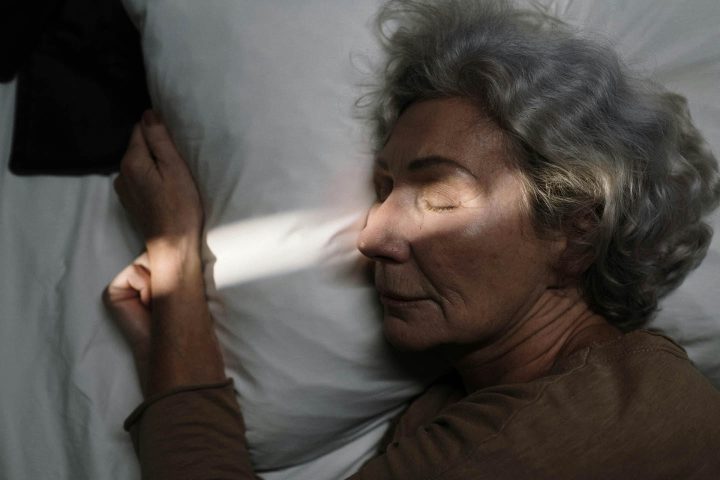
A senior woman sleeping

What is deep sleep?

During a night’s sleep, we go through several sleep stages that succeed one another and are repeated.((Normal sleep. CEAMS))

NREM sleep (non-rapid eye movement sleep) is divided into light NREM sleep, NREM sleep and deep NREM sleep, also called slow-wave sleep. The latter is associated with several restorative functions. Next, REM sleep (rapid eye movement sleep) is the stage generally associated with the most vivid dreams. An adult generally spends around 15 to 20 per cent of each night in deep sleep, if we add up all the periods of deep NREM sleep.

Several sleep changes are common in adults, such as going to bed and waking up earlier, sleeping for shorter periods of time and less deeply, and waking up more frequently during the night.

Loss of deep sleep linked to dementia

Participants in the Framingham Heart Study were assessed using a sleep recording — known as polysomnography — on two occasions, approximately five years apart, in 1995-1998 and again in 2001-2003.((Himali JJ, Baril A, Cavuoto MG, et al. Association Between Slow-Wave Sleep Loss and Incident Dementia. JAMA Neurol. 2023;80(12):1326–1333. doi:10.1001/jamaneurol.2023.3889))

Many people showed a reduction in their deep slow-wave sleep over the years, as is to be expected with aging. Conversely, the amount of deep sleep in some people remained stable or even increased.

Our team of researchers from the Framingham Heart Study followed 346 participants aged 60 and over for a further 17 years to observe who developed dementia and who did not.

Progressive loss of deep sleep over time was associated with an increased risk of dementia, whatever the cause, and particularly Alzheimer’s type dementia. These results were independent of many other risk factors for dementia.

Although our results do not prove that loss of deep sleep causes dementia, they do suggest that it could be a risk factor in the elderly. Other aspects of sleep may also be important, such as its duration and quality.

A senior woman making tea in her antique home

Strategies to improve deep sleep

Knowing the impact of a lack of deep sleep on cognitive health, what strategies can be used to improve it?

First and foremost, if you’re experiencing sleep problems, it’s worth talking to your doctor. Many sleep disorders are underdiagnosed and treatable, particularly through behavioral (i.e. non-medicinal) approaches.

Adopting good sleep habits can help, such as going to bed and getting up at consistent times or avoiding bright or blue light in bed, like that of screens.

You can also avoid caffeine, limit your alcohol intake, maintain a healthy weight, be physically active during the day, and sleep in a comfortable, dark and quiet environment.

The role of deep sleep in preventing dementia remains to be explored and studied. Encouraging sleep with good lifestyle habits could have the potential to help us age in a healthier way.

Healthy Fruits

Stay Always Up to Date

Sign up to our newsletter and stay always informed with news and tips around your health.

Sign Up Now!

This article is republished from The Conversation under a Creative Commons license. Read the original article.


The Conversation

Filed Under: Dementia, Diseases, Healthy Lifestyle, Phases of Life, Seniors, Sleep

7 Ways to Reduce Stress in Your Relationships

May 7, 2023 by Martin Neumann - [rt_reading_time label="Reading Time:" postfix="minutes" postfix_singular="minute"]

Decreasing stress in relationships

Relationships can be a wonderful thing. They’re a chance to connect with someone on a deeper, more emotional level, and even discover new things about yourself. However, when you’re sharing your life with someone else, things can sometimes be stressful too.

7 Ways to Reduce Stress in Your Relationships

The unfortunate truth is that everyone will feel stress connected to their relationship at one time or another. You might be worried about approaching a complex topic with your partner, or you could be facing a challenge together, like an unpaid bill.

The key to success is ensuring that you don’t allow stress to take over your relationship. Instead, figure out how to work things out together, and you could make your relationship stronger than ever.

Here are some of the best ways to reduce stress in your relationship.

1. Listen

Lack of effective communication is one of the most common issues that many people encounter in their relationships. Either they don’t know how to approach their other half when they want to talk, or they don’t know how to listen when their partner comes to them.

The most important way to minimize stress and strengthen your relationship at the same time is to listen to each other. Recognize the symptoms of stress in your partner, such as moodiness, restlessness, or agitation, and ask them if they want to talk about it.

If your partner wants to talk to you about their stress, the important thing to remember is that you don’t necessarily need to fix their problem.

Most of the time, when your partner is stressed, they know you can’t handle everything for them. Instead, they just want an opportunity to vent and get some basic reassurance. Sit, listen, and only offer advice if asked for it.

A couple talking to each other

2. Always Be Yourself

Relationships only work when people are honest with each other.

When you’re attracted to someone, and a relationship is just starting out, it’s tempting to try and build an image of yourself that matches what you think the other person wants. However, the reality is that it’s impossible to keep up with this charade long-term.

You’ll end up causing yourself a lot of additional stress if you attempt to be someone who you’re not.

At the same time, your other half is going to get the sense that something isn’t right. This causes stress for them because their mind will try to help them figure out what’s going on.

Ultimately, being honest will save you both a lot of stress and tension. If your partner doesn’t love the real you, it likely wouldn’t have worked out anyway.

3. Practice Self Care

Sometimes, the best way to care for a relationship is to look after yourself.

Stress is contagious. If your other half notices that you’re constantly stressed, they’re going to start picking up on that feeling too. Sometimes, this can lead to your partner becoming self-conscious, or feeling nervous that they’re doing something wrong. Even if you explain, self-doubt can linger.

Try to take care of yourself to avoid a buildup of stress in your life. Be sure to get enough sleep, do some daily exercise, and work on a healthy diet. Try to get your partner on board with that plan whenever you can.

A couple walking

4. Be Open in Your Communication

Communication and honesty are the pillars of a great relationship.

Most of the time, stress and arguments come from us trying to guess the thoughts of the other. For instance, if you notice that your partner is a little withdrawn one night, you might find yourself wondering whether it’s because you didn’t make their favorite meal.

Even if your partner tells you that’s not the case, if they don’t give an explanation of their state, the thought will grow larger in your head, causing feelings of resentment, anger, and upset. You start getting defensive, and that’s where arguments begin.

If you’re honest about why you’re acting a certain way, and explain your feelings to your partner frequently, there’s less room for assumptions to cause problems.

5. Use More I Instead of You in Communicating

Often we tend to enter the blame game by pointing fingers and accusing our partner. We can take off a lot of the pressure if we learn to speak more about how I am feeling about the situation instead of the mistakes that you are making. This is an important step to get out of that blame game, and it will help us a lot to get more cooperation from our partner.

For example, instead of blaming your partner: “You are coming home late again, and you do not even bother to give me a call!”, maybe you can reword that and say: “I am frustrated if I prepare supper for you and the food is getting cold. Can you call me next time when you come home late?” Instead of focusing on the mistake of the other, you are focusing on your own feeling about the situation, and you offer a solution, how your partner can help you in the future. Do you see how that can change instantly the climate of your communication? 

6. Express Gratitude

Take some time to express gratitude and tell your partner what you appreciate about them. If you keep a positive mindset, it will remove a lot of tension and stress.

It is so easy to get wrapped up in negative thoughts and feelings, and more than often it is not more than our perspective of life around us. If you just take some time and express what you like about the other, and acknowledge their little acts of kindness, it can quickly change the atmosphere you are experiencing at home.

A couple being grateful for each other

7. Stop Being Harsh to Each Other

Finally, if there’s one thing you can do to reduce stress and arguments in your relationships, it’s to give each other a break.

When we fall in love, it’s easy to place another person on a pedestal. We see them as perfect and believe they can do no wrong. Unfortunately, that’s not the case. Eventually, you’ll begin to notice your partner making mistakes.

The important thing at this time is to let your partner know that, while you might be disappointed by the mistakes they made, you can get through it together.

Giving each other a break and forgiving your loved one for the things they do wrong is essential to reducing stress. Remember, you’re both only human.

Keep these ideas in mind. They can help you to reduce relationship stress on a daily basis and make your lives more fun and fulfilling.

Do you need a guide to help you understand how to cope with Stress in an all inclusive approach? Learn how to combat stress, mentally, physically, emotionally and strategically in your life.

Get Me the Guide

Filed Under: Adults, Mental Health, Stress Management Tagged With: Communication, Relationship Stress

What is Causing Stress for Seniors?

July 24, 2022 by Martin Neumann - [rt_reading_time label="Reading Time:" postfix="minutes" postfix_singular="minute"]

Stress for Seniors

By the time you’ve reached the twilight of your life, you still face a very unique, yet very real set of stresses. The stress that elderly people face is much different from that of any other age group, and as such, many people younger than them don’t know how to help, because they simply can’t relate as they’ve never experienced these things themselves.

What is Causing Stress for Seniors?

Some people are kind of lost when they retire, because work has been their focal point for all their life, and gave them a certain kind of satisfaction. Once they retire, they kind of lose their purpose and do not know what to do all day long. This is such a kind of change that can cause you an existential stress, even though your responsibilities have diminished all of the sudden.

Others want to catch up on all of the things they had no time to do while they were working. So they pack their agenda with all kinds of activities and are eventually busier than somebody who is on his 9 to 5 job.

One of the most prevalent factors of stress at this age is simply death. Most people don’t live past their eighties, with exceptions, of course. Once you start approaching that age, you realize just how little time you have left.

There’s this constant pressure to make your life feel complete by the time you pass away, so there’s this major stress you have to face in trying to do all of these things you always wanted to do.

Of course, this isn’t always entirely feasible, because chances are, you wouldn’t be as mobile at this point. Once you really start to climb in age, your mobility just gets worse and worse, and in some cases, you might even be wheelchair bound.

Some elderly people remain mobile their entire lives, while others might end up stuck in a wheelchair or bedridden early on. Along with a variety of other health problems, physical health is something very worrying for people this age.

A senior in his wheelchair

Another cause of stress for people sixty and over is that they often see their circle of family and friends shrinking each year from them passing away. Parents and older siblings may have passed away, or even their spouse.

This can cause an immense feeling of loneliness, with many of the people you once knew no longer being in your life. This also accompanies the first major factor, with people wondering whether or not they’ll be the next one in their circle to pass away.

With that in mind, one of the final causes of stress in older people is that they are often secluded and don’t see much attention. Without the mobility or energy to go out, with so many friends passing away, many older people don’t have a reason to do much – besides sit at home and watch TV or read.

Some are a bit more active, but regardless, it’s very difficult for them to do anything. Some have no form of transportation, even if they did feel like going somewhere. It’s not easy at all to recognize stress in older people, as they typically contain it very well.

They’re often overlooked when it comes to thinking about people who get stressed out, because they don’t necessarily do much. They’re likely retired, and spend most of their time at home watching television.

For many people, that sounds like a great time, but for them, it’s just the only thing they can do for entertainment, since it’s so hard for them to go out and about. One way you can tell that they’re a bit stressed is that they’ll start to eat a lot less.

By ceasing to take good care of themselves, they’ve essentially just given up. This can be dangerous, because if they’re not taken care of, they might end up having some serious health issues, since their bodies aren’t anymore in top physical condition.

Another big sign of stress in older people is that they just kind of stop caring. At some point, when most of the people you once knew were gone, and you will be soon, it’s difficult to find genuine joy in just about anything.

The few things you might have been able to enjoy are often too physically demanding, leaving you with so few options that you’re simply uninterested in anything else. There are some solutions that can make older people’s lives much better.

For example, it’s very important that they continue to be social, even if their old friends aren’t with them any longer. There’s no harm in being social with your kids or grandkids, and it gives you a much needed opportunity to get out of your shell once in awhile.

A senior being social with family

It’s not healthy to go from being social your whole life to suddenly being reclusive. You’re just not meant to endure that kind of change. It’s very, very important that you come to terms with the life you’ve lived by this point.

Living the later years of your life full of regret is not good, so just learn to be happy or accepting of the life you’ve had. There’s no sense in worrying about the past since you can’t change it, so you might as well do something more enjoyable than just worrying all day.

It can be good to reminisce about old times, but you shouldn’t spend an excessive amount of time on it. Looking back through an old photo album once in awhile with some family or friends and talking about the past can be a great way to fondly remember exactly what your life was like, but if you dwell on it or obsess over it, you’ll just start to become sad that you’re not there now.

It helps to just change things up a little here and there to break up the monotony. Get food from some place new, perhaps take a tour of a place you’ve never been to. Little things like this can make all the difference, because you’ll be able to essentially scratch something off of your bucket list, leaving you with one less thing to be able to regret.

Elderly woman having fun outside

Stress can be at your side through your entire life. As a toddler, you may have endured a volatile family situation, then gone through bullying in school. You followed that up with bad decisions in college, and financial and career stress as a young adult.

As you aged, you experienced relationship stress, health stress and the looming stress of getting older. Because it’s something that everyone deals with in one form or another, it’s important that you learn to recognize when you, yourself are stressed as well as your loved ones.

Knowing stress is getting out of control can alert you that it’s time to seek out a solution or remedy. Because everyone is different, the treatment that works for one person may not work for another.

You might need professional help, or be able to handle it on your own, naturally. You also may need to experiment with a variety of stress relief solutions and find one or a combination of things that work best to alleviate your concerns and help you enjoy life and remain calm on a consistent basis.

Do you need a guide to help you understand how to cope with Stress in an all inclusive approach? Learn how to combat stress, mentally, physically, emotionally and strategically in your life.

Get Me the Guide

Filed Under: Mental Health, Phases of Life, Seniors, Stress Management

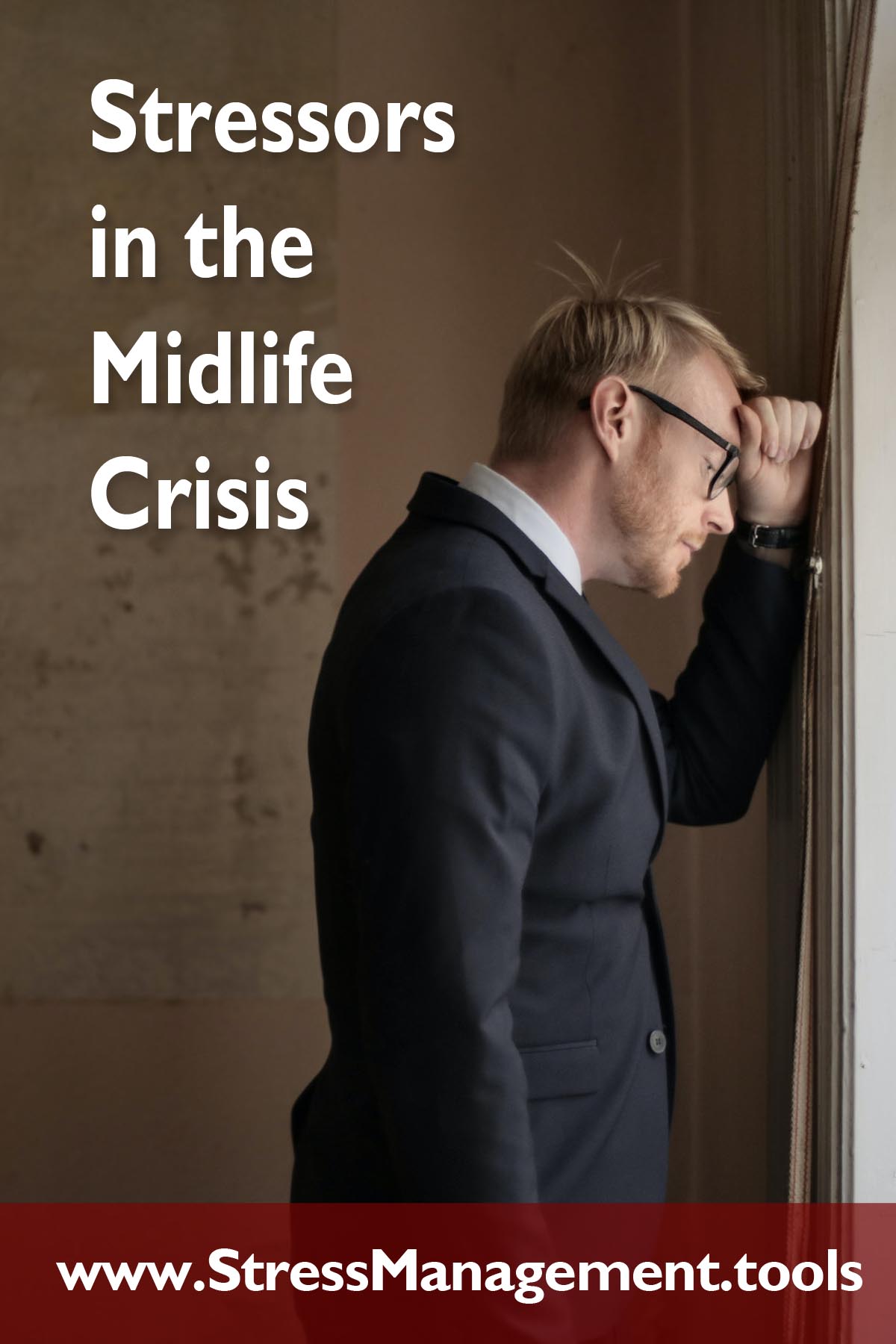
Stressors in the Midlife Crisis

June 19, 2022 by Martin Neumann - [rt_reading_time label="Reading Time:" postfix="minutes" postfix_singular="minute"]

Adults are expected to have it all together. They look back on years of experience that hopefully taught them some important lessons for life. They are dealing with growing responsibilities. This period in one’s life can come with a ton of challenges, both tangible and abstract. These are the years that are typically branded as the midlife crisis years, and for good reason.

Stressors in the Midlife Crisis

At this point, many people realize that the first half of their life is over, and to some extent, they really can’t get back any of their childhood or young adult experiences. Unless they are pretty content with the lives they’ve lived thus far, it is pretty easy for somebody to slitter into that existential crisis of the midlife years.

One of the most dreadful causes of stress that people experience at this age is more philosophical than it is tangible. They start to see things in the bigger picture rather than just small portions of their life.

At this point, many people will start to wonder a lot about what they’ve done for the world. Thoughts such as, “What did I accomplish in my younger years?” and, “What was I put here to do?” are common, because it’s hard to imagine that you’ve already lived roughly half of your life without feeling like you did much. They really just want to have left some kind of reliable legacy, because there’s something scary about the prospect of one day being forgotten.

In a much more physical sense, this is when health problems can become really apparent. Joints at this age don’t work quite as well as they used to, leading to things like early stages of arthritis, general joint pain, and more. It might become harder for people this age to do things that they once enjoyed – especially when it comes to things like sports or hiking. By making basic enjoyable tasks painful, these health problems can take away much of their happiness and add on a lot of stress.

A painful knee

One major problem around this age that can cause stress is the sheer amount of responsibilities they have when it comes to family. Around this age, your parents are starting to get much older, and bluntly put, might pass away soon. They’ll have a ton of health problems of their own, so you’ll likely have to make sure they’re taken care of or become a caretaker yourself.

At the same time, your own kids will be a bit older, so you’ll also have to give them a certain amount of care and concern as you ready them to go out in the world as young adults soon.

Trying to balance that alone is bad enough, but you also still have to work and earn money, start thinking about retirement, and you might be experiencing issues with your relationship by this point.

All kinds of problems can arise around this time, making it one of the most stressful times of one’s life. The classic sign of stress around this time is the midlife crisis. A midlife crisis occurs when someone has been going through the same motions for decades now, and is so sick and tired of the monotony, that they do something very out of character in order for them to feel refreshed and reinvigorated.

A midlife crisis can manifest itself in a number of things, varying from person to person. With men, it could be something like buying a new sports car or a motorcycle – something exciting and interesting that they can enjoy.

A sports car

In some more extreme cases, a midlife crisis might culminate in leaving your significant other, especially if you’re not fully happy with the relationship. It doesn’t have to be something specific, either.

Many people experience this crisis just by realizing they’re now older than they want to be. They start taking note of little things like how much the world has changed, how much they’ve changed, and how everything they used to do is now old-fashioned.

This can be really hard on some people, and they’ll show it. One prevalent sign of stress around this age is changes to the body. Many men experience a receding hairline as a result of both age and stress, and by worrying about it, they only make it worse.

Men can also experience a severe drop in testosterone around this time. No matter who you are, you’ll also start to get some gray hairs coming in, which can be stressful if you’re worried about your looks. Both men and women alike will dye their hair in an attempt to keep looking youthful.

A woman dying her hair

There are many, many solutions for stress around this time. The first solution you might try is coming to terms with and accepting your age. Growing older isn’t a bad thing, but it feels bad at the time. In reality, you’re experiencing more and more each day than many other people got to, so you should enjoy the time you have rather than sit there stressing and having regrets.

It’s also important that you deal with your stress in a proper way. Going out to drop tons of money on an expensive car is not healthy, nor is leaving your family or taking up unhealthy habits. Instead, find joy in things that are either productive or make you feel whole. Sure, life is stressful, but if you can escape it for an hour to engage in some kind of hobby, you’ll feel so much better by the end of the day.

One practice that has helped many people become more positive in their lives is to embrace positive thoughts as much as you do negative thoughts, if not more. Each time you think about something negatively, think of a positive aspect to it as well.

For example, if you’re unhappy with your job, it’s fine to think about that, but just also think about the fact that you’re lucky to be employed and to have a stable source of income. Taking time to appreciate all of the little things can really make such a difference in your life. Gratitude can change your outlook to life quite drastically. Be sure you find the best in your years you are living right now, and let the stressful thoughts pass you by.

Do you need a guide to help you understand how to cope with Stress in an all inclusive approach? Learn how to combat stress, mentally, physically, emotionally and strategically in your life.

Get Me the Guide

Filed Under: Adults, Mental Health, Phases of Life, Stress Management

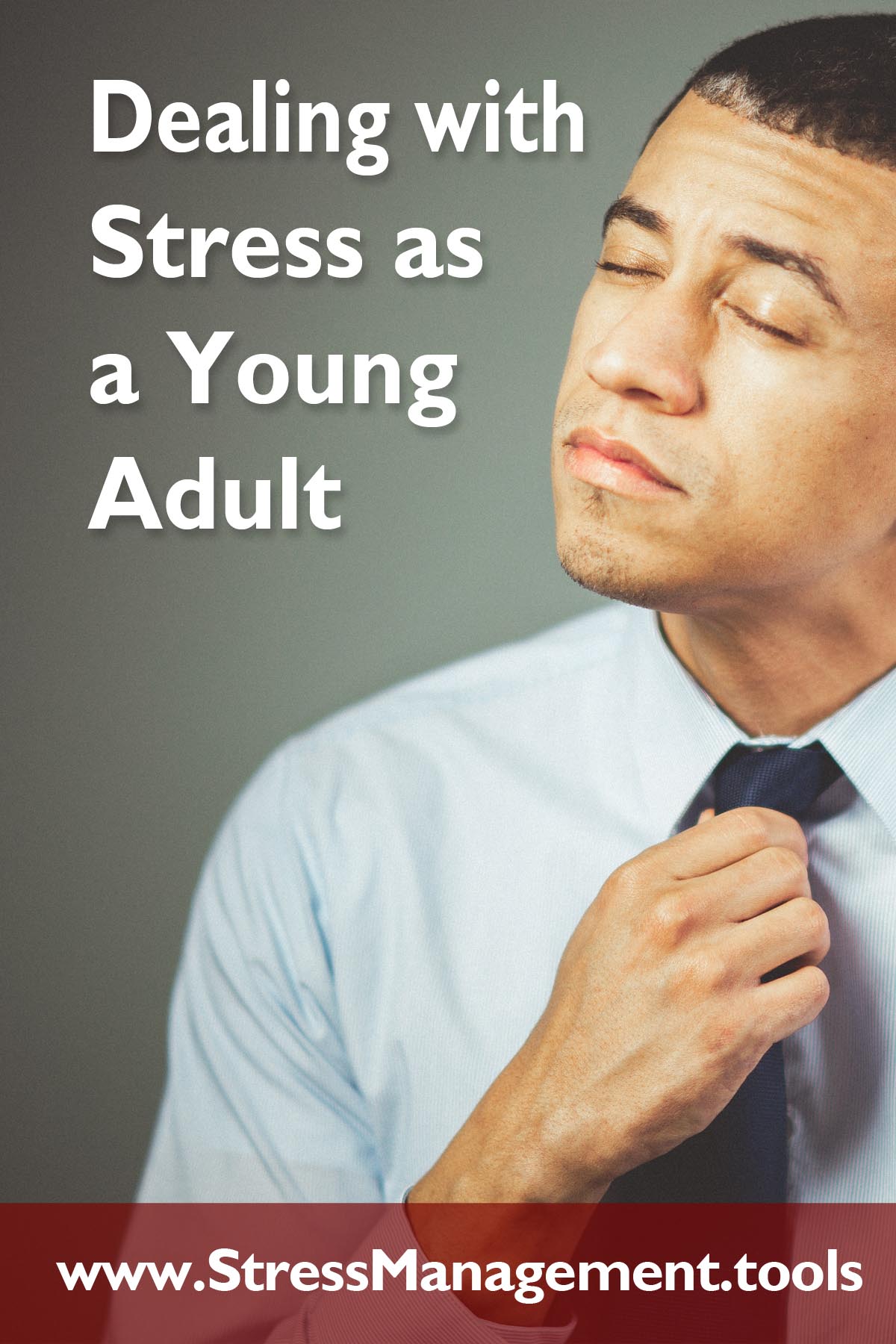
Dealing with Stress as a Young Adult

May 22, 2022 by Martin Neumann - [rt_reading_time label="Reading Time:" postfix="minutes" postfix_singular="minute"]

Dealing with Stress as a Young Adult

After you’ve settled into a career, you face a whole new type of stress in your late twenties and thirties. You’re well past the point now where you have to worry about stresses from school such as bullying or grades, but now you’re in a whole new situation: your job, your family, and to a greater extent, you’re now really on your own.

Dealing with Stress as a Young Adult

This stage in your life is full of figuring things out and having to put up with a lot of stuff that can be stressful. Most stresses around this age come from your job and finances. This can vary greatly depending on what job or career you’re in by this point, but let’s take the average office job for instance.

Chances are the work is a bit tedious and repetitive, meaning that after a few years, you’ll want a change so badly that you’ll start to worry that you’ve gone into the wrong field for your career.

These regretful kinds of stresses are the worst ones by far, because you feel as though you’re trapped and powerless to undo the path you’re on. You might feel stuck where you are.

For many people around this age, they start feeling as if they’re actually getting old for once. They’re no longer in school, no more being just silly in college, but just living a full adult life.

This can come as a sudden and bizarre revelation, but the concept of feeling old can stress some people out. Some might feel as though the best of their days have blown by, and now they have to be serious for the rest of their life.

A young adult being stressed working on a computer

Another factor that comes with getting a little older is that some people will start to feel as though their bodies aren’t as active as they used to be. As most people go into adulthood, they miss the unending activity and abundant energy they had in school.

But this process doesn’t happen all at once. It can start as early as your late twenties with simple things such as soreness and perhaps some back pain from moving around a certain way. This can take a serious toll on someone’s confidence and can be a major cause of stress.

One of the most serious stress factors around this age can come from having a family. By this time, most people are making decisions about a partner. Perhaps they’re married, and they might even have one or more kids. Parenting alone can cause immense amounts of stress for someone who’s just learning how to go about it, and this goes for all ages of kids.

A young couple struggling to control their kids

People around this age might be a lot more open about what they’re stressed out about than other age groups are, and in fact might be the most clear about it. They’ll often complain about their problems to close friends and family, whether they’re unhappy with their job or worried about feeling older and the responsibilities that go along with it.

Usually you can find out what’s wrong with them by listening to what they choose to complain about. Something many people might start to do around this age is make rash decisions for the sole purpose of breaking up the monotony.

Essentially, by doing something very different from what they’re used to, they feel “alive” again, and are just happy to be doing something different for once. This can vary between getting a new car, going on a vacation, or taking up some kind of strange obsession or hobby.Just something that they can enjoy and ignore work or the stresses of life for a little bit.

One unfortunate sign of stress from people in this age group is that they cease to do things that they used to do for fun. Getting rid of certain hobbies just because they either don’t have the time or money for it anymore is a sign that they’re not having a good time going through this stage in life. For example, if someone used to enjoy doing things with friends every weekend, but now never comes out, chances are they’re going through a lot and want to seclude themselves as a result.

This can lead to additional feelings of loneliness on the part of the person secluding themselves, which can in turn cause even worse stress. One of the best solutions for a lot of stressful problems at this age is to simply have some downtime.

It doesn’t have to be a lot, and it doesn’t have to be expensive, but just having an hour or so to do what you like each day to help decompress can turn someone’s life around really quickly.

If you can take some time to just do nothing for a bit, or something that really gives you joy, then you’ll be a whole lot happier as the day goes on. This can also come in the form of short breaks throughout work, just to revitalize.

Many people get stressed out at this stage over mindset issues, and having a change of attitude can mean the world to them. Switching their outlook from a negative one to a positive one can make things like work, parenting, and aging a whole lot more likable than just sitting there moping and looking on the bad side of everything. Everyone knows there are many drawbacks to those things, but there are also positive aspects that you have to embrace.

When it comes to helping with stress related to body issues, getting into a consistent workout schedule can help immensely. People start to experience things like aches and pains because they aren’t using their bodies as much as they should be – especially if they’re sitting in office chairs all day. By getting into a good workout routine, you’ll be in better shape and you’ll be a lot more mobile.

Stress will happen in every phase of your life, just the nature of the stressors will change over time. Make it a habit early in life to develop healthy coping skills for your stress, and you will be better off for the rest of your life.

Do you need a guide to help you understand how to cope with Stress in an all inclusive approach? Learn how to combat stress, mentally, physically, emotionally and strategically in your life.

Get Me the Guide

Filed Under: Adults, Mental Health, Phases of Life, Stress Management

What is Getting Teenagers Stressed Out?

April 24, 2022 by Martin Neumann - [rt_reading_time label="Reading Time:" postfix="minutes" postfix_singular="minute"]

What is getting Teenagers stressed out?

One of the most prevalent times for stress to arise in one’s life is in the teenage years. This time involves a lot of changes that can be stressful for many. So what is getting a teenager really stressed out?

What is getting Teenagers stressed out?

At the earlier end, many kids are going through puberty and through their awkward years. This is the point in time when bullying can be the worst, as teens start to become a bit more grown-up, but not fully, and still make poor decisions by picking on people.

The stresses at this age vary greatly from person to person, but one of the most prevalent ones is bullying and harassment. By this age, many people are still kind of awkward, but they’re at the point where they are getting interested in people of the opposite sex.

This involves some kind of identity changes that can lead to some inner conflicts. While children tend to harass those of the opposite sex, teenagers start to feel to be attracted, and while some are showing their change in attitude, others might be teasing them for that.

As the attraction grows, teenagers tend to want to impress acquaintances of the opposite sex. This can mean showing the best side of themselves, maybe even showing off a facade that is not their true self, or others trying to impress by doing risky things they would not do if nobody was watching.

A teenager group

All of those is mixed with the quest of defining his own identity and self-worth. Some are stressed out and devastated when getting rejected from somebody else, especially being rejected from somebody of the opposite sex. Teenagers want to be accepted by their collegues and have a desire to belong to a group that values them in some way.

The teenage years involve a lot of changes that can be stressful. As a child, many decisions are being made for you. A teenager is exactly at the phase where he starts making lots of the decisions for himself, without having the prior experience on how to deal with this new reality in a proper way. Many times they do not want to rely on others in their decision making, in order to show their growing independence, but are still struggling to keep up with the stress of being responsible of the consequences of doing a right or a wrong choice.

Another problem, especially towards the later years of high school, is figuring out what they want to do with their lives. Often, teens are pressured about what they want to do for the rest of their lives, as if they have to have it all figured out by age 18.

This couldn’t be farther from the truth. They’re expected to make decisions about where they want to go to college, if they want to go at all, and if so, what they will major in. For many people, this is a stressful process of applications and trying to figure out what their passion is.

It’s certainly a lot to take in, and if they don’t have the right guidance, they’ll feel overwhelmed quickly. Finally, towards the tail end of this age group, you have the people who are in college.

College comes with a ton of stress factors that aren’t well known to everyone. In college, you have a lot more independence than you do in high school, but that comes with its fair share of drawbacks.

Students are often left out to dry by the university and their professors, who both assume the student is capable of doing everything on their own. They might find it hard to adjust, and with the realization that they’ll soon be working a full-time job, many can begin to panic from the get-go.

A perplexed student

Teens and young adults don’t show their stress very clearly, so it can be hard to pick up on it. Many don’t want people to worry about them too much, so they just suppress their stress and worries and just hope things go well.

Some will just try to act as though everything is fine, until one day they just kind of break down. Some show that they’re stressed out by secluding themselves from others, so as to not show off their problems to others.

You might notice that someone is spending a lot more time on their own, being reclusive by going home as soon as they get the chance to just be alone. This isn’t always a sign of stress, because some people are just naturally introverted.

But if someone is normally social and suddenly starts wanting to be on their own all the time, there’s clearly something wrong there. You also might want to watch their eating habits, since some people will either eat much more or a lot less when they’re stressed out.

This can lead to undesired weight fluctuations that can cause even more stress. Moving up into college, some students try to alleviate their stress by partying. Many students will resort to heavy drinking for the sake of getting the negative thoughts out of their head.

By using alcohol as a coping mechanism, they put themselves at risk to develop alcoholism. Some will even start using drugs, which can put them at risk of an overdose, addiction, and getting arrested.

No one solution will work for everyone’s problems, but there are common ways that you can go about trying to help people in this age range. As a rule of thumb, you should never, ever try to come at them aggressively to try to fix their problems for them with already predefined solutions.

Teenagers do not appreciate this kind of intervention. They’ll just deny anything’s wrong and seclude themselves further from you. You should always try to get them to open up a bit, and then casually move it towards thinking about solutions.

A teenage girl in a counseling session.

When it comes to teens, your first step should be to teach them to handle the situation as best as they can on their own. If that fails to work, then you might intervene yourself, instead of trying to get administrators or teachers involved, because they’ll feel really embarrassed if the teachers have to step in for a school bully problem – and it may make matters worse.

You need them to feel as if they can trust you as a parent, because if they don’t, they’ll never open up to you fully. Make it a point for them to know first and foremost they you have their back and support them fully, no matter what.

Then, you’ll have a much better shot at getting them to open up to you. When it comes to young adults, getting them to go to a counselor might be a good option. Many universities and high schools give free counseling, and sometimes just blowing off a good amount of steam can fix a lot of problems.

If the resource is there, why not take advantage of it? And there may be even other reference figures in the life of a teenager, whom they can trust and can serve them as a counselor. Be sure to explain to them that bottling up their emotions isn’t a good way to go about anything in life, and by just getting things off of their chest, they’ll find a lot more support and they’ll feel a lot better not having to brace against it on their own. Nothing creates additional stress quite like loneliness.

As a conclusion, there are quite a bit of stressors involved in the various changes taking place in a teenage life. Much of this can be mitigated if they know they have somebody they can trust and that will support them in their journey of finding their independence. Showing them acceptance and strengthening their feeling of self-worth can also go a long way to make this transition period less stressful. Avoid to be in a conflict course and give proper support to the teenagers in your life and you will see how grateful they are that you have made a difference in their lives when they needed it most.

Do you need a guide to help you understand how to cope with Stress in an all inclusive approach? Learn how to combat stress, mentally, physically, emotionally and strategically in your life.

Get Me the Guide

Filed Under: Mental Health, Phases of Life, Stress Management, Teenagers

Next Page »

Primary Sidebar

Social Channels

Coronavirus Immunity Challenge

Boost your immune system to be bullet-proof for the pandemic.

I Want to Participate

Recent Posts

  • 5 Habits to Live Longer
  • Better Sleep Can Protect Against Dementia
  • Finding Peace In Your Crazy-Busy World
  • Flaxseed – An Ancient Plant Rediscovered
  • Platelets – Triggers for Life or Death
  • Boderline Personality Disorder
  • In Praise of Almonds and Nuts
  • Are You Stuck in the Clutter Trap?

Categories

  • Body Systems (16)
    • Cell Function (2)
    • Circulatory System (1)
    • Digestive Tract (10)
    • Immune System (4)
  • Diseases (27)
    • Cancer (2)
    • Cold (1)
    • COVID-19 (11)
    • Dementia (1)
    • Diabetes (1)
    • Digestive Diseases (2)
    • Heart Disease (2)
    • Kidneys (1)
    • Metabolic Syndrome (2)
    • Skin (1)
  • Healthy Lifestyle (42)
    • Exercise (11)
    • Gardening (2)
    • Sleep (7)
    • Sunlight (2)
    • Temperance (14)
    • Water (4)
  • Mental Health (87)
    • Addictions (6)
    • Anxiety (7)
    • Burnout (1)
    • Depression (7)
    • Psychosomatic Diseases (6)
    • Stress Management (45)
    • Trust (6)
  • Nutrition (56)
  • Obesity (9)
  • Phases of Life (14)
    • Adults (3)
    • Babies and Infants (1)
    • Children (3)
    • Seniors (5)
    • Teenagers (3)
  • Therapies (7)
    • Herbs (5)
    • Hydrotherapy (1)
  • Uncategorized (3)

Archives

  • January 2025 (1)
  • March 2024 (5)
  • February 2024 (4)
  • January 2024 (4)
  • December 2023 (5)
  • November 2023 (4)
  • October 2023 (5)
  • September 2023 (4)
  • August 2023 (3)
  • July 2023 (2)
  • June 2023 (4)
  • May 2023 (4)
  • April 2023 (5)
  • March 2023 (4)
  • February 2023 (4)
  • January 2023 (4)
  • December 2022 (4)
  • November 2022 (4)
  • October 2022 (5)
  • September 2022 (4)
  • August 2022 (4)
  • July 2022 (5)
  • June 2022 (4)
  • May 2022 (5)
  • April 2022 (4)
  • March 2022 (4)
  • February 2022 (4)
  • January 2022 (5)
  • December 2021 (3)
  • November 2021 (4)
  • October 2021 (6)
  • September 2021 (4)
  • August 2021 (4)
  • July 2021 (5)
  • June 2021 (4)
  • May 2021 (3)
  • April 2021 (5)
  • March 2021 (4)
  • February 2021 (4)
  • January 2021 (5)
  • December 2020 (3)
  • November 2020 (4)
  • October 2020 (5)
  • September 2020 (5)
  • August 2020 (3)
  • July 2020 (1)
  • June 2020 (1)
  • May 2020 (1)
  • April 2020 (1)
  • March 2020 (1)

Copyright © 2026 · Abundant Health - Privacy Policy - Medical Disclaimer