Abundant Health

Up to date health information tailored for you

  • Home
  • Blog
  • Recipes
  • Shop
  • Contact
You are here: Home / 2021 / Archives for September 2021

Archives for September 2021

Internet, Video Games, Social Networks and Your Brain

September 26, 2021 by Dr. Cesar Vasconcellos de Souza - [rt_reading_time label="Reading Time:" postfix="minutes" postfix_singular="minute"]

Internet, Videogames, Redes Sociais e o Cerebro

How much time do you spend each day on social media? Have you ever thought about going two days without accessing the computer? Have you managed recently to stay three days without video games? We are going to deal with electronic addictions today.
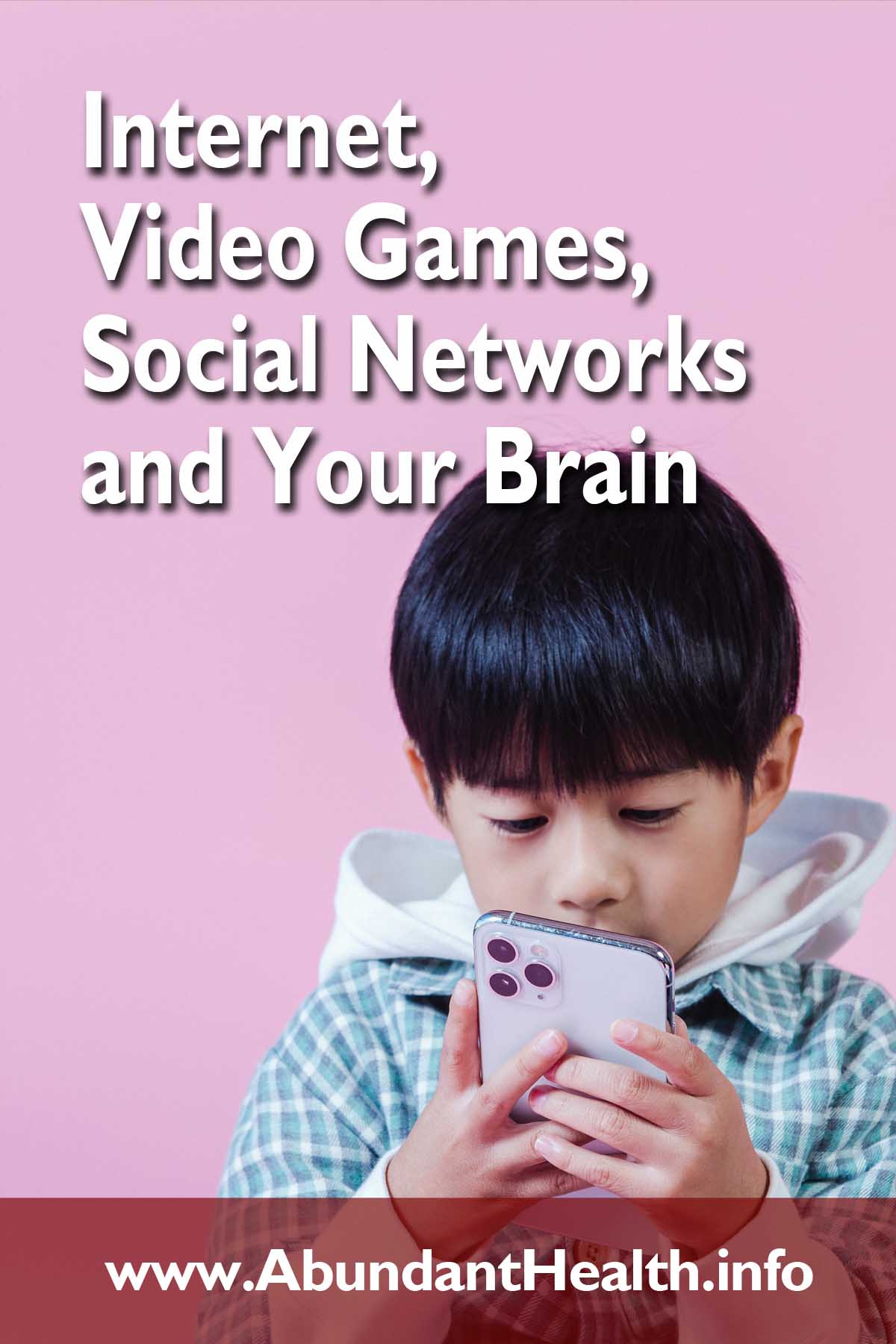
Internet, Video Games, Social Networks and Your Brain

We will have a look at some of the more recent scientific findings that have shown how addiction, and specifically electronic addictions, can affect your brain in an unhealthy way. Do you know that today there are specific treatments for people who are addicted to the internet, social networks and video games?

But let’s understand what an addiction is. An addict is a person who is dependent on something, so addiction is what becomes a god to you. If you look at what you are addicted to, you are worshiping this object and it becomes a god. Addiction is what dominates your thoughts, dominates your feelings and influences your attitudes. If we want a scientific definition of addiction, it can be: It is an unhealthy model of substance use or some other object, which leads to negative changes in your health.

Addiction separates you from your emotions. You may notice, when you stop or try to stop something that is the object of your addiction, there is certainly anxiety, restlessness, nervousness, insomnia, irritability and impatience. So addiction dulls reasoning and emotions.

If you are addicted, it can be sex, a substance that is legalized as alcohol, you certainly have a numbness, an anesthesia, a blockage of some reasoning, some thoughts, some feelings that you would need to be experiencing to have a healthier behavior. So you use a substance, you use a product, you use a practice, in this case video game addiction, social network addiction, internet addiction, you use that to numb your emotion, then comes a remorse: I spent a lot of time on it! Oh boy, I neglected my kids! I arrived late for work! I spent a lot of money, because I wanted to buy a more powerful equipment! Or whatever else! Then comes the guilt, then comes the feeling of lack of self-worth, because I think I’m no good as a human being, I don’t think there’s an escape, and then you feel more anguish, more sadness and then you can think: Let me get on a social network again to see if I can relieve myself a little. And you get this sick emotional ping pong, it’s really a destructive cycle!

Types of Addictions

Every addiction creates a destructive cycle for your health, for your peace, for your happiness and also for the well-being of the people around you. There are several types of addictive agents, that is, there are several instruments, several situations, several practices that can produce an addiction in your life, not just alcohol, cocaine, marijuana and what we are talking now about the internet. There are people addicted to work, to success, to spending too much, to gambling, to accumulating goods, people addicted to controlling others, to humiliating people, it is an addiction, a disorder, an alteration. You have to deal with it. There are people addicted to food, people addicted to sex, pedophilia, pornography, indeed, there is an epidemic of pornography addiction. People you never imagined are connected with this.

This is a symptom; the world is compulsive. Compulsive not in a positive sense unfortunately, of having a compulsion to do something good for society. The world is medicated, the world is anesthetized, the world is altered, in their emotions, in their reasoning due to various types of drugs.
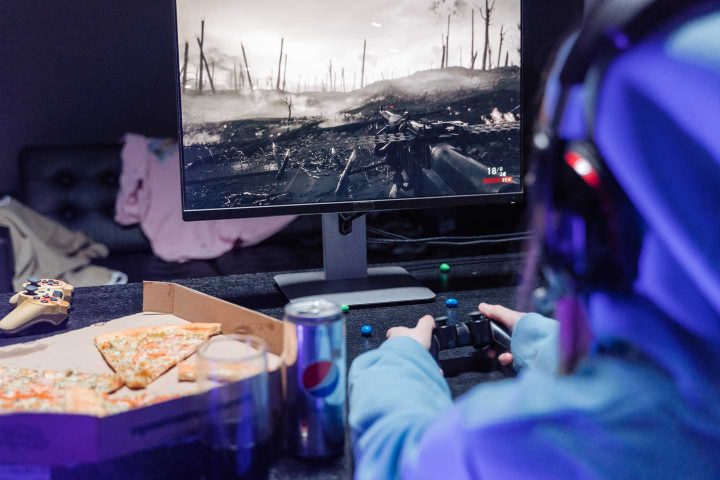
A person addicted to video games - Photo by Tima Miroshnichenko from Pexels

Some people are addicted to approval, a need to please, always neglecting their needs to see if they please someone. People in a savior role, people who are dependent on toxic relationships. What is a toxic relationship? It’s a relationship that’s bad for you, that will harm you. There are people who marry a complicated person, suffer a lot, separate, marry another complicated person, suffer a lot again. There are people with a mania for their physical outlook, their cosmetics and clothing, obsessed with aesthetics and plastic surgery, it’s just that these people want to try to look good on the outside, while on the inside they’re not very well centered. Some people are addicted to academic titles, there are various types of addictions there.

There exists a vicious cycle of addiction. The person has emotional pain, he has emotional discomfort, there is something that is not well resolved within him, some trauma. I don’t like this word because it gives the impression that emotional suffering has to do with a trauma, while in reality it is a set of situations in life that are, in general, painful and difficult, which develops the person’s emotional suffering. So he has pain, he looks for an agent to get rid of this pain, it can be cocaine, marijuana, sex, pornography, food, as I said, he has a temporary anesthesia of this pain, then it can have negative consequences, it will depend on the type of addictive object that he’s using, and then he’s finally going to have shame, guilt and that results in more pain and lessening of his self-worth and he gets stuck in this cycle.

Effects of Electronic Addiction

Some studies show that too much time on the internet infantilizes the brain. It’s showing that it can produce a generation of young people incapable to think for themselves. For anything, they get on the internet: Let’s see what that person says. They will access site a b c or d.

Dr Susan Greenfield, a neuroscientist at Oxford University, says the following: The immediacy of imagery in the internet impairs mental development in children and adolescents. These images are very fast, the child’s brain is not prepared to be able to manage all of this. So it’s different from stories told by parents in the past, They used to sit on the porch, telling stories of this and that to the children, but a story that has a beginning, a middle, an end, and a lesson. On the internet, those images with a lot of virtual stimulation confuses children’s minds. So these stories that parents can offer their children help the brain to think in sequence, reason from cause to effect, in addition to the emotional bond that father and mother have talking to their child and interacting with the family.((Greenfield S, “Excesso de internet pode criar geração de jovens incapazes de pensar por si próprios” Revista Ser Médico, Jan/Fev/Mar de 2012))

In the Chinese Academy of Sciences, a very interesting scientific study was done by a scientist named Fuchun Lin in 2012, he came to the conclusion that young people who surf excessively in the internet have brain changes similar to those seen in gambling compulsives.((Lin F, Abnormal White Matter Integrity in Adolescents with Internet Addiction Disorder: A Tract-Based Spatial Statistics Study. Plos One,  January  11, 2012. https://doi.org/10.1371/journal.pone.0030253)). So you see the matter is serious.

Teenagers with cell phone addiction - Photo by cottonbro from Pexels

At the University of Rochester, in a 2010 study by scientist Daphne Bavelier, she came to the following conclusion that there is a strong correlation between exaggerated computer use and brain abnormalities.((Bavelier  D et.al.  Children, Wired: For Better and for Worse.  Neuron, Vol. 67,  Issue  5, 9  September  2010. https://doi.org/10.1016/j.neuron.2010.08.035))

What To Do About Electronic Addictions?

What can you do if you’re addicted to electronics, social networking, you can’t go two hours without accessing and posting things? And if you stop you will feel symptoms of the withdrawal crisis, anxiety, irritation, impatience and nervousness, some lose their appetite, in others it increases appetite or causing insomnia? Let’s talk a little bit if you have children and don’t know how to dose the use of electronics in their hands, what can be done?

First, it’s important to understand that any compulsion can serve to keep you from realizing some inner needs, experiencing certain emotions, living certain thoughts, improving relationships in some areas of your life. If the family you live in is experiencing this problem of excessive use of electronics, then it is important that the family as a whole looks for solutions to this. It’s no use for you as a father, as a mother who is addicted to electronics, wanting to teach your child a moral lesson and say: “Stop it! Or: Turn it off! Give it to me! I’ll take it away!” But you are addicted too? You can’t put down your electronics, how are you going to exact this from your child? To fix the excess, the abuse of electronics that can already be characterized as an addiction, it is important that you lead by example.

A family addicted in electronics - Photo by Ketut Subiyanto from Pexels

So in this family where there is a member who is really addicted, maybe a young man is leaving his studies, because he spends hours and nights on his computer, in his bedroom, he sees who knows what, even if you have parental control connected on the computer, you need to set an example. So this young person or child will need a limit in their computer time. You have to determine this as a father, as a mother, you have to have a firm hand, love has to be firm. If you’ve a small child, don’t put electronics in that child’s hand too early. Take it to the park or play an educational toy with them.

So parents need to lead by example. Because you as a dad or mom might not be addicted to electronics, but you can be addicted to something else. There are people who come home, tired from work and say: My day was so exhausting, let me have a drink of whiskey to relax! Oops! Or they may say: Where’s my tranquilizer, have you seen my medicine box over there? I’m nervous, I want to take an extra dose of tranquilizer! You know your son, your daughter is seeing this, is noticing that you are dependent on something to make you feel better.

Then you can allow internet access for your children after they do some chores or homework. It seems that parents today feel guilty about giving chores to their children. They want to give everything on a silver plate to their children. This is a diseducation. In a house, even if it is a middle-class or rich house, even if it has employees for house cleaning for example, it is important that father and mother finds some simple tasks for their children: “you clean your closet, you put the garbage out, you put the clothes into the dryer, you help me here to peel these fruits so we can have breakfast, because the maid hasn’t arrived yet. This participation, this setting of limits, giving tasks to your children, for everyone to participate, is necessary. This does not mean that you will be sitting in the armchair demanding: “Go there and bring me my coffee, go do this and that!” If you participate then this will help in setting limits for your children, including internet usage. This is an important factor, because the ones who set rules in the house have to be the father and the mother.
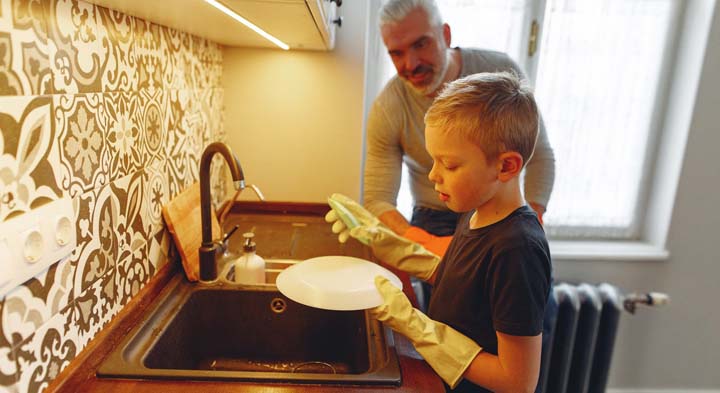
A child helping washing dishes to contribute to family chores.

Another important thing you can do with your children is to change the electronics use pattern, like: “Look, you’re only going to use the computer after doing a homework and school assignment. You only use your tablet after you shower.” That’s it, it’s set. You have to dialogue and explain, and keep that decision firm. Don’t go back. So don’t say something you won’t do, or you’ll lose morale. They will see that you say something and don’t do it, or give in easily. Being firm is different from exercising authoritarianism; an emotional dictatorship should not exist in the relationship between parents and children.

Children need an authority, that’s why God even placed a commandment: honor father and mother. Some scientific studies, analyzing young people who were raised in very dictatorial homes, compared to young people raised in homes that were very liberal, have shown that these young people in their adulthood had somewhat similar sufferings. In other words, children raised in very dictatorial homes, which can never do anything, had emotional distress in adulthood, and also young people who could do anything when they wanted to, also had emotional distress in adulthood. Why? Because young teenagers who had this freedom, said consciously: “Oh my dad, my mom, is cool, they let me do what I want!”, but deep down they felt like: “Do they care about myself? Are they interested in me? Do they want to know how my inner world is?” That’s interesting!

If there is any kind of addiction, you have already noticed that your child is too much hooked to the computer in his room, you will have to make a decision and explain: “Look son, I’m going to put the computer in the living room.”, especially if you’ve noticed that he’s hiding what he does, or if you’ve already seen that he’s been accessing some bad websites. It’s not even a dictatorial attitude, because you could even take the computer away from him. But you’re giving him a chance: “I’ll put the computer in the room for you to use in an educated way, for things that are good for you.” Because people go back and forth in the room, which restricts inappropriate use. Of course, there are also programs that block certain websites. You can also use a timer: “Look, I’ll put an hour here for you before you take a shower, or after you shower”. You can use this strategy.

It is also important to think about whether there is some kind of emotional disorder that is leading this person to this addiction. This may need a professional assessment. There are people who may be addicted to pornography, and then they will need to have specialized treatment to deal with it and get out of that kind of suffering.

Children playing outside with leaves - Photo by Charles Parker from Pexels

We might think: “Wow, that sounds somewhat backwards and outdated, how can I pass this on to my children?” Because kids today want electronics! How to go about it? Will you block everything? For infants yes, but for a little bit older children you can dose them. “You will play a little in the backyard, a little in the park, climb the trees, play on the beach and then you have a moment alone with your electronics”. It’s not one or the other, but you definitely don´t want your kids on electronics all day long without having any outdoor activity. The virtual world is not a healthy replacement for the real world. So, protect your kids from overexposure to electronics. And small child doesn’t need a cell phone. I would like to finish with the text that is in the book of Luke:

People were also bringing babies to Jesus for him to place his hands on them. When the disciples saw this, they rebuked them. But Jesus called the children to him and said, “Let the little children come to me, and do not hinder them, for the kingdom of God belongs to such as these.”((The Bible, Luke 18:15,16 (New International Version). ))

Luke 18:15.16

Take care of your children so that they don’t get their brains harmed by excessive exposure to electronics!

Healthy Fruits

Stay Always Up to Date

Sign up to our newsletter and stay always informed with news and tips around your health.

Sign Up Now!

Filed Under: Addictions, Mental Health, Temperance

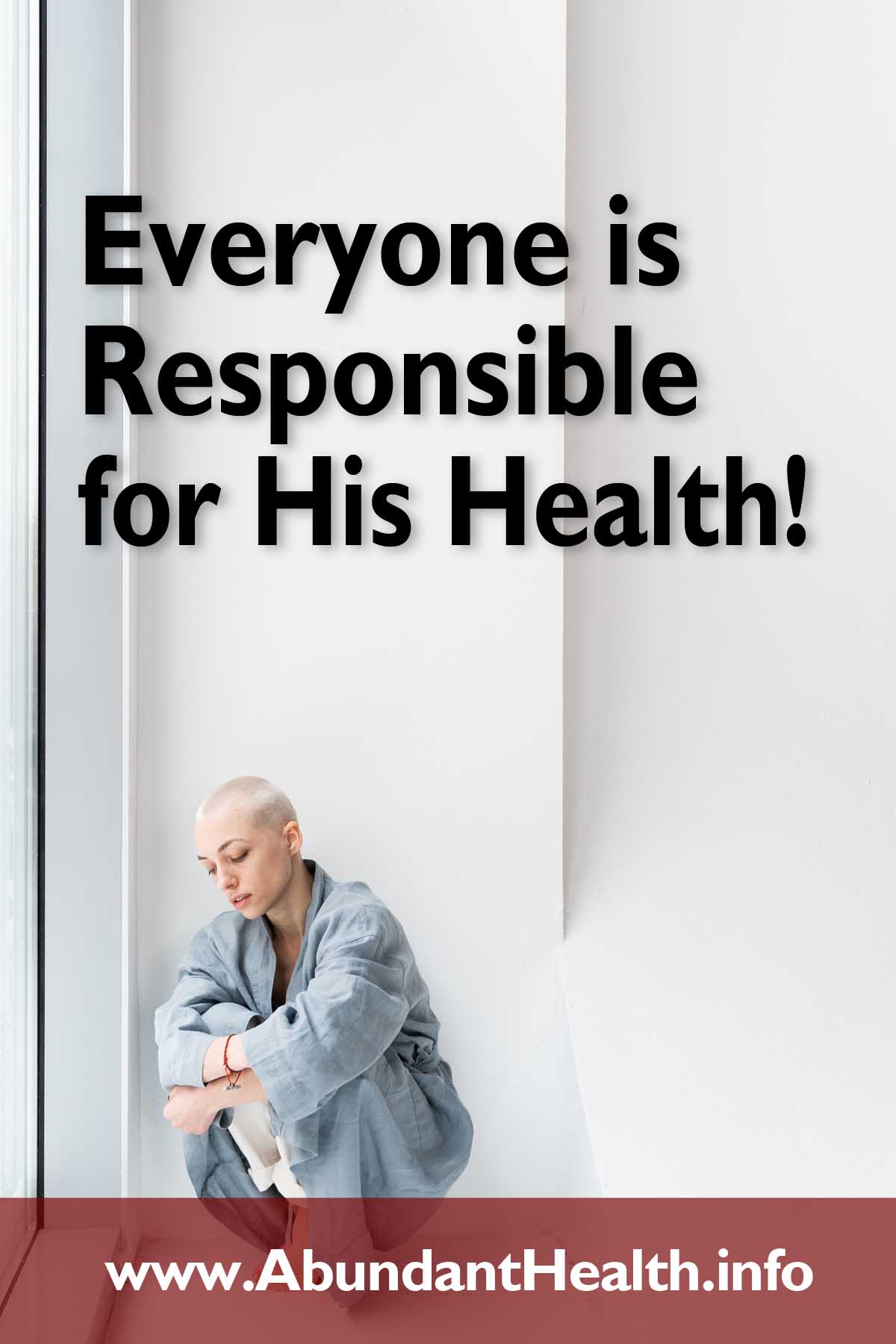
Everyone is Responsible for His Health!

September 19, 2021 by Esther Neumann - [rt_reading_time label="Reading Time:" postfix="minutes" postfix_singular="minute"]

Jeder ist für seine Gesundheit verantwortlich

Personal responsibility for health is one of the most important pillars of our healthcare system. Great advances in medical research give us access to expensive treatments that are covered by the healthcare system. People’s life expectancy is increasing.

Everyone is Responsible for His Health!

Just in spite of the progress, our society is not getting healthier. The prolonged lifespan is not coupled with a better quality of life. The healthcare system is becoming more and more difficult to maintain. We cannot just rely on politicians and health insurance companies to preserve or regain our health. Health policy always stands in the field of tension between society and the individual. Where is our personal responsibility?

A motorist races along the highway. Suddenly, an indicator lamp lights up on the dashboard. The car is quickly steered onto the hard shoulder. Where is the error? What needs to be done to make the car work properly again? It is the V-belt of the alternator. The next workshop is approached and the damage repaired.

If we paid the same attention to our body as we did to the status symbol car, our well-being would be better off. The car we take regularly to the inspection. What about prevention for our body? Going to the doctor, the check-up or more?

Provision for our Health

It is crucial what priority we give to a healthy lifestyle. This includes a sensible diet, sufficient exercise, an intact environment and the right mindset. It is largely up to us to prepare the way for health to come along naturally. This requires our maturity.

Buying groceries - Foto by RFStudio from Pexels

A study has shown that about 37% of our health depends on our lifestyle. 29% depend on the genetic make-up, whereby the lifestyle determines largely, whether the genetic make-up really comes into play or not. 24% of our health depend of the environment and only 10% is due to curative medicine.

Our health is both a gift and a task. Right principles must guide us, because illness is nature’s effort to free the body from conditions that have mostly arisen through transgression of the laws of health.

Lifelong Learning

There is a saying that we die twice. The first time when we stop learning. This saying is true especially when it comes to our health. Let’s not bury our heads in the sand. It is our task to learn how our body works. When studying physiology, we really learn to appreciate our body and understand why we should do some things and leave others behind.

Our body is a real marvel, conceived by a great Creator. The same Creator wants us to be healthy and happy. But he also shows us the way to do so in his Word, the Holy Scriptures.

The Instruction Manual

Whenever we purchase a household appliance or a machine, we study the instruction manual. We want to benefit from our investment as long as possible. And yet a machine becomes obsolete relatively quickly. It ends up in the garbage, because it is outdated or worn out. But how long do we want to get along with our body? 75, 80 years, if it is much maybe 100! And there you should not study and follow an instruction manual?

The biblical principles are a foundation we can rely on. They are not going to be knocked over by fads and trends. The most important principles are probably free will and love. Free will makes me responsible. It is up to my free will to decide whether I want to accept God’s counsel. And the Bible is full of them. Let us just read carefully once again the wise proverbs of Solomon.

A woman reads the Bible - Photo by Tima Miroshnichenko from Pexels

Personal responsibility means to find a proper response to life’s questions, setting your own impulses, take actions to consume sensibly. Social pressure triggers consumption. This manifests itself in smoking, alcohol, diet and fashion. Am I free to stand up for my own decisions and bear the consequences?

Above all, Love

But living healthy alone is not enough. Exercise alone won’t keep me healthy. We must let God’s love into every area of our lives. God’s love and loving our fellow beings keeps us healthy and heals us. Surely you have experienced that for yourself. If you like someone, you have somebody special in your life, your life is different. You get strength, you approach problems in a completely different way. If we contemplate the beauty and love around us, this stimulates our hormones. Endorphins – happiness hormones are released. This makes life healthier.

Affection of a mom for her kids - Photo by Ketut Subiyanto from Pexels

There is always one who loves me – God and Jesus Christ, His Son, who loved me so much that He gave His life for me. This knowledge helps me to love my neighbor as well. This makes life more joyful and enjoyable. This has a positive effect on health.

Realize the Value of Health through Illness

We can do our part to maintain our health, or often regain it through a lot of patience if we lost it. It was certainly not the intention of our Creator to harm our body, which He prepared so wonderfully (Psalm 139:14). The cause for illness and hardship is usually man’s disobedience to God’s laws. From Hippocrates comes the saying: “Diseases do not attack us out of the blue, but develop from daily tiny sins against nature. When they have accumulated, they seem to burst out all at once.”

A Cancer patient - Foto by Ivan Samkov from Pexels

Diseases are also triggered by mental misconduct. Selfishness, guilt, fear and excessive demands can make people physically and mentally sick. We know the term “psychosomatics” for this. Even here my personal responsibility is important. Do I want to torment myself with negative thoughts or do I seek help from God and from my fellow human beings? The decision is up to me. Another thought about responsibility: No one is sick on their own. His environment always suffers. That’s why the saying: “I can do whatever I want with my body” is actually wrong. If I’m not well, my loved ones suffer with me. I also have a responsibility for them. There is responsibility in love.

The Purpose of Disease

Is there any purpose in illness at all? If there is, we normally do not grasp it immediately and we do not want to explore this topic here. But there is one thing we can do after every recovery: Set the course anew, execute our good resolutions, manage well our resources which are limited, and above all be grateful for the regained health.

Healthy Fruits

Stay Always Up to Date

Sign up to our newsletter and stay always informed with news and tips around your health.
Sign Up Now!

Filed Under: Healthy Lifestyle

Seven Foods to Reduce Stress

September 12, 2021 by Martin Neumann - [rt_reading_time label="Reading Time:" postfix="minutes" postfix_singular="minute"]

7 Foods to Reduce Stress

Just thinking about all the chores that are building up, the errands you have to run, the looming work deadlines and the social demands on your overbooked calendar can run you ragged. Talk about stress!

Seven Foods to Reduce Stress

If left unchecked, stress can lead to many health problems, including heart disease, diabetes, obesity, and high blood pressure. Not to mention stress can also take a toll on your thoughts and behavior.

When life gets hectic and we’re feeling stressed, we tend to put healthy eating on the back burner. But heading to the vending machine or grabbing a meal at the drive-thru won’t alleviate the stress in your day.

To combat stress levels, take a look at what you eat. It may actually help relieve your tension. In fact, certain foods can help stabilize your blood sugar levels, can lower your cortisol and change your emotional response to stress.

Here are seven foods you can eat to reduce stress.

1. Oatmeal

This slow burning breakfast food is the perfect comfort food. It stimulates your brain to produce the feel-good chemical serotonin, which is antagonic to the stress hormone cortisol. Increasing serotonin will help you keep your cortisol level low.

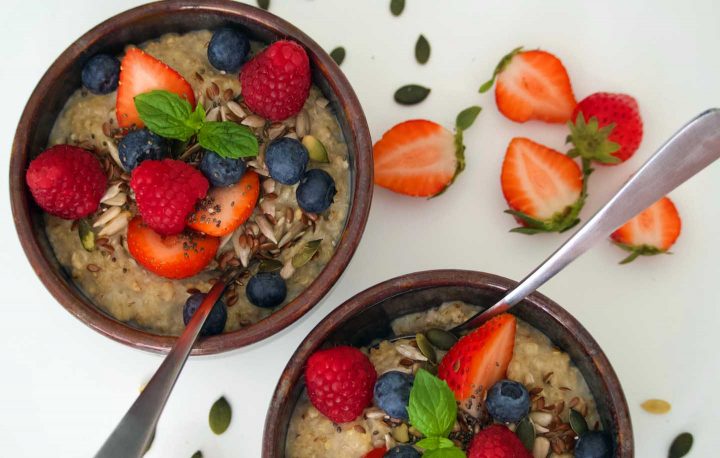
A bowl of oatmeal wit fruits - Photo by Thiea Alhoz from Pexels

The soluble fiber in oatmeal keeps you fuller for longer as it provides a slow burn, maintaining your glucose level more stable throughout the morning. It’s sure to help you stave off stress and stay focused throughout your morning.

When we’re stressed our blood pressure can become elevated. A study published in the American Journal of Clinical Nutrition found that a diet which includes whole grains such as oats can lower blood pressure. Actually, all forms of whole grains like whole wheat bread, brown rice or whole wheat pasta will give you the same kind of benefits.

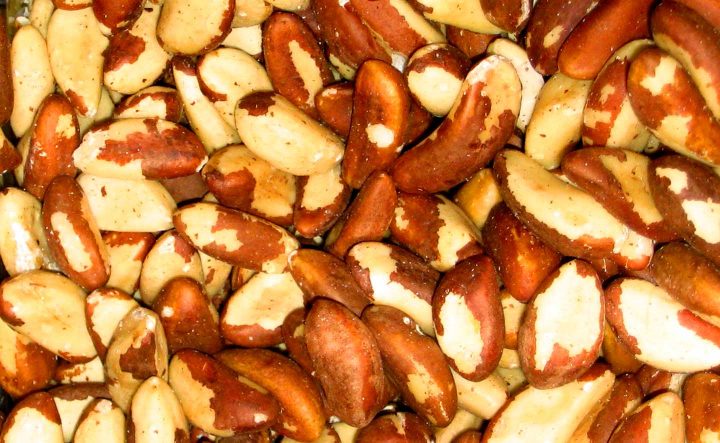
2. Brazil Nuts

This nut from the Amazon Rainforest is one of the best food sources of selenium. This mineral is an essential element to calm your nerves, alleviate fears, improve your mood and increase your energy levels. Besides that, selenium can help to improve your immune system. It is also important for proper thyroid function, cancer prevention and protects the body in many other ways. A consumption of 3 or 4 nuts will give you an adequate amount of selenium for the day.

Brazil Nuts - Source: Wikipedia

3. Flax Seeds

This superfood is an excellent source of magnesium which may help regulate emotions, alleviate depression, combat fatigue and minimize irritability. Magnesium can also help fight PMS!

Flax seeds contain Omega 3, which is helpful for inhibiting inflammation and is great for cortisol reduction. Furthermore, it may improve mood by helping neurons to communicate with one another. Studies also showed a reduction of anxiety with the consumption of Omega 3.

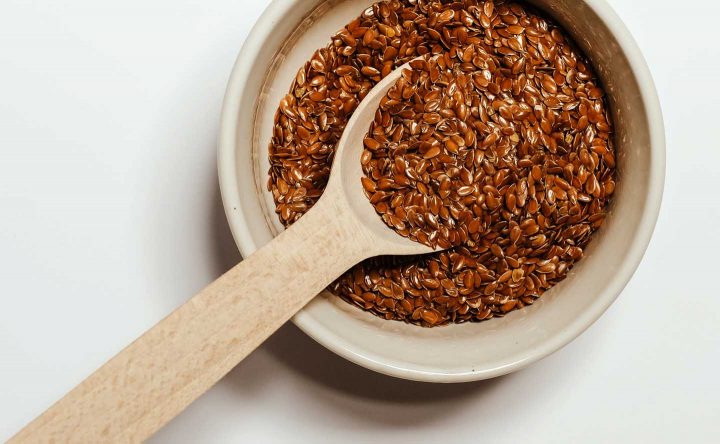
Flaxseed is absorbed best, if you grind the seeds shortly before consumption. It is good to grind only what you consume in 2-3 days. Use a tablespoon daily in your food, over your salad, and in bakeries like bread and cakes. Mix 8 parts of toasted and ground flaxseed with one part of salt, and you have an excellent spicing for your salad plate.

A bowl of flaxseed - Photo by Vie Studio from Pexels

You can also include other omega-3 rich foods in your daily diet such as chia seeds, walnuts, wheat germs, tofu and cauliflower.

4. Citrus Fruits

Instead of reaching for sugary treats during stressful times, why not choose oranges, kiwis, some berries or any citrus fruit? Vitamin C can help slow down your body’s production of cortisol while also quickly clearing it from your bloodstream.

Vitamin C is also beneficial for the prevention of blood pressure spikes that usually occur as part of your body’s response to stress.

Get a good amount of citrus fruits in your diet. Citrus reduces levels of the stress hormone norepinephrine, thus making us feel much better.

5. Garlic

A Japanese study discovered that garlic is effective in reducing cortisol levels. Garlic is also a good source of antioxidants, strengthens the immune system and helps to lower blood pressure.

Garlic has lots of protective phytochemicals. Photo by Nick Collins from Pexels.

6. Microgreens

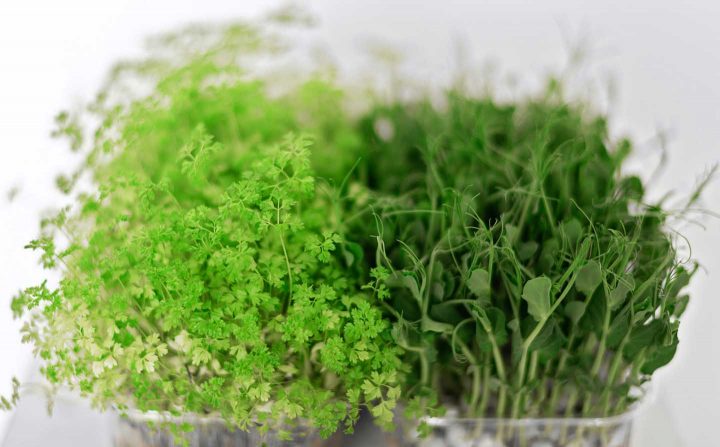
Microgreens are salad greens picked very young, usually soon after the first leaves have formed. The great thing about microgreens is that they contain higher concentrations of stress-busting vitamin C. Young cilantro and baby red cabbages contain up to six times more vitamin C than their mature versions.

If you have the time and space, growing your own microgreens is a good way of bringing nature into your home and of making nutrition just a hand-pick away. If not, they are usually readily available in the produce section of the supermarket, as they are highly sought for their nutritive, taste and garnishing qualities.

Microgreens in a bowl - Photo by Mikhail Nilov from Pexels

7. Cashews

These kidney-shaped nuts are a good source of zinc which is a critical mineral that can help reduce anxiety symptoms such as irritability and lack of focus. Other good sources of zinc are sesame, flax seeds, Brazil nuts, chickpeas and lentils. Cashews are also a source of magnesium which is good for your emotions. You can easily add a few nuts for breakfast, or use them to decorate your salad at lunch.

Conclusion

In recent years science has discovered more and more links between the foods we eat and the way we feel. We have given you seven examples of foods you can add to your diet, that can help you relieve stress and improve your health and wellbeing. Actually, using plenty of plant-based food sources, the way that God has created them, will give you a lot of benefits for your health and mental well-being. Try it out for yourself!

Do you need a guide to help you understand how to cope with Stress in an all inclusive approach? Learn how to combat stress, mentally, physically, emotionally and strategically in your life.

Get Me the Guide

What food do you turn to in times of stress? Share it with us in the comments.

Filed Under: Mental Health, Nutrition, Stress Management

Celiac Disease – An Intestinal Problem

September 5, 2021 by Esther Neumann - [rt_reading_time label="Reading Time:" postfix="minutes" postfix_singular="minute"]

Zöliakie - eine Darmerkrankung

Celiac disease is a condition like a chameleon. The symptoms are very versatile and the number of unreported cases is high. About one in every hundred is affected. It can take years for the correct diagnosis to be made. If the disease is not detected in time, it leads to severe malnutrition with many secondary diseases such as osteoporosis, anemia, tooth enamel damage, muscle spasms, edemas and even cancer.

Celiac Disease - An Intestinal Problem

Definition

Celiac disease is a chronic disease. It breaks out after the consumption of the pathogenic substance gliadin, which is one of the components of gluten. Of course, gluten is only pathogenic if there is an intolerance. With the technical term, the disease is called “gluten-sensitive enteropathy”. Very specific types of protein from wheat, rye, triticale, barley, oats, spelt, einkorn, emmer and kamut lead to damage to the mucous membrane of the small intestine, called villous atrophy.

The surface of the small intestine is greatly increased by villi and crypts, so that it can come to an intimate contact with the chyme. This allows the nutrients to be optimally absorbed. In patients with celiac disease, incorrectly composed protein bodies are found in the innermost lining of the intestinal wall. Gliadin, a type of protein from the cereals, is bound to these. This either has a direct damaging effect or it leads to a defensive reaction against the gliadin-carrying body cells with subsequent damage to the intestinal mucosa. The villi regress strongly, making the absorption area for the nutrients much smaller.

The cereal proteins lose their pathogenic properties neither through cooking nor through enzymatic breakdown in the gastrointestinal tract. Genetic conditions favor the development of the disease. The white race is the main target of the disease, and prevalence differs widely from country to country. A study in the US found a prevalence of 1 case in 133 persons of the general population.((Fasano A. et.al. Prevalence of celiac disease in at-risk and not-at-risk groups in the United States: a large multicenter study. Arch Intern Med. 2003 Feb 10;163(3):286-92. DOI: 10.1001/archinte.163.3.286 )) A UK study found a prevalence of 1 in 166.(( El-Hadi S, et.al. Unrecognised coeliac disease is common in healthcare students. Arch Dis Child. 2004 Sep;89(9):842. DOI: 10.1136/adc.2003.041459 )) In Australia it seems to be 1 in 70. It is very rare in Japan and sub-Saharan Africa.

The Clinical Presentation

The disease can occur at any age. There are two distinct peaks. One occurs in infancy, the other between the ages of 30 and 40. Girls and women are more often affected. Diagnosis is quicker in toddlers than in adults, because the pathogenic types of protein are usually introduced into the diet between the ages of 4 and 6 months in the form of cereal porridge, biscuits, crackers and bread.

A toddler eating a cereal - Photo by Yan Krukov from Pexels

In case of intolerance, the symptoms become visible after a few weeks or months. The toddler no longer thrives and there is no weight gain. Often it unlearns what has already been acquired. The thin arms and legs and the missing buttocks stand in striking contrast to the bloated belly. The stools are mushy, bulky and smelly. The face remains round for a long time. The skin color is pale.

What happened? The intestinal villi have largely disappeared. The size of the surface of a healthy intestine could be compared to a tennis court, that of a patient with untreated celiac disease to a table tennis table. This leads to severe deficiency symptoms because the nutrients such as protein, fat, carbohydrates, vitamins and minerals cannot be absorbed in the required amount.

 Diagnosis in adults is more difficult. Often, he wanders from one examination to another, is treated for various diseases such as lactose intolerance, osteoporosis or anemia. The typical textbook picture of the disease usually only appears at a late stage. Silent celiac disease is also known, in which the course is symptom-free and there is still a change in the mucous membrane.

Diagnosis

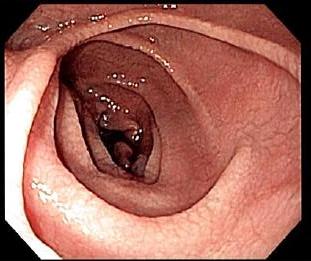
The most important diagnostic measure is the direct examination of the intestinal mucosa. In the past a small metal capsule attached to a thin tube was swallowed in order to extract a tissue sample. Today an endoscopy is used to examine the appearance of the duodenum and obtain 4 to 8 samples for biopsy. A microscopic examination can determine whether there is damage to the mucous membrane or not. Immunological tests support the diagnosis. In case of disease, antibodies to gluten are found in the blood serum. Other deficiencies in the blood can also be detected, such as iron, hemoglobin, vitamin and mineral deficiencies. The diagnosis of celiac disease is then the sum of all the available information.

Endoskopie von einem Zwölffingerdarm mit Zöliakieschäden - Foto by Samir from Wikipedia
Endoscopy of a duodenum with celiac damage. Samir at wikipedia, CC BY-SA 3.0

Treatment

Basically, the treatment consists in avoiding the substance recognized as harmful, and this for life. With a gluten-free diet, the mucous membrane of the small intestine gradually recovers and can then no longer be distinguished from a healthy one. However, in adults, recovery can take much longer than in children, who have a much higher rate of cell renewal.

It is difficult to avoid all foods containing gluten. For this reason, working groups have been formed in many countries that have meticulously asked the manufacturers for the exact formulations of many products. The results are summarized and continuously updated in thick manuals with many grocery lists, as the aim is to avoid even the tiniest traces of gluten.

There are gluten free oats on the market that are free from gliadin contamination, but they still contain avenin which can trigger an inflammatory response in some susceptible people. If you do not want to do without oats, a new biopsy should be done after three months of use. In case of doubt it is safer to avoid oats altogether.((Oats and the gluten free diet. Coeliac Australia))

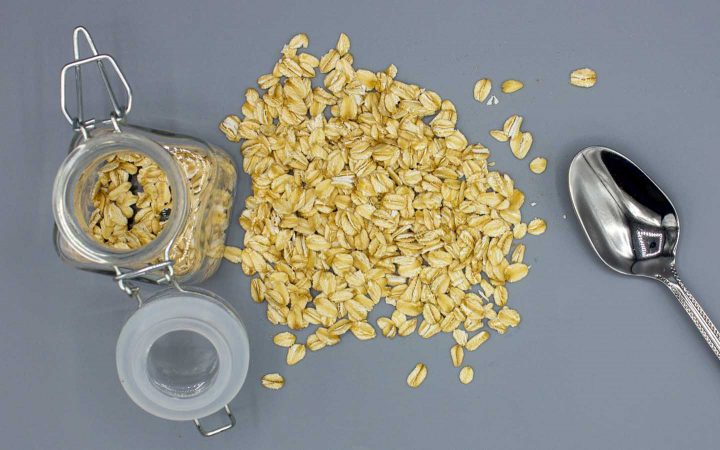
Oat flakes - Photo by Juliet King from Pexels

Traded gluten-free products are specially labeled with a crossed-out cereal ear. Just studying the ingredient list of a product does not help, because a compound ingredient does not have to be declared if less than 25% of it is contained in the final product. Gluten can also be added to products for technological reasons, such as a processing aid or as a carrier.

Celiac Societies

If celiac disease is diagnosed, contact with the local celiac society is established if desired. The affected person receives a manual with a precise description of the clinical picture and with many practical tips for cooking with gluten-free products. A list of restaurants, hotels and health resorts is enclosed that cook gluten-free if required. There are also many tips for dealing with authorities, because a gluten-free diet is expensive and time-consuming. That is why there are increased family allowances and tax allowances in many countries.

I have Celiac Disease – And What do You Have?

People with celiac disease are considered healthy when maintaining a gluten-free diet and completely normal in every respect. Of course, especially with children who would love to eat what other children eat, there are occasional grievances. Why he can’t bite into a tempting doughnut to his heart’s content? Why does he always have to take his special things to eat at a birthday party? The diagnosis of celiac disease for a child and his or her parents is certainly not a trivial matter. Parents, grandparents, acquaintances and friends shouldn’t feel sorry for the poor child all the time, but should encourage them, show them that celiac disease is sometimes an unpleasant thing, but nothing devastating.

Contacts

Celiac Disease Foundation (USA)
www.celiac.org

National Celiac Association
www.nationalceliac.org

Canadian Celiac Association
www.celiac.ca

Coeliac Australia
www.coeliac.org.au

Coeliac New Zealand
www.coeliac.org.nz

Coeliac UK
coeliac.org.uk

Recipes

Rice Cake

  • ⅔ cup brown rice
  • ⅔ cup orange juice ( (juicing 4 large oranges))
  • ⅓ cup honey
  • 1 tbs dry yeast
  1. Hydrate ⅔ cup brown rice for 12 hours. Makes about 1 cup of hydrated rice.

  2. Blend the ingredients for a few minutes.

  3. Grease a mold with oil, pour the dough and let it rise for 40 minutes to 1 hour depending on weather, until doubled in volume.

  4. Bake at medium heat for about 1 hour.

Dessert
American
Gluten Free

Chickpea Flour Pancake

  • 1 banana
  • 1 cup chickpea flour
  • 2 Tbsp tapioca flour (sweet)
  • 1 Tbsp honey
  • ½ tsp salt
  1. Blend everything with 1 cup of water.

  2. Pour the right amount into the skillet and spread with a spoon or spatula.

  3. Wait until golden and forming bubbles. Loose the pancake with the help of a spatula to flip it over.

  4. Let the other side brown.

  5. Use your preferred filling. Serve still hot.

Cassava Cake

  • 1 lbs cassava root ( (½ kg))
  • ½ cup honey
  • 1 small coconut
  • 1 pinch of salt
  1. Grate raw cassava or crush in the food processor.

  2. Blend the coconut with 1 cup of water.

  3. Mix all the ingredients, adding water if necessary to reach the consistency of cake batter. Taste the dough to check appropriate sweetness.

  4. Grease a mold and spread the dough to a thickness of 1-2 inch. (3-5 cm)

  5. Bake on medium heat until golden.

The cake tastes better the next day.

Dessert
Gluten Free

Corn Bread

  • 2 cups corn flour
  • 1 cup tapioca flour (sweet)
  • 4 Tbsp olive oil
  • 1 Tbsp honey (or brown sugar)
  • 1 Tbsp dry yeast
  • ½ tsp salt
  • sunflower seeds (for decoration)
  1. Mix all dry ingredients.

  2. Add 1 cup of lukewarm water little by little and stir until you get a liquid and homogeneous dough.

  3. Pour the dough into a greased pan.

  4. Let it rise for about 1 hour or until it doubles in volume.

  5. Preheat oven and bake over medium heat for about 1 hour.

  6. Allow it to cool down for a few minutes and remove from pan in order for the bread not to sweat.

  7. Wrap in a cloth to cool.

Wait at least 6h before eating for all yeast to die.

Diabetic, Gluten Free, Vegan

Recipes with Oats

Like we stated, not all with celiac disease can use even gluten free oats. If you have made a test that you can use them, here are some interesting recipes that can serve you.

Oat Bread

This bread is the product of a mistake. Because of an oversight I mixed the wrong ingredients, and it worked out really well!

  • 2 cups oat flour
  • 1 cup tapioca flour (sweet)
  • 4 Tbsp olive oil
  • 1 Tbsp honey (or brown sugar)
  • 1 Tbsp dry yeast
  • ½ tsp salt
  • sunflower seeds (for decoration)
  1. Mix all dry ingredients.

  2. Add 1 cup of lukewarm water little by little and stir until you get a liquid and homogeneous dough.

  3. Pour the dough into a greased pan.

  4. Let it rise for about 1 hour or until it doubles in volume.

  5. Preheat oven and bake over medium heat for about 1 hour.

  6. Allow it to cool down for a few minutes and remove from pan in order for the bread not to sweat.

  7. Wrap in a cloth to cool.

Wait at least 6h before eating for all yeast to die.

Peanut Oat Cookies

Delicious! Children will love these tasty cookies!

  • 3 cups oats
  • 1 pinch of salt
  • 1/3 cup honey
  • 1 cup roasted peanuts
  1. Beat the peanuts in a blender with a little water to form a cream.
  2. Pour into a bowl and put the remaining ingredients, mix well.
  3. Make cookies in the format you want.
  4. Bake in moderate heat until golden brown.
Dessert
Gluten Free, Vegetarian

Coconut Rice Bread

We really love to invent in the kitchen! Coconut bread with brown rice flour. Delicious bread with different flavor and super easy to make =)

  • 1 cup coconut flour
  • 1 cup brown rice flour
  • 1 Tbsp dry yeast
  • 1 cup rolled oats
  • 1/2 cup coconut flakes
  • 1 tsp salt
  1. Mix the flours well with the yeast.

  2. Add salt and mix again.

  3. Add the rolled oats and mix again.

  4. Add 1½ cups of water and mix more until it forms a very homogeneous mass.

  5. Put the dough in a form.

  6. Bake for 1 hour at 390°F (200ºC).

  7. Turn off the oven and let it cool down.

Wait at least 6h before eating for all yeast to die.

Oat Pizza

  • 3 cups fine rolled oats
  • 1 tsp salt
  • 1 chopped onion
  • 2 cloves of garlic
  • 2 chopped tomatoes
  • Oregano and parsley
  • 6 chopped olives
  • Sesame and sunflour for decoration
  1. Put all the ingredients in a container and mix everything, adding water until forming a dough.

  2. Place on a pizza sheet.

  3. Decorate with oregano, sesame and sunflower. If you like, top with vegan cheese.

  4. Bake over medium heat until golden.

Healthy Fruits

Stay Always Up to Date

Sign up to our newsletter and stay always informed with news and tips around your health.

Sign Up Now!

Filed Under: Digestive Diseases, Digestive Tract, Diseases, Nutrition

Primary Sidebar

Social Channels

Coronavirus Immunity Challenge

Boost your immune system to be bullet-proof for the pandemic.

I Want to Participate

Recent Posts

  • 5 Habits to Live Longer
  • Better Sleep Can Protect Against Dementia
  • Finding Peace In Your Crazy-Busy World
  • Flaxseed – An Ancient Plant Rediscovered
  • Platelets – Triggers for Life or Death
  • Boderline Personality Disorder
  • In Praise of Almonds and Nuts
  • Are You Stuck in the Clutter Trap?

Categories

  • Body Systems (16)
    • Cell Function (2)
    • Circulatory System (1)
    • Digestive Tract (10)
    • Immune System (4)
  • Diseases (27)
    • Cancer (2)
    • Cold (1)
    • COVID-19 (11)
    • Dementia (1)
    • Diabetes (1)
    • Digestive Diseases (2)
    • Heart Disease (2)
    • Kidneys (1)
    • Metabolic Syndrome (2)
    • Skin (1)
  • Healthy Lifestyle (42)
    • Exercise (11)
    • Gardening (2)
    • Sleep (7)
    • Sunlight (2)
    • Temperance (14)
    • Water (4)
  • Mental Health (87)
    • Addictions (6)
    • Anxiety (7)
    • Burnout (1)
    • Depression (7)
    • Psychosomatic Diseases (6)
    • Stress Management (45)
    • Trust (6)
  • Nutrition (56)
  • Obesity (9)
  • Phases of Life (14)
    • Adults (3)
    • Babies and Infants (1)
    • Children (3)
    • Seniors (5)
    • Teenagers (3)
  • Therapies (7)
    • Herbs (5)
    • Hydrotherapy (1)
  • Uncategorized (3)

Archives

  • January 2025 (1)
  • March 2024 (5)
  • February 2024 (4)
  • January 2024 (4)
  • December 2023 (5)
  • November 2023 (4)
  • October 2023 (5)
  • September 2023 (4)
  • August 2023 (3)
  • July 2023 (2)
  • June 2023 (4)
  • May 2023 (4)
  • April 2023 (5)
  • March 2023 (4)
  • February 2023 (4)
  • January 2023 (4)
  • December 2022 (4)
  • November 2022 (4)
  • October 2022 (5)
  • September 2022 (4)
  • August 2022 (4)
  • July 2022 (5)
  • June 2022 (4)
  • May 2022 (5)
  • April 2022 (4)
  • March 2022 (4)
  • February 2022 (4)
  • January 2022 (5)
  • December 2021 (3)
  • November 2021 (4)
  • October 2021 (6)
  • September 2021 (4)
  • August 2021 (4)
  • July 2021 (5)
  • June 2021 (4)
  • May 2021 (3)
  • April 2021 (5)
  • March 2021 (4)
  • February 2021 (4)
  • January 2021 (5)
  • December 2020 (3)
  • November 2020 (4)
  • October 2020 (5)
  • September 2020 (5)
  • August 2020 (3)
  • July 2020 (1)
  • June 2020 (1)
  • May 2020 (1)
  • April 2020 (1)
  • March 2020 (1)

Copyright © 2026 · Abundant Health - Privacy Policy - Medical Disclaimer