Abundant Health

Up to date health information tailored for you

  • Home
  • Blog
  • Recipes
  • Shop
  • Contact
You are here: Home / Archives for Diseases / Metabolic Syndrome

Metabolic Syndrome

NAFLD – When the Liver Gets Inflamed

October 29, 2021 by Elen Duarte - [rt_reading_time label="Reading Time:" postfix="minutes" postfix_singular="minute"]

Liver

Bill((name changed by the redaction)) is 58 years old, obese, but feels perfectly healthy. During a routine check-up, Bill got the news that he has fat in the liver. However, Bill has no symptoms beyond his already known obesity, and does not feel pain or discomfort. Bill is worried because the doctor says it is a fatty liver, which if not taken care of, could turn into cirrhosis. However, Bill says that he never consumed a lot of alcohol, and for 5 years he was not even drinking socially. Bill is concerned and comes to us in search of nutritional advice to improve his health and contribute to the treatment of the disease.
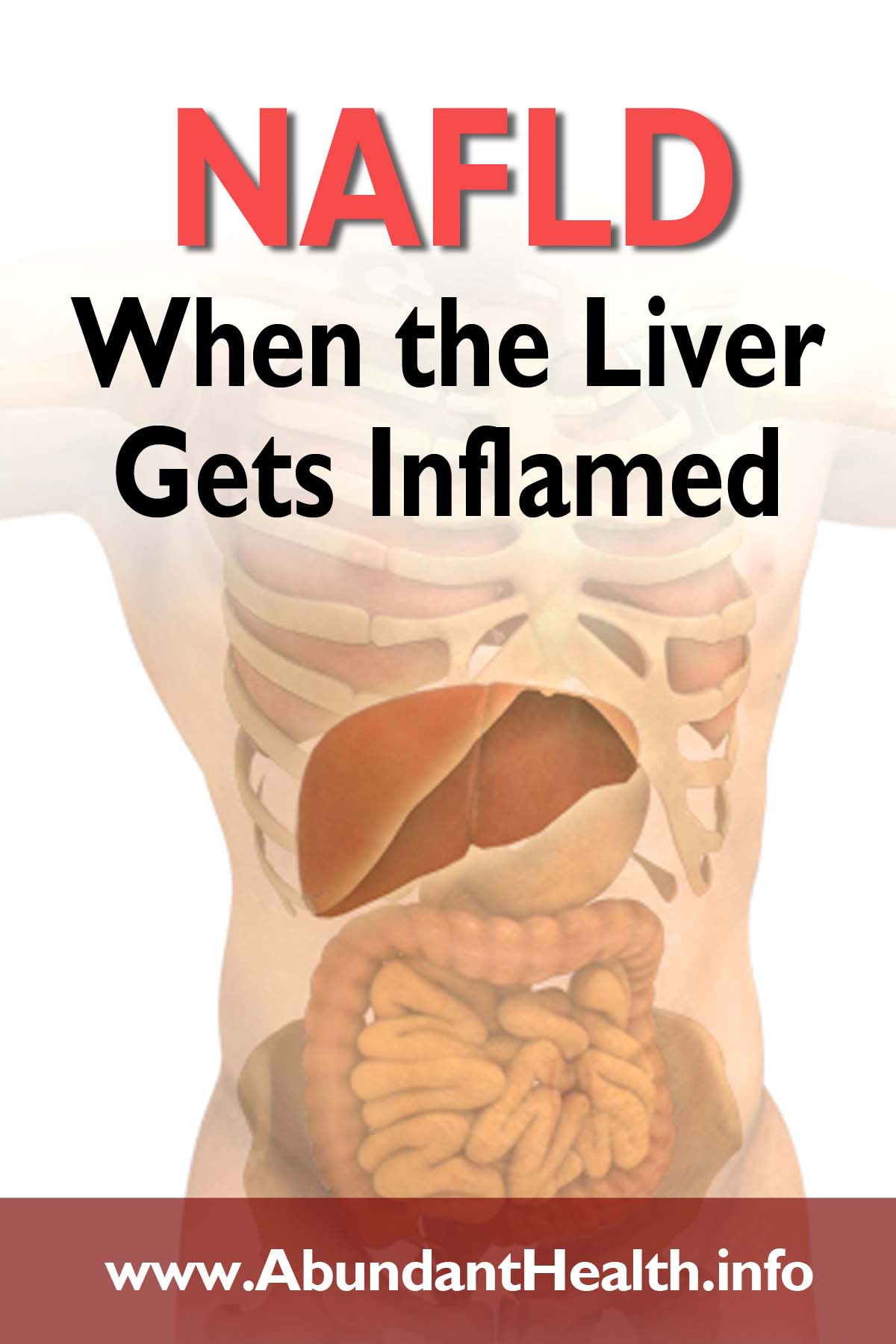
NAFLD - When the Liver Gets Inflamed

NAFLD (Non-Alcoholic Fatty Liver Disease) is caused by an inflammation in the liver due to the accumulation of triglycerides in the liver tissue. NAFLD is a very prevalent multi-factorial disease associated with metabolic factors. It is usually caused by poor eating habits together with physical inactivity or obesity. It can also arise as a consequence of diabetes, high cholesterol, high blood pressure, or the metabolic syndrome that is a compound of these symptoms.((Hepatologia SBd, Coelho HSM, Leite NC. Prevalência e importância da doença hepática gordurosa não alcoólica [internet]. Universidade Federal do Rio de Janeiro.; [Accessed on: 07 oct. 2021]. https://sbhepatologia.org.br/pdf/revista_monotematico_hepato.pdf))

NAFLD can be considered the first level of Hepatic Steatosis, a disorder characterized by the accumulation of fat inside liver cells. It silently affects a growing number of the population around the world. A more recent study conducted in the United States with 328 asymptomatic patients reported that 46% of individuals had steatosis, and of those 70% were obese and 26% diabetic. Studies show that a BMI > 30 and diabetes mellitus are considered risk factors for the evolution of steatohepatitis to cirrhosis.((Aray Nabuco e Wilson Vieira, COMO CONTROLAR A GORDURA NO FÍGADO – Coleção Saúde Essencial))
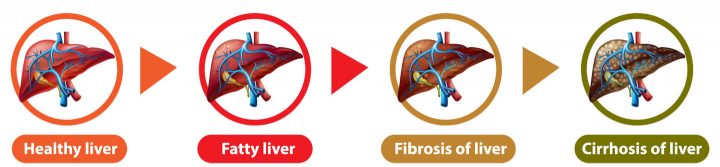
Progression of liver disease

Obesity has become more frequent around the world and in all age groups. Currently, there are one billion overweight adults in the world, 300 million of whom are obese with a BMI ≥ 30. In the US, around 30% of the population has non-alcoholic fatty liver disease (NAFLD). This is even clearer in morbidly obese patients, in which the prevalence of hepatic steatosis is around 76 to 91%, with 25 to 37% of the individuals progressing to hepatitis.

NAFLD prevalence increases with age, but children and adolescents are not spared. Obesity is the accumulation of triglycerides (blood fat) in adipose tissue. When the fat cells reach their limit of expansion, the accumulation of fats in other tissues, including the liver, begins to occur.((Aray Nabuco e Wilson Vieira, COMO CONTROLAR A GORDURA NO FÍGADO – Coleção Saúde Essencial))

An obese man holding his belly. Photo by Towfiqu barbhuiya from Pexels

The prevalence of type 2 diabetes has been increasing exponentially. According to the World Health Organization (WHO), in 2030 there will be more than 300 million individuals with diabetes worldwide. Macro and microvascular complications can arise over the years, reducing the life expectancy and quality of diabetic patients. After obesity, diabetes mellitus was the risk factor that most correlated with the presence of non-alcoholic fatty liver disease (NAFLD).((Hepatologia SBd, Coelho HSM, Leite NC. Prevalência e importância da doença hepática gordurosa não alcoólica [internet]. Universidade Federal do Rio de Janeiro.; [Accessed on: 07 oct. 2021]. https://sbhepatologia.org.br/pdf/revista_monotematico_hepato.pdf))

In another study of 195 patients with cirrhosis due to Non-Alcoholic Liver Steatosis, who were followed for five years, 12.8% developed liver cancer. The risk was higher in elderly men with diabetes mellitus.((Ascha MS, et.al. The incidence and risk factors of hepatocellular carcinoma in patients with nonalcoholic steatohepatitis. Hepatology. 2010 Jun;51(6):1972-8. DOI: 10.1002/hep.23527)) Mortality from chronic liver disease is the third leading cause of death among patients with Non-Alcoholic Liver Steatosis.

Main Symptoms

Normally, there are no symptoms of any kind during the early stages of the disease, so NAFLD is often accidentally discovered through tests to diagnose other diseases. NAFLD, if treated at the beginning, can be reversible, but 30% of diagnosed patients suffer the progression of the disease.

Although in most cases it is an asymptomatic disease, in more advanced stages it is possible that some people feel pain in the right side of the abdomen, swollen belly, nausea, vomiting and general malaise. In the presence of these symptoms, a hepatologist should be consulted for tests that assess liver function and disease severity.((Aray Nabuco e Wilson Vieira, COMO CONTROLAR A GORDURA NO FÍGADO – Coleção Saúde Essencial))
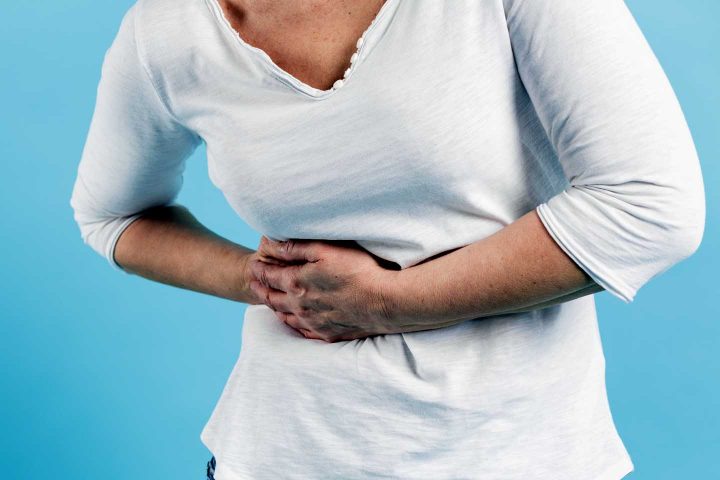
A woman with pain in the liver region - photo created by freepik - www.freepik.com

Liver steatosis has three stages, two of which are reversible (fatty and inflamed), and the third stage is Liver Cirrhosis, when the damaged parts of the organ form scar tissues and the disease becomes irreversible.

NAFLD Diagnosis

To assess the health of the liver, the doctor may order blood tests, imaging tests such as ultrasound, tomography and MRI, and even a biopsy, as these tests provide important information about alterations in this organ. The most used are imaging exams, due to their fast and high diagnostic accuracy. In the specific case of NAFLD, it is common to request the following blood tests:

The liver function test contains typically the markers ALT (Alanine Aminotransferase), AST (Aspartate  Aminotransferase) and GGT (Gamma Glutamyl Transferase), which assess the concentration of liver enzymes. They are complemented with Albumin, Bilirubin, Lactate dehydrogenase and prothrombin time. These tests are usually ordered together and provide important information about the liver’s condition.

Blood work to measure Glucose, Cholesterol and Hemoglobin are also part of the analysis.

Treatment

The treatment needs to be multidisciplinary. Lifestyle changes and control of risk factors should be encouraged.

It is important for the patient to seek a healthy, natural and wholesome diet, increasing the consumption of fruits, freshly prepared vegetables and whole grains rich in fiber.

A healthy breakfast

The intake of processed and ultra-processed foods, as well as refined carbohydrates, should also be reduced. These foods are harmful to the liver and have a high content of fat and sugars which contribute to excess weight, the main risk factor for hypertension, diabetes and NAFLD. It is good to avoid sweets, soft drinks, sugary drinks, margarine, cheese and fried foods in general.((https://www.sbhepatologia.org.br/pdf/FASC_HEPATO_31_FINAL.pdf))

Some herbs and teas can be useful for treatment. But beware of weight loss tea mixtures! In the search for weight loss to regain quality of life, patients diagnosed with fatty liver run the risk of complicating their condition. Although weight loss is considered the main pillar of treatment, it is important that weight loss is gradual. Rapid weight loss can aggravate steatosis because, before being “burned”, the fat stored in the body also passes through the liver, overloading it. The recommendation is to avoid rapid weight loss with these products, as even a natural product is not always harmless.

Some teas also have high detoxifying efficiency, but they must be inserted correctly in terms of dosage and timing of treatment, under the supervision of a doctor. Otherwise, the patient may progress to drug hepatitis, which occurs when the liver becomes inflamed by the action of the proper herbs.((Aray Nabuco e Wilson Vieira, COMO CONTROLAR A GORDURA NO FÍGADO – Coleção Saúde Essencial)) Always seek professional advice from a skilled doctor or nutritionist.

Drug hepatitis can occur from either herbal or regular prescription drugs. In this case, it is necessary to evaluate the cost-benefit and study the possibility of substitution. The use of anabolic steroids should be discontinued, and if steatosis is associated with other diseases, such as hypothyroidism or polycystic ovary, these conditions should be treated accordingly.((Hepatologia SBd. Doença Hepática Gordurosa Não Alcoólica: Consenso da Sociedade Brasileira de Hepatologia [internet]. Sao Paulo; 2017. [Accessed on: 07 out. 2021]. https://www.sbhepatologia.org.br/pdf/Consenso_DHGNA_da_SBH-2015.pdf))

There is no specific medication for steatosis, but some medications to control cholesterol, diabetes and obesity are indicated for some patients.

A very interesting herbal treatment is silymarin. It is an extract of the seeds of the herb Silybum Marianum, also popularly known as cardus marianus, milk thistle or Saint Mary’s thistle, and has been given for years to treat liver diseases.

Milk thistle flower - By Alvesgaspar CC BY-SA 3.0, https://commons.wikimedia.org/w/index.php?curid=10109722

Pre-clinical scientific studies indicate that silymarin can reduce oxidative stress and consequent cytotoxicity, thus protecting intact liver cells, or cells not yet damaged. Silymarin acts as a free radical scavenger and modulates enzymes associated with the development of cell damage, fibrosis and cirrhosis.((Gillessen A, Schmidt HH. Silymarin as Supportive Treatment in Liver Diseases: A Narrative Review. Advances in Therapy 37, 2020. DOI: 10.1007/s12325-020-01251-y))

In an analysis of treatment with patients that had diabetes and non-alcoholic cirrhosis combined, silymarin was also able to improve glycemic parameters. To obtain maximum benefit, treatment with silymarin should be started as early as possible, when the liver’s ability to regenerate is still high in patients with fatty liver disease.

Silymarin can be consumed as a tea or in the form of capsules and tablets, in order to complement the treatment indicated by the doctor, and must be accompanied by physical exercise and change of eating habits.

Getting rid of NAFLD mainly requires the patient’s commitment to change their unhealthy lifestyle. It is recommended to achieve a healthy weight, in a plan that combines physical exercise,((Hepatologia SBd. Doença Hepática Gordurosa Não Alcoólica: Consenso da Sociedade Brasileira de Hepatologia [internet]. Sao Paulo; 2017. [Accessed on: 07 out. 2021]. https://www.sbhepatologia.org.br/pdf/Consenso_DHGNA_da_SBH-2015.pdf)) using low and medium intensity activities, with changes in eating habits. Some scientific studies show benefits in using supplementation with Vitamin E, Omega 3, Vitamin D((Hepatologia SBd. Doença Hepática Gordurosa Não Alcoólica: Consenso da Sociedade Brasileira de Hepatologia [internet]. Sao Paulo; 2017. [Accessed on: 07 out. 2021]. https://www.sbhepatologia.org.br/pdf/Consenso_DHGNA_da_SBH-2015.pdf)) and herbal preparations such as silymarin. Treat your liver well, as it is essential for your health!

Healthy Fruits

Stay Always Up to Date

Sign up to our newsletter and stay always informed with news and tips around your health.

Sign Up Now!

Filed Under: Diseases, Metabolic Syndrome

The Metabolic Syndrome

January 15, 2021 by Esther Neumann - [rt_reading_time label="Reading Time:" postfix="minutes" postfix_singular="minute"]

Metabolic Syndrome

Obesity, high blood pressure, elevated blood sugar and increased triglycerides with simultaneously decreased HDL are the precursors of a heart attack. In the US, one third of the adult population suffer from metabolic syndrome, and in women at the age of 70 and over, the prevalence rises to about 60%((J.S.Moore et. al. Metabolic Syndrome Prevalence by Race/Ethnicity and Sex in the United States, National Health and Nutrition Examination Survey, 1988–2012. Prev Chronic Dis 2017;14:160287. DOI: http://dx.doi.org/10.5888/pcd14.160287)). Even in the so-called developing countries, obesity continues to play a greater role. For this reason, the World Health Organization is particularly concerned with the problem of metabolic syndrome.

The Metabolic Syndrome

Definition of Terms

The metabolic syndrome is a complex metabolic disorder, the main symptom of which is insulin resistance. This is an insufficient response of the muscle, fat and liver cells to the action of insulin. That means the pancreas produces enough insulin, but the cells don’t respond well enough. In 1999 the WHO suggested the following parameters to be diagnosed for metabolic syndrome: Being diabetic or having glucose intolerance/insulin resistance, together with 2 of the following factors:((R M Parikh, V Mohan. Changing definitions of metabolic syndrome. Indian J Endocrinol Metab. 2012 Jan-Feb; 16(1): 7–12. doi: 10.4103/2230-8210.91175))

  • Abdominal obesity with a waist/hip ration of above 0,9 in men and over 0,85 in women or Body Mass Index over 30 kg/m2
  • Elevated triglyceride levels above 150 mg/dl; decreased HDL, men below 35 mg/dl and women below 39 mg/dl
  • Elevated blood pressure above 140/90 mmHg
  • urinary albumin excretion rate above 20 μg/minute

Causes of Metabolic Syndrome

In recent years there has been increased research into genetic factors. The body composition, the type of muscle fibers and their blood flow, and the hormone and enzyme levels play an important role in the development of the metabolic syndrome. But the problem is only triggered by a faulty lifestyle on the part of the person himself. Alcohol, smoking and stress are important triggers, but also improper nutrition and, above all, a lack of exercise. For these reasons, we also speak of the prosperity syndrome.

As the name suggests, the syndrome involves mainly metabolic diseases such as obesity (severe overweight), diabetes, high blood pressure, blood clotting disorders and disorders of lipid metabolism. This results in organ damage such as arterial occlusive diseases, coronary heart diseases, strokes, or colloquially called hardened arteries.

Obesity

According to the WHO, obesity is already a pandemic. It is the leading cause of high blood pressure and diabetes. The absolute weight plays less of a role, but more the fat distribution. The belly fat causes much more problems than the fat on the thighs and hips. Excess fat does not just stay quiet until a fat reserve is needed. Instead, fat tissue is considered a hormonal organ. Many different substances, similar to hormones, are released from the fat cells. These in turn influence blood clotting, insulin resistance, high blood pressure and control energy expenditure, to name but a few.

Ice cream and an obese man

Sedentary Lifestyle

Physical inactivity is a risk factor by itself. Modern technology relieves us of a lot of activities that used to be mandatory. This ranges from remote controls to electronic typewriters to cars and escalators. Many professions today are sedentary and many leisure activities are carried out while sitting. Exercise falls by the wayside, just we would urgently need it to reduce our belly fat. Fortunately, the times of famine, for which a certain fat reserve would be beneficial, are not coming at the moment. Every now and then, a fasting day or skipping dinner days should be inserted – a programmed time of famine – in order to reduce excess body fat.

Increased Lipid Levels

Elevated triglycerides are often hereditary. But diet also plays an important role. If we eat high-fat, there will be lots of triglycerides circulating in the blood. Excess carbohydrates are also converted into fat in order to be stored, and insulin is needed for this process. A high-calorie diet paves the way for Diabetes.

Fortunately, there are some foods that can lower triglycerides. These include: soybeans, legumes, avocado, onion, wheat germ, and whole grains. We should incorporate several of these foods into our daily diet. Most of them help lower blood pressure at the same time. In addition, they do not contain cholesterol and even help to lower it, since we should keep cholesterol levels low.

Cholesterol is essential for life. That is why the body produces it itself. Without cholesterol, life would be bland, because it is the starting substance for sex hormones, as well as bile acid, aldosterone and cortisol. But the amount needed is very little, and any cholesterol in the diet will lead to excess. Here, too, there are foods that help to lower the cholesterol level: They are mainly nuts, avocados, flaxseed and chia, but also all fruits and vegetables.

LDL transports cholesterol to the body cells. We are used to call LDL the bad cholesterol. It’s just the taxi for the cholesterol. It only becomes dangerous when it oxidizes, i.e. reacts with oxygen and deposits as plaques in the vessel walls. This can be avoided by reducing oxidized cholesterol in the diet, not smoking, building up as little stress as possible and eating a lot of fruits and vegetables high in antioxidants, which are protecting the LDL from oxidation.

Decreased HDL

Most Metabolic Syndrome patients have low HDL levels. However, high values protect the blood vessels. HDL is the taxi for cholesterol back to the liver when it is not needed in the cells. We can increase the HDL levels by plenty of exercise. People who do regular exercise have higher levels.

High Blood Pressure

About 40% of overweight people also have high blood pressure. No wonder, because for every additional pound of fat, an extra mile of new blood vessels have to be created (3,5 km for every kg of fat). The heart therefore has to work harder. Smoking and drinking coffee, black and green tea also narrow the vessels and should be avoided. Apples, pears, grapefruits, pumpkin and celery all help lower blood pressure. They have hardly any sodium, but a lot of potassium. These two minerals are primarily that regulate blood pressure. Sausage, cheese, ham and cured meat are high in sodium, which increases blood pressure. Therefore we should avoid these foods.

Elevated Blood Sugar

This cause of Metabolic Syndrome can also be hereditary. But the trigger is again lifestyle. Lack of exercise, obesity and a high fat diet promote the development of diabetes. The resulting damage of diabetes can be very serious: blindness, kidney failure, amputation of legs and cardiovascular disease.

Diabetes test - Photo by Polina Tankilevitch from Pexels

What can you do? Here weight reduction is again called for, through exercise and a sensible diet. Olive or canola oil are positive fat sources, as well as nuts and seeds. Fruits, vegetables and whole grains provide a lot of fiber, fill you up and help that the sugar from food flows more slowly into the bloodstream.

Drug Treatment of the Metabolic Syndrome

Unfortunately, the Metabolic Syndrome delivers a whole package of metabolic disorders. The drug treatment is accordingly, and one or more drugs for each of the problems are applied. And quickly you have gathered half a pharmacy. The doctor will prescribe all essential drugs for treating the disorders. Unfortunately, a doctor rarely has time for lifestyle advice or has little experience with proper nutrition.

The far more sensible way would be a change in lifestyle and diet, as has been listed under the individual points above.

Hope on the Horizon

A group of doctors who study the Metabolic Syndrome in great detail give hope: “The Metabolic Syndrome can be treated quite effectively. If obese people having Metabolic Syndrome lose significant weight, the metabolic disorder has disappeared in most of them. Almost everyone can reduce their medication or stop it altogether.”

I would also like to encourage in this direction. Metabolic Syndrome patients need to find a way to get more exercise. Support Groups can help. If there isn’t one around, why not start one yourself? Diet and lifestyle courses bring help. Lifestyle changes are therefore undertakings in the right direction – and success is certain!

Filed Under: Diseases, Metabolic Syndrome, Obesity

Primary Sidebar

Social Channels

Coronavirus Immunity Challenge

Boost your immune system to be bullet-proof for the pandemic.

I Want to Participate

Recent Posts

  • 5 Habits to Live Longer
  • Better Sleep Can Protect Against Dementia
  • Finding Peace In Your Crazy-Busy World
  • Flaxseed – An Ancient Plant Rediscovered
  • Platelets – Triggers for Life or Death
  • Boderline Personality Disorder
  • In Praise of Almonds and Nuts
  • Are You Stuck in the Clutter Trap?

Categories

  • Body Systems (16)
    • Cell Function (2)
    • Circulatory System (1)
    • Digestive Tract (10)
    • Immune System (4)
  • Diseases (27)
    • Cancer (2)
    • Cold (1)
    • COVID-19 (11)
    • Dementia (1)
    • Diabetes (1)
    • Digestive Diseases (2)
    • Heart Disease (2)
    • Kidneys (1)
    • Metabolic Syndrome (2)
    • Skin (1)
  • Healthy Lifestyle (42)
    • Exercise (11)
    • Gardening (2)
    • Sleep (7)
    • Sunlight (2)
    • Temperance (14)
    • Water (4)
  • Mental Health (87)
    • Addictions (6)
    • Anxiety (7)
    • Burnout (1)
    • Depression (7)
    • Psychosomatic Diseases (6)
    • Stress Management (45)
    • Trust (6)
  • Nutrition (56)
  • Obesity (9)
  • Phases of Life (14)
    • Adults (3)
    • Babies and Infants (1)
    • Children (3)
    • Seniors (5)
    • Teenagers (3)
  • Therapies (7)
    • Herbs (5)
    • Hydrotherapy (1)
  • Uncategorized (3)

Archives

  • January 2025 (1)
  • March 2024 (5)
  • February 2024 (4)
  • January 2024 (4)
  • December 2023 (5)
  • November 2023 (4)
  • October 2023 (5)
  • September 2023 (4)
  • August 2023 (3)
  • July 2023 (2)
  • June 2023 (4)
  • May 2023 (4)
  • April 2023 (5)
  • March 2023 (4)
  • February 2023 (4)
  • January 2023 (4)
  • December 2022 (4)
  • November 2022 (4)
  • October 2022 (5)
  • September 2022 (4)
  • August 2022 (4)
  • July 2022 (5)
  • June 2022 (4)
  • May 2022 (5)
  • April 2022 (4)
  • March 2022 (4)
  • February 2022 (4)
  • January 2022 (5)
  • December 2021 (3)
  • November 2021 (4)
  • October 2021 (6)
  • September 2021 (4)
  • August 2021 (4)
  • July 2021 (5)
  • June 2021 (4)
  • May 2021 (3)
  • April 2021 (5)
  • March 2021 (4)
  • February 2021 (4)
  • January 2021 (5)
  • December 2020 (3)
  • November 2020 (4)
  • October 2020 (5)
  • September 2020 (5)
  • August 2020 (3)
  • July 2020 (1)
  • June 2020 (1)
  • May 2020 (1)
  • April 2020 (1)
  • March 2020 (1)

Copyright © 2026 · Abundant Health - Privacy Policy - Medical Disclaimer