A vast combination of microorganisms live in our gut, including bacteria, fungi and viruses. Collectively, we refer to this as the microbiome. Despite their tiny size, these microbes have significant effects on our health and wellbeing. In fact, the microbiome is often referred to as the “second brain” due to the extensive relationship it has with the body’s organs and systems.
One role in particular the microbes in our gut play is supporting immune function. They help to control local and systemic inflammation, the process by which the immune system protects us from harmful pathogens.((Zheng, D et. al. Interaction between microbiota and immunity in health and disease. https://doi.org/10.1038/s41422-020-0332-7))
So it’s not entirely surprising that research has shown the make-up of bacteria in the gut may influence the severity of a COVID infection.((Kageyama, Y et.al. Lactobacillus plantarum induces innate cytokine responses that potentially provide a protective benefit against COVID‑19: A single‑arm, double‑blind, prospective trial combined with an in vitro cytokine response assay. Experimental and Therapeutic Medicine, 23, 20. https://doi.org/10.3892/etm.2021.10942)) At the same time, evidence is beginning to suggest a COVID infection could affect the balance of bacteria in the gut, which might go some way to explaining why some people have persistent symptoms after a COVID infection.((Bernard-Raichon, L et.al. Gut microbiome dysbiosis in antibiotic-treated COVID-19 patients is associated with microbial translocation and bacteremia. https://doi.org/10.1038/s41467-022-33395-6))
The microbes in our gut provide essential signals for our immune responses across the body, including in the lungs. A “healthy” gut microbiome comprises a broad range of bacteria, though is not identical in every person. Studies have previously shown that a healthy gut microbiome can improve the immune response to respiratory infections by regulating immune cells and messages.((Shanahan F et. al. The Healthy Microbiome—What Is the Definition of a Healthy Gut Microbiome? https://doi.org/10.1053/j.gastro.2020.09.057))
On the flip side, evidence shows a poorer composition of gut bacteria increases susceptibility to influenza infections in the lungs,((Looft T, Allen H. Collateral effects of antibiotics on mammalian gut microbiomes, Gut Microbes, 3:5, 463-467, https://doi.org/10.4161/gmic.21288)) and leads to reduced clearance of germs from the lungs in mice.((Fagundes C et. al. Transient TLR Activation Restores Inflammatory Response and Ability To Control Pulmonary Bacterial Infection in Germfree Mice. J Immunol 1 February 2012; 188 (3): 1411–1420. https://doi.org/10.4049/jimmunol.1101682))
With COVID, it similarly appears that the make-up of the gut microbiome can influence the course of disease. Research has shown an association between the microbiome profile and levels of inflammatory markers in patients with COVID, where patients with a poorer combination of gut bacteria show signs of too much inflammation. This suggests the microbiome influences the severity of a COVID infection via effects on the immune response.((Yeoh YK, Zuo T, Lui GC, et al. Gut microbiota composition reflects disease severity and dysfunctional immune responses in patients with COVID-19. Gut 2021;70:698-706. https://gut.bmj.com/content/70/4/698))
Unbalancing the microbiome
Just as the composition of our gut bacteria appears to influence how we fare with COVID, the reverse might also be true – a COVID infection could affect the make up of our gut bacteria. Specifically, it seems COVID might throw off the balance between “good” and “bad” microbes in a person’s microbiome.
Studies have shown a significant difference in the gut microbiome between COVID patients and healthy people.((Zuo T, Liu Q, Zhang F, et al. Depicting SARS-CoV-2 faecal viral activity in association with gut microbiota composition in patients with COVID-19. Gut 2021;70:276-284. https://gut.bmj.com/content/70/2/276)) We see a reduction in bacterial diversity in the gut in COVID patients – so a smaller range of species, as well as substantial differences in the species of bacteria present.((Bernard-Raichon, L., Venzon, M., Klein, J. et al. Gut microbiome dysbiosis in antibiotic-treated COVID-19 patients is associated with microbial translocation and bacteremia. Nat Commun 13, 5926 (2022). https://doi.org/10.1038/s41467-022-33395-6))
Notably, scientists have observed a reduction in a group known as commensal bacteria in COVID patients, which act on the immune system to help prevent invasion by pathogens.((Yeoh YK, Zuo T, Lui GC, et al. Gut microbiota composition reflects disease severity and dysfunctional immune responses in patients with COVID-19. Gut 2021;70:698-706. https://gut.bmj.com/content/70/4/698)) This may increase our risk of other infections after COVID. Simultaneously, there appears to be an increase in a variety of opportunistic pathogenic bacteria that are known to cause infections.
This “imbalance” is called dysbiosis, and these changes have been shown to still be present in patients 30 days post-infection.((Yeoh YK, Zuo T, Lui GC, et al. Gut microbiota composition reflects disease severity and dysfunctional immune responses in patients with COVID-19. Gut 2021;70:698-706. https://gut.bmj.com/content/70/4/698))
Recent studies have suggested gut dysbiosis is linked to the movement of gut bacteria into the blood during a COVID infection.((Bernard-Raichon, L., Venzon, M., Klein, J. et al. Gut microbiome dysbiosis in antibiotic-treated COVID-19 patients is associated with microbial translocation and bacteremia. Nat Commun 13, 5926 (2022). https://doi.org/10.1038/s41467-022-33395-6)) In mice, COVID caused changes in a variety of parameters associated with gut barrier permeability, meaning things can theoretically move more easily through the gut wall.
In 20% of human COVID patients in this same study, certain bacteria from the gut had migrated into the bloodstream. This group was at higher risk of developing a secondary infection in the blood.
Research is now also showing that dysbiosis following COVID may contribute to long COVID,((Lantinga MA, Mönkemüller K. COVID-19 in gastroenterology and hepatology: Where will we be? United European Gastroenterol J. 2021 Sep;9(7):743-744. https://doi.org/10.1002%2Fueg2.12121)) with gut dysbiosis more prevalent in patients presenting with long-term COVID symptoms.((Giannos, P. and Prokopidis, K. (2022), Gut dysbiosis and long COVID-19: Feeling gutted. J Med Virol, 94: 2917-2918. https://doi.org/10.1002/jmv.27684)) This makes sense because dysbiosis seems to put the body in a heightened and constant state of inflammation – something that’s associated with chronic COVID symptoms.((Yeoh YK, Zuo T, Lui GC, et al. Gut microbiota composition reflects disease severity and dysfunctional immune responses in patients with COVID-19. Gut 2021;70:698-706. https://gut.bmj.com/content/70/4/698))
Supporting your immunity
As we continue to develop a more comprehensive understanding of gut microbes and their role in inflammation, how can you help keep your immune system healthy to protect yourself against COVID and other infections?
Certain nutrients, including vitamins A, C, D and E as well as iron, zinc and omega-3 fatty acids, all have positive effects on immune responses against viral infection.((Zhang, L, Liu, Y. Potential interventions for novel coronavirus in China: A systematic review. J Med Virol. 2020; 92: 479– 490. https://doi.org/10.1002/jmv.25707))
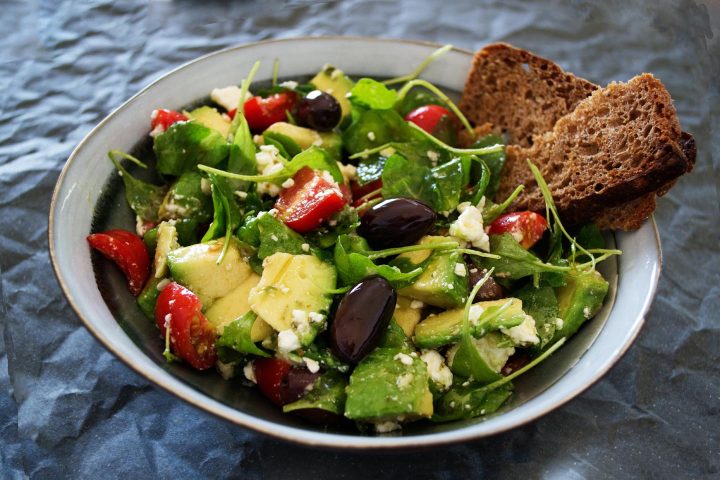
A Mediterranean diet, which is rich in vitamins, minerals and dietary fiber, has an anti-inflammatory effect in the gut.((Ganesan, K.; Chung, S.K.; Vanamala, J.; Xu, B. Causal Relationship between Diet-Induced Gut Microbiota Changes and Diabetes: A Novel Strategy to Transplant Faecalibacterium prausnitzii in Preventing Diabetes. Int. J. Mol. Sci. 2018, 19, 3720. https://doi.org/10.3390/ijms19123720)) Interestingly, a strain of bacteria known as Faecalibacterium prausnitzii is key to immune regulation.((Nagpal R, Shively CA, Register TC, Craft S, Yadav H. Gut microbiome-Mediterranean diet interactions in improving host health. F1000Res. 2019 May 21;8:699. https://doi.org/10.12688%2Ff1000research.18992.1)) It’s frequently low in the western diet, but abundant in the Mediterranean diet.
Ideally you should avoid too many refined cereals, sugars and animal fats, which can all heighten inflammation in the body.((Trompette, A., Gollwitzer, E., Yadava, K. et al. Gut microbiota metabolism of dietary fiber influences allergic airway disease and hematopoiesis. Nat Med 20, 159–166 (2014). https://doi.org/10.1038/nm.3444))
Probiotics, supplementary blends of live bacteria, may also have benefits. A blend of bacterial strains Lactiplantibacillus plantarum and Pediococcus acidilactici was shown to reduce the quantity of virus detected in the nasal passage and lungs, as well as the duration of symptoms in COVID patients.((Gutiérrez-Castrellón P et. al. Probiotic improves symptomatic and viral clearance in Covid19 outpatients: a randomized, quadruple-blinded, placebo-controlled trial, Gut Microbes,14:1,DOI: 10.1080/19490976.2021.2018899))
This combination also significantly increased the production of COVID-specific antibodies, suggesting probiotics act directly by interacting with the immune system, rather than solely changing the composition of the gut microbiome.
Finally, moderate exercise can also help support the immune system to fight COVID.((da Silveira MP et. al. Physical exercise as a tool to help the immune system against COVID-19: an integrative review of the current literature. Clin Exp Med. 2021 Feb;21(1):15-28. https://doi.org/10.1007%2Fs10238-020-00650-3))

Stay Always Up to Date
Sign up to our newsletter and stay always informed with news and tips around your health.
This article is republished from The Conversation under a Creative Commons license. Read the original article.

Leave a Reply