Abundant Health

Up to date health information tailored for you

  • Home
  • Blog
  • Recipes
  • Shop
  • Contact
You are here: Home / Archives for Mental Health / Stress Management

Stress Management

Seven Foods to Reduce Stress

September 12, 2021 by Martin Neumann - [rt_reading_time label="Reading Time:" postfix="minutes" postfix_singular="minute"]

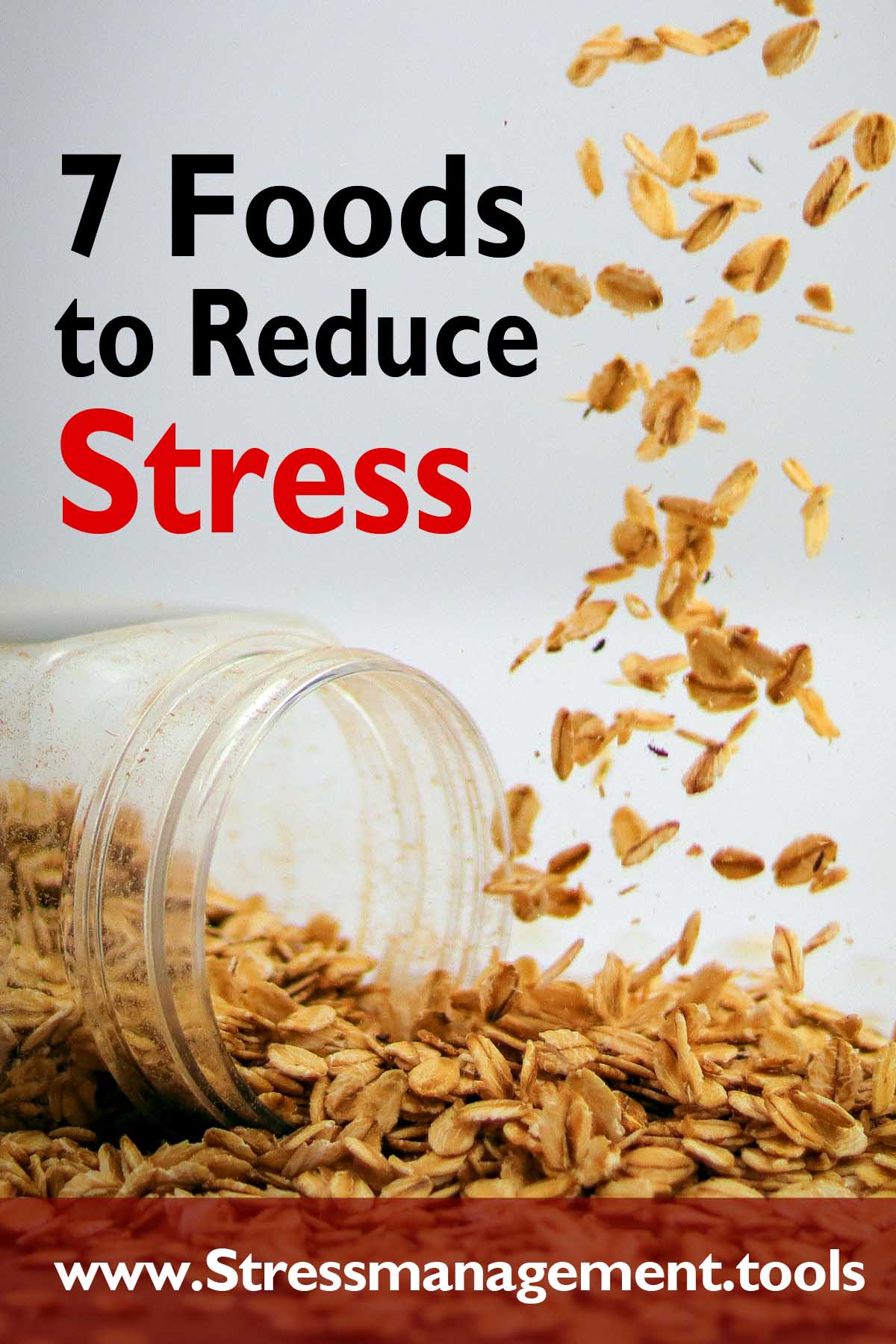
7 Foods to Reduce Stress

Just thinking about all the chores that are building up, the errands you have to run, the looming work deadlines and the social demands on your overbooked calendar can run you ragged. Talk about stress!
Seven Foods to Reduce Stress

If left unchecked, stress can lead to many health problems, including heart disease, diabetes, obesity, and high blood pressure. Not to mention stress can also take a toll on your thoughts and behavior.

When life gets hectic and we’re feeling stressed, we tend to put healthy eating on the back burner. But heading to the vending machine or grabbing a meal at the drive-thru won’t alleviate the stress in your day.

To combat stress levels, take a look at what you eat. It may actually help relieve your tension. In fact, certain foods can help stabilize your blood sugar levels, can lower your cortisol and change your emotional response to stress.

Here are seven foods you can eat to reduce stress.

1. Oatmeal

This slow burning breakfast food is the perfect comfort food. It stimulates your brain to produce the feel-good chemical serotonin, which is antagonic to the stress hormone cortisol. Increasing serotonin will help you keep your cortisol level low.

A bowl of oatmeal wit fruits - Photo by Thiea Alhoz from Pexels

The soluble fiber in oatmeal keeps you fuller for longer as it provides a slow burn, maintaining your glucose level more stable throughout the morning. It’s sure to help you stave off stress and stay focused throughout your morning.

When we’re stressed our blood pressure can become elevated. A study published in the American Journal of Clinical Nutrition found that a diet which includes whole grains such as oats can lower blood pressure. Actually, all forms of whole grains like whole wheat bread, brown rice or whole wheat pasta will give you the same kind of benefits.

2. Brazil Nuts

This nut from the Amazon Rainforest is one of the best food sources of selenium. This mineral is an essential element to calm your nerves, alleviate fears, improve your mood and increase your energy levels. Besides that, selenium can help to improve your immune system. It is also important for proper thyroid function, cancer prevention and protects the body in many other ways. A consumption of 3 or 4 nuts will give you an adequate amount of selenium for the day.

Brazil Nuts - Source: Wikipedia

3. Flax Seeds

This superfood is an excellent source of magnesium which may help regulate emotions, alleviate depression, combat fatigue and minimize irritability. Magnesium can also help fight PMS!

Flax seeds contain Omega 3, which is helpful for inhibiting inflammation and is great for cortisol reduction. Furthermore, it may improve mood by helping neurons to communicate with one another. Studies also showed a reduction of anxiety with the consumption of Omega 3.

Flaxseed is absorbed best, if you grind the seeds shortly before consumption. It is good to grind only what you consume in 2-3 days. Use a tablespoon daily in your food, over your salad, and in bakeries like bread and cakes. Mix 8 parts of toasted and ground flaxseed with one part of salt, and you have an excellent spicing for your salad plate.

A bowl of flaxseed - Photo by Vie Studio from Pexels

You can also include other omega-3 rich foods in your daily diet such as chia seeds, walnuts, wheat germs, tofu and cauliflower.

4. Citrus Fruits

Instead of reaching for sugary treats during stressful times, why not choose oranges, kiwis, some berries or any citrus fruit? Vitamin C can help slow down your body’s production of cortisol while also quickly clearing it from your bloodstream.

Vitamin C is also beneficial for the prevention of blood pressure spikes that usually occur as part of your body’s response to stress.

Get a good amount of citrus fruits in your diet. Citrus reduces levels of the stress hormone norepinephrine, thus making us feel much better.

5. Garlic

A Japanese study discovered that garlic is effective in reducing cortisol levels. Garlic is also a good source of antioxidants, strengthens the immune system and helps to lower blood pressure.

Garlic has lots of protective phytochemicals. Photo by Nick Collins from Pexels.

6. Microgreens

Microgreens are salad greens picked very young, usually soon after the first leaves have formed. The great thing about microgreens is that they contain higher concentrations of stress-busting vitamin C. Young cilantro and baby red cabbages contain up to six times more vitamin C than their mature versions.

If you have the time and space, growing your own microgreens is a good way of bringing nature into your home and of making nutrition just a hand-pick away. If not, they are usually readily available in the produce section of the supermarket, as they are highly sought for their nutritive, taste and garnishing qualities.

Microgreens in a bowl - Photo by Mikhail Nilov from Pexels

7. Cashews

These kidney-shaped nuts are a good source of zinc which is a critical mineral that can help reduce anxiety symptoms such as irritability and lack of focus. Other good sources of zinc are sesame, flax seeds, Brazil nuts, chickpeas and lentils. Cashews are also a source of magnesium which is good for your emotions. You can easily add a few nuts for breakfast, or use them to decorate your salad at lunch.

Conclusion

In recent years science has discovered more and more links between the foods we eat and the way we feel. We have given you seven examples of foods you can add to your diet, that can help you relieve stress and improve your health and wellbeing. Actually, using plenty of plant-based food sources, the way that God has created them, will give you a lot of benefits for your health and mental well-being. Try it out for yourself!

Do you need a guide to help you understand how to cope with Stress in an all inclusive approach? Learn how to combat stress, mentally, physically, emotionally and strategically in your life.

Get Me the Guide

What food do you turn to in times of stress? Share it with us in the comments.

Filed Under: Mental Health, Nutrition, Stress Management

Are You Stressed Out about Having no Time?

August 15, 2021 by Martin Neumann - [rt_reading_time label="Reading Time:" postfix="minutes" postfix_singular="minute"]

Are You Stressed Out About Having No Time?

You surely heard the phrase: Time is Money. We may agree, but in practical terms, are you one of those people who turn around any penny you spend, but you do not think much about how you are spending your time? Do you try to do everything at the same time, but at the end you are frustrated that there are not enough hours in the day, and you catch yourself saying: I have no time? I think it is on the time to think about budgeting our time.

Are You Stressed Out about Having no Time?

If you are successful, you are able to earn more money, but there is something that not even a millionaire has more than you, and this is time. Everybody has 24 hours a day. Time is a finite resource. If you think about your time, you need to think how you want to invest it the most effective way. Are you smart in investing your money? Now think about the return of investment you will get from your time. Where are you going to invest it the most sensible way? This phrase gets it to the point:

Time is what we want most, but what we use worst.

William Penn

Set Priorities

President Eisenhower had an interesting approach to time management. He organized all his tasks in four quadrants: urgent or not urgent, important or not important. The urgent and important quadrant is the one you should give your priority.

There are some tasks that are important but not urgent, like your continual education for example. They will be coming right next in the priority list, and you should schedule a regular time for them each week, so that you make continual progress on something that will give you a better position in the future.

Now the urgent but not important category, you need to evaluate carefully if they are worth your time. Some tasks you may be able to delegate. Others you may drop from your list. You need to learn to focus on items that make the biggest difference at the end. The list of neither urgent nor not important items, you better store away for a day that you have really nothing else to do, but do not let your mind dwell on them.

I have heard another approach that can be quite interesting as well. You define 2 or 3 projects that you want to work on for this week or the near future. Those are the things that need your full attention at this moment. Then you have 3 or 4 projects that you target as next on the list. You may do a little bit of preparation to get the ball rolling, or you may start to work on them if you have some time left, but they are not your top priority for now. Everything else will go into the Maybe Later list, and you do not need to even think about them. Whatever method you use, you need to have a clear criteria, what is the priority for you to tackle at this exact moment.

Invest your Time Wisely

Think about your time as an investment. You need to think, what investment will give you the best returns. Think about sleep for example. If you sleep the hours you need, you will be energized the next day to tackle the tasks at hand with efficiency. If your cut your corners on sleep, your performance will suffer.

Sleeping man -  Photo by Andrea Piacquadio from Pexels

It is actually a wise move to go to bed early and rise early, in order to start your most important tasks when your mind is fresh in the early morning hours. We know that one hour of sleep before midnight is worth two hours of sleep after midnight. So it is a wise investment to go to bed with the chicken and get the greatest benefit from your sleep time.

Be sure to start your day right. When you wake up, spend some time in the presence with God, so He can give you some insights for the day. You will see that things will flow differently when you are doing that. Be sure to get a good breakfast without any rush, because a substantial meal in the morning will give you the energy you need to start the day right.

Exercise is another time investment that will pay you high dividends. If you put in half an hour of vigorous exercise every day, it will surely safe you an hour or two while you work with more efficiency, plus you will put some time in your savings account, since it can prolong your live for several years. Talk about a wise investment!

Automation can be another investment that can pay you high dividends. Why do you need to tackle your payments every month, when you can automate them? It takes you once to set it up, but then you will never need to think about it again!

Budget Your Time

Like you have a budget for your expenses, you should have a budget on your time. When making a purchase, many people will be out to search for the best deal, instead of reflecting first: Do I really need this?

The same is true for time management. Most people will teach you how you can do your tasks the most effective way in order to save a minute here and get done more in your day. Instead of this, you should look at your schedule fist and reflect if you should not simply stop many of the activities you are doing.

Any commitment you make, think first if it is really worth your investment. What are your fist priorities? Your family? Your friends? Making a difference in your community? And at your work, what can make the biggest impact? Cut out some activities that are not essential and do not contribute to the advancement of your priorities.

Every activity you are planning to do, you need to estimate how much time it will take you. If it is something you have done in the past, you will have a good indicator how long it will take you. If it is something you never did before, you need to break it down in different steps, and estimate every step how long it will take you. Your estimate will be more accurate this way.

After having quantified your time investment, you need to evaluate if it is worth it, the same way you look at a product in the store to think if it is worth that price. Next you need to schedule the time in your calendar. If you do not have the time available, you need to either decline the commitment, or you need to drop off some low priority activities you have already scheduled in your calendar. Doing your proper planning can help to avoid a lot of surprises on the way, and will maximize the impact you can achieve with your limited time.

Price tag for fruits - Photo by Wendy Wei from Pexels

Track your Time

There are many ways you can track your time. Some apps can track your activities you do on the computer. Some people like a Fitbit watch that will track their sleep, their exercise and various other activities during the day. Some do a simple feedback on the end of your day, while others like to use an app to do a more sophisticated evaluations of their time. Tracking style can vary, but you should be conscious on how you are using your time.

It happens so often that we are just quickly looking something up on the internet, and before we realize, we have spent an hour surfing around without any purpose. Multitasking is another thing that was increasing greatly in the digital era. On average we are checking every 6 minutes on emails and instant messaging. That is draining your productivity. You need to get into the habit of being focused on one task, and when you are done, you can have a look whether somebody was writing you on messenger.

According to studies, an internet user is spending on average 2:25 hours a day on social media.((Daily time spent on social networking by internet users worldwide from 2012 to 2020. Statistica)) You add to that almost 3 hours of TV time per day, and you see quickly why we have no time left.((Average daily time spent watching TV in the United States from 2014 to 2023. Statistica))

Start to reflect on your habits. Are the 2 hours of scrolling the infinite feed of Facebook really well spent? And when you watch a video on YouTube, how many suggested videos you end up binge watching afterwards? Is this time really well invested, or are there other activities that would be really worth your time?

Do you have no time to play with your kids? Are you wanting to start a hobby for a long time? You are thinking to learn a new language? You want to learn an instrument that you desired to play since you were a kid? I have just freed you up 5 hours a day to do all of that if you want.

Be Realistic in Your Expectations

It is interesting to see how times have changed. When a hundred years ago, a farmer was plowing a field, it may have taken him a day or two, and another week for planting, but at the end he was looking back at his work and he was satisfied with his accomplishments.

A traditional farmer after plowing the field - Photo by Archie Binamira from Pexels

Nowadays things are going faster. A tractor will plow the field within an hour, and an email can go around the globe within seconds. Things are moving much faster. But with that we have also different expectations. If we have no time, because we have overcommitted ourselves.

Our changed expectations will also show up in our homes. While the farmer’s wife was not worried about the dirty kitchen floor while cooking lunch, our kitchen today needs to be sparkling clean. The house got bigger, consuming more time for cleaning and maintenance, and the yard needs to be perfectly cared as well. Think about this statement:

Life is a disappointment and a weariness to many persons because of the unnecessary labor with which they burden themselves in meeting the claims of custom. Their minds are continually harassed with anxiety as to supplying wants which are the offspring of pride and fashion…

The sweet word “Home” is perverted to mean “something with four walls, filled with elegant furniture and adornments,” while its inmates are on a continual strain to meet the requirements of custom in the different departments of life.((Ellen White, The Adventist Home p. 150))

I think it is time to make some adjustment on our expectations. Not everything needs to be perfect, and normally simpler is better.

Better Done than Perfect

We can roughly divide people in two groups: Maximisers and Satisficers. Maximizers are a tribe of perfectionists. If they buy a new phone, they will study all the available reviews for a week, and try to purchase the very best. And even then, they are still concerned whether they have made the right choice.

A satisficer at the other hand will walk into the store, look for the first phone that looks right, asks the dealer if it does what he is looking for and purchase it on the spot.

When it comes to answer an email, the maximiser will investigate the question he was asked, try to write a lengthy response, rewrite it three times to formulate it better, getting all the punctuation right and sending it out when he thinks it is perfect. The satisficer will simply throw in a quick response, maybe not even write a complete phrase, and hoping that it answers the question he was asked for, because if not, they will ask back anyways.

It is easy to see that the satisficer will get much more done in a shorter time, and he will feel more satisfaction on the end of the day. I guess it is important to find a healthy balance between the two. We need to learn to invest our time where it matters most. If my work can really have an impact, it is worthwhile to invest some more time, but when it comes to writing an email, we better get it over, so we can make time for things that really count. And even on the impactful projects, sometimes it is better to get it out and improve later, then to try to make it perfect and never get done.

Plan Your Week

When you are planning your week, you want to look at the bigger picture. You think about maybe 2 or 3 major projects to tackle and schedule their time. You also want to block out some time for essential goals that are not in the urgent category.

A Calendar - Photo by RODNAE Productions from Pexels

Then you look at your last week. You have scheduled anything that was left undone? Next look at the upcoming meetings and commitments that you have scheduled. Are they still your priorities? If not, you can decline or reschedule some of them.

And do not fill up your schedule to the maximum. Some tasks may take you longer than planned, and unexpected surprises are coming up all the time. Maybe keep some time open on Friday to catch up with things you could not get done during the week. This way you can get into the weekend with a satisfaction that you have accomplished your goals.

Daily Planning

When starting out in the morning, you need to spend a few minutes to get on track with your operating plan of the day. Is there anything left undone from the day before? What meetings do you have scheduled? Was there anything new coming up that needs to be treated with urgency? What are your top priorities?

Plans are important, but they are not set in stone, so you need to always recalibrate to reach your goals. But having something sketched out on paper, helps you to be more efficient in order to accomplish your priorities.

Get in Alignment with Your Passions

In a study of more than 3000 working people, researchers found out that those who were passionate about what they were doing, did feel less of a time pressure.((Jachimowicz J et.al. Why Passionate Employees Can Have It All: Passion Lowers Time Stress by Enhancing Goal Integration. https://psyarxiv.com/qd2zf/)) It is not so much about how long the activity takes, but more of how much you enjoy it. A sense of accomplishment did mean that they did not feel that their time was wasted.

A satisfied man - Photo by Jonathan Borba from Pexels

Researchers found also that some people perceived activities as competing for their time. For example, they felt that engaging themselves in the company was conflicting with coming home in time for dinner. Passionate workers on the other hand felt that activities were complementing, since a healthy meal at home with family was giving them more energy for the next day’s work.

Get Divine Wisdom

You have done everything and you are still struggling to make ends meet in your schedule? Is there an emergency coming up and you don’t know how to handle it? James was giving us an interesting counsel many years ago:

If any of you lacks wisdom, let him ask of God, who gives to all liberally and without reproach, and it will be given to him.((The Bible, James 1:5, NKJV))

James 1:5

If you are on a tight spot, you can always turn to God, and He will give you wisdom on how to deal with your situation. So often He is able to show us the right priorities, or what to do to avoid being stressed out about our day. And He has promised to be on your side as your Heavenly Father. Jesus gave us another wonderful promise:

Come to Me, all you who labor and are heavy laden, and I will give you rest. Take My yoke upon you and learn from Me, for I am gentle and lowly in heart, and you will find rest for your souls.((The Bible, Matthew 11:28.29))

Matthew 11:28.29

We do not need to resolve everything on our own. If there is something burdening you, then you can bring it to Jesus and he promised to help you. When you do not know whether you should take up a commitment, have a conversation with Jesus and ask him if he wants you to do this, or pass it on. Understand the purpose that God has for your life. Then you will have a clearer picture on how you can make really the best of every hour that God has given to you.

Do you need a guide to help you understand how to cope with Stress in an all inclusive approach? Learn how to combat stress, mentally, physically, emotionally and strategically in your life.

Get Me the Guide

Filed Under: Mental Health, Stress Management

9 Rules for Improving Sleep to Reduce Stress

July 17, 2021 by Martin Neumann - [rt_reading_time label="Reading Time:" postfix="minutes" postfix_singular="minute"]

9 Rules for Improving Sleep to Reduce Stress

There’s a strong correlation between how much sleep you get and how stressed you are. It’s a vicious cycle that can cause mental distress and even wreak havoc on your physical well-being.

9 Rules for Improving Sleep to Reduce Stress

It’s a well-known fact that people who don’t get enough sleep are lethargic and constantly experiencing an energy slump. This causes irritability, which also makes it hard to fall asleep. The reverse is also true. When you experience an exorbitant amount of stress during the day, it causes you to lie there awake – and that piles on more stress for the upcoming day. In many cases, this is leading to a vicious cycle that is complicating your stress more and more.

The Huffington Post conducted a poll where they asked people what their #1 stressor was. Lack of sleep was one thing that dominated the results. Stress and a lack of sleep combined can cause you to lose mental clarity and they can put more pressure on your body to perform at less than optimal standards.

For this reason it’s vital that you learn how to implement stress relief measures that also work to lull you to sleep at night. When you wake up fully refreshed, you’ll be able to tackle the world and anything it throws at you!

Rule #1 – Implement a Bedtime Technology Ban

If you want to toss and turn and have trouble to wake up in the morning, just keep your cell phone right by your bed. For some of you, that won’t be a problem – but for many people, it’s become an addiction that disrupts their sleep routine and causes a lack of sleep.

Some people have their computer right beside the bed and the glow of it lights up the room at night. The same is true for notifications that come in on cell phones – sometimes with lights and sometimes with the inclusion of sounds.

Not only is it a physical factor, but it causes a certain amount of mental unrest when you’re constantly checking emails or looking to see who posted what on Facebook.

Man using cellphone in bed - Photo by Ketut Subiyanto from Pexels

The physical distraction of the computer glow tricks your body into thinking it’s time for you to be awake. Your body won’t produce the melatonin it needs and help you get (and stay) asleep, so you toss and turn all night.

Technology doesn’t just have to be left out of the bedroom – it needs to be shut down quite awhile before you go to bed. Your mind needs time to disconnect and wind down itself, and it can’t do that if you’re constantly feeding it information. If you go to bed at 10 PM, try disconnecting around 8:30 PM. Let your stress melt away and your mind relax. By the time you go to bed, all technology should be switched off or transferred to a different room. This isn’t an easy habit to break, but by having a plan you’ll be able to implement it.

Rule #2 – Create an Environment Conducive for Sleep

Your bedroom can do a lot to improve your sleep quality. First of all, it should be completely dark at night. Our sleep cycles are influenced by the dark light cycle, and a good night’s rest requires a completely dark bedroom. No lights on, and no electronic gadgets that are emitting light. If you have street lights out of your window, invest in a good curtain to block them off. Your sleep quality will appreciate it.

Next, your bedroom should be quiet. Some people got used to sleeping with radio or TV at night, and it seems to give them a certain sense of security. Just the sleep quality suffers from that, and in the long run, it might be better to find ways to overcome this habit. If you are impacted by street noise right outside your bedroom window, you may want to invest in double or triple glass sound blocking windows for your home. Your mind needs to be able to fully relax overnight and refresh your energies for the next day.

Be sure to also avoid any distractions inside your bedroom. This room should be designed for sleep, and not for continuing the frenzy you are suffering already all day long. The TV can stay in the living room where it belongs. And the less clutter you have in the room, the more your mind will feel at rest.

A quiet bedroom

What can help a lot in the quality of your sleep is a good mattress. At the end of the day, you are spending one-third of your time in bed, and you should make sure that this time will be comfortable. A good mattress will be comfortable, but still firm, in order to give proper support to your spine. A pillow that is right for you can complement the comfort of your bed.

If you have trouble falling asleep, you can use a branch of lavender and put it below your pillow. As an alternative, you can purchase a lavender extract and sprinkle a few drops on your bed, just enough that you can smell it, but does not annoy you. For more severe sleep deficiencies you can try out to take some capsules of Valerian or Passion Flower, which are good options to induce you to sleep, giving you better conditions to resolve the underlying stress that may have caused your sleep deficiency.

Rule #3 – Wind Down Your Day With Exercise

It sounds almost backwards – putting forth extra exertion when you really need to be relaxing and calming down. But that’s just what exercise does for you! Exercise is a great stress reliever because it helps you release endorphins.

That’s why you sometimes hear of athlete’s bragging about their “runner’s high” – because although they may start out fatigued, they hit a point in their regimen where the endorphins are released and they feel good.

Feeling good is one of the first steps to you being able to sleep well tonight! Your body has probably been tensed and knotted up all day while you were at work. Allowing it to exercise gives you some relief – somewhere to pour all of that tension into. If you were sitting down all day long, this is exactly what your body needs.

Exercise also helps you sleep better at night. We joke as parents about letting our kids wear themselves out so they’re ready for a good, long nap – but the same goes for us as adults!

When the Huffington Post conducted a poll for people who exercise in terms of how they sleep, they discovered that people who exercise don’t just get more sleep – they get better sleep.

As you might suspect, the better your work out, the better you snooze each night! If you’re not used to exercising, start out slow and work your way up. You can start off with a simple 10-minute-a-day plan and increase it a bit each week.

Another good side effect of exercising is that you might shed some extra pounds! Poor sleep makes people gain weight according to recent studies – and stress definitely leads you to consume extra calories.

Try to exercise after work – but still plenty of time before going to bed. Making a strenuous workout just before bedtime will hype up your hormones. But if you do half an hour walk around 2 hours before going to bed, it will have a relaxing effect. If you exercise too close to bedtime and you discover that you still feel restless, just move your exercise up to an earlier time.

Rule #4 – Get a Soothing Bath

A soothing bath

For some people, bath time is their only time of the day when they unwind and kick stress to the curb. There are no clocks ticking, no technology vying for your attention, and nobody talking to you.

It’s just you, your warm, soothing water, and whatever environment you’ve created to help you relax. The environment for your bath is just as important as the sleeping environment you create.

If it’s off, then you can’t relax. A cold, sterile bathroom won’t lend itself to a calming environment. Some people like to invest in a bubble bath or a lavender smell, while others put up candles to create a relaxing ambiance. Soft and relaxing music might be another option to get you into a tranquil mode.

Just as you’ve made the commitment to turn off technology at bedtime, do the same for your bath time, too. You can’t really relax if your smartphone is ringing off the hook. Just enjoy the moment, and forget about everything that was stressing you out during the day.

Rule #5 – Take a Light Supper

Eating a heavy meal late at night is a surefire recipe for troubled sleep. There is an old saying that we all know: “Eat breakfast like a king, lunch like a prince and supper like a pauper. There is much truth in that.

Think for supper on something that is lightweight. This applies not only for quantity, but also the quality of our foods. What you should cut out as much as possible are fats, since they are very difficult to digest. So keep your fries for lunch and your nuts for breakfast. You should also go easy on proteins and focus more on carbohydrates for supper. So fruits together with a toast bread is a really good option, that will digest in a snap.

A light toast bread for supper

If you work all day long with your mind, you may even find that skipping supper altogether will improve your sleep. At night your body does not need this energy, and skipping supper helps you to wake up the next morning with appetite to face a substantial breakfast. Besides improving your sleep, this habit will help you a lot in your weight control, and controls your excessive sugar levels if you are diabetic. It may take you a few weeks to get used to it, but after that, you will feel the full benefit in your sleep quality.

For those who do not want to skip supper altogether, it should be lightweight and early enough to be completely digested before going to bed. A light supper should still be placed 2-3 hours before bedtime, to guarantee that digestion is done before you hit the bed. You do not want your stomach to work extra hours while you are at sleep. This will impact not only your health, but also sleep quality and your mood the next day you get up.

Rule #6 – Sleep at Regular Times

An alarm clock - Photo by Aphiwat from Pexels

Have a regular time for going to bed and a regular time to rise that allows you 8-9 hours of good sleep. Cutting corners on sleep does not help your productivity. You will be running around like crazy, thinking you cannot afford to go to bed on time and let your work be undone. The truth is, that the next morning you will be irritated and with a foggy mind, not being able to think straight on what your next step should be to get you to the goal you are looking for. More than often you will realize that you will work more hours and accomplish less.

If you are really on a tight deadline, you may be better off to go to bed an hour earlier than normal, but wake up two hours earlier and get some undistracted work time early morning, while everyone else is still asleep.

Our body is adjusting its daily hormonal cycle according to the light and dark cycle of the sun. For this reason, one hour of sleep before midnight is just as refreshing as two hours of sleep after midnight.

Getting into the habit of going to bed before 9:30 PM will help you a lot to wake up refreshed and full of energy the next day. If you have created the habit of burning the midnight candle, it may take you some time to adjust to the new schedule, but after a few weeks you surely will start to feel the benefits.

Many people created the habit to get by on a minimal sleep time during the week, but at the weekends they sleep in as much as they can. This is detrimental in two ways. First, there is no way that you can make up for sleep that you have lost during the week. You cannot recuperate the lost productivity you had during the week, nor can you make up the toll that sleep deficiency had on your health.

Second, the body gets used to a regular rhythm of activities you do during the day. If you totally change your sleeping routine on the weekend, your body gets out of sync and you cannot enjoy completely the free time you have. So if you have the habit of getting up at 6 o clock during the week, and on the weekends you can’t get out of bed before 10, this is a sure sign that you were sleep deficient on your weekday schedule. If you aim for a regular time to go to bed and a regular time to wake up, ideally even on the weekends, you help your body a lot to optimize the circadian rhythm for peak productivity.

Rule #7 – Become a Master at Time Management

During the Huffington Post surveys about sleep and stress, they noticed that most people started with phrases like, “Not enough time to…” Time is one thing we need more of and have less of in this day and age.

We have no time to relax. We push ourselves from the time our feet hit the floor in the morning right up until we go to bed – and we never get to bed on time. Instead, we give ourselves a minimal amount of sleep hours – and much of that is spent tossing and turning due to the stress of what all we couldn’t accomplish this day.

If you’ll get firm with yourself and look at how much time you waste during the day, or how much time you’re not as productive as you should be, then you’ll free up more time for sleep.

Notice that didn’t say, “free up more time to get tasks done.” Many of you will learn new time management skills and forget to learn your lesson about sleep. Instead, you’ll pack in more on your to-do list.

Make the exercise to journal for a week your daily routine. Notice all the times when you’re surfing the web or standing around chatting with co-workers. That’s time that you could be spending really accomplishing things so that once your day is done, you are rewarded with free time – “me time” – to pamper and nurture your body and mind.

A blank journal - Photo by Jessica Lewis from Pexels

You might also find that when you implement the other rules here to accomplish proper sleep hygiene, you’ll be able to get more done throughout the day. That’s because your mental clarity improves and you tend to have more energy to tackle whatever the day may bring for you.

Rule #8 – Allow Deep Breathing to Replace Naps

There are some people who get in the habit of taking a daily nap – primarily because they’ve heard that power napping can help them achieve their goals for the day.

This might be true for many people. But if sleep eludes you, then naps could be causing the problem. A 10-minute power nap where you’re basically just shutting your eyes and deep breathing is beneficial. Going to bed for 2-4 hours in the middle of the day is a recipe for disaster. You’ll never be able to go to bed at a regular bedtime and you’ll lie there frustrated and annoyed that you can’t go to sleep. It’s a hard habit to break.

Try using deep breathing to energize yourself whenever you’re in an afternoon slump. Breathe from your diaphragm and try to watch how often you’re using shallow breaths throughout the day.

Rule #9 – Resolve Your Worries Before Going to Bed

If you find yourself troubled or upset make an effort to solve the problem as best you can before bedtime. If you had an argument with your spouse, or whether you were getting wrapped up with your coworker, if you are able to resolve it before bedtime, sleep will be so much sweeter. The Apostle Paul was saying already many years ago: “Do not let the sun go down on your wrath.”((The Bible, Ephesians 4:26 NKJV))

Sometimes you find that worries are wanting to creep up on you and be your companion at bed in order to rob your sleep. Some worries are good in order to get us into action. But more often we are worried about things that we can do nothing to resolve. At this moment, we need to turn our worries over to your Heavenly Father, trusting that He is well able to take care of your needs. This experience of peace can do much more for a sweet night of rest than anything else. This is exactly what Solomon was speaking about:

When you lie down, you will not be afraid; yes, you will lie down and your sleep will be sweet.

Proverbs 3:24

I wish you can make this experience for yourself. Because if you are able to turn over your troubles into the Hand of God, then your sleep with a peace of mind that you maybe did not now for a long time. You want to try this out in your life?

Do you need a guide to help you understand how to cope with Stress in an all inclusive approach? Learn how to combat stress, mentally, physically, emotionally and strategically in your life.

Get Me the Guide

Filed Under: Healthy Lifestyle, Mental Health, Sleep, Stress Management

The Seven Main Stressors in Your Personal Life

June 20, 2021 by Martin Neumann - [rt_reading_time label="Reading Time:" postfix="minutes" postfix_singular="minute"]

The Seven Main Stressors in Your Personal Life

When we think about stress we often think about a heavy workload. But stressors in our private life can be just as compromising as our work stress. Stress may come from debt, relationship problems, disease or even from very abstract things such as feeling a lack of purpose, or feeling uncertain about whether you have taken the right decision. Today we want to pinpoint the most common sources of personal stress and see how we can deal with them.

The Seven Main Stressors in Your Personal Life

Stress is an intrusion on your peaceful existence.  All of us strive to have orderly and peaceful lives.  We tend to develop well when we get into certain routines.   Parents often find that their children will behave much better when they have a set routine than if everything is pandemonium in the household.  Routines give a child a feeling of security, which is the one thing that a child wants most of all.

Many people will complain that their kids are unruly and do not want to go to bed on time.  For many it escalates into screaming at their kids to go to bed or threatening their kids with punishment if they do not go to bed. 

The entire “go to bed” issue can be avoided if the parents simply set a bedtime routine.  Fruits and cookies.  A bedtime story, being tucked in, a kiss on the cheek and lights switched off. Every night.  The children know what to expect and actually end up looking forward to bedtime.  This gives children an added sense of security, something that they really need in their lives. 

We all want to feel safe and secure, but as we get older, we realize that we cannot always count on things being the same.  We experience different incidents in our lives that turn our world upside down and cause us to feel stress.  Most of these incidents we cannot control, others we can control to a certain degree.  Some of us are fortunate enough not to experience these stressors until adulthood.  Others experience stress as young children.

When there is happening some change in our routine from what we consider to be normal, our minds will interpret this unknown future as a potential stressor. The amount of stress will be related to the amount of threat our mind is feeling.  Some common causes of stress are the following:

Death of a loved one

This can be a spouse, parent, child or friend.  Death is part of life, but the death of a loved one is something that causes significant stress.  Our hearts are broken as we grieve for our loved one and our lives are seriously disrupted.  This is something which we can do little about, unfortunately, and also something we all have to deal with, sooner or later.  Many people recover soon from this stressor and continue with their lives, others are grieving for a long time. The death of a loved one can cause a number of serious illnesses that we take on ourselves, including depression.

The death of a child is probably the worst pain anyone can endure and some people never fully get over it. Others do manage to get over the pain for the sake of others around them.  A sense of purpose and usefulness for other people around can help to overcome the loss. However, this is one stress factor that can be quite devastating to some people.

Mourning for a dead loved one - Photo by RODNAE Productions from Pexels

Divorce

Even in the case that you are glad to get rid of your ex-spouse, divorce is a major stressor in our lives. In addition to causing you to feel stress, it can also stress out your children. Many couples are so wrapped up with their own emotions during a divorce that they fail to notice the impact of the situation on their children.  Chances are that the kids are feeling quite a bit of turmoil, even if they are too young to understand what is really going on.  In fact, younger children can experience even more stress than older children in the case of their parent’s divorce because they cannot put their emotions into words, nor can they understand that daddy or mommy going away has nothing to do with them.  A young child tends to feel such a loss as a personal rejection.

A child who experiences the trauma of his or her parents’ divorce will feel stress. In some cases, the stress may manifest itself in a number of psychological disorders, including anxiety. The child has lost their most important point of reference and no longer feels safe, so he or she will come up with a way to alleviate the stress and retain some sort of control, trying to get attention by being silly and unruly, or even developing a disorder such as anorexia.

A divorce is always a traumatic event, because it involves feelings of rejection, and it breaks down human links that you considered to be a safe haven on earth. Somebody should consider very closely whether it is worthwhile to pass through such a traumatic event, or whether there may be some ways to restore the relationship. A counselor may be able to help you to look at things in a more objective manner, to understand the viewpoint of the other side, and to develop strategies to generate mutual respect and understanding.

In case that a divorce is really inevitable, be sure to take your due time to heal from the wounds that were caused by the separation. Allow yourself some time off to deal with the traumas that are left. If possible go for a vacation to a place where you are able to process things more calmly. Go a bit easier on your workload, and consider if you can be released for a while from some of your responsibilities in case that you are in a leadership position.  Look up some good friends with whom you can talk, and if needed ask for professional help to deal with processing the traumas of your crisis.

Moving

Even if you are moving from a shack to a palace, this is still stressful.  It may be a happy occasion, but it is still a disruption of your routine.  And any disruption of your routine causes stress. Moving disrupts the entire family.  And it is a real pain in the neck. Plus you have to deal with the packing.

Packing boxes for moving house - Photo by Andrea Piacquadio from Pexels

Everyone hates moving.  Packing up all of your belongings and then unpacking them is just a hassle.  Very few of us are fortunate enough to be able to have someone do all of this labor for us so it tends to be stressful.  However, even if we do not have to lift a finger, moving is still a disruption of our normal routine. 

It will take a while before you can get established into your new home.  You also need to get used to your new environment, figure out where to do shopping, and finding new friends in your neighborhood. Until you do, you should try to maintain as much of your usual daily routine and rituals as possible, especially if you have children. 

Major Illness

Any type of major illness is a significant stressor for the entire family.  One person being ill does not just affect that person, but everyone around him or her.  A major illness is one of the worst stressors we can endure as it can go on for years, taking its emotional toll on everyone around. If you are dealing with a potentially terminal illness like cancer, you are dealing with a huge amount of stress, dealing with feelings of anxiety about possibility of imminent death.

Some people who experience a major illness enter into depression.  This is usually due to the dramatic change in their life. Sometimes family members can be affected by the stress of dealing with the sick, which could lead even them to depression, or some kind of escape mechanism in form of dependencies.

Finances

Lack of finances can be stressful. If you cannot figure out how to pay the bills, if some emergency arrives and you have no means to resolve it, if the costs are rising but the salary does not correspond, this can cause quite a bit of stress.

Avoid taking loans and paying in installments whenever you possibly can. Purchasing a new car on an installment plan is easy and convenient, but making ends meet when paying back, can become very stressful.  Not to speak about the financial turmoil in case you are losing your job.

Sometimes finances can get out of control because of overspending. Adjusting the budget and knowing how to economize can in many cases balance the finances. If you set a financial goal and tighten your belt now, then you’ll find that the money stress eases. This might mean that you have to give up wasting money in areas that aren’t imperative to your needs, such as paying almost $5 or more for a cup of coffee.

Tightening the budget

It might also mean that you need to stop spending money on eating out. It’s cheaper and healthier to eat at home anyway. With the money that you save by not eating out or spending on impulse buys, you can pay off debt, start a savings account and eventually have the money to do what you wanted to do for a long time.

There are situations though where there is no easy solution to the financial turmoil and professional help may be necessary to deal with the resulting stress.

Job Loss

In addition to being humiliating, the loss of a job can throw you into financial turmoil.  Losing a job often results in depression as well as anxiety.   Not only did your self-esteem take a hit, but you are also worried about money.  You will probably experience stress until you get a new job or reconcile yourself to the fact that you will have to get by on less money.

Until you get your bearings, you will face a disruption in your lifestyle as well as your financial status.  The uncertainty that surrounds getting another job also affects us when it comes to stress.  Losing a job and having to find another job can be stressful. 

City Life

Living in large cities involves several stressors, like noise, traffic, pollution, fear of assaults, hectic rhythm of life, and the simple fact of lacking the relaxing influence of nature around us. Even if you have to commute to town for work, setting up your home in the country can do a lot to relax your mind at the end of the day.

Traffic in the large cities can be stressful. Traffic jams can be especially stressful if we need to get to an appointment in time. And hectic traffic around us as well as stressed out drivers being impatient, will have its toll at anybody needing to navigate under those circumstances.

Living in high crime areas can be also stressful. Not knowing whether you will suffer an assault the next time you leave home can keep you quite apprehensive. And any kind of dubious face crossing your way will make your stress hormones rise.

City Life

Other Stressors

Relationship Problems can be a big stressor. Abusive relationships, sometimes even involving physical abuse, can be hard to deal with. Addictions are another problem that can cause a lot of strain on a relationship. Those are situations that may need help from outside to try to resolve the situation. Divorce sometimes seems to be an easy way out, but it should be a last resort, since any separation of an intimate relationship involves lots of stress by itself.

Technology and information overload are increasingly perceived as a burden in our lives. The fact that we are reachable wherever we are makes us more stressed at the end of the day. Many expect companies to respond to their email within an hour, and we need to catch up with Facebook, WhatsApp, Telegram and other messenger services. We want to keep up with the life of our friends on Facebook and Instagram and many get addicted to the diversions that are all around on social media. If we search for some topic on Google, the wealth of information available to almost any topic we want to know is just overwhelming. And that we spend several hours a day in front of the television is considered as part of our live. All of this keeps our minds busy with an unnatural amount of stimulus around us, and impedes us to simply rest and relax.

These are just a few of the major stress factors that we as a society face.  There are other things that can lead to stress, but these are the most common stressors in our private life.

In some way, even happy events such as the birth of a child, marriage, or even a new job can lead to stress.  Even though these are joyous occasions, they are stressful.  Why?  Because they disrupt our set out common routine.

Are you sensing any sort of pattern here with regard to stress?  Each of the aforementioned stressors all has one thing in common – they disrupt our lives.  We don’t like to have our lives disrupted and when it happens, even if it a good disruption, passing through the adaptation phase is causing us stress. We are going to experience stressful situations throughout our lives.  How we handle those situations will determine how well we can manage stress.  There are both good ways and bad ways to manage stress. 

Identifying stressors is not always so easy. While some of us can point to different stress factors that have occurred recently in our lives, others have no idea why they are stressed. In some cases, the original stressor can be something that happened in your childhood and left you insecure. For example, an abuse can create negative thought patterns that can be a stressor remaining until the adult age. In such cases, a Psychologist may be able to help you out to identify the original cause of your stress.

Once you have identified your stressor, you can work on removing the cause. This often helps already to bring your stress under control. But not always there is an immediate solution to the problem. In this case, you need an all-inclusive approach to stress management. If you need to figure out how to manage your stress the most effective way, download now your copy of The 10 Minute Guide to Stress Management.

Do you need a guide to help you understand how to cope with Stress in an all inclusive approach? Learn how to combat stress, mentally, physically, emotionally and strategically in your life.

Get Me the Guide

Filed Under: Mental Health, Stress Management

Stress and Your Health

May 20, 2021 by Martin Neumann - [rt_reading_time label="Reading Time:" postfix="minutes" postfix_singular="minute"]

Stress and Your Health

You ever felt jittery after a bout of stress? Do you have stomach cramps, a sudden outburst of pimples on your skin, or your blood pressure suddenly goes through the roof? You should be familiar with the symptoms of stress in your body and recognize when stress is taking its toll on your health.

Stress and Your Health

The body is wonderfully adapted to deal with many challenges, including stress. When we are in a dangerous spot, the body releases a number of hormones that help us to be alert, more energetic, run fast, make some quick decisions and do whatever is needed to face the crisis. When stress is chronic, like the deadlines at work or the debt that is not going away, then stress hormones like cortisol are chronically elevated as well.

Too much cortisol can suppress the immune system, increase blood pressure and sugar, decrease libido, produce acne, cause learning difficulties, lapse of memory, loss of muscle mass, aggravate obesity and much more. If cortisol is chronically elevated, the body is entering into a fatigue state, where the hormone stops to produce the desired effect. This is called glucocorticoid resistance, and will result in chronically elevated cortisol levels, and a body out of control.

The results of chronic stress on your health can be various. Have a close look at the following symptoms, and evaluate how stress is affecting your health.

Heart

As we’ve seen, cortisol constricts blood vessels and increases blood pressure. In addition to that, the stress response increases the clotting factor, preparing the body for faster wound healing in case of injury, but also facilitating the formation of arteriosclerotic plaques.

These plaques adhere to the inside of blood vessel walls, especially at locations where micro vascular damage has occurred, and attempt to “patch” it, resulting in large deposits of this mass along various areas of the blood vessel, which is reducing the blood flow and may eventually block the artery completely. When this happens in the coronary arteries of the heart itself, portions of muscle can die from oxygen starvation, which we call a heart attack. When this blockage happens in the brain, it results in a stroke. A study found that stress increases risks for development of cardiovascular diseases, which include deep venous thrombosis.((Dong, et al. Chronic Stress Facilitates the Development of Deep Venous Thrombosis, DOI:10.1155/2015/384535))

Examining the heart

Research shows that employees who are frequently exposed to high levels of work-related stress are at a higher risk of being diagnosed with cardiovascular disease.((Jaskanwal S et.al. Association Between Work‐Related Stress and Coronary Heart Disease: A Review of Prospective Studies Through the Job Strain, Effort‐Reward Balance, and Organizational Justice Models. DOI:https://doi.org/10.1161/JAHA.117.008073)) Stress causes massive depletion of the mineral magnesium, which is essential for muscle relaxation.((Tarasov E A et.al. Magnesium deficiency and stress: Issues of their relationship, diagnostic tests, and approaches to therapy. DOI: 10.17116/terarkh2015879114-122)) Tests have shown that a very large percentage of the adult population are magnesium-deficient, which very likely has a strong correlation to those affected by chronic stress.

As the heart is a muscle it is dependent on adequate magnesium for proper and healthy function. Current research is exploring the possible link between low magnesium levels and heart attacks.

Acute stress, such as may occur to people who are experiencing the sudden death of a loved one, a natural disaster or extreme accident may also lead to stress-induced cardiomyopathy. Thankfully, increased awareness means that professional emotional support is offered far more often than before, with better outcomes for those affected.

Digestive Disorders

Do you feel sometimes like your stomach has been invaded by butterflies? This is a normal reaction to many stressful or fearful circumstances. A regular stomach ache is one of the many symptoms that can be experienced by an individual who is suffering from stress. The digestive system is controlled by the parasympathetic nervous system, which is suppressed during the stress response.

As a result, digestion is compromised, indigestion develops, and the mucosal lining becomes irritated and inflamed. The diminished absorption of nutrients can cause various deficiencies, even while eating well. A study has shown that stress can dramatically change the gut microbiome, increasing the amount of inflammation-promoting bacteria.((Gao X et.al. Chronic stress promotes colitis by disturbing the gut microbiota and triggering immune system response. DOI: 10.1073/pnas.1720696115))

Treating the stomach

Cortisol stimulates also gastric acid formation. Gastritis and Ulcers are more common during stressful times, and continually feeling pressured can cause poor bowel elimination. If the cause is left unchecked, this could escalate into other gastric problems.

Many cases of gastrointestinal disorders such as diarrhea, constipation, colitis and irritable bowel syndrome have been linked to stress. This shows how our brain and our gut are so interconnected to each other. When you are able to resolve your problems and find that peace of mind, your whole body is going to thank you.

Immune System

It is known that chronic stress with elevated cortisol will reduce various functions of the immune system.((Dragos D et.al. The effect of stress on the defense systems. PMCID: PMC3019042)) As a result you are more susceptible to flus and colds or any other kind of infection. You will also increase your risk for cancer, since your immune system is not at peak performance to control and eliminate abnormal cancer cells.

Stress will have a cumulative effect on the immune system the longer we experience it. Think of the immune system as a firewall; the longer it is down, the greater the chances that some sort of infection can take hold of us and complicate our recovery.

Skin

Psoriasis, eczema, and other skin inflammations are often linked to prolonged exposure to stress. In most cases of skin diseases that have been brought on by stress, reducing stress levels have also been found to rapidly improve a person’s skin condition.

Chronic exposure to stress can lead to the overproduction of the sex hormone androgen, resulting in acne and other skin problems.

Akne

Stress causes excessive hormone production combined with a reduced healing ability, meaning you may experience the same types of skin problems you did as a teenager.

Hair

While hair loss can be a sign of other conditions, it can also be one of the most common symptoms of stress. Hair loss will be most likely to happen three to six months after a traumatic experience such as losing a loved one or losing a job. 

When a person is exposed to highly-stressful events their androgen hormone production will be imbalanced, possibly resulting in temporary hair loss. Sticking to a balanced diet is important at times of high stress, to give the body every possible assistance for healing and repair.

You may often hear people say that stress is turning their hair gray.  Stress can speed up this process especially if you are already genetically predisposed to having gray hair. During periods of prolonged stress, an individual’s white blood cells may attack their hair follicles thereby putting a halt to hair growth which is also called a “resting phase”. This gets visible when much hair is lost when being washed or combed.

Menstrual Cycle Problems

Missed and delayed periods can be a sign of stress in women. In severe cases, some women may suffer a complete stop of the menstrual cycle.

Other women still experience regular menstrual periods but many complain of dysmenorrhea that is twice as painful when they’re feeling excessive stress, and Pre Menstrual Symptoms may get worse or become more difficult to deal with.

Women with overly hectic and busy lives, filled with demands that promote chronic stress may feel a loss of sexual drive. And those who pass through menopause may feel an increase in intensity and frequency of hot flashes.

Decreased Libido

Elevated cortisol relating to prolonged stress, can lend itself to impotence and erectile dysfunction. Furthermore, the androgenic sex hormones are produced in the same glands as cortisol and epinephrine, so excess cortisol production may hamper the optimal production of these sex hormones.

It is common for people who are under a great deal of stress or feeling exhausted to have no desire in the bedroom. This can be frustrating for your partner as well. If you are suffering from a general lack of libido possibly caused by stress, it is essential to talk openly with your partner so that they can lend you a sympathetic ear and not take it personally.

Muscle Tightness

Tensed muscles are common indications of stress. This can further lead to muscle spasms which can cause great pain. Stress causes magnesium depletion in the body and without magnesium the muscles cannot relax, putting them in a state of near-constant contraction. Tense muscles can lead to migraines and tension headaches that are linked to muscle tension of the neck, head and shoulders.

Increased Cortisol levels will tend to activate an inflammatory response, causing sore muscles, aches and pains in the body. Prolonged muscle tension and possible subsequent muscle atrophy from a lack of physical activity, promote chronic, stress-related musculoskeletal conditions. Relief comes through exercise, massage, muscle relaxation exercises and adequate vitamin and mineral intake.

Pancreas, Diabetes and Obesity

People who are chronically stressed have a high tendency to indulge in sugary, feel-good foods. Also, increased cortisol levels will raise the blood glucose levels, causing difficulties especially for diabetics.

Cortisol will activate the transformation of fat into glucose. This is why stress makes it hard for diabetics to control blood glucose levels. Once the excessive glucose is not used for exercise, it will be transformed back into fat and stored in the visceral fat cells. This resuts in the dreaded belly fat that is not only unsightly but is another major health risk that can shorten your life span. On top of that, excessive cortisol levels can cause cravings for sweet, high-fat, and salty foods. Obesity in turn will increase the risk of developing diabetes.

An obese man

Metabolic Syndrome

Chronic stress can increase blood pressure, glucose levels, cholesterol, triglycerides and weight gain, all of the factors involved in the metabolic syndrome.

One study found that “there is a dose-response relationship between exposure to work stressors over 14 years and risk of the metabolic syndrome, independent of other relevant risk factors.” The final results found that “employees with chronic work stress were more than twice as likely to have metabolic syndrome as compared with those subjects with without work stress.”((Chandola, et al. Chronic stress at work and the metabolic syndrome: prospective study, BMJ 2006; 332 doi: https://doi.org/10.1136/bmj.38693.435301.80))

Conclusion

We have seen that stress can compromise our health in various ways. If you experience one or several of those warning signs, you should take action to get your stress under control. In chronic stress we need to take action to decrease our cortisol levels, which can be achieved in two ways:

  • Firstly – by reducing the stress that is the root cause of the problem, either by eliminating the stressors, or by improving the ability to cope with them. A reduced emotional response to any stressor will mean less cortisol release.
  • Secondly – there are known lifestyle and dietary ‘hacks’ that assist the mind and body to reduce the release of cortisol into the system. Some bad habits can though increase cortisol production.

If you need some tips on how to achieve both of this approaches, download our Ten Minute Guide to Stress Management and start beating your stress with efficient strategies that put you into control of your life. Download your copy now!

Do you need a guide to help you understand how to cope with Stress in an all inclusive approach? Learn how to combat stress, mentally, physically, emotionally and strategically in your life.

Get Me the Guide

Filed Under: Mental Health, Stress Management

Six Tips to Set Boundaries

March 28, 2021 by Dr. Cesar Vasconcellos de Souza - [rt_reading_time label="Reading Time:" postfix="minutes" postfix_singular="minute"]

Como colocar limites?

Do you have a hard time setting boundaries? Do you usually say yes when you wanted to say no? You tackle things that you were not supposed to deal with? If so, then today’s topic is for you. Let’s get some tips that can help you set some boundaries.

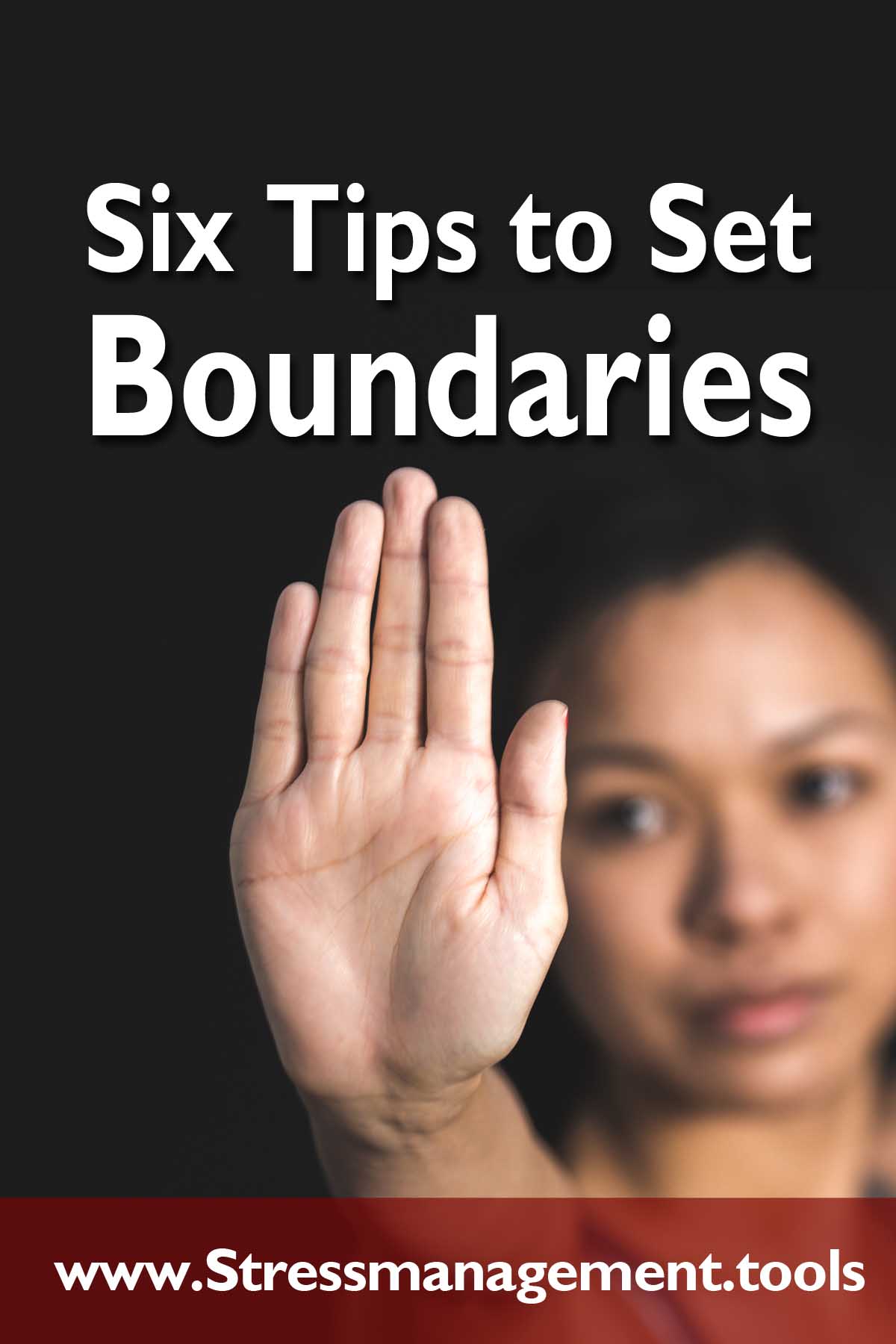
Six Tips to Set Boundaries

The Importance of Boundaries

You may ask: Why is it important to set Boundaries?

First, because you may be a person who didn’t know how to do this since you were a child. You may have been a victim of other abusive, dominating children, or you suffered from adults who were not sensitive to your needs as a child, needs that you did not know how to claim. Father and mother need to teach children from an early age to know how to defend themselves from abuse. You may have become an adult who still struggles with the issue of setting limits. Hence you suffer unnecessarily, assuming tasks, responsibilities that you shouldn’t have, but since you take them on, your life gets stressful, heavy and unhappy.

Boundaries are attitudes you should have and need to practice, in order to protect what is good in your life, and not allow bad things to overcome you, whether in your home, your body, at work, in your religious community, in the neighborhood and in your own mind. Limits are important. Think of the boundary between your house or apartment and the neighbor’s house or apartment. The limit can be the door, the corridor, the sidewalk, the wall, the fence, right? And what about the limits between a town and another town, between a state and another state, between one country and another country. Look how important limits are, the border is important, isn’t it? I remember a saying I read a while ago: having a neighbor is good, but put up your fence.

The fence defining the property boundary of the house

An emotionally sensitive person, if he suffered a lot in childhood relationships, he may have built up tight boundaries on his personality, in order to avoid suffering pain again. Sometimes we hide ourselves to protect from the pains we have experienced in the childhood past, to make sure they are not repeated in adulthood. But we can exaggerate our boundaries that keep us away from more intimate contact with others, and even with ourselves.

Some children may not have learned to put limits during childhood against family abuse. They may have been criticized for wanting to be alone for a few moments when it was normal for their temperament. They may have been hampered in the process of delineating their self, in the construction of an identity that separates them from others. They may have had difficulty making decisions independently. Some children and teens may have suffered in their families for being aggressively repressed when they tried to complain about something unjust and cruel. Children who grow up without having learned to set just and necessary limits for the preservation of their own identity, become adults who are generally victims of abuse in marriage, with an authoritarian husband, with an authoritarian wife, or with a co-worker, boss, or abusive business partner.

Practical Tips

Now let’s look at some tips on how to establish healthy boundaries.

First make sure you express yourself clearly. Many sensitive people, more prone to not knowing how to set boundaries, often express themselves, but not in a clear and firm way. They may say something like this: yes maybe, I’ll try, if I can, when they really wanted to say no. You can be clear, firm, and at the same time polite and tactful.

A woman shrugging her shoulders, not saying what she thinks - Photo by Polina Zimmerman from Pexels

A second tip: you have no obligation of always needing to give a reason for your decision. Think about it: you can say no thanks, I don’t want that, and that’s it. Speak politely, without shouting, and if the person insists on wanting to know the reason for your decision, you can repeat your answer and say that you do not want to explain. You have the right not to explain yourself to an abusive person, who just wants to bog you down.

The third tip on setting boundaries. Only you know whether or not you are overwhelmed. If people know that you are overwhelmed, they may not ask you for another difficult task. So say you have a lot to do or too many responsibilities around your ears.

A fourth tip: You have the right to tell a person that you will need more time to think about the decision he wants you to take right away. If you feel not safe to take the final decision right now, say that you need to think and that you will get back to them as soon as you can.

The fifth tip for you to set boundaries and protect yourself. If you think it will be easier to say no by email, by phone, by the message on your cell phone or other means, without being face to face, then use one of these means of contacting the person.

The sixth tip has to do with respecting yourself and thinking that you are on same ground with another person, or you may even be better prepared, for example to perform a certain task. Someone who is bossy, with a dominant temperament, usually chooses the best seat, the quietest place, the largest office, dictates the rules, determines tasks, doesn’t he? So do not feel or place yourself as inferior to that person, but with the same rights if you are actually in the same hierarchy. If the person doesn’t see you as someone who has the same rights as he does, when in fact you have a right, see what you can do to change that.

Make an effort to say no when it is the right thing to do. When you arrive at the final judgment, God will not ask you why you were not the same as someone else. If you don’t take better care of yourself, putting boundaries on what God expects you to be, he will ask you why you have not been the best of yourself. So think about it. You have a right to set boundaries, and if you have not learned it in childhood, you can learn it now. Protect yourself and set boundaries!

Do you need a guide to help you understand how to cope with Stress in an all inclusive approach? Learn how to combat stress, mentally, physically, emotionally and strategically in your life.

Get Me the Guide

Filed Under: Stress Management

« Previous Page
Next Page »

Primary Sidebar

Social Channels

Coronavirus Immunity Challenge

Boost your immune system to be bullet-proof for the pandemic.

I Want to Participate

Recent Posts

  • 5 Habits to Live Longer
  • Better Sleep Can Protect Against Dementia
  • Finding Peace In Your Crazy-Busy World
  • Flaxseed – An Ancient Plant Rediscovered
  • Platelets – Triggers for Life or Death
  • Boderline Personality Disorder
  • In Praise of Almonds and Nuts
  • Are You Stuck in the Clutter Trap?

Categories

  • Body Systems (16)
    • Cell Function (2)
    • Circulatory System (1)
    • Digestive Tract (10)
    • Immune System (4)
  • Diseases (27)
    • Cancer (2)
    • Cold (1)
    • COVID-19 (11)
    • Dementia (1)
    • Diabetes (1)
    • Digestive Diseases (2)
    • Heart Disease (2)
    • Kidneys (1)
    • Metabolic Syndrome (2)
    • Skin (1)
  • Healthy Lifestyle (42)
    • Exercise (11)
    • Gardening (2)
    • Sleep (7)
    • Sunlight (2)
    • Temperance (14)
    • Water (4)
  • Mental Health (87)
    • Addictions (6)
    • Anxiety (7)
    • Burnout (1)
    • Depression (7)
    • Psychosomatic Diseases (6)
    • Stress Management (45)
    • Trust (6)
  • Nutrition (56)
  • Obesity (9)
  • Phases of Life (14)
    • Adults (3)
    • Babies and Infants (1)
    • Children (3)
    • Seniors (5)
    • Teenagers (3)
  • Therapies (7)
    • Herbs (5)
    • Hydrotherapy (1)
  • Uncategorized (3)

Archives

  • January 2025 (1)
  • March 2024 (5)
  • February 2024 (4)
  • January 2024 (4)
  • December 2023 (5)
  • November 2023 (4)
  • October 2023 (5)
  • September 2023 (4)
  • August 2023 (3)
  • July 2023 (2)
  • June 2023 (4)
  • May 2023 (4)
  • April 2023 (5)
  • March 2023 (4)
  • February 2023 (4)
  • January 2023 (4)
  • December 2022 (4)
  • November 2022 (4)
  • October 2022 (5)
  • September 2022 (4)
  • August 2022 (4)
  • July 2022 (5)
  • June 2022 (4)
  • May 2022 (5)
  • April 2022 (4)
  • March 2022 (4)
  • February 2022 (4)
  • January 2022 (5)
  • December 2021 (3)
  • November 2021 (4)
  • October 2021 (6)
  • September 2021 (4)
  • August 2021 (4)
  • July 2021 (5)
  • June 2021 (4)
  • May 2021 (3)
  • April 2021 (5)
  • March 2021 (4)
  • February 2021 (4)
  • January 2021 (5)
  • December 2020 (3)
  • November 2020 (4)
  • October 2020 (5)
  • September 2020 (5)
  • August 2020 (3)
  • July 2020 (1)
  • June 2020 (1)
  • May 2020 (1)
  • April 2020 (1)
  • March 2020 (1)

Copyright © 2026 · Abundant Health - Privacy Policy - Medical Disclaimer