Abundant Health

Up to date health information tailored for you

  • Home
  • Blog
  • Recipes
  • Shop
  • Contact
You are here: Home / Archives for 2022

Archives for 2022

Addicted to What?

January 23, 2022 by Esther Neumann - [rt_reading_time label="Reading Time:" postfix="minutes" postfix_singular="minute"]

Süchtig worauf?

Hands speak volumes. The Russian author Tolstoy describes in a stirring language how a visitor observes the hands of the players in a casino. They express so many things. There are the completely relaxed ones, because they don’t care whether they win or not. Perhaps the one who owns the hands can still afford to lose. The other’s fingers clench, they twitch, they’re wet. It’s all or nothing. It’s whether they can lift up their head leaving the place, or get away beaten, destroyed, deprived of dignity, without a future, with a lot of gambling debts.

Addicted to What?

The non-material addictions, as they are called, are not limited to gambling addiction. Addiction to work can also distract us from our real purpose in life. The list below is not complete, but shows us that almost all activities can lead to addiction: addiction to shopping, internet addiction, computer game addiction, television addiction, cell phone addiction, sex addiction, craving for recognition, binge eating, obesity, anorexia, sleep addiction, exercise addiction…

Relaxation and Pleasure

The activities listed above are not inherently bad. We can all use them in a positive way. We work in order to be able to live our lives, in order to fulfill our desires, in order to be able to help others. Sex is a pleasant thing when it is connected to a relationship of genuine love. When we sleep we can rest and relax. Playing brings us socializing and relaxation. The children learn to follow rules and lose without anger. Eating gives us moments of pleasure, helps us to socialize and can be very satisfying.

Compulsion

When do normal activities become a problem? When they have to be done over and over again under compulsion. The desire to pursue the dominant activity is so great that it occupies me all the time. Work is often neglected, partners and family members are hardly noticed. Your own well-being and health are being neglected. A power stronger than myself has taken hold of me.

When someone can no longer cope with the demands of everyday life, an outlet is sought. One often slips into daydreams. You create your own world. In this world you are invulnerable. At first you feel comfortable, secure, no demands are made. It is only over time that such daydreams turns into problems again.

Also, one reason many become addicted is because of the ease of access to accessories. TVs, computers are in almost every home, even in the bedrooms. Slot machines for gambling can be found in many inns and are an additional source of income. Finding a casino is already taking some effort, but who is addicted to gambling will find its way.

Spielautomat

When Things Go Bad

Initially, satisfaction is really found in the act of addiction. One can escape the pressure from outside. An own world, in which one feels comfortable, is created. But if the compulsion to keep immersing in this self-created world becomes too great, problems begin. Eventually everything gets neglected, including oneself. The essence of addiction is that you can’t get out of it by your own willpower. You cannot rely on your own willpower. An addict cannot be freed from his addiction against his own will either. Any attempt to help him will fail until he makes up his own mind to get out of his illness, which is in fact an addiction. But what can be managed is for the addict to recognize that they need help. However, this requires a basis of trust for many joint discussions.

How Can You Help?

No accusations should be made. The addict usually makes them himself. In all situations one must remain firm but cordial. Withdrawing support often helps. If, for example, the gambling addict who gambles for money and loses it, or the alcoholic realizes that people are always helping him out with money, he is not feeling the psychological strain of his actions. When you solve the problems for an addict and try to keep his life under control, you support him to carry on as before. If you withdraw the help, he gets into a big crisis, but it can force him to reorganize his life.

Relatives must not allow themselves to be abused or extorted. You can’t do anything for the addict or without his presence, everything must be done with their participation. This usually requires professional help. Advice centers for all kinds of assistance have been set up in all larger cities. Visiting a self-help group is a great help for those affected. There, in a relaxed atmosphere, he hears about the problems of others and how they are re-mastering their lives. He can exchange thoughts, take encouragement and have fun together. Many self-help groups use the 12-step Alcoholics Anonymous program.

self help group - Photo by Tima Miroshnichenko from Pexels

Liberation is a Process and Spiritual Growth

Addicts need to realize that they cannot rely on their own willpower. It is not necessary to find out why one is addicted in order to have something to blame. Many addicts have been neglected in their childhood. They have never known real security. They find it difficult to confide in anyone. But they have to realize that only a greater power than they have in themself can help. And that power is sure to be found in God, our Creator and Sustainer. This is why the AA serenity prayer is so important and should be part of any therapy.

God grant me the serenity to accept the things I cannot change; the courage to change things that I can change; and the wisdom to distinguish one from the other.

Sticking to certain principles is a great help. The Twelve Step Alcoholics Anonymous program is a spiritual program that leads to healing and spiritual growth and is helpful with virtually any addiction. Instead of alcohol, simply substitute the addiction in question. Everyone can face their problem without fear and learn that there is liberation, also for them. However, getting rid of addiction is a process that you have to work on for the rest of your life. But it’s worth it. God wants us to break the chains of slavery, and He promises victory when we enlist His help.

Alcoholics Anonymous 12 Step Program:

1. Step

We admitted we were powerless over alcohol — that our lives had become unmanageable.

2. Step

Came to believe that a Power greater than ourselves could restore us to sanity.

3. Step

Made a decision to turn our will and our lives over to the care of God as we understood Him.

4. Step

Made a searching and fearless moral inventory of ourselves.

5. Step

Admitted to God, to ourselves, and to another human being the exact nature of our wrongs.

6. Step

Were entirely ready to have God remove all these defects of character.

7. Step

Humbly asked Him to remove our shortcomings.

8. Step

Made a list of all persons we had harmed, and became willing to make amends to them all.

9. Step

Made direct amends to such people wherever possible, except when to do so would injure them or others.

10. Step

Continued to take personal inventory and when we were wrong promptly admitted it.

11. Step

Sought through prayer and meditation to improve our conscious contact with God as we understood Him, praying only for knowledge of His will for us and the power to carry that out.

12. Step

Having had a spiritual awakening as the result of these Steps, we tried to carry this message to alcoholics, and to practice these principles in all our affairs.

Source: Alcoholics Anonymous

Healthy Fruits

Stay Always Up to Date

Sign up to our newsletter and stay always informed with news and tips around your health.

Sign Up Now!

Filed Under: Addictions, Healthy Lifestyle, Mental Health, Temperance

Exercise – A Principle of Life

January 16, 2022 by Esther Neumann - [rt_reading_time label="Reading Time:" postfix="minutes" postfix_singular="minute"]

Bewegung – ein Prinzip des Lebens

Exercise doesn’t just mean chasing the ball. Everything that lives moves. People, animals, even plants move. Movement is a characteristic of life. We can explore our environment through movement. Movement shapes us. But our way of moving also shapes our environment. Let’s just think of the car. Where do you come across a car? Let’s imagine a city without cars. Unimaginable? Or would that be heaven on earth for pedestrians?

Exercise - A Principle of Life

Anyone who tries to define “life” will quickly notice that it is not that easy. What does it take to be able to call something really “life”! Reproduction? Then a person would be dead alone, because it takes two to reproduce. But it is certainly part of the principle of life, just like the constant renewal of cells, the ability to adapt, improvisation and most certainly the energy and the resulting movement. When a climbing plant twists and turns around a climbing aid, that is movement. Granted, it’s extremely slow. Snails also literally move slowly, but they move forward. They are often far too fast for garden owners in eating their lettuce. A leopard can run as fast as a car.

Even a top athlete can lay down a remarkable pace. If you convert Asafa Powell’s 100m run to miles per hour, that’s 23 miles per hour (37 km/h). This is the result of years of training. Discipline and a strong will are also part of it.

Powell leading at the 2007 World Championships in Osaka, Japan - Photo by Eckhard Pecher (Arcimboldo) - Own work, CC BY 2.5 Wikimedia

The brain is the control center for muscle movement in the entire body. Nerve pathways pass on the commands from the brain to the muscles. Electrical impulses are alternately converted into chemical ones and vice versa. A true miracle of creation, if you consider the speed at which everything happens. Such reactions take place in thousands of muscle fibers in a thousandth of a second. Movement is and remains a miracle that we no longer think about in everyday life when we move. Should we unexpectedly find ourselves in a wheelchair, we would appreciate the miracle again.

Sedentary Lifestyle

But our modern way of life has made us sluggish. Ship, train, car and plane have made long walks for us. Machines help us with our physical work. So we have to provide more and more a balance so that we don’t become “couch potatos”. Movement is still a principle of life. And everything we don’t practice, what we don’t use, we lose.

Churchill is reported to have said: “No Sports” when he was asked how he has reached his old age drinking whiskey and smoking cigarettes. Yet when he was a young officer, he was actually an extremely athletic person. Fencing, horse riding, swimming and polo were his sports. He also undertook a very strenuous escape on foot from a Boer prison camp in 1899. This escape was rated as a great physical achievement. The first marathon runner in ancient Greece is said to have collapsed dead after his run. There are occasionally reports in the press that athletes collapsed dead after their performance or at least suffered a collapse. According to relevant studies, however, the risk of death after exercise is very low. It mostly affects people who have challenged themselves to top performance without being trained. Well, we don’t need to become football players or top athletes.

Health Benefits

Endurance sports reduce cardiovascular deaths from 70 to 30 per 10,000 people. The heart is trained through sport or simply through persistent exercise. Movement lowers the resting heart rate. If we can reduce the resting heart rate by 10 beats per minute, the heart is saving 5,256,000 beats per year. What a gain! Exercise lowers blood pressure and cholesterol levels. The heart can only benefit from this. The supply of oxygen throughout the body is improved. All of these are factors that prevent heart attacks and strokes. Exercise of course cannot prevent aging entirely, but it can do well in delaying it. When used correctly, it increases performance, cerebral blood flow, resistance and vitality.

Senior exercising - Photo by Barbara Olsen from Pexels

Exercise lowers the insulin requirements and helps stabilize blood sugar levels. It strengthens bones and muscles. Calcium and minerals can only be stored thanks to movement. Who does not remember the thin limbs when the cast can be removed after six weeks? This is due to a lack of exercise. For those for whom the word “sport” is sounding like torture, it can be replaced by walking, swimming, or strolling. These types of movement also improve our quality of life considerably if they are exercised regularly and for at least half an hour a day.

Exercise is not only responsible for our physical well-being. Our soul benefits from it as well. You can literally run away from depression. Anyone who has tried this before can confirm that. Endorphins, happiness hormones, are released when you move. They lift our mood. The increased blood supply to the brain allows us to think more clearly again. When I’m at the computer and make no progress, I go out into the garden. After a while of gardening or a brisk walk with the dog, everything goes much better again.

No Excuses!

The biggest obstacles to moving are the lazy excuses: No time, too old, too cold, not today, tomorrow I’ll start, alone, too boring. There is a solution to all excuses. Movement can be incorporated into everyday life. As soon as you wake up in bed you do some exercises under the warm blanket. It continues with putting on the clothes. With a little imagination, you can incorporate a whole exercise program. Something like this: Hop on one leg while putting on your socks. When you pull the t-shirt over your head, you complete a stretching program followed by hip circles. Who can think of anything else?

Stretching in the bed - Photo by Diana Dynaeba from Pexels

On the way to work or school, you walk a portion of the way. On the escalators we can save time and walk forward instead of staying still. Even in old age you can find an appropriate type of exercise. It can be a bit more relaxed. Even in nursing homes with a few minutes of fitness program a day, progress can be achieved. There are appropriate clothing to protect against the cold and you will warm up quickly anyways. Even today I can decide to do more exercise, on my own, when I’m more of a loner. It’s more fun with friends, however. You can always find like-minded people with a little effort. So: From today on, get a kick out of life through more exercise!

Healthy Fruits

Stay Always Up to Date

Sign up to our newsletter and stay always informed with news and tips around your health.
Sign Up Now!

Filed Under: Exercise, Healthy Lifestyle

When Milk Becomes a Problem

January 9, 2022 by Esther Neumann - [rt_reading_time label="Reading Time:" postfix="minutes" postfix_singular="minute"]

Wenn Milch zum Problem wird

As early as 400 years before the birth of Christ, Hippocrates described painful gastrointestinal reactions after consuming milk. Flatulence, colic, diarrhea, nausea, bloating, chronic fatigue and blemished skin – all of this is associated with milk when you can no longer tolerate it for a very specific reason. Globally, around 2.3 billion adults and 600 million children and adolescents are affected. When they drink milk they swell up like a yeast braid.

When Milk Becomes a Problem

Breast milk is the first nourishment for mammals as well as humans. Milk sugar or lactose, as it is called by the technical term, is a component of every mammalian milk. Chemically speaking, milk sugar is one of the carbohydrates. It is a double sugar or a disaccharide. In the small intestine, the lactose is broken down into galactose and glucose by the digestive enzyme lactase and absorbed into the blood through the intestinal wall. As a result, it is then converted into energy. If too little or no lactase is available in the small intestine, the lactose ingested with the food is only partially or not at all broken down and absorbed. We are dealing with lactose intolerance.

Lactose Intolerance

It is estimated that around 80 to 90 percent of the world’s population is affected. In Europe and North America, milk and dairy products are among the most important staple foods. In Asian and most African countries, it is rarely used. Worldwide, there is a north-south and a west-east divide in lactose intolerance. In the Scandinavian countries, the proportion of people affected is only around five percent, in Greece already 75 percent and in parts of Africa and Asia between 80 and 100 percent. In the US, about 25% of the white population is considered lactose intolerant, while among black, Native American, and Asian American populations, the prevalence of lactose intolerance is estimated at 75-90%. There is a high number of unreported cases. Mostly adults are affected. The cause of the complaints often remain unknown for years and the patients pass through a long path of suffering before the correct diagnosis is finally made.

Colon Problems

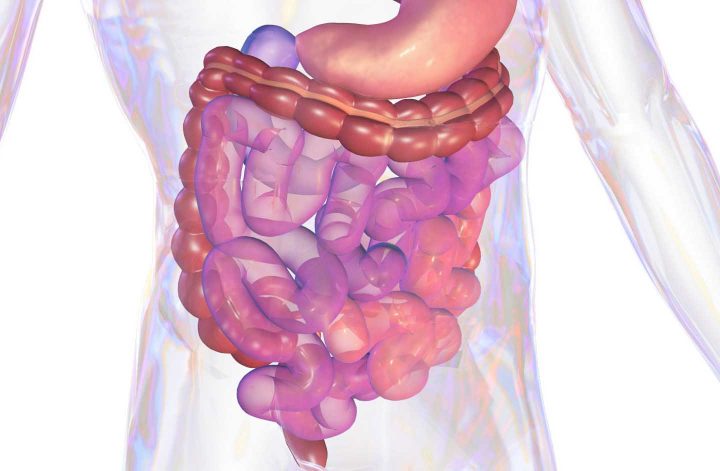
If the lactose in the small intestine is not completely or not at all broken down and absorbed, it reaches the large intestine undigested. There it is broken down by the intestinal bacteria. The gases hydrogen, carbon dioxide and methane are produced as waste products during this bacterial fermentation. Acids are also formed. This leads to gas and bloating. The milk sugar binds a lot of water, this leads to an increase in osmotic pressure, water retention and increased intestinal peristalsis. Bloating, diarrhea and gas are the consequences.

Intestines
Ilustration by Blausen.com via Wikimedia CC BY 3.0

Indefinite Clinical Picture

The symptoms can vary from day to day. It always depends on how many dairy products are consumed. Often there are hidden dairy products that you don’t even think about. They are found in sausages, baked goods, sauces, chocolate and industrially produced foods. Psychological factors such as stress, excitement and fear of the unknown also have a negative impact on well-being. Often, lactose intolerant patients also have fructose intolerance. They not only suffer from symptoms of irritable bowel syndrome, but often also from depression. Chronic lactose intolerance can lead to bacterial overgrowth in the small intestine.

The chronic digestive problems damages the entire enzyme-bearing intestinal mucous membrane. This in turn can cause further digestive problems. Unfortunately, the treating physicians rarely examine specifically lactose intolerance in the case of diffuse gastrointestinal complaints. The consequence of this is a long ordeal until the correct treatment is finally carried out. Self-observation is always good when one suffers from indefinite indigestion. If you leave out all dairy products for two weeks and the symptoms subside and come back when you consume milk again, you can make the doctor aware of the problem in a targeted manner.

Secure Diagnosis

The hydrogen breath test is a good tool for diagnosing lactose intolerance. Milk sugar is dissolved in water. The patient drinks this solution and the amount of hydrogen in the exhaled air is measured regularly for the next three hours. If the proportion of hydrogen in the exhaled air increases, there is a lactose intolerance.

The increase in blood sugar after drinking the lactose solution can also be measured. If there is a lactase deficiency, there is little or no increase in blood sugar level. This method is not entirely reliable, however. Mucous membrane samples by means of a colonoscopy can also provide information about the condition of the small intestinal wall.

Nowadays there is also a gene test available. But it is quite expensive. Another new test involves simply taking a saliva sample and examining it in the laboratory using a special test kit.

Severity and Forms

The lactose intolerance is divided into “light”, “medium” and “severe” depending on the severity. In the light form, 8 to 10 grams of lactose are easily tolerated, in the medium form around 1 gram and in the severe form no lactose at all.

The most common form is primary lactase deficiency. In this form, the lactase activity in the small intestine decreases continuously with increasing age. The newborn infant has the highest lactase activity. That is understandable, since he normally only feeds on breast milk. If the baby is weaned, the enzyme is significantly reduced in the first few years of life. In adulthood, only about a tenth of the original activity remains.

Older people normally don’t tolerate dairy products very well. This is a completely natural process that can be observed in almost everybody.

With secondary lactase deficiency, the deficiency is a side effect of another disease in the digestive tract such as celiac disease, Crohn’s disease, ulcerative colitis or acute gastroenteritis. Treatments with antibiotics or cytostatics (cell poisons) can also temporarily damage the intestinal mucosa and its enzymes. When these original diseases are healed, sufficient lactase can usually be produced again.

An extremely rare form is the congenital lactase deficiency. The infants already suffer from a lactase deficiency shortly after birth.

Therapy

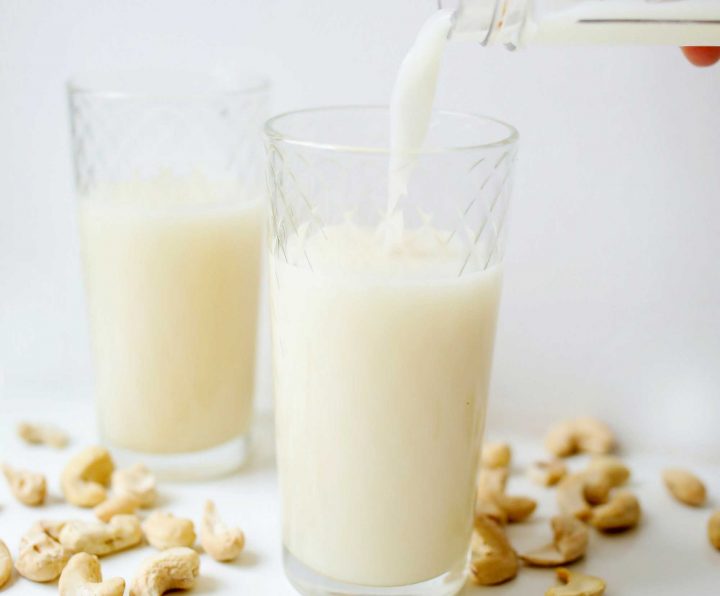
Therapy depends on the severity of the disease. Everyone concerned has to find out for themselves how much lactose they can tolerate. With a low-lactose diet, where around 8 to 10 g of lactose can be tolerated, cheese and sour milk products can be eaten in small quantities. Dishes containing milk can be prepared with soy milk or other alternative types of milk. Sour milk products are better tolerated because the lactose-breaking enzymes in the lactobacilli from which they are made continue to work in the digestive tract and can break down milk sugar.

Cashew milk - Photo by Polina Tankilevitch from Pexels

There are also lactose-free products on the food market. Lactase is added to the milk or milk product, which already breaks down the milk sugar. This milk is much sweeter because lactose is not as sweet as the broken down glucose and galactose.

As a result of better consumer protection, since 2005 all ingredients in a food that are classified as allergy triggers or intolerance reactions have had to be listed on food labels across Europe. Since 2006 in the US the Food Allergen Labeling And Consumer Protection Act is in effect with the same purpose. Allergy labeling also includes lactose. It is not uncommon to find lactose in products in which one would not expect it. In the event of intolerance or allergies, the lists of ingredients must always be carefully studied. Often there are also manuals available in which the products that are lactose-free are listed.

Calcium Supply

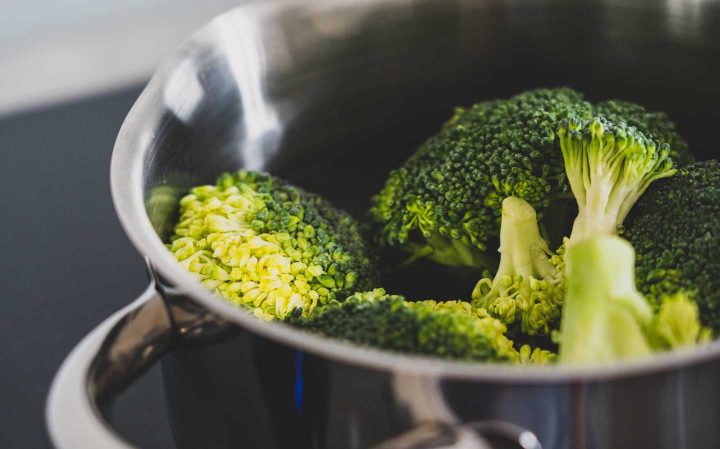
Calcium can be easily obtained from plant sources. These include broccoli, fennel, nuts, sunflower seeds, sesame seeds, nettles, calcium-rich mineral waters, calcium-fortified fruit juices, and soy milk. You can definitely live without dairy products if you are interested in nutrition and think about where else the calcium can be found in the food. Nowadays, when mass livestock farming leads to all sorts of problems and we have just shown how problematic dairy products are for many people, it is worthwhile to think about a diet that is free or at least poor in animal products.

Broccoli as calcium source - Photo by Castorly Stock from Pexels

Wrong Development Aid

Lactose intolerance is particularly widespread in countries receiving development aid. What kind of goods are being sent there? For a large part they are surplus products from the industrialized nations. This also includes powdered milk. It is distributed in large quantities to sections of the population who do not tolerate dairy products at all.

Take the Indians in their reservations as an example. They also belong to the group that is genetically determined to be almost 100% lactose intolerant. They receive powdered milk deliveries with great regularity. Fortunately, the Indians know that they would rise like a yeast braid if they were to drink this milk. But what do you do with the milk powder? Some use it to mark the playing fields on their sports grounds.

But if milk is distributed in parts of Africa where small children are already suffering from lactose intolerance, it is like throwing gasoline into the fire. The little ones, who are already suffering from edema from hunger and have bulging stomachs, get diarrhea and colic after consuming milk.

Conclusion

Today, lactose intolerance no longer requires giving up the consumption of dairy products because we have medicines and lactose-free dairy products at our disposal. But even better is a balanced dairy free diet and lots of exercise. There are entire population groups who cannot tolerate and do not consume milk and dairy products and are still well nourished with healthy bones. We can belong to this group if we eat a balanced diet, exercise a lot and adopt a sensible lifestyle. To this end, God, our Creator, gave us the power of reasoning. It is our privilege, even our responsibility, to be concerned about some sensible, healthy lifestyle changes.

Healthy Fruits

Stay Always Up to Date

Sign up to our newsletter and stay always informed with news and tips around your health.

Sign Up Now!

Filed Under: Digestive Diseases, Diseases, Nutrition

Are You Addicted to Stress?

January 2, 2022 by Martin Neumann - [rt_reading_time label="Reading Time:" postfix="minutes" postfix_singular="minute"]

Are you addicted to stress?

When you think of things you might be addicted to, stress is never on your list, is it? Some people might put alcohol or nicotine, caffeine or even social media – but stress isn’t even considered.

Are You Addicted to Stress?

The idea of stress addiction might seem rather strange, thinking that most of us hate feeling stressed. However, many people don’t realize it, but stress can become an addiction over time. It’s all due to the subtle scientific reactions within your body, when the stress hormone cortisol floods your system and allows you to deal with harrowing situations.

Your adrenaline increases and you find yourself powering through tasks and completing projects with ease. When you’re not under pressure, you find yourself dragging on, procrastinating and struggling to the finish line.

Some people laugh this off by saying they “work better under pressure,” and this is why. It’s an addiction to the stress from a chemical standpoint. It’s not just a mental preference.

The problem is, when you start suffering from chronic stress, it not only puts your health at risk, but it also affects your personal and professional relationships. Over time, your quality of life diminishes and you reach a point where you’re unable to accomplish anything without stress – a very sad way to live your life.

What Does It Mean to Be Addicted to Stress?

Stress is something that can give you a reaction in the brain that’s a similar feeling to what you get from taking drugs or drinking alcohol. This kind of high is a result of the brain releasing chemicals that make you feel good.

Some people may not realize their stress addiction until they start analyzing their habits. If you tend to procrastinate until something happens that puts pressure on you where you get a dose of stress and use it to fuel your productivity, that’s a stress addiction.

You feel good because have a lot of energy and your feelings are high. All of this occurred because of whatever stress that happened. You can also tell if you’re addicted to stress by what your life looks like.

There’s rarely any peace within it. In fact, your life is like an advertisement for stress. You’re rarely calm and you’re always frazzled. You don’t find it boring because there’s always something going on.

There are rarely any down moments because you’re too busy racing from place to place. It feels like you practically live in your car because you’re never getting any down time.

Driving a car - Photo by Ketut Subiyanto from Pexels

Relaxation isn’t something that’s in your vocabulary. You might think about it every now and then, but you don’t ever get to do it. Or, it could be that you’ve got a full load of pressure.

There’s drama and stress and it always seems like there’s a personal or professional fire to put out. You might be stretched too thin, feeling like you’re burning the candle at both ends, but it doesn’t really bother you.

Life isn’t bad, you tell yourself. It’s just hectic and when you handle all the stressors that come your way, you end up feeling empowered, like you’ve accomplished a lot. An addiction to stress also manifests itself by what you reveal about your life to other people.

One way that people do this is by putting stuff on social media. For you, social media isn’t really a place you go to in order to see how your friends or family are doing. It’s usually all about you – how other people made you mad, hurt your feelings or took advantage of you in some way.

You’re always posting that kind of stuff on social media and the topic centers around your stress – how hectic everything has been for you or what’s going on in your day and how that turned into stress.

You might talk about why you feel so stressed out – because you didn’t sleep, haven’t eaten, aren’t making enough money at your job, had a fight with your friend and how you’ve always been the one compromising and not her or him.

Posting on social media - Photo by Edmond Dantès from Pexels

Or you might mention how angry or anxious you are because of what you went through in the past or because of emotional issues now. On your social media, you get online and bemoan often in detail what’s going on in your intimate relationship or with your family or coworkers.

You talk about what awful thing was said to you or what bad thing you had to deal with, like you had to do more than your fair share of work. You talk about the pressure that put on you and how you worked late and rushed home and didn’t even get to eat.

Stuff like that happens to everyone because life itself can be hectic. But the thing about a stress addiction is that you post things like this all the time and it’s a huge deal to you. You talk about putting gas in your car and it becomes an effort comparable to running a marathon.

Or you mention going to the grocery store and what the store was out of and how someone cut you off in line or failed to return their shopping cart. You might talk about the effort it takes to pay the bills or get the dog to the groomer.

Nothing that you talk about is ever a simple task or enjoyable. There’s always drama and stress associated with it. Whatever you do can’t just be a normal thing. It always has to be bigger and more stressful than the situation calls for and much worse than what anyone else is dealing with.

Exaggerating the voice on social media

What you don’t realize is that others on social media who also deal with stress will start to view you as a drama magnet. They’ll think that nothing in your life can ever be simple – that it always has to be bigger than it really is.

People who are addicted to drama are usually posting negative things or complaining non-stop about their life. When you talk to people at work or your friends or family, your life is all about the stress and you don’t really feel bad about all that because to you, your stress isn’t a bad thing.

It’s something that’s part of your life and you’ve become used to enjoying the high that it gives you to be a fighter. Be aware that when you begin garnering that kind of reputation, people will avoid you. This adds to your stress, but you’ll just use it to fuel your fire even more. 

Consequences for Failing to Break Your Stress Addiction

You know how life goes. There’s always something that interrupts your plans and it happens on the day when you can least afford to encounter a stressor. You might be on your way to work because you have to go over a project with your boss before the client gets there for a scheduled appointment.

But the next thing you know, you’re trapped in a traffic jam. There’s no way around it and you can’t turn back. You’re just stuck. When this happens, your body reacts and floods your system with stress hormones.

The reaction from your body is based on the fight or flight response and it’s meant to be a help to you. However, when the situation isn’t life or death, this response isn’t needed.

When this is an occasional circumstance where you get a flood or stress hormones, it’s not a big deal.

But you start to have it even when you’re dealing with a mundane stressor because you don’t know the right coping techniques to turn to. When your body is constantly getting this flood of hormones, it affects you by giving you that brain chemical high.

It’s easy to get addicted to wanting to get that boost of chemicals. You feel good to some degree when you first get it, but over time, this constant cycle of having a stress response within the body wreaks havoc on your physical health.

Over time, the overuse of your stress hormone starts to take a toll on your immune system. This happens because your body has something known as natural killer cells. These are designed to battle against serious conditions such as cancer, but these cells are also designed to fight things like bacterial or viral illnesses.

They work to protect your immunity. Stress weakens the ability of these cells to work the way that they’re supposed to, leaving you with little protection so you’re constantly catching whatever is going around.

catching a cold

It’s not just illnesses that you’ll face more often when you fail to break your stress addiction. You’ll be at a higher risk for developing conditions that are related to stress such as diabetes.

When you get stressed, it raises your glucose level – even if you don’t have the disease.

Stress can make you more likely to have a heart attack because when you’re stressed, your blood pressure goes up.

The flood of stress hormones that you get are supposed to temporarily narrow your blood vessels. But when you’re addicted to stress, these blood vessels can be constantly narrowed, which restricts blood flow and oxygen to the heart.

When you’re stressed, it can also affect your digestive health. You can develop nausea, stomach cramps and suffer from diarrhea or constipation. You can also suffer from heartburn.

People who are addicted to stress can develop reproductive problems. Women might skip a monthly cycle or they might notice that their periods last longer, while men can experience lower levels of testosterone, which is linked with impotence. 

But it’s not just your physical health that will show the signs of stress. You can also struggle with mental health. For many people, prolonged exposure to stress, such as with a stress addiction, can cause depression.

This happens because the stress hormones linger, and you don’t get that break from them that you’re normally supposed to get. It’s common for stress to have an impact on your emotions and when you constantly get that flood of stress hormones, it brings out negative feelings such as grief, which can lead to depression.

Anxiety is another consequence of not dealing with a stress addiction. You don’t have to have an anxiety disorder to develop anxiety. This is something that happens as a result of whatever stress you have in your life.

When you have anxiety, it can show up as both physical and emotional symptoms. When it has to do with your mental health, the anxiety that you experience usually reveals itself through a feeling of dread.

You might feel nervous at random times or consistently. Sometimes anxiety can show up as feeling like something is just off. You feel wary. This mental reaction can happen whenever you’re about to face a situation or when you think about that situation.

It can also happen because you fear the results of a situation. When stress is what’s behind your anxiety, then what you’re experiencing lingers and doesn’t just go away. Not dealing with stress can also lead to panic attacks.

A Panic Attack

A panic attack is what happens when you get a feeling of overwhelming fear or you experience a deep anxiety. Panic attacks can happen with or without physical side effects.

Many people who have stress and develop panic attacks have these because of something in the past that they haven’t dealt with, stress addiction, or something that they’re afraid of that might occur that hasn’t happened yet.

A panic attack is a sense of impending doom, even if nothing bad is going on at the moment or they’re not in any danger. These attacks are a clear sign for the person who has them that something needs to be treated so that it can end.

When a panic attack disrupts your daily routine and you have difficulty being able to carry on, this a severe episode and may need professional treatment. As a result of your mental health suffering because of stress, you can start feeling dissatisfied with life.

You just feel like something is missing. This can happen when you’re not happy with the person you are. You might experience self-doubt along with this dissatisfaction. You might also have low self-esteem and you don’t like what you see when you look in the mirror.

You don’t like your job, your relationships, or where you stand in life. It’s at this point that many people start turning to coping addictions to try to fill the void and feel better about themselves and their lives.

Just an addiction is not going to help you to get anywhere in life. It is not going to resolve your problems, but just adding to them. You may feel good being addicted to stress, but it does not get you anywhere. If you find that you are having a stress addiction, you need to learn techniques to deal with your stress in a more constructive way. Download the free 10 Minute Guide to Stress Management to start your journey in learning how to dominate your stress.

Do you need a guide to help you understand how to cope with Stress in an all inclusive approach? Learn how to combat stress, mentally, physically, emotionally and strategically in your life.

Get Me the Guide

Filed Under: Mental Health, Stress Management

« Previous Page

Primary Sidebar

Social Channels

Coronavirus Immunity Challenge

Boost your immune system to be bullet-proof for the pandemic.

I Want to Participate

Recent Posts

  • 5 Habits to Live Longer
  • Better Sleep Can Protect Against Dementia
  • Finding Peace In Your Crazy-Busy World
  • Flaxseed – An Ancient Plant Rediscovered
  • Platelets – Triggers for Life or Death
  • Boderline Personality Disorder
  • In Praise of Almonds and Nuts
  • Are You Stuck in the Clutter Trap?

Categories

  • Body Systems (16)
    • Cell Function (2)
    • Circulatory System (1)
    • Digestive Tract (10)
    • Immune System (4)
  • Diseases (27)
    • Cancer (2)
    • Cold (1)
    • COVID-19 (11)
    • Dementia (1)
    • Diabetes (1)
    • Digestive Diseases (2)
    • Heart Disease (2)
    • Kidneys (1)
    • Metabolic Syndrome (2)
    • Skin (1)
  • Healthy Lifestyle (42)
    • Exercise (11)
    • Gardening (2)
    • Sleep (7)
    • Sunlight (2)
    • Temperance (14)
    • Water (4)
  • Mental Health (87)
    • Addictions (6)
    • Anxiety (7)
    • Burnout (1)
    • Depression (7)
    • Psychosomatic Diseases (6)
    • Stress Management (45)
    • Trust (6)
  • Nutrition (56)
  • Obesity (9)
  • Phases of Life (14)
    • Adults (3)
    • Babies and Infants (1)
    • Children (3)
    • Seniors (5)
    • Teenagers (3)
  • Therapies (7)
    • Herbs (5)
    • Hydrotherapy (1)
  • Uncategorized (3)

Archives

  • January 2025 (1)
  • March 2024 (5)
  • February 2024 (4)
  • January 2024 (4)
  • December 2023 (5)
  • November 2023 (4)
  • October 2023 (5)
  • September 2023 (4)
  • August 2023 (3)
  • July 2023 (2)
  • June 2023 (4)
  • May 2023 (4)
  • April 2023 (5)
  • March 2023 (4)
  • February 2023 (4)
  • January 2023 (4)
  • December 2022 (4)
  • November 2022 (4)
  • October 2022 (5)
  • September 2022 (4)
  • August 2022 (4)
  • July 2022 (5)
  • June 2022 (4)
  • May 2022 (5)
  • April 2022 (4)
  • March 2022 (4)
  • February 2022 (4)
  • January 2022 (5)
  • December 2021 (3)
  • November 2021 (4)
  • October 2021 (6)
  • September 2021 (4)
  • August 2021 (4)
  • July 2021 (5)
  • June 2021 (4)
  • May 2021 (3)
  • April 2021 (5)
  • March 2021 (4)
  • February 2021 (4)
  • January 2021 (5)
  • December 2020 (3)
  • November 2020 (4)
  • October 2020 (5)
  • September 2020 (5)
  • August 2020 (3)
  • July 2020 (1)
  • June 2020 (1)
  • May 2020 (1)
  • April 2020 (1)
  • March 2020 (1)

Copyright © 2026 · Abundant Health - Privacy Policy - Medical Disclaimer