Abundant Health

Up to date health information tailored for you

  • Home
  • Blog
  • Recipes
  • Shop
  • Contact
You are here: Home / Archives for Dr. Cesar Vasconcellos de Souza

Dr. Cesar Vasconcellos de Souza

The True Meaning of Christmas

December 25, 2022 by Dr. Cesar Vasconcellos de Souza - [rt_reading_time label="Reading Time:" postfix="minutes" postfix_singular="minute"]

The true meaning of Christmas

Christmas has a very special meaning for some people, while not so much for others. But what does Christmas mean to you? At Christmas we celebrate the birth of Jesus, Son of God, Creator of the Universe, humble Lord, Deliverer, Truth, Peace, Light, Way and Life. The essence of Christmas is the Messiah.

The True Meaning of Christmas

We have gone through some difficult years of the pandemic, but we are still alive. That’s wonderful, isn’t it? God, the Creator of the Universe, keeping our lives until this moment. And if you had COVID-19, with or without complications, He has preserved you and that’s why you’re still here, alive. Cultivate gratitude for this. Gratitude is important to our health, isn’t it? So it may be that you have lost some loved one in your family or a friend this year for whatever reason. But God has preserved your life.

You are here and certainly, the kind Lord has given you strength to deal with the losses that have occurred this year in your life, whether it be financial, emotional or loss of someone important to you. The Bible says that God does not let anyone go through trials beyond what one can endure.

Secondly, it also reveals that the difficulties we have to face can be God’s instruments to mature us. Yes, there is a spiritual war going on in this universe, a war between good and evil. This war is as much out there in society, as it is inside our minds.

But this text gives us comfort and confidence if we are connected with Jesus, who is the essence of Christmas:

Even the power of demons is under the control of our Savior, and the working of evil is overruled for good.

White, E.G. The Desire of Ages, p. 340

This is coming from one of the best books on the life of Jesus. You can get this book for free on this site: whiteestate.org

See also this other quote that talks about the sovereignty of God and his kind, protective and restorative character:

All earthly powers are under the control of the Infinite One. To the mightiest ruler, to the most cruel oppressor, He says, “Hitherto shalt thou come, but no further.” Job 38:11. God’s power is constantly exercised to counteract the agencies of evil; He is ever at work among men, not for their destruction, but for their correction and preservation.

White, E.G. Patriarchs and Prophets, 694

Have you noticed how this text ends? I will repeat: “He (God, the creator of the universe) is always at work among human beings, not to destroy them, but to correct and preserve.” So I think this: God is always working in your life, not to destroy, but to correct something bad that hurts you and to preserve your physical, mental, and spiritual health. Nothing is by chance. Christmas means: to be born for health, to be born for fraternity, to be born for compassion. Remember that we are all human beings, we are brothers by creation, we are in the same boat, that is, we will die and we need a God to give us eternal life, the eternal Christmas.

A Christmas gift

Philosophers use the expression, ” We are a being destined for death.” Yes, we are going to death, the one the Bible calls the first death. It speaks of a second death, which will be eternal after the Final Judgment. So Christmas is to be alive and to be able to acquire eternal life, having victory over the second death, by the grace of the Lord Jesus and by the salvation he has provided for us on the cross.

To be alive is wonderful! Usually, when I open my eyes in the morning, I do this almost every day, I say to God the Creator: ” Thank you, Lord, for continuing to be alive! ” This is wonderful! You are alive!  So, there is still the chance for change, to get further, to greater personal growth. If you want a proof that the Creator of the universe still has something to tell you, to mend your character defects, or to use you to help other people, and that He still has something for your life, the proof is that you are alive, right? While you´re alive, there is hope.

So Christmas is spirituality. It is submitting to the Creator, to the Lord Jesus Christ. It means humbling oneself before the reality of human, personal or technological impotence.  Medical technology, for example, is wonderful indeed, but it can’t generate life. Being spiritual means submission to the truth, to the light, that comes to all, though not everyone wants it. Being spiritual has to do with perceiving reality beyond the ordinarily observable. Being spiritual is something extraordinary, beyond the ordinary, beyond the conventional.

Going to church on weekends is something ordinary. You can do this for decades and still not be a spiritual person. Why is that?  You can become dependent on what the leader of your religious community says and preaches, and you do not research for yourself what the truth is. Maybe you want to stay in the humanistic comfort zone, or because the attractions of the world can blind and trap you, or because you go to church in a well-conditioned, half-decorated way, without any deep sense attached to it.

The most spiritual person who has ever passed through this earth in my view, Jesus Christ, came in poverty and humility to be our example and our Redeemer. If He had appeared in royal pomp, how could he have taught humility, right? How could He have presented the truths so incisively, like those of the Sermon on the Mount?  Where would the hope of the materially poor of life be, if Jesus had come to dwell as the king among men? Jesus was even courteous to his persecutors, even those individuals who had fallen morally lower in society. They were treated with respect by Jesus, who saw each person through the eyes of divine compassion. How wonderful is that! What a Christmas!

The feet of Jesus walking in the desert sand

In this difficult time, it is important that you exercise compassion for people, for anyone, by helping, supporting, forgiving, protecting, and exercising self-control over your aggressive and selfish impulses, to protect people from yourself, in case you are, perhaps, somewhat rude in your words.

You know, Jesus can change that character flaw in you, as he has changed the apostle Peter. Peter was impulsive and bold, and how did Jesus change John and James, right? They are even called by the Master the sons of Thunder, because they were explosive before learning meekness from Jesus. Seek for yourself the presence of the Messiah, Jesus Christ. Christmas! Listen with respect to the leaders of your religious community, but go personally, individually, in the quest for light, truth, doctrine, which, being Christian, is in the Bible.

If Nathaniel, one of Christ’s earliest disciples, had relied on the direction of the rabbis, who were the leaders of the Jewish church of the time, he would never have found Jesus. It was seeing and judging for himself that he became a disciple. So, in this sincere, persistent, daily search, your spirituality will gradually emerge.

Years ago, I read a book by a professor from the University of São Paulo. He is a retired psychiatrist and psychoanalyst. He wrote in his book: “Psychotherapy Religion”, that the mature man, the mature woman is spiritualized.

Christmas is spirituality. People can fight or challenge our logic. They can resist our appeals. But the selfless life of love is an argument that cannot be resisted. A coherent life, characterized by the meekness of Christ, is a force in the world. It is Christmas that should be, in fact, one day at a time and every day. Solomon is saying the following:

And he who waters will also be watered himself.

Proverbs 11:25 (New King James Version)

In other words, you give and receive, if you give from all the heart. Christmas is about giving, and I believe that the best gift you can give and receive is the one that feeds your spirituality. Everything else ends, passes, wears out, gets old, breaks, goes out of style, but Christmas remains. Jesus Christ, Christmas, the personification of spirituality. We are a family with you, who may be going through difficulties, but we are with you, and Jesus Christ is there looking to help you. Accept his help. Accept our embrace. Merry Christmas!

Connect to the True Meaning of Christmas

The Desire of Ages

Download The Desire of Ages

A Violin

Listen to Inspiring Christian Music

Filed Under: Mental Health

The Power of Trust

November 27, 2022 by Dr. Cesar Vasconcellos de Souza - [rt_reading_time label="Reading Time:" postfix="minutes" postfix_singular="minute"]

The power of Trust

Mental health has much to do with trust. Trust can release us from stress and anxiety. It is important to understand how we can build that trust.

The Power of Trust

If you don’t trust, you build walls between yourself and others. These walls serve, say the suspicious, to protect against being deceived; but living in isolation impedes recovering from personal behavioral difficulties. It is true that the solution is not to trust blindly, but to discern who is trustworthy and who is not. Trusting serious, ethical and honest people never leads us to problems, but if you trust people of bad character, problems arise in your life. Many of us may have been practicing this for a long time, and therefore suffering unnecessarily.

You should not demand of yourself unshakable loyalty to someone who is not trustworthy. Trust is something to be earned, acquired. We should not blindly trust others, but to patiently wait to see if the other person has learned, and values being trusted because of following our good example. Our goal should be to discern wisely who is trustworthy and who is not.

Interestingly, Jesus Christ alerted us to how we should behave in contact with others:

Therefore be wise as serpents and harmless as doves.

Matthew 10:16

When we are afraid, we usually act in control, or try to control. We want to control events, destiny, people, which increases stress and frustrates us even more. When we don’t trust God, or what you believe to be a higher power, the tendency is to control. But the best way to resolve fear is to trust. Understanding and accepting that good and bad things happen in our life, whether or not we have control.

To face fear and for it to gradually disappear, you need to cultivate trust in yourself, in God – the Creator of the Universe, and trust in the support of people who like you. You can learn to trust that when things don’t work out the way you want, the Creator will have something better planned. We can trust that the Creator of the Universe will give us the right direction we need; and that whatever we need on our journey will come to us.

A man contemplating about life and the providence of his Creator

We won’t get everything we need for the journey of a lifetime today. We will receive today’s supply for today, and tomorrow for tomorrow. The manna that fell from heaven to feed the Israelite people in the desert was in the right portion for each person and for that day. Only on Friday it fell twice as much, so that it would not be harvested on Sabbath. The Creator God does not allow your burdens to be carried today to be too heavy, beyond what you can bear. Think about it! He is in control and he is the only being capable of controlling things and people in a healthy and liberating way.

Learning to trust requires cultivating patience and to wait. I saw in the news about a young man who got impatient when facing traffic that was very slow. He lost emotional self-control and fired shots at the car in front, killing an innocent young woman. His argument at the police station for having shot and killed the young woman was his impatience with the traffic. The Bible warns us of the following:

Whoever has no rule over his own spirit Is like a city broken down, without walls.

Proverbs 25:28

To live better, it is necessary to learn to wait. Have you noticed how impatient and irritated people are? Some people base their calm and patience on depending on the effect of some drug or medication. They didn’t understand, or understood but didn’t want to change, that the most important thing to deal with impatience is not the medication, but knowing how to deal well with the emotion of impatience.

A man impatiently looking at his watch

One truth of life is that we can’t always have what we want when we want it. Could it be that one of the motivations of people who became multimillionaires could have been that, when they got rich, they could have whatever they wanted, whenever they wanted it? Many young adults, men and women pass through burnout, because they struggle with obsession to achieve things before their time. And usually it’s the money. Years ago in Japan, young entrepreneurs died suddenly from an illness called karoshi, which is a type of sudden death from exhaustion. They wanted to reach 30 years of age as millionaires. You can burn yourself out by trying to get today what will come in a healthy way later.

Waiting is not a waste of time. Things in life only happen when we are ready. There’s no way to speed up and maintain sanity of mind. For everything there is a timing. Timing means the right thing at the right time. You are not going to stop your life by having to wait. Other things continue and you will get involved in them; in the meantime, cultivate gratitude and acceptance of what is possible. There’s a life to live while you’re waiting for what you want. Coping with frustration and impatience is important in learning to wait and trust.

Emotional healing is a process of learning to trust. Trusting God, trusting people you can trust, trusting the healthy part of yourself. Trust grows slowly! It’s just like that. We cannot trust overnight. Trust is built one day at a time.

It’s interesting that the Creator of the Universe comes to help us, and even though He’s the one who keeps us alive, He respects our decision, our defenses, our timing. The Bible says that He knocks at the door and waits. He doesn’t invade our lives. By knocking He makes an invitation, not an invasion! Some people enter without knocking, they don’t respect the boundaries. Some think that, because they are from the same family, they can invade your privacy; but they shouldn´t; don’t allow it.

God knocks and waits. In our maturity we can for one day only hear Him knocking, but later we can say: who is there? And further on, since He doesn’t give up on us and knock again, maybe we can let Him in and sit with Him and enjoy His loving presence that instructs us, teaches us to be patient, to wait and to trust.

Healthy Fruits

Stay Always Up to Date

Sign up to our newsletter and stay always informed with news and tips around your health.

Sign Up Now!

Filed Under: Mental Health, Trust

How to Deal With Mental Sufferings

October 30, 2022 by Dr. Cesar Vasconcellos de Souza - [rt_reading_time label="Reading Time:" postfix="minutes" postfix_singular="minute"]

Por Que Acontecem os Sofrimentos Mentais?

We suffer mentally because of alterations in brain functioning, but a difficult question to answer is: Do mental sufferings arise as a result of brain chemistry imbalances, or does the chemical imbalance occur because of conflicts in the person’s life?

How to Deal With Mental Sufferings

Seems like it’s all together. We can think, because electrical chemical circuits are at work in the brain, and they are active due to the blood circulation that carries nutrients to the brain to function. Therefore, mental health also depends on what we eat and drink. Mental suffering can therefore be connected with physical aspects, such as poor diet, insufficient hydration, sedentary lifestyle, overeating, even on healthy foods, air pollution, among other factors.

In addition, there are psychological factors: interpersonal and intrapersonal conflicts that produce sadness, excessive anxiety, exaggerated fears, shame and guilt. As for the social environment, violence and crime, especially in large cities, in addition to stressful traffic, noise and visual pollution contribute to mental stress. Therefore, to deal with mental suffering we need to take care of our physical health with exercise, preferably outdoors, ingesting pure water between meals, breathing pure air, getting plenty of sunlight, preferring a balanced vegetarian diet, getting a good sleep at night, and eliminating what is harmful to health.

It is also necessary to solve or manage emotional problems in relationships, first with oneself, then with family members, at work, at church, with other relatives, avoiding to leave situations pending that need to be resolved. At times it may be necessary to receive professional counseling and undergo psychological treatment. Do what you can to improve your social life. Having friends is important. Helping people unselfishly promotes mental healing. Asking forgiveness, setting limits, being patient, sharing experiences and materially helping the poorest contributes to mental health and relief from suffering.

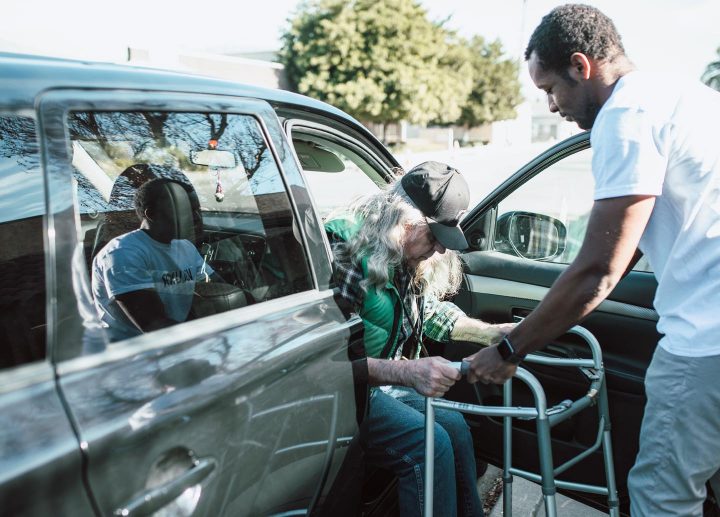
Helping an elderly man to get out of the car.

Psychiatric and psychological treatment varies not only in terms of the severity of the illness, but also in terms of personality type. There are individuals who are more likely to understand and accept the relationship between their current sufferings and past conflicts, which facilitates treatment. Others, who do not have this ability to think from cause to effect, deny having suffered in the past or diminish the personal impact of what they have suffered in earlier years of life.

When, in a psychological consultation, the professional explains the relationship between the current suffering and the conflicts in the patient’s life, he comes to understand and accept, that a good part of his mental struggles of today are related to the traumas of the past. We call this understanding insight. But is that insight enough to promote emotional healing? Not always. Many, by making the connection between their suffering today with painful phases of the past, can have a good perception of their struggle, but this perception alone may not be enough for healing.

In fact, beyond the insight, beyond the perception of possible causes of current mental suffering, the person needs to decide to act in a different and better way. Perception or insight helps, but what he will do with what he has perceived is the key to healing, and the starting point in learning to manage mental pain.

However, in the same person undergoing psychotherapeutic treatment, there may be a moment of greater perception and a moment of greater difficulty with this. Each one has his time to get a grip about the cause of personal suffering. This is because memories of emotional pain are not pleasant for anyone, and we can escape the thinking about what hurts for a long time, even for years.

A woman thinking about life.

So the person who suffers mentally and who still doesn’t understand the causes of his mental problems, needs to be patient with himself and ask God for enlightenment on what He thinks he needs to understand in order to improve. He must ask not only for enlightenment or insight, but also for the strength to take a look at what is the source of his emotional pain, and that is not easy for anyone. On this point of having or not the perception of the causes of emotional pain, Jesus once commented something along these lines:

I still have many things to say to you, but you cannot bear them now.

John 16:12

He knew that His followers were not ready to accept certain things about themselves. There are conflicts in our unconscious mind that we are not able to perceive. The Unconscious is the virtual space of our mind where we guard information, images, thoughts and feelings of everything that has happened to us, since we were born, until this moment in life. We do not have access to this information when we want it, but when we are ready to see and understand it. The Bible talks about the unconscious in the book of Psalms:

Who can understand his errors? Cleanse me from secret faults.

Psalms 19:12

You have set our iniquities before You, Our secret sins in the light of Your countenance.

Psalms 90:8

So, recognize that the unconscious exists, and that it has many answers about a person’s mental sufferings.

The treatment of mental illnesses or disorders varies according to the type of illness, and there are different types of treatments for the same illness. For example, depression can be mild, moderate, or severe. When a person suffers from mild depression, psycho-therapeutic treatment alone is enough. No medication is needed. But when the level is moderate to severe, maybe even with suicidal thoughts, the medication is indicated for temporary use, under the supervision of a psychiatrist.

Psychotherapy

A good part of mental suffering can be improved or resolved without the use of medication. Others need them, such as during the euphoric crisis of bipolar disorder, agitation with delusions and hallucinations in people with schizophrenia, among others. Some people undergoing psychiatric treatment may need medication for a moment, but once they get better they will no longer be needed. Or they can use them as SOS, which means the medication will only be used at the most difficult times, when the symptoms are wanting to come back.

Finally, it is important to consider that spirituality is a very positive factor to help people in their struggles with mental suffering. Several scientific studies have confirmed that faith, attendance at a religious community, the exchange of experiences of spiritual growth in the group, prayer, and for Christians, the study and meditation of the Bible, favor mental health and powerfully assist in emotional recovery.

As human beings, we have struggles not only because of physical problems, such as an organic disease, or family, social, economic and psychological problems, but also of spiritual origin. According to the biblical account, we are spiritually corrupted since birth, which means that we are already born with selfishness, pride, vanity, envy; these problems that we need to resolve using spiritual instruments such as prayer, study and meditation on the Bible, socializing with people in the religious community for spiritual learning, the practice of voluntary charity, among other factors.

Therefore, if you identify with any of the points discussed here, correctly follow the psychological and psychiatric treatment, including family support. But put the search for God, the kind creator of the universe, as number one in your life, praying, meditating on the scriptures – the Bible, helping others who suffer, and participating in a religious community that sincerely seeks the truth. With this, your mental health and well-being can improve much faster.

Healthy Fruits

Stay Always Up to Date

Sign up to our newsletter and stay always informed with news and tips around your health.

Sign Up Now!

Filed Under: Mental Health Tagged With: Mental Sufferings

Proper Thoughts for Mental Healing

October 2, 2022 by Dr. Cesar Vasconcellos de Souza - [rt_reading_time label="Reading Time:" postfix="minutes" postfix_singular="minute"]

Changing thought patterns

There are many suffering from anxiety, depression, stress, panic attacks and other mental illness. We often think of a variety of factors that can cause these mental issues, but we rarely think about the power of our thoughts. What are the steps to mental healing?

Proper Thoughts for Mental Healing

How do we define a person as having good mental health? First of all, there is no one who has 100% mental health; in other words, there is no human being who does not have some kind of sadness, some moments of anguish, some anxiety. We all have some kind of struggle. Some have it more, some have it less, and some have it for a period of their life, then it passes and they are fine. It is important to think that mental health has to do with the ability to be able to work, study and be useful to society, and to love people in a mature way.

Many people are dependent on psychiatric medications, like tranquilizers, antidepressants, mood stabilizers or sleep-inducing drugs. There are people who are very dependent on psychiatric drugs, and of course drugs have their place, they have their moment in the treatment of mental illness. But we need to know that drugs don’t cure the cause of suffering.

Psychiatric drugs act on the symptoms. The tranquilizer can lower the anxiety of a person who has a major mental conflict that generates excessive anxiety, but it is necessary to understand that this anxiety is being produced by something, a behavior, a tension in some relationship, or some trauma from the past. People who are dependent on psychiatric medications can improve and acquire mental health if they practice some steps in their own consciousness and attitudes towards themselves and others.

A psychiatric drug on the patient's tongue

Someone said that depression is an excess of the past, anxiety is an excess of the future, and stress is an excess of the present. I think there’s some truth in that! Some depressed people focus their conscious and unconscious thoughts too much on past losses, becoming too attached to that past. On the other hand, very anxious people focus too much on fears about the future in general, with thoughts that very anxious people commonly have. They use the phrases a lot: “Oh, what if that and that happens? Oh, what if I’m there, lost? What if this bus driver falls asleep? What if my son doesn’t call me?” They are very worried about what might happen up front.

Stressed people, on the other hand, may have a load of activities and responsibilities in the present that need to be relieved. It is important for those who suffer mentally to fight thoughts of sadness, discontent, distrust, anxiety, and to cultivate thoughts of hope, sympathy, balanced love for oneself and for others.

The important thing is that the person who is suffering emotionally, whether it’s a panic attack, depression, a sadness or excessive shyness, does not allow himself to become dependent on another person for his mental healing. No human being can heal another human being. It’s important not to submit to any technique – even considered scientific – if that technique makes you submit to someone else’s domain, like a passive instrument in their hands. The source of deep healing is not a human being. I’m not saying that we’re not going to see a psychiatrist or psychologist; I’m saying that, even if I need to look for a mental health professional, I still need to work on my mind, knowing that that a professional doesn’t have the entire solution to my problem.

Many times when attending a patient, I usually told him something like this: “Look, you can see that door over there, (and I would show the door to my office). What’s most important to your mental health is what you’re going to do from that door out; it’s what you’re going to think, it’s how you’re going to deal with your emotions; it is not the drug; It’s not me. It is what you’re going to do with what we work here in the psychotherapy office”.

Opportunities for change behind the door

Sure, medication can give you a little boost, but for Christians, I usually say medication is number three in that treatment. The number one is you and God. Number two is psychotherapy, and number three is medication.

It is important to remember that God has given us a conscience, given us freedom of choice. We have intelligence, we can think, we can learn to deal with difficult emotions. It is possible to learn. There is work to be done by every person who suffers emotionally, and that work cannot be replaced by the doctor, psychologist or counselor, nor by medication, even if they are natural medicines.

This work is what everyone has to do: it is to evaluate their thoughts, analyze their feelings and see if they are based in reality, if they are coherent, and decide to fight those thoughts and feelings that are unreasonable, that don’t make sense and that drown you in excessive anxiety and depression. Don’t let those negative, bad thoughts take over your mind all the time. Beneficial freedom in mental health is not thinking, feeling and doing what you want; it is thinking, feeling and doing what produces well-being, what produces serenity, what leads to a victory over the depressive state, the confrontation of compulsions, a reduction of high or exaggerated anxiety.

This depends a lot on where the person focuses. Mental health largely depends on what a person thinks most. It depends on the choices that he makes. There are people who have a lot of tragic thoughts, who suffer from panic attacks. Usually their thoughts are: Oh my heart is going to stop; Ah, I’m going to have a heart attack; Oh, I can’t breathe. At any little symptom in their body, at any normal sign, they already despair. If your heart accelerated a little because you took a run, or there was a little pain in your belly, you already think: Oh my, is it cancer? Am I going to have a heart attack?

This is a tendency to think tragically; and this has to be worked on, it has to be eliminated, it has to be corrected, because the drug will not change that. Often, people who feel mentally invalid, thinking they can’t do anything, can’t work, can’t get better, can resist the disease by refusing to surrender to this unhealthy state, and also avoiding doing nothing, believing that the medication will fix everything.

Everyone needs to face their pain and have an occupation suited to their strengths: Practicing physical activity outdoors, breathing deeply, exposing themselves to sunlight, drinking pure water throughout the day, avoiding alcoholic beverages, using a diet as close to vegetarianism as possible, all this helps the body and brain to function better. If the person is suffering emotionally, and if it’s not something serious like schizophrenia or a manic bout of bipolar disorder, it’s important that they take the step of doing something in their life that helps alleviate someone else’s suffering rather than staying idle, working selfishly like some, for the accumulation of material goods.

Helping an elderly person, delivering groceries at home

Not wasting precious time on frivolous entertainment also helps with mental health. You can have a fun time, but let it be something more productive and positive. When a very difficult ordeal happens in your life, instead of whining and cursing and feeling bitter, ask yourself: what can I learn from this? What is this painful situation trying to teach me? Open your mind to think about these things.

It takes a great deal of effort to change the current of thoughts of sadness, anxiety and excessive worry. But change is possible. Evaluate your thoughts. Are they negative? What are the thoughts that occupy your mind the most? You need to do this exercise. It can be tiring, it can be annoying, sometimes unpleasant, but it is necessary.

Of course, it’s much easier to go to the doctor, start taking the prescribed medication and then think: How good, I’m in Zen, I took a Rivotril, now I’m great, everything is fine. But wait a minute: your thoughts remain negative, so that medicine is not going to change those thoughts. No medicine can do for a person what he has to do for himself to be able to assess the type of thoughts he has the most, and the emotions he most allows to happen in his life, to see what is positive , what is not, what should be changed and what should not be changed.

Much of a person’s happiness, emotional recovery, treatment, healing, and mental well-being depends on fixing the mind on encouraging things, resisting the tragic and pessimistic thoughts that lead to sadness and anxiety.

A man on the rock expressing gratitude

You can think about the good things that have happened in your life. Be grateful for it. Talk about gratitude. Of course, during a psychotherapeutic treatment, there are moments for the person to vent, to cry, to express their anger – anger at life, anger at God, anger at those who are hurting them. Of course, this person needs acceptance and we will let them talk and vent, but at some point they will have to interrupt this, as they have had enough time to vent everything, and from there they need to change the way they deal with this pain.

It may take a few months of training the mind to stop anxious, pessimistic or depressive thoughts, and cultivate hope, gratitude, kindness, which help in the recovery of mental health, when developed. It can be a lengthy process, but for more determined people it can happen faster.

Sometimes you will treat two patients with depression. The first depressive patient says: “Oh, I can’t do anything, I won’t be able to improve, God has abandoned me, life doesn’t make sense”. He’s not yet ready to get out of that frame of mind. Another, also experiencing the same condition, says: “Look, I am suffering, I am sad, everything is very bad, I suffered a loss, but I know that God will help me, and I am willing to do whatever I can to receive help and get out of this suffering. The same disease, but with two different mindsets.

We don’t erase in a few weeks, in a few months, the consequences of years of negative tendency to think and feel. Often the person who comes to the office has been living for 15 years with a very tragic or anxious tendency to think and to live, and they want to solve this in one month, in three consultations, or with two drugs; but things do not work that way. Also, depression is a type of mental suffering that can have relapse, but a person can pick themselves up and start over with what they’ve already learned, that they know helps.

It is important to believe in the change that can take place in a person’s mind when he is willing to work properly to overcome his mental suffering. If a person really wants to get better, he will get better by practicing these changes in their thought patterns.

Healthy Fruits

Stay Always Up to Date

Sign up to our newsletter and stay always informed with news and tips around your health.

Sign Up Now!

Filed Under: Mental Health Tagged With: Mental Healing, negative thinking, Thought Patterns

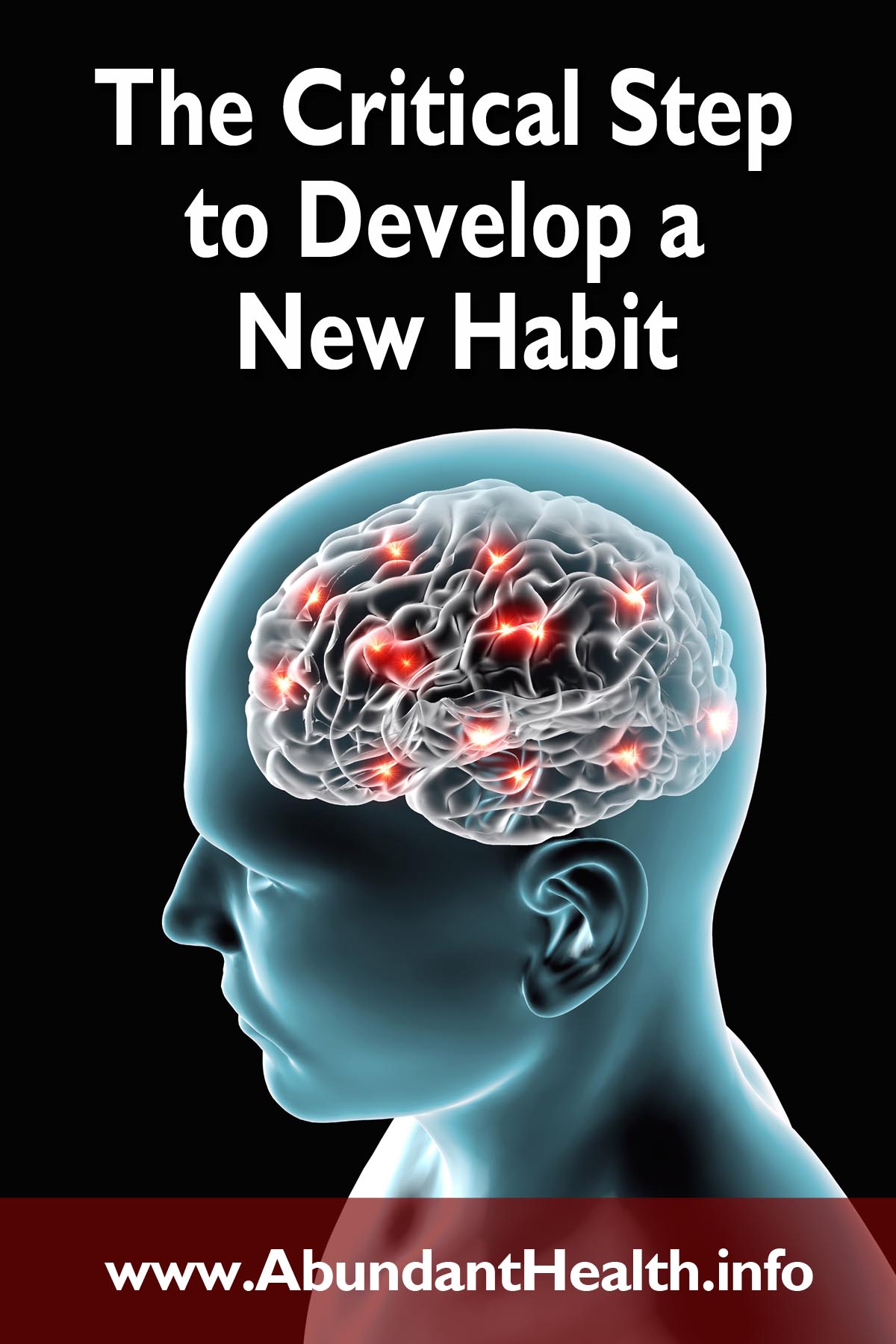
The Critical Step to Develop a New Habit

September 4, 2022 by Dr. Cesar Vasconcellos de Souza - [rt_reading_time label="Reading Time:" postfix="minutes" postfix_singular="minute"]

Have you ever wondered how a habit is formed? Do you find it hard to change your customs? You are not alone. Let’s look at the right way to change your habits in a lasting way.

The Critical Step to Develop a New Habit

Our mind works with thoughts, feelings and actions: attitudes and choices. We think, feel and do something. By repeating the same actions day after day, month after month, year after year, we create a habit. With the repetition of habits, be it food, clothing or the way you think and relate to yourself and others, character is built. So, repeated actions form our character. The sequence is:

  • thoughts lead to feelings
  • feelings lead to actions
  • actions produce habits
  • habits generate character

Remember when you took your first driving lessons? For a while, even after you had your driver’s license in hand, your mind needed to think about what pedal you use to accelerate and which one is the break, when to signal that you take a turn and that you need to put into park position when you stop. But over time, with habit, all of that was starting to happen in autopilot without you needing to think about that. A habit, a conditioning, emerged.

To create a new habit, effort, perseverance and self-control are necessary. Look at this text:

The power of self-restraint strengthens by exercise. That which at first seems difficult, by constant repetition grows easy, until right thoughts and actions become habitual.

E.G.White, Mind, Character and Personality Vol, 1, p. 285.

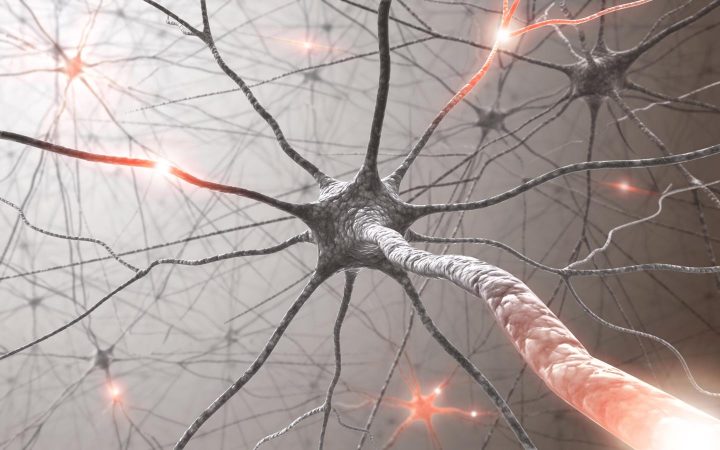
Brain cells, neurons, form an electrochemical circuit in the brain, a network with billions of neurons that communicate with each other. When you habitually think the same way about some subject, that thought becomes an ingrained belief in your psyche. Your habitual way of thinking then becomes a strong influence in your life, affecting your relationships, your work, and your social life. We become what we think about most. Brain circuits are working in such a way that it repeats functions that have been conditioned over time; and this is called habit.

Neurons forming a neural pathway in the brain.

People who are used to looking at the negative side of things, who tend to focus their minds on tragic matters, who always think pessimistically, favor the brain to function in unhealthy conditioning. Positive psychology studies show that cultivating thoughts of gratitude and hope helps with physical health as well. But when a person harbors negative thoughts and ideas, their immune system is affected in a way that can make infections easier to develop.

For example, researchers at the University of Arizona, studying stress, found that people who lost hope due to loss in life had not only more frequent infections, but also infections that took longer to resolve. This is because sadness seems to weaken immunity, making defenses such as T lymphocytes and B lymphocytes less effective in fighting viruses and bacteria, that is: the mental attitude affects the body, which can generate psychosomatic diseases and clinical situations, such as a weakened immune system.

So individuals who cultivate bad habits of thinking may experience more physical ailments throughout life. And the opposite is also true: good physical habits, a positive, optimistic, hopeful mental attitude and trust in God, make it easier for our bodies to respond to illness in a better and more protective way. The good news is that there is a mechanism in our brain called neurogenesis, which has to do with brain flexibility, neuroplasticity; a type of biological resilience. In other words, a possibility of change.

In other words: brain cells that have become accustomed to functioning in a certain neural pathway, which produces addiction, can return to normal functioning in the adult state, making it possible to create a new habit. Some studies suggest that a new habit can be built in three weeks, or 21 days. Other studies have shown that it takes 40 days to create a different habit. The important thing is that this is possible.

Freed from a handcuffing habit

But it is true that in many cases change is not coming easy. Some negative habits may need something more than physical and psychological resources to disappear, or come under control. There are habits that are so ingrained in the person, that have been in the individual’s life for so many years and that produce unhealthy pleasure, with a strong feeling of satisfaction, that willpower alone is not enough to break them. Hence the need to believe in a higher power, which I call God the Creator, to give us the strength to overcome that bad habit.

Do you want to change a bad habit in your life? Take the first step. Place a target. Something like: Just for today I’m not going to practice this bad habit. In other words, the fight is today! What tomorrow will be like, leave it for tomorrow. You may have to struggle with splitting the day, in the sense of deciding to avoid the bad habit at least in the morning. Make the decision by saying to yourself: this morning I will not practice…. . Mention the addiction you don’t want to practice that day. If you feel the force of a bad habit taking hold of you, turn to spiritual resources, as members of Alcoholics Anonymous do:

  1. Admitting your powerlessness in the face of you bad habit.
  2. Believing that a power greater than yourself, the God of the Universe can help you.
  3. Deciding to turn the will of your life over to the care of this Creator God.

So start believing. Believe that it is possible to change a bad habit, because it will be worth reaping the results of your right choices.

Healthy Fruits

Stay Always Up to Date

Sign up to our newsletter and stay always informed with news and tips around your health.

Sign Up Now!

Filed Under: Addictions, Healthy Lifestyle, Mental Health, Temperance Tagged With: breaking addictions, creating habits

How to Face Your Anguish

August 7, 2022 by Dr. Cesar Vasconcellos de Souza - [rt_reading_time label="Reading Time:" postfix="minutes" postfix_singular="minute"]

Angustia

Anguish is very common in our society. It is a feeling of intense pain, whether physical or emotional. In the midst of difficulty and anguish it can be difficult to perceive what to do. But anguish does not come from nothing, there is a reason for it to appear. How can we handle anguish?

How to Face Your Anguish

David was a shepherd who became a king in Israel in Old Testament times, but he screwed up a lot. I’ve heard preachers say that even when David committed adultery and murder, he was a man after God’s own heart. The truth is that David became a man after God’s own heart after he deeply regretted his sins, especially adultery and murder. Up to a certain point he tried to stifle his anguish over the mistakes he had made. Let’s think now about what we do with anguish. Do we run away from it, or are we able to face it in the strength of God?

The Bible is a wonderful book because it shows the truth of human history, without putting a lid on anyone. David was carried away by emotion, by sensuality, and abusively he wanted to have the wife of one of his army chiefs, Uriah. He ordered to put Uriah – his faithful soldier – at the head of the battle and to leave him there alone, so he was slain in battle.

It was cowardice on the part of David and his officers who carried out this order. David wanted to stay with Uriah’s wife, Bathsheba. He adulterated and murdered one of their military leaders. He didn’t think about it anymore, he fled into denial, into self-deception. Many do this, they escape into a mental attitude of unconsciousness of guilt, in the cruel, unpleasant, rude way of being. Running away from yourself can be the worst escape to do.

Then the Prophet Nathan, sent by God, went to David and told him a parable that portrayed injustice. When David heard the story of the parable, he immediately said that the unjust character must be punished. Nathan then said that he, David, was the unjust man, for what he had done to Bathsheba and Uriah. Suddenly the penny dropped and David came out of denial and admitted his mistakes, facing his anguish head on.

It seems difficult for certain people to admit their mistakes in behavior. Sometimes they are authoritarian, bossy, boastful, arrogant people. It’s hard to get along with people like that who, like David, are in denial almost all the time, always making an excuse for their abusive behavior.

There are people who do not feel anguish, because they have a strong ego and a good ability to manage their emotions. But a person with an impoverished emotional make-up, or someone alienated, may not complain of anguish.

Another type of person who seems to lack conscious distress is one who lacks self-observation. They can be defensive people, who don’t open up, they think they are powerful because they are more affluent, or with some relevant political, business or social position, or because they are people soaked with emotions, and with that they believe they have the power to love. Mature love involves feeling, but a strong feeling alone is not love.

A politician thinking he has power

Why do some deny having behavioral problems? Why don’t they observe themself and admit it? Maybe because they didn’t want to face their anguish. One way to avoid thinking about your anguish is to criticize, wanting to control others and having an attitude of ordering as if others were your stewards. Nor does one feel anguish who suffers from a decrease in morals. Corrupt people are like that. Some corrupt people may have a personality disorder, because they lack remorse, lack the feeling of guilt, lack true repentance. Those who say they don’t have anguish, may not have symptoms, but the way they live, trampling on ethics, exploiting people, dominated by material greed, aren’t these the symptoms of a character deficiency?

Another way to escape the perception of anguish has to do with psychosomatic illnesses, which are the manifestations of anguish through the body. This is where autoimmune diseases and other symptoms in the body come in, for which there is no diagnosis of some organic clinical disease. Is the absence of perceiving anguish the same as the absence of symptoms? Who doesn’t feel anguish consciously doesn’t have symptoms of emotional suffering?

Some symptoms may not be so evident, that they are expressing the presence of anguish or exaggerated anxiety. For example, stuttering, the presence of a tic, nocturnal enuresis that makes the person wet the bed again, obesity, verbal aggression, consumerism, a sex craving, an addiction to work, among others.

Anguish affects the entire human race. A baby is already born with it. Anguish is a general malaise, an unpleasant feeling of emptiness, of missing something that you don’t know what it is. It feels like a hole in the chest, sometimes a feeling of tightness, oppression in the chest, a lump in the throat, with or without sadness. Sometimes, and perhaps most of the time, anguish comes in disguise, or hides itself in physical symptoms, or even in mental symptoms such as panic attacks, bulimia, self-mutilation, obsessive compulsive disorder, drug addiction, among other problems.

Dealing with anguish is not easy. We all want pleasure, well-being, and that’s a normal desire. But is it possible not to have anguish in this existence? Is there any medication that eliminates the anguish inherent to existing? Any drug, licit or illicit, only promises resolution of anguish, but does not fulfill it, unless temporarily, and depending on the drug in a very fleeting way. The pain comes back.

Psychotropic pills

To better deal with your anguish, it is important to observe what types of thoughts you cultivate the most in your mind. Imagine a car with four wheels. The front wheels are the most important because they get you where you want to go. The rear wheels follow the front ones. The ones at the front are thought, cognition, choice, volition. The ones behind are feelings and physiology; that is, how your body reacts depending on what you think, what you feel and what you do.

To deal with anguish and depression it is important to consider the front wheels: thinking, choice. People who let their thoughts focus on tragedies, pessimism, and personal suffering can develop a variety of mental disorders. Studies of depression reveal that distorted and hopeless thoughts contribute and worsen depression.

The rear wheels are still important. Without them, the front ones can’t handle the path you want to go. Feelings are important for the functioning of the brain and other organs. Most people tend to be either at the extreme of being dominated by feelings – the front wheel of thought comes to the back, and the back wheel of feeling comes to the front – or they repress emotions too much, taking off a rear wheel.

A car steering in a curve

There are not many who manage their thoughts and feelings well. It depends on learning, which I call psychoeducation. That’s where you learn to think better by correcting your distorted thoughts, to focus your attention on what works in your life instead of what doesn’t, to cultivate hope, to strive to be optimistic, to have and express gratitude, to overcome authoritarianism and to cultivate meekness, stop complaining about people, about life, about everything; this is psychoeducation.

When you let thought go to the back wheel and allow the back wheel of emotion to come forward, choices, behavior, your family and social relationships can become problematic. Not because feelings are a mistake, but because common sense, serenity, mental balance, are not produced by feeling; this is not their job. It is cognition, thought, one of the front wheels that is enabled to do this. Taking medication for anguish and depression and not learning to think better is like wanting the back wheel to guide the car of your mind.

Do something to learn how to better deal with your emotions, with your anguish or sadness. Psychotherapy, good reading, lectures, counseling, spiritual retreats, support groups, Bible reading, life can help. Once you learn to control your thoughts, emotions and everything else, you’ll move on more easily.

Healthy Fruits

Stay Always Up to Date

Sign up to our newsletter and stay always informed with news and tips around your health.

Sign Up Now!

Filed Under: Anxiety, Mental Health

« Previous Page
Next Page »

Primary Sidebar

Social Channels

Coronavirus Immunity Challenge

Boost your immune system to be bullet-proof for the pandemic.

I Want to Participate

Recent Posts

  • 5 Habits to Live Longer
  • Better Sleep Can Protect Against Dementia
  • Finding Peace In Your Crazy-Busy World
  • Flaxseed – An Ancient Plant Rediscovered
  • Platelets – Triggers for Life or Death
  • Boderline Personality Disorder
  • In Praise of Almonds and Nuts
  • Are You Stuck in the Clutter Trap?

Categories

  • Body Systems (16)
    • Cell Function (2)
    • Circulatory System (1)
    • Digestive Tract (10)
    • Immune System (4)
  • Diseases (27)
    • Cancer (2)
    • Cold (1)
    • COVID-19 (11)
    • Dementia (1)
    • Diabetes (1)
    • Digestive Diseases (2)
    • Heart Disease (2)
    • Kidneys (1)
    • Metabolic Syndrome (2)
    • Skin (1)
  • Healthy Lifestyle (42)
    • Exercise (11)
    • Gardening (2)
    • Sleep (7)
    • Sunlight (2)
    • Temperance (14)
    • Water (4)
  • Mental Health (87)
    • Addictions (6)
    • Anxiety (7)
    • Burnout (1)
    • Depression (7)
    • Psychosomatic Diseases (6)
    • Stress Management (45)
    • Trust (6)
  • Nutrition (56)
  • Obesity (9)
  • Phases of Life (14)
    • Adults (3)
    • Babies and Infants (1)
    • Children (3)
    • Seniors (5)
    • Teenagers (3)
  • Therapies (7)
    • Herbs (5)
    • Hydrotherapy (1)
  • Uncategorized (3)

Archives

  • January 2025 (1)
  • March 2024 (5)
  • February 2024 (4)
  • January 2024 (4)
  • December 2023 (5)
  • November 2023 (4)
  • October 2023 (5)
  • September 2023 (4)
  • August 2023 (3)
  • July 2023 (2)
  • June 2023 (4)
  • May 2023 (4)
  • April 2023 (5)
  • March 2023 (4)
  • February 2023 (4)
  • January 2023 (4)
  • December 2022 (4)
  • November 2022 (4)
  • October 2022 (5)
  • September 2022 (4)
  • August 2022 (4)
  • July 2022 (5)
  • June 2022 (4)
  • May 2022 (5)
  • April 2022 (4)
  • March 2022 (4)
  • February 2022 (4)
  • January 2022 (5)
  • December 2021 (3)
  • November 2021 (4)
  • October 2021 (6)
  • September 2021 (4)
  • August 2021 (4)
  • July 2021 (5)
  • June 2021 (4)
  • May 2021 (3)
  • April 2021 (5)
  • March 2021 (4)
  • February 2021 (4)
  • January 2021 (5)
  • December 2020 (3)
  • November 2020 (4)
  • October 2020 (5)
  • September 2020 (5)
  • August 2020 (3)
  • July 2020 (1)
  • June 2020 (1)
  • May 2020 (1)
  • April 2020 (1)
  • March 2020 (1)

Copyright © 2026 · Abundant Health - Privacy Policy - Medical Disclaimer