Abundant Health

Up to date health information tailored for you

  • Home
  • Blog
  • Recipes
  • Shop
  • Contact
You are here: Home / Archives for Martin Neumann

Martin Neumann

What is Getting Teenagers Stressed Out?

April 24, 2022 by Martin Neumann - [rt_reading_time label="Reading Time:" postfix="minutes" postfix_singular="minute"]

What is getting Teenagers stressed out?

One of the most prevalent times for stress to arise in one’s life is in the teenage years. This time involves a lot of changes that can be stressful for many. So what is getting a teenager really stressed out?
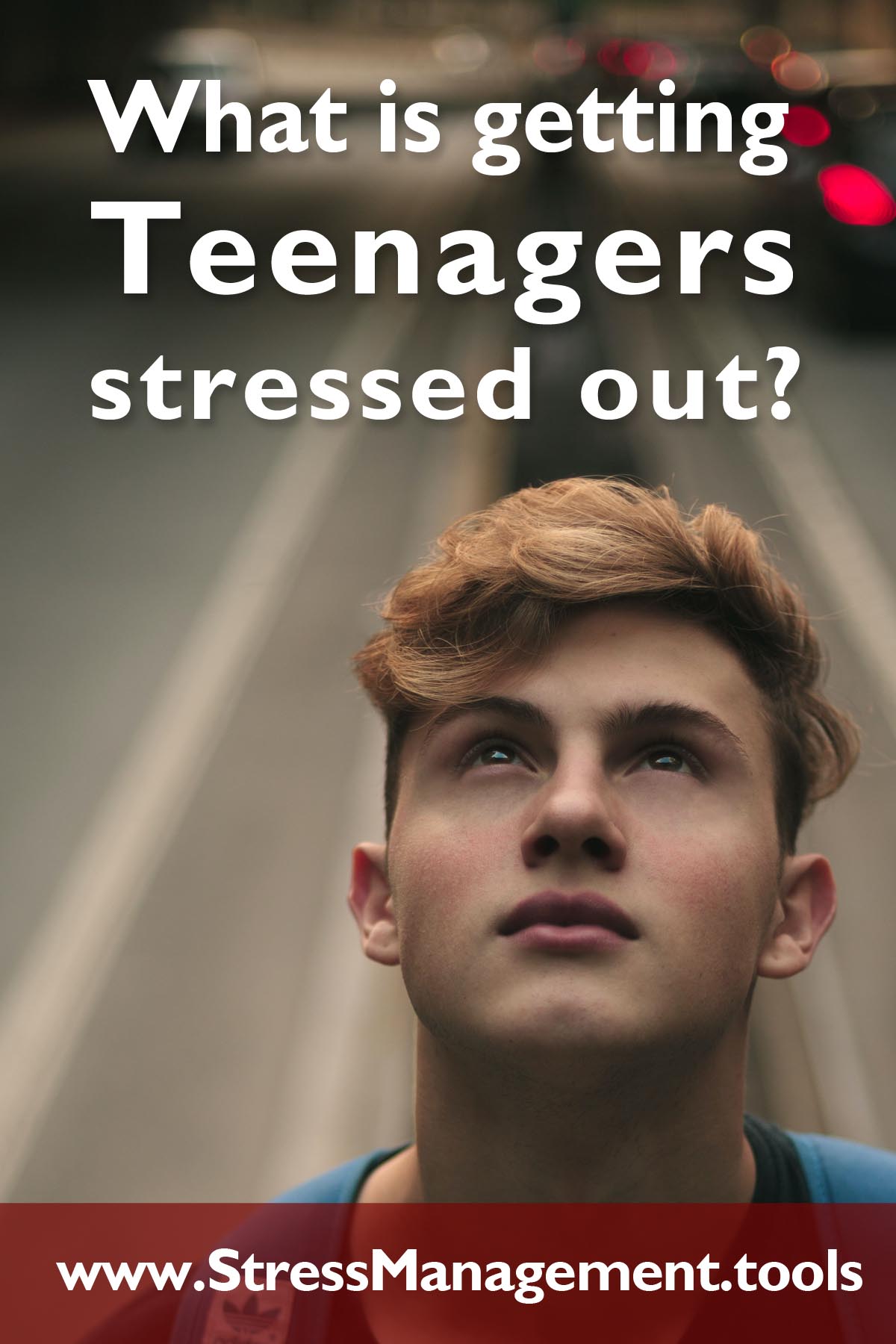
What is getting Teenagers stressed out?

At the earlier end, many kids are going through puberty and through their awkward years. This is the point in time when bullying can be the worst, as teens start to become a bit more grown-up, but not fully, and still make poor decisions by picking on people.

The stresses at this age vary greatly from person to person, but one of the most prevalent ones is bullying and harassment. By this age, many people are still kind of awkward, but they’re at the point where they are getting interested in people of the opposite sex.

This involves some kind of identity changes that can lead to some inner conflicts. While children tend to harass those of the opposite sex, teenagers start to feel to be attracted, and while some are showing their change in attitude, others might be teasing them for that.

As the attraction grows, teenagers tend to want to impress acquaintances of the opposite sex. This can mean showing the best side of themselves, maybe even showing off a facade that is not their true self, or others trying to impress by doing risky things they would not do if nobody was watching.

A teenager group

All of those is mixed with the quest of defining his own identity and self-worth. Some are stressed out and devastated when getting rejected from somebody else, especially being rejected from somebody of the opposite sex. Teenagers want to be accepted by their collegues and have a desire to belong to a group that values them in some way.

The teenage years involve a lot of changes that can be stressful. As a child, many decisions are being made for you. A teenager is exactly at the phase where he starts making lots of the decisions for himself, without having the prior experience on how to deal with this new reality in a proper way. Many times they do not want to rely on others in their decision making, in order to show their growing independence, but are still struggling to keep up with the stress of being responsible of the consequences of doing a right or a wrong choice.

Another problem, especially towards the later years of high school, is figuring out what they want to do with their lives. Often, teens are pressured about what they want to do for the rest of their lives, as if they have to have it all figured out by age 18.

This couldn’t be farther from the truth. They’re expected to make decisions about where they want to go to college, if they want to go at all, and if so, what they will major in. For many people, this is a stressful process of applications and trying to figure out what their passion is.

It’s certainly a lot to take in, and if they don’t have the right guidance, they’ll feel overwhelmed quickly. Finally, towards the tail end of this age group, you have the people who are in college.

College comes with a ton of stress factors that aren’t well known to everyone. In college, you have a lot more independence than you do in high school, but that comes with its fair share of drawbacks.

Students are often left out to dry by the university and their professors, who both assume the student is capable of doing everything on their own. They might find it hard to adjust, and with the realization that they’ll soon be working a full-time job, many can begin to panic from the get-go.

A perplexed student

Teens and young adults don’t show their stress very clearly, so it can be hard to pick up on it. Many don’t want people to worry about them too much, so they just suppress their stress and worries and just hope things go well.

Some will just try to act as though everything is fine, until one day they just kind of break down. Some show that they’re stressed out by secluding themselves from others, so as to not show off their problems to others.

You might notice that someone is spending a lot more time on their own, being reclusive by going home as soon as they get the chance to just be alone. This isn’t always a sign of stress, because some people are just naturally introverted.

But if someone is normally social and suddenly starts wanting to be on their own all the time, there’s clearly something wrong there. You also might want to watch their eating habits, since some people will either eat much more or a lot less when they’re stressed out.

This can lead to undesired weight fluctuations that can cause even more stress. Moving up into college, some students try to alleviate their stress by partying. Many students will resort to heavy drinking for the sake of getting the negative thoughts out of their head.

By using alcohol as a coping mechanism, they put themselves at risk to develop alcoholism. Some will even start using drugs, which can put them at risk of an overdose, addiction, and getting arrested.

No one solution will work for everyone’s problems, but there are common ways that you can go about trying to help people in this age range. As a rule of thumb, you should never, ever try to come at them aggressively to try to fix their problems for them with already predefined solutions.

Teenagers do not appreciate this kind of intervention. They’ll just deny anything’s wrong and seclude themselves further from you. You should always try to get them to open up a bit, and then casually move it towards thinking about solutions.

A teenage girl in a counseling session.

When it comes to teens, your first step should be to teach them to handle the situation as best as they can on their own. If that fails to work, then you might intervene yourself, instead of trying to get administrators or teachers involved, because they’ll feel really embarrassed if the teachers have to step in for a school bully problem – and it may make matters worse.

You need them to feel as if they can trust you as a parent, because if they don’t, they’ll never open up to you fully. Make it a point for them to know first and foremost they you have their back and support them fully, no matter what.

Then, you’ll have a much better shot at getting them to open up to you. When it comes to young adults, getting them to go to a counselor might be a good option. Many universities and high schools give free counseling, and sometimes just blowing off a good amount of steam can fix a lot of problems.

If the resource is there, why not take advantage of it? And there may be even other reference figures in the life of a teenager, whom they can trust and can serve them as a counselor. Be sure to explain to them that bottling up their emotions isn’t a good way to go about anything in life, and by just getting things off of their chest, they’ll find a lot more support and they’ll feel a lot better not having to brace against it on their own. Nothing creates additional stress quite like loneliness.

As a conclusion, there are quite a bit of stressors involved in the various changes taking place in a teenage life. Much of this can be mitigated if they know they have somebody they can trust and that will support them in their journey of finding their independence. Showing them acceptance and strengthening their feeling of self-worth can also go a long way to make this transition period less stressful. Avoid to be in a conflict course and give proper support to the teenagers in your life and you will see how grateful they are that you have made a difference in their lives when they needed it most.

Do you need a guide to help you understand how to cope with Stress in an all inclusive approach? Learn how to combat stress, mentally, physically, emotionally and strategically in your life.

Get Me the Guide

Filed Under: Mental Health, Phases of Life, Stress Management, Teenagers

Digestion Optimized

April 17, 2022 by Martin Neumann - [rt_reading_time label="Reading Time:" postfix="minutes" postfix_singular="minute"]

Digestion Optimized

Most people’s hair stands on end when they hear the word chemistry. Be it because of the many negative media reports about chemical accidents or because of the boring, almost incomprehensible chemistry lessons that they are actively trying to forget. However, chemistry is extremely exciting. And in our digestive tract, there is so much chemistry going on from the mouth to the anus!

Digestion Optimized

We could not exist without chemical processes. And the best thing is that it runs on auto pilot without any programming on our part. However, we can still support the digestive processes, so that they are happening the way they are intended to be.

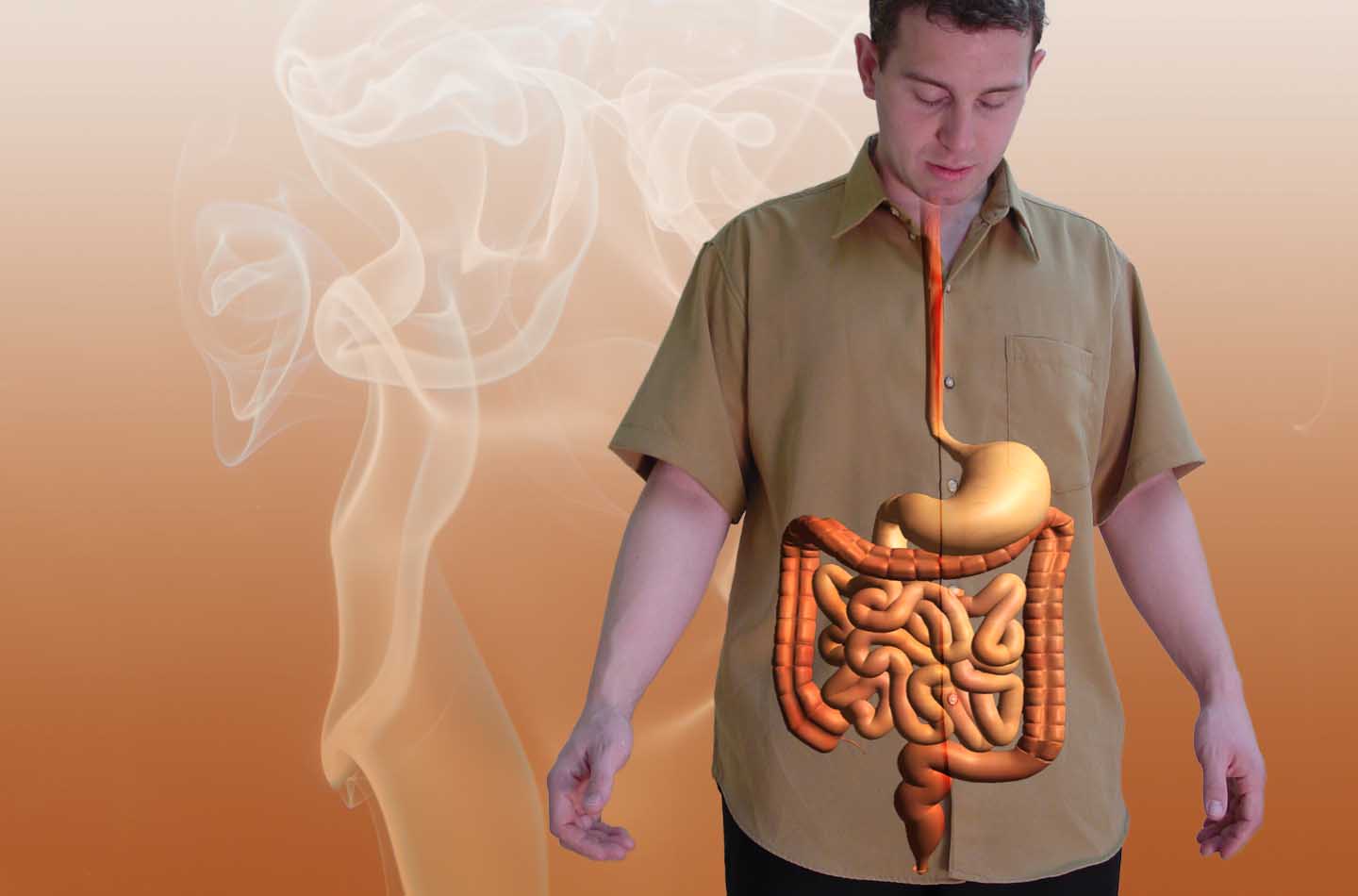
Let’s take a look at our digestive tract. To put it simply, it is a tube from the mouth to the anus with sections of different widths. In terms of structure, all sections are similar. However, there are significant differences in the fine tissues. And by adding coordinated secretions, they fulfill very special functions. Digestion breaks down the nutrients contained in food, until they can be absorbed through the intestinal wall. They are transported with the bloodstream to various organs, where they perform their important tasks and generate energy.

The digestive organs include the oral cavity with dentition, tongue and salivary glands, pharynx, esophagus, stomach, intestines, liver with bile ducts and pancreas.

Digestion Starts in Your Mouth

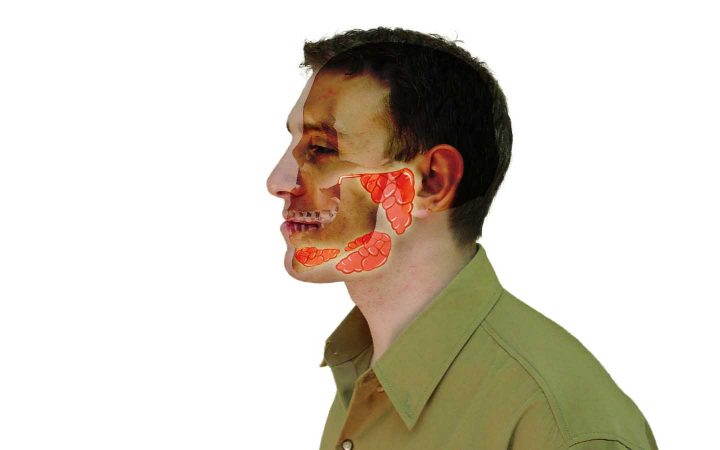
When we take a bite of our meal, digestion begins right in the mouth. The teeth work to break down food and prepare it for digestion. At the same time, the resulting pulp is insalivated and the alpha-amylase contained in the saliva begins the process of splitting the carbohydrates. If we chew a piece of bread long enough, it will start to taste sweet because the long chain starch molecules are broken down into glucose, providing energy for our body.

The salivary glands

But if we choke down our food and wash it down with a soda, these processes don’t take place. Unfortunately, the stomach doesn’t have teeth to handle the unfinished work with the same efficiency. If you have not yet created the habit of chewing, you should try to chew every bite 20-30 times. You can count along for a while until thorough chewing becomes your second nature.

Dwell Times

The length of time spent in the individual sections varies from person to person and depends heavily on the composition of the food. The esophagus itself is approximately 10 inch (25 cm) long. It takes about 10 seconds for a bite to slip through this tube and arrive in the stomach. The food stays here for an average of 1-4 hours. The dwell time of carbohydrate is shorter than that of protein. High-fat foods stay in the stomach the longest; a fatty roast up to eight hours, and sardines in oil up to nine hours. That is why you should be using fat in your diet rather sparingly.

It is good if we give our stomach a break at night. Therefore, the last meal should be taken no later than 3 hours before bedtime and should be easily digestible. Therefore the meal should consist mainly of carbohydrates and you should avoid fats as much as possible. A fruit with a piece of toast or a rusk bread would be an optimal option for dinner.

A light toast for supper

The emptying times of the small intestine is about 5-9 hours, of the colon is 25-30 hours and close to the rectal area feces can sometimes stay another 30-120 hours. Now we understand why colon cancer is appearing commonly in the lower part of the intestine. There, the feces stay along the longest. Carcinogenic substances have the longest time to act on the intestine. So we would be doing good by avoiding them. Carcinogenic substances include polycyclic aromatic hydrocarbons in grilled meat, seafood and sausage, and heavy metals that tend to concentrate themselves in animal products. Fish is often burdened with mercury.

The Stomach

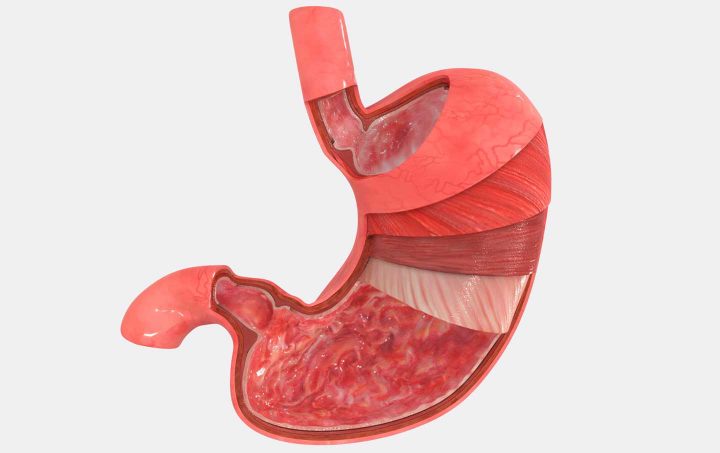
The stomach is in the upper left abdomen. It serves as a storage container and for breaking down the food. It produces up to 3 liters of gastric juice per day. This consists of mucus, hydrochloric acid (HCl), bicarbonate (HCO3), protein-splitting enzymes and intrinsic factor.

The mucus and the bicarbonate protect the stomach wall from the very strong hydrochloric acid. The concentrated acid would result in a pH of about 1, but this is buffered to pH 1.8-4 by the chyme. The low pH kills the vast majority of bacteria. The duodenum is therefore very low in germs and, by the way, alkaline and not acidic like the stomach. However, if we consume liquids during meals, we dilute the stomach acid and delay the work of digestion, until the stomach can return to an optimal pH. Very hot or ice-cold drinks delay digestion even further, because the stomach contents have to be acclimatized first.

Intrinsic factor is secreted by the gastric wall and is necessary for the absorption and transport of vitamin B12. If this factor is missing, vitamin B12 cannot be absorbed. Deficiency symptoms often occur in people with gastritis or in the elderly. A regular B12 test would therefore be advisable.

Solid food stays in the stomach until it is broken up into particles about 0.3 mm in diameter. This is done by peristaltic waves produced by several muscle layers all over the stomach. They are particularly strong in the lowest part of the stomach. The chyme is pushed forwards and backwards. The food is crushed up, mixed with the gastric juice, and fats are finely distributed. If you chew the food well, you relieve the stomach of a considerable amount of work.

The several muscle layers of the stomach

In the lower part of the stomach, the chyme is already very fine and thin, and the coarser parts are layered on top. When moving back and forth, a part of the coarser pulp is always carried along and further crushed. The fine pulp, called chyme, can then flow through the pylorus into the duodenum. The chyme can only be released to the duodenum to the extent that it is ready for further processing. There are measuring points at the stomach outlet that check the exact composition.

Gastric Emptying

The work process and emptying of the stomach is controlled by many factors. Various hormones and messenger substances are involved. Measurements and comparisons are constantly being made. The 10th cranial nerve plays an important role. It stimulates the gastric glands and is responsible for stomach contractions. But the mind also plays a role. We may remember the effects of stress on our digestion before an exam! It’s always good to create a relaxed atmosphere around meals.

The pylorus is usually slightly open so that liquid and the thin chyme can drain. The pylorus is closed again when larger pieces of food arrive. Indigestible things such as bones, coarse fiber and foreign bodies do not leave the stomach during the digestion phase. Only in the subsequent resting phase, according to an internal clock, do special contraction waves run through the stomach and intestines, during which indigestible matter and digestive secretions are emptied. We often hear the rumbling of the stomach, which is not a signal of hunger. So it makes perfect sense if we only eat something every 5 hours and allow the digestive tract this resting phase in between. 2 to 3 meals a day, at regular times, are ideal.

If we are constantly snacking, food is repeatedly refilled at the top. The stomach never finishes processing everything into fine chyme. So it can happen that something from the breakfast bread still has to be lounging around in the stomach in the evening.

Our Body – A Marvel

It is far from possible for us to go into all the details that take place in the digestive tract. Otherwise we would have to write an entire book. However, this excursion was already enough to recognize what a marvel we have in our body. Let’s help our digestion, as far as it is up to us, to accomplish its diverse work! We can do this by living a sensible, healthy lifestyle. He will thank us with good health. And we thank him for a job well done.

Healthy Fruits

Stay Always Up to Date

Sign up to our newsletter and stay always informed with news and tips around your health.

Sign Up Now!

Filed Under: Body Systems, Digestive Tract, Nutrition

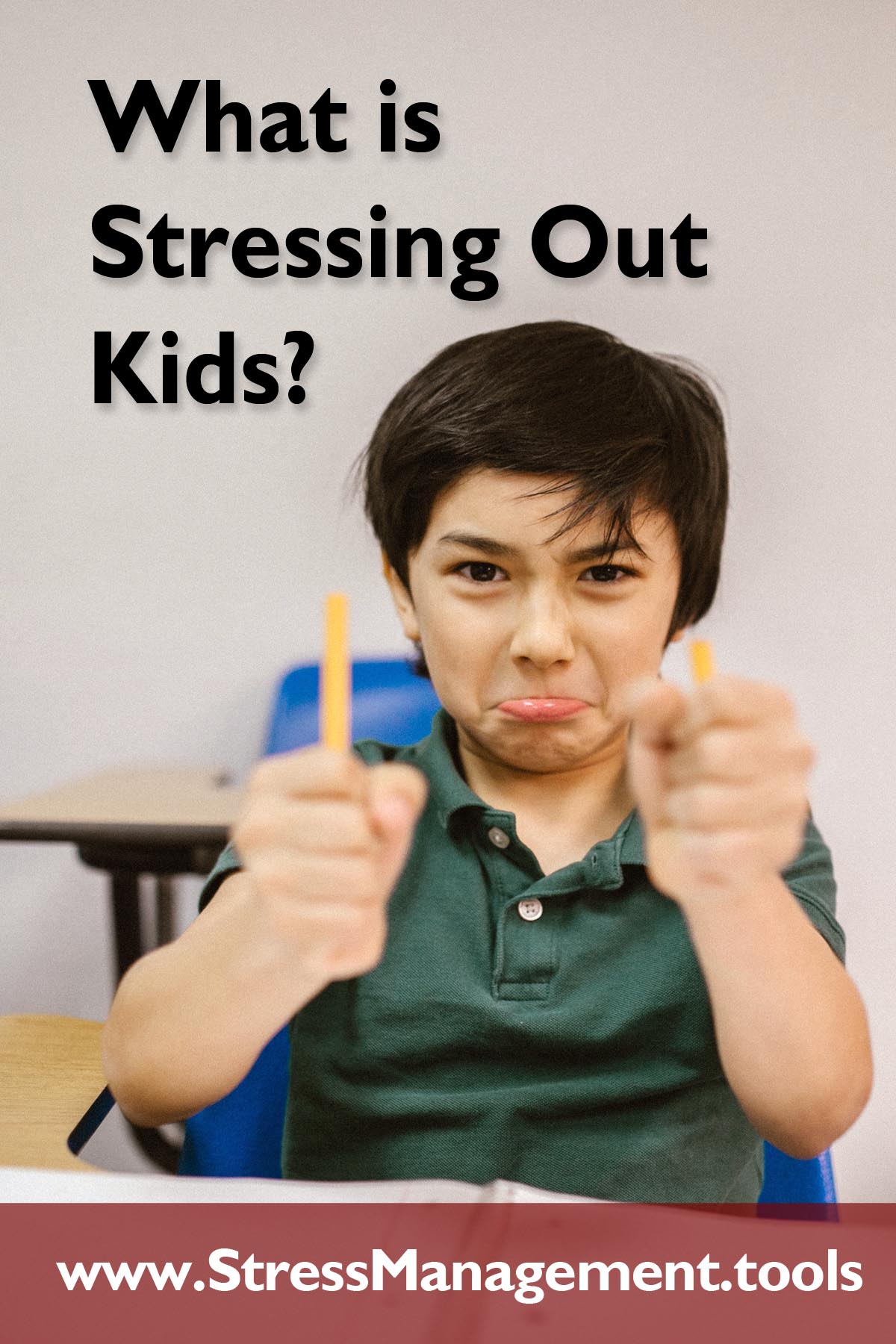
What is Stressing Out Kids?

February 27, 2022 by Martin Neumann - [rt_reading_time label="Reading Time:" postfix="minutes" postfix_singular="minute"]

What is Stressing Out Kids?

When people think about who gets stressed out, their last thought is kids. From an adult’s perspective, kids have nothing to stress about. They don’t pay bills, they don’t have to work, and all they do is hang around all day playing, chatting with friends and eating. So what is stressing them out?

What is Stressing Out Kids?

Theoretically, all they have to do is go to school and come back home. While this sounds like a dream to most people, there are several factors in a kid’s life that can stress them out quite a bit, and it’s important to address these factors early on so that they don’t develop any problems later in life.

One of the longest running and worst causes of stress for kids is bullying. Adults don’t face this problem nearly as much, because if someone is harassing you in the real world, you can simply leave the situation or file a complaint.

If the harassment is physical, an adult would be arrested for assault. However, kids can’t just leave school or call the police if they’re getting bullied. Some might say that they can just talk to a teacher, but that seldom fixes the problem.

Kids feel as if they’re trapped there at school with their bully, and with no way out of a harmful situation, they can get extremely stressed out every day of the week.

Bullying in school

Another cause of stress in kids might be their home life. Unlike teenagers and young adults, kids can’t just drive away from home if it’s not a good place to live. They’re powerless in terms of moving away, and completely at their parent’s mercy.

If a child’s household is full of fighting or has abusive family members in it, the kid might get stressed out about even going home. They could have a fine life at school, but every day they have to go home at some point.

Abusive parents or siblings can absolutely ruin a child’s home life, stressing them out beyond your knowledge. In a similar situation to having a bully at school, kids can’t do anything to prevent or help their situation at home, due to the fact that they can’t escape in any way.

Being unable to leave your situation can cause more stress than anything. Recognizing stress in kids can be either easy or difficult, depending on the kid. In younger children, it will be fairly clear when they’re stressed out, because they’ll usually start to cry.

Young children cry whenever they’re stressed, upset, or feel as if anything is wrong. This type of sign is the easiest to recognize, and you certainly shouldn’t overlook it as them being a “whiny kid.”

There’s almost always a reason for a child to cry – you just have to be able to look for it. If you don’t, they’ll start to develop some long-running issues. Of course, there are many kids who have outgrown their standard crying days.

Older kids have a very different way of showing that they’re stressed out, and this is the point at which it can become more difficult, so you really need to be looking out for these kinds of signs.

One sign that a kid is stressed out is that they start to close off from other people. They might start to become incredibly quiet – not just around you, but also around other kids their age.

While some kids are naturally introverted and shy, this is a totally different situation. When kids start to close off, they won’t even be open with their own parents or with their closest friends.

Another way older kids start to show stress is by acting out. Kids with a bad home life and similar problems might start to act out at school, at home, and elsewhere for the sake of getting positive attention from their friends – something that they desperately need.

Another common sign involves kids becoming reluctant to do certain things. For example, if a child is reluctant to go to school, there might be deeper meaning to it than them just not wanting to go because it’s boring.

They might be getting bullied at their school, and they’re avoiding going because they’re scared of what awaits them. Similarly, they might be reluctant to come home from school if they’re afraid of their home lives.

Another common source of stress for children is if their parents are going through a divorce. Parents are very much acting as a point of reference for children. If one of the parents is suddenly leaving from home, this is quite a significant disruption of the secure environment that the child may have felt at home. These kind of changes can be pretty difficult to digest for a child and causing them a significant amount of stress, so don’t be surprised if your child will close off or get unruly when you are going through a divorce.

Kids involved in divorce of parents

There are tons of different solutions when it comes to helping kids deal with stress. The first one is addressing the problem at its source. If it’s the home life that the child is stressed about, then try to improve it by going to family counseling, where the child can clearly communicate their feelings about their home life to a counselor or to their parents directly.

You can also directly address the source of bullying by getting onto the parents of the bully, in an attempt to get the parents to reprimand them appropriately. The bully’s parents might be totally unaware of what’s going on, so informing them might help the situation. Try to understand the circumstances of their family as well. Their child may be aggressive as an outlet of other problems he is facing. Maybe you can help resolve another dilemma in the process.

Another solution for improving a child’s stress is to remove them from a stressful situation. This applies best to the bullying situation. If you’ve already tried talking to the school’s administration, to the bully’s family, and to the teachers, then it might be time to switch your child over to another school or choose a homeschooling option.

This is best done early on, so that the child doesn’t have to endure years and years of bullying. This also allows them to get a fresh start at a new location.

If you feel that you have done whatever needed to adequately limit the bullying, without being able to stop it completely, one of the best options that you can take is to just talk to your child and help them better understand the scope of time that they’re in.

While they might be stressed out about school and all of that right now, they need to know that things do get better. It can be helpful to explain to them how small of a portion of their life this will be.

Show them a timeline of a person’s life from age 0 to 100 and how small the school years are in that line of existence. It’s important to get their thoughts on their own situation as well, because it makes them feel respected, as if they have a bit of power in their tough situation.

We have seen that children can face significant stressors in their lives. If they are kept unresolved, it can develop into more serious problems in adulthood. Find a way to adequately resolve their issues, and your child will thank you for having done the right thing to protect them.

Do you need a guide to help you understand how to cope with Stress in an all inclusive approach? Learn how to combat stress, mentally, physically, emotionally and strategically in your life.

Get Me the Guide

Filed Under: Children, Mental Health, Phases of Life, Stress Management

Handling Stress Before It Happens

January 30, 2022 by Martin Neumann - [rt_reading_time label="Reading Time:" postfix="minutes" postfix_singular="minute"]

Handling Stress before it happens

Stress is something that everyone in the world will experience. Some of us deal with a lot of stress – others, not as much. But one thing that we all have in common is that we all have a reaction to stress.

Handling Stress Before It Happens

When something happens to cause stress, we’ll react in either positive or negative ways. The way that you deal with stress will profoundly affect your health and well-being.

Your reaction to stress on one day can affect you emotionally the next day, and even the day before if you’re bracing for it. Unfortunately, there is no escaping stress and there are varying degrees of stress and causes behind it.

Stress Happens to Everyone

There are no groups of people or any single individuals who can avoid stress. Stress doesn’t fit neatly into any one category like a one-size-fits-all event. There are different levels of stress that will vary, depending on the person who’s dealing with it.

There are also different reasons and different times for stress to occur. You might experience more stress at a certain time of the year than other people do. However, stress does fall under the heading for four basic types.

The types of stress are encounter stress, time stress, situational stress and anticipatory stress. Encounter stress has to do with the relationships in your life. This covers your intimate relationships, your work relationships and even stranger or acquaintance relationships.

The type of life that you have can often determine whether you have a high stress level due to encounter stress. People who work in jobs where there’s a great deal of emotions (such as in a hospice care group) might have a higher rate of encounter stress than other people would normally have.

Giving emotional support to a cancer patient

Time stress can occur when you’re feeling overwhelmed with everything that you have to get done – so you fret that you don’t have enough time. You “what if” that you’re not going to get everything done and your stress level rises.

An example of this would be having to be somewhere for an important meeting that you absolutely can’t miss and things crop up to put you behind. Sometimes people will engage in time stress before there’s even an issue.

This “what if” worry can make them feel anxious and depressed because they worry how it will affect their future. The panic it causes can result in even more stressful situations to occur.

Situational stress is what happens when you’re in a situation that causes immediate stress. An example of this can be a car accident, a child becoming ill or a job loss. In situational stress, it’s the situation that causes the worrying and the emotions that go along with it. This kind of stress can be short or long term.

Anticipatory stress is stress that you get because you’re anticipating something that’s coming your way. This might be having to give a speech or wanting to ask for a raise. It can also be about something that’s not even on the horizon.

It’s a fear that the other shoe is going to drop. This type of stress is the kind that has the most “what if” worry involved with it because it’s focused on things that haven’t even happened – and may never happen!

And when the things that you worried about do come to past, they often don’t look anywhere as frightening or terrible as what you thought they’d be. Often we discover that it was not really worth our worries.

Worrying About Stressful Situations Affects Your Health

Thinking about a problem or wondering what’s going to happen isn’t the same thing as worrying about it. When it crosses the line is when you begin to “what if.” You might “what if” about an event, a person or an unknown future.

Plenty of people will “what if” in their mind. Unfortunately, most of them create all sorts of “what ifs” that have a negative aspect to the thoughts. From that negative “what if” can spring a ton of stress that can turn into long term stress if the habit isn’t broken.

Worrying about future events

There’s nothing wrong with thinking “what if” when you’re trying to brainstorm and come up with a purpose or a plan to deal with stress. But if you do random “what ifs” where you let your mind wonder from one bad possibility to the next, this is futile and can even be bad for your health.

This kind of “what iffing” is a stagnant process that doesn’t get you anywhere. It’s like sitting in a rocking chair moving back and forth and expecting to get from point A to point B.

This negative “what iffing” doesn’t help anything and all you gain is fear and a sense of foreboding about the situation or your future. When you engage in unproductive, negative “what ifs,” you can start to experience a host of various health problems.

You can develop headaches or stomachaches. You might start to encounter muscle problems. Worrying about stress is bad for your heart health. When you worry about stress, studies have shown that this habit is known to cause high blood pressure, tachycardia and shortness of breath.

Worrying about stress can even cause heart disease. The reason that it can do this is because when you worry about stressful situations, your body gets an influx of stress hormones.

Having a regular dose of stress hormones puts additional pressure on your heart because of the high blood pressure that goes hand in hand with raised stress hormones.

Besides affecting your body’s health in a myriad of ways, worrying about stress affects your emotional health and your mental health, too. If you worry about stressful situations to the point that it becomes an ongoing habit, you can be at risk of having a mental breakdown.

This usually happens when thinking about and dealing with stress reaches the point where a person simply can’t deal with it any longer. When that happens, he or she can lose the ability to go about their day as they normally would.

It’s an abnormal response to stress that’s linked with worrying about stressful situations and feeling like there’s no relief for the stress in sight. When worrying about stressful situations reaches the point where someone is having trouble eating and begins to deal with insomnia, that’s the point where something must be done immediately to alleviate the worry.

The 4 Types of Pre-Meditated Stress Analysis

People cope with stress in different ways. These coping mechanisms can be labeled four different ways. The first one is problem analysis. With this type of coping mechanism, people think about the problem.

This way of thinking usually means the person is using “what if” in a positive way. They’re not simply turning the problem or situation over and over in their minds. They’re looking for how they can define exactly what the problem is.

Analyzing a problem on paper

This is the first step that often motivates people to reaching for a solution to the problem. When someone engages in problem analysis, they can see the problem objectively without internalizing it to the point that they dwell on it long term.

This kind of coping mechanism is highly effective and doesn’t lead to emotional or physical problems that can happen with dwelling on a stressful situation. The type of people who use this method are the type that are able to separate their lives and self-worth from the problem.

They can look at something that needs to be solved and then lay it down without it causing them to lose sleep. The second type of coping mechanism is plan rehearsal. Someone who copes this way is usually an analytical thinker.

He or she won’t dwell on negative “what ifs.” Instead, this person will think about what he can do to bring the situation to a resolution. Someone using this coping mechanism rarely thinks that there isn’t a solution to a situation regardless of what the problem is.

The person who deals with stressful situations this way usually comes up with several solutions and analyzes each one for the best outcome. People who use plan rehearsal don’t usually carry a stressful situation over into the next day emotionally.

Stagnant deliberation is one of the poorer methods that people use when dealing with stress. This is the type of person who will “what if” and think about the problem, but won’t get anywhere.

They don’t come up with a solution and so they don’t move forward. With stagnant deliberation your emotional and physical health can be affected to the point that it can make you ill.

The fourth coping mechanism is outcome fantasy. With this way of dealing with stress, people fantasize or daydream that they won’t have to deal with the problem because it will be somehow magically solved. This coping mechanism can affect emotional and physical health as well.

It’s rare that a person always uses just one type of coping mechanism. You can use a mixture of all of them but the type of people who use problem analysis and plan rehearsal don’t get stuck in the “what if” or the negative thinking about stressful situations. They might pause there, but they don’t get stuck.

How to Make an Action Plan Ahead of Time to Handle Stress

By knowing how to act rather than react to stress, you can handle stress before it becomes an issue. In every situation that happens, prioritize it. Ask yourself if the situation is yours to handle.

Too many of us deal with things that we don’t have to deal with. We take on other people’s stress. We handle things for friends, a spouse and coworkers that we shouldn’t take on.

It can be tempting to want to help and to want to fix someone else’s stress, but that’s a way to quickly become overwhelmed and stressed yourself!

Take action steps to handle stress before it happens by identifying where you feel the pressure start to build. If you know that you’re going to be pressed for time, then look at what has to be done.

Use to-do lists and pare it down to only the necessities to get you through that day or week. Let go of things that don’t matter in the long run for your health or happiness. Give yourself extra time to accomplish tasks and learn to say no to things – and people – that will eat up time to the point you know it will cause stress to begin.

Don’t focus on the things that you can’t control. For example, if you have a joint project with a colleague and you’re ready with your part, but he isn’t, don’t focus on what he didn’t do.

All you’re responsible for is what you were supposed to do. Let that person suffer the consequences rather than you suffering the stress. When you know that a situation is coming up that has the potential to turn stressful, take the time to write out a list of possible solutions.

For example if you’ve heard that your company is going to be laying people off, instead of worrying about it, write down all of the steps that you’ll take if it does happen. Once you do that, let it go. You’re prepared!

Don’t give in to negative “what if” thinking. You don’t want to attempt to cross bridges before you even come to them. You might find that the bridge never even appears in your life and you don’t want to waste time needlessly.

Do you need a guide to help you understand how to cope with Stress in an all inclusive approach? Learn how to combat stress, mentally, physically, emotionally and strategically in your life.
Get Me the Guide

Filed Under: Mental Health, Stress Management

Are You Addicted to Stress?

January 2, 2022 by Martin Neumann - [rt_reading_time label="Reading Time:" postfix="minutes" postfix_singular="minute"]

Are you addicted to stress?

When you think of things you might be addicted to, stress is never on your list, is it? Some people might put alcohol or nicotine, caffeine or even social media – but stress isn’t even considered.

Are You Addicted to Stress?

The idea of stress addiction might seem rather strange, thinking that most of us hate feeling stressed. However, many people don’t realize it, but stress can become an addiction over time. It’s all due to the subtle scientific reactions within your body, when the stress hormone cortisol floods your system and allows you to deal with harrowing situations.

Your adrenaline increases and you find yourself powering through tasks and completing projects with ease. When you’re not under pressure, you find yourself dragging on, procrastinating and struggling to the finish line.

Some people laugh this off by saying they “work better under pressure,” and this is why. It’s an addiction to the stress from a chemical standpoint. It’s not just a mental preference.

The problem is, when you start suffering from chronic stress, it not only puts your health at risk, but it also affects your personal and professional relationships. Over time, your quality of life diminishes and you reach a point where you’re unable to accomplish anything without stress – a very sad way to live your life.

What Does It Mean to Be Addicted to Stress?

Stress is something that can give you a reaction in the brain that’s a similar feeling to what you get from taking drugs or drinking alcohol. This kind of high is a result of the brain releasing chemicals that make you feel good.

Some people may not realize their stress addiction until they start analyzing their habits. If you tend to procrastinate until something happens that puts pressure on you where you get a dose of stress and use it to fuel your productivity, that’s a stress addiction.

You feel good because have a lot of energy and your feelings are high. All of this occurred because of whatever stress that happened. You can also tell if you’re addicted to stress by what your life looks like.

There’s rarely any peace within it. In fact, your life is like an advertisement for stress. You’re rarely calm and you’re always frazzled. You don’t find it boring because there’s always something going on.

There are rarely any down moments because you’re too busy racing from place to place. It feels like you practically live in your car because you’re never getting any down time.

Driving a car - Photo by Ketut Subiyanto from Pexels

Relaxation isn’t something that’s in your vocabulary. You might think about it every now and then, but you don’t ever get to do it. Or, it could be that you’ve got a full load of pressure.

There’s drama and stress and it always seems like there’s a personal or professional fire to put out. You might be stretched too thin, feeling like you’re burning the candle at both ends, but it doesn’t really bother you.

Life isn’t bad, you tell yourself. It’s just hectic and when you handle all the stressors that come your way, you end up feeling empowered, like you’ve accomplished a lot. An addiction to stress also manifests itself by what you reveal about your life to other people.

One way that people do this is by putting stuff on social media. For you, social media isn’t really a place you go to in order to see how your friends or family are doing. It’s usually all about you – how other people made you mad, hurt your feelings or took advantage of you in some way.

You’re always posting that kind of stuff on social media and the topic centers around your stress – how hectic everything has been for you or what’s going on in your day and how that turned into stress.

You might talk about why you feel so stressed out – because you didn’t sleep, haven’t eaten, aren’t making enough money at your job, had a fight with your friend and how you’ve always been the one compromising and not her or him.

Posting on social media - Photo by Edmond Dantès from Pexels

Or you might mention how angry or anxious you are because of what you went through in the past or because of emotional issues now. On your social media, you get online and bemoan often in detail what’s going on in your intimate relationship or with your family or coworkers.

You talk about what awful thing was said to you or what bad thing you had to deal with, like you had to do more than your fair share of work. You talk about the pressure that put on you and how you worked late and rushed home and didn’t even get to eat.

Stuff like that happens to everyone because life itself can be hectic. But the thing about a stress addiction is that you post things like this all the time and it’s a huge deal to you. You talk about putting gas in your car and it becomes an effort comparable to running a marathon.

Or you mention going to the grocery store and what the store was out of and how someone cut you off in line or failed to return their shopping cart. You might talk about the effort it takes to pay the bills or get the dog to the groomer.

Nothing that you talk about is ever a simple task or enjoyable. There’s always drama and stress associated with it. Whatever you do can’t just be a normal thing. It always has to be bigger and more stressful than the situation calls for and much worse than what anyone else is dealing with.

Exaggerating the voice on social media

What you don’t realize is that others on social media who also deal with stress will start to view you as a drama magnet. They’ll think that nothing in your life can ever be simple – that it always has to be bigger than it really is.

People who are addicted to drama are usually posting negative things or complaining non-stop about their life. When you talk to people at work or your friends or family, your life is all about the stress and you don’t really feel bad about all that because to you, your stress isn’t a bad thing.

It’s something that’s part of your life and you’ve become used to enjoying the high that it gives you to be a fighter. Be aware that when you begin garnering that kind of reputation, people will avoid you. This adds to your stress, but you’ll just use it to fuel your fire even more. 

Consequences for Failing to Break Your Stress Addiction

You know how life goes. There’s always something that interrupts your plans and it happens on the day when you can least afford to encounter a stressor. You might be on your way to work because you have to go over a project with your boss before the client gets there for a scheduled appointment.

But the next thing you know, you’re trapped in a traffic jam. There’s no way around it and you can’t turn back. You’re just stuck. When this happens, your body reacts and floods your system with stress hormones.

The reaction from your body is based on the fight or flight response and it’s meant to be a help to you. However, when the situation isn’t life or death, this response isn’t needed.

When this is an occasional circumstance where you get a flood or stress hormones, it’s not a big deal.

But you start to have it even when you’re dealing with a mundane stressor because you don’t know the right coping techniques to turn to. When your body is constantly getting this flood of hormones, it affects you by giving you that brain chemical high.

It’s easy to get addicted to wanting to get that boost of chemicals. You feel good to some degree when you first get it, but over time, this constant cycle of having a stress response within the body wreaks havoc on your physical health.

Over time, the overuse of your stress hormone starts to take a toll on your immune system. This happens because your body has something known as natural killer cells. These are designed to battle against serious conditions such as cancer, but these cells are also designed to fight things like bacterial or viral illnesses.

They work to protect your immunity. Stress weakens the ability of these cells to work the way that they’re supposed to, leaving you with little protection so you’re constantly catching whatever is going around.

catching a cold

It’s not just illnesses that you’ll face more often when you fail to break your stress addiction. You’ll be at a higher risk for developing conditions that are related to stress such as diabetes.

When you get stressed, it raises your glucose level – even if you don’t have the disease.

Stress can make you more likely to have a heart attack because when you’re stressed, your blood pressure goes up.

The flood of stress hormones that you get are supposed to temporarily narrow your blood vessels. But when you’re addicted to stress, these blood vessels can be constantly narrowed, which restricts blood flow and oxygen to the heart.

When you’re stressed, it can also affect your digestive health. You can develop nausea, stomach cramps and suffer from diarrhea or constipation. You can also suffer from heartburn.

People who are addicted to stress can develop reproductive problems. Women might skip a monthly cycle or they might notice that their periods last longer, while men can experience lower levels of testosterone, which is linked with impotence. 

But it’s not just your physical health that will show the signs of stress. You can also struggle with mental health. For many people, prolonged exposure to stress, such as with a stress addiction, can cause depression.

This happens because the stress hormones linger, and you don’t get that break from them that you’re normally supposed to get. It’s common for stress to have an impact on your emotions and when you constantly get that flood of stress hormones, it brings out negative feelings such as grief, which can lead to depression.

Anxiety is another consequence of not dealing with a stress addiction. You don’t have to have an anxiety disorder to develop anxiety. This is something that happens as a result of whatever stress you have in your life.

When you have anxiety, it can show up as both physical and emotional symptoms. When it has to do with your mental health, the anxiety that you experience usually reveals itself through a feeling of dread.

You might feel nervous at random times or consistently. Sometimes anxiety can show up as feeling like something is just off. You feel wary. This mental reaction can happen whenever you’re about to face a situation or when you think about that situation.

It can also happen because you fear the results of a situation. When stress is what’s behind your anxiety, then what you’re experiencing lingers and doesn’t just go away. Not dealing with stress can also lead to panic attacks.

A Panic Attack

A panic attack is what happens when you get a feeling of overwhelming fear or you experience a deep anxiety. Panic attacks can happen with or without physical side effects.

Many people who have stress and develop panic attacks have these because of something in the past that they haven’t dealt with, stress addiction, or something that they’re afraid of that might occur that hasn’t happened yet.

A panic attack is a sense of impending doom, even if nothing bad is going on at the moment or they’re not in any danger. These attacks are a clear sign for the person who has them that something needs to be treated so that it can end.

When a panic attack disrupts your daily routine and you have difficulty being able to carry on, this a severe episode and may need professional treatment. As a result of your mental health suffering because of stress, you can start feeling dissatisfied with life.

You just feel like something is missing. This can happen when you’re not happy with the person you are. You might experience self-doubt along with this dissatisfaction. You might also have low self-esteem and you don’t like what you see when you look in the mirror.

You don’t like your job, your relationships, or where you stand in life. It’s at this point that many people start turning to coping addictions to try to fill the void and feel better about themselves and their lives.

Just an addiction is not going to help you to get anywhere in life. It is not going to resolve your problems, but just adding to them. You may feel good being addicted to stress, but it does not get you anywhere. If you find that you are having a stress addiction, you need to learn techniques to deal with your stress in a more constructive way. Download the free 10 Minute Guide to Stress Management to start your journey in learning how to dominate your stress.

Do you need a guide to help you understand how to cope with Stress in an all inclusive approach? Learn how to combat stress, mentally, physically, emotionally and strategically in your life.

Get Me the Guide

Filed Under: Mental Health, Stress Management

Mastering the Art of Letting Go

November 7, 2021 by Martin Neumann - [rt_reading_time label="Reading Time:" postfix="minutes" postfix_singular="minute"]

Mastering the Art of Letting Things Go

Sometimes letting go is hard – like breaking an old, addictive habit. There are so many obstacles to overcome and negativity to rethink. Being stuck in your past may be blocking your health, happiness, love, success and more.

Mastering the Art of Letting Go

Mastering the art of letting go takes courage and determination. Then, and only then, can healing occur and you get a new outlook on life. When you choose to hang on to negativity, it’s like you’re choosing to take poison every day. It’s time to take action and take the steps necessary to bring positivity back into your life.

Refusing to Let Go Is Like Poisoning Yourself Slowly

When you’re burdened by negativity in your life, it’s like a chain around your neck weighing you down and keeping you from success and happiness. Refusing to let go of the negativity can bring stress of such magnitude that it is like slowly poisoning yourself.

There are many things you can get hung up in your life. You could be disappointed in yourself or someone who has hurt you. You likely think about it every day – possibly every minute – and you’re constantly giving momentum to that negativity.

It may seem impossible to let go of those feelings, but like everything else, there are ways to let go and focus on building your energy rather than letting it slowly seep away. Fear of letting go zaps your energy and keeps you from having the inner peace you need to move forward.

Letting go is like every other bad habit that you want to rectify. In the beginning, it seems impossible, but the more you practice, the easier it will get to let go of things like toxic relationships, negative thoughts and grudges.

It may be easier if you identify one thing to let go of in the beginning. Working on one issue at a time and focusing on letting go makes it easier to go on to the next issue when you’re ready.

For example, you may be trying hard to forgive someone and still hold a grudge that’s stressing you out. Forgiveness of a wrong done to you can be one of the most difficult emotions to work through.

First, realize that forgiveness doesn’t mean you’re dismissing what was done to you. What it does mean is that you’re proposing resolution for the negative thoughts and emotions you’re having about the person.

Five Things You Should Let Go of for Stress Relief

Keeping things that bother you in the forefront of your mind can cause stress that never seems to go away. There are certain stressors that are more damaging than others and can make you feel so bad about yourself and other people in your life that you become paralyzed and unable to feel happiness.

An angry woman - Photo by Andrea Piacquadio from Pexels

There are five top stressors that people have the most trouble letting go of:

  1. Anger – Feelings of resentment, revenge and bitterness may accompany anger in your life. Unless you can work your way through the anger – whether you’re angry at a person or a situation, it can affect all areas of your life.
    You can either hold on to that anger and face the many health and emotional consequences, or learn how to forgive and move on with your life.
  2. Grief – Loss of a loved one, either in death, divorce, estrangement or other way, can cause grief that is difficult to let go of. Grief is a normal response to a loss and there are five stages that you need to deal with.
    First is denial. Then, anger, bargaining, depression and, last – acceptance. You may go through only one or two of these stages, but the important thing is ending your grief by acceptance and letting it go.
  3. Resentment – Resentment is similar to anger in that it can permeate every area of your life and keep you from enjoying people and experiences. Holding on to resentment zaps your happiness.
    One popular quote about resentment likens it to taking poison and expecting the other person to die from it. With both anger and resentment, the cure involves acceptance, forgiveness and letting go.
  4. Control – Those who have a need to control others are especially vulnerable to bringing unnecessary problems into their lives. When you let go of the need to control, you’re actually gaining.
    You’re gaining the ability to accept people as they really are rather than being disappointed over and over again, because they’re not conforming to your wishes or expectations.
  5. Past – Issues that happened in the past can haunt you until you die unless you learn how to let go of all the negativity.
    It might be that you’re clinging to the past because it was a happy time for you. Because of situations you can’t control, those happy times are gone. But feeling sentimental about those old days is not going to bring them back.
    At the other hand it could be that you cling to unhappiness from the past. Developing a more positive attitude and/or forgiveness may help you move on.

The urge to hang on to anger, grief, resentment, control and the past can be overpowering, but learning how to let go of these debilitating feelings can open doors to happiness you never thought possible.

Allow Yourself to Go Through Emotions

It’s difficult to let go of situations and people unless you go through an emotional process first – such as crying as much as you need to or expressing your thoughts or feelings in a way that gets it across to the other person.

A crying lady - Photo by Karolina Grabowska from Pexels

Studies have shown that bottling up such emotions as anger can increase your cancer risk, and in many other ways chip away years from your life. When you release those emotions, blood flow increases to the frontal area of the brain and helps you let more positive emotions in.

Negative and suppressed emotions play an enormous part in the future of your mental and physical health and well-being. Such emotions often lead to unhealthful coping mechanisms to try and relieve some of the pressure caused by bottling up the emotions inside of you.

Turning to drugs, alcohol, cigarettes and junk food may all play a part in trying to deal with the bottled-up emotions, but it’s clear that coping with these feelings is much better for you than holding on to them.

You may be able to put up a facade for some time – both for others and yourself – and convince yourself that you don’t have a thing in the world that’s depressing you and stressing you out. Eventually, those bottled-up feelings will explode, just like a bottle of soda that’s been shaken and all of a sudden you take off the cap.

Rather than blowing up all at once and causing all types of consequences, it’s best to vent your emotions a bit at a time – much like slowly turning the cap of the soda bottle and letting some of the fizz happen a little at a time.

You may hide your true feelings in a relationship for being afraid to get hurt, or save up the anger inside of you and then explode all of a sudden. Or, you might vent your anger on someone else.

Rather than putting yourself at risk by bottling up your emotions, try healthy ways to vent such as exercise, talking to a therapist, controlling your thoughts, journaling or another of the many ways to deal with your emotions in a constructive way.

Learn That Forgiveness Doesn’t Mean They Got Away with Anything

Learning how to forgive can release you from some negativity in your life that are weighing you down and keeping you from the happiness you desire. Forgiving has different connotations for different people.

Resentment, anger and thoughts of revenge are generally involved in situations where you want to forgive someone. That makes it more difficult to navigate through your emotional turmoil.

If a person has hurt you seemingly beyond repair, that person has control over your feelings and emotions until you can forgive and let go. The hurt may take time to heal, but when you forgive, you’ll lessen the grip of control and set yourself free.

There are many ways to forgive. Looking for the positive in a person who once hurt you is one way, and journaling helps to find those good points. You may also try empathizing with the person.

Perhaps he or she has been going through trials in his or her life that caused the negativity toward you. Or, remember similar mistakes that you have made that hurt someone that you really didn’t mean to harm.

Forgiveness does not mean that you need to return into an unsustainable relationship. It does not mean everything is the same like before. It means that you can relief yourself from the anger and bad feelings against this person that has hurt you. But protecting yourself can mean you cut some ties with that person. Protecting yourself is part of the process of letting go.

The benefits of forgiving others are many. Your mental health and acuity will improve because you’re not always thinking about negatives. That can cause a positive change in relationships and any hostility and anxiety you may feel toward people.

A woman forgiving a man - Photo by RODNAE Productions from Pexels

As for your health – letting go of anger and using the power of forgiveness can affect your blood pressure, immune system and heart. Depression is less likely to get you down and your self-esteem can be heightened.

When you forgive, a wonderful thing happens when your brain pathways aren’t trapped into letting in negative thoughts and emotions. You can choose what you want to think about and you’re not always obsessed with getting even or hating the person who hurt you.

Think about it. You owe it to yourself that the person who hurt you isn’t controlling you any longer – and that’s what the power of forgiveness can bring into your life.

Not forgiving can take away your joy in life and prevent you from moving on from paralyzed and hurt feelings to a happier and much more inspired life. Today, scientists and medical experts concur that holding on to a serious resentment can be toxic to your health – both mental and physical.

Rather than looking at forgiveness as a sign of weakness, it’s a sign of strength – that you’re in control of your own life. Maybe you say that you are not able to forgive the other person. If you are a Christian, ask God to give you strength to do that difficult step. You surely are not going to regret.

Channel Your Distress into Something Positive

Turning your hurt feelings and distress into a positive outcome is a challenge. But when you take action, everything changes. Remember the times when you had a work task that you kept procrastinating about.

If and when you took action to complete the task you gathered momentum and were successful. If you didn’t take action, you may have suffered consequences – maybe severe, such as losing your job or needing to pick up a broken relationship.

When you’re focusing on the past and all the ways you have been hurt from others, you’re not able to see all the positive things that are going on in your life. It’s a spiraling downturn of negativity that you may never get back if you don’t take steps to break this vicious cycle. Grudges, resentment and other types of pain limit what you can do and who you can be.

You may also be tolerating problems in your life that you think you can’t control. You have accepted it as a norm, but it drains your energy because you are unsatisfied with your status quo. More often though, you are able to make some kind of positive change. It may take some courage, but looking back after the fact, you will be thanking yourself for having done the right decision.

A woman happy for having done the right decision

Pursue greatness in your life rather than bend to controlling or distressful situations or people. When you’re caught in a web of feelings of revenge, toleration, grief and resentment, you may not realize the toll it’s taking. You better get over this and try to become the very best that you can be.

At the end of the day, you have a choice to make. You can decide to continue in something that is toxic to your health, your mind and your future. Or you can decide to let things go. Simply open your hands and drop this anger, hurt feelings, emotions of discontent and feelings of worthlessness of the past. Once your hands are empty, grab for something better, something that will bring you peace and happiness in your life.

Jesus says:

I have come that they may have life, and that they may have it more abundantly.

John 10,10 NKJV

God has some plans for your life. He wants to give you a new purpose, a new destination. He wants you to live your life to the fullest potential that you can possibly be. Are you ready to let things go?

Do you need a guide to help you understand how to cope with Stress in an all inclusive approach? Learn how to combat stress, mentally, physically, emotionally and strategically in your life.
Get Me the Guide

Filed Under: Mental Health, Psychosomatic Diseases, Stress Management

« Previous Page
Next Page »

Primary Sidebar

Social Channels

Coronavirus Immunity Challenge

Boost your immune system to be bullet-proof for the pandemic.

I Want to Participate

Recent Posts

  • 5 Habits to Live Longer
  • Better Sleep Can Protect Against Dementia
  • Finding Peace In Your Crazy-Busy World
  • Flaxseed – An Ancient Plant Rediscovered
  • Platelets – Triggers for Life or Death
  • Boderline Personality Disorder
  • In Praise of Almonds and Nuts
  • Are You Stuck in the Clutter Trap?

Categories

  • Body Systems (16)
    • Cell Function (2)
    • Circulatory System (1)
    • Digestive Tract (10)
    • Immune System (4)
  • Diseases (27)
    • Cancer (2)
    • Cold (1)
    • COVID-19 (11)
    • Dementia (1)
    • Diabetes (1)
    • Digestive Diseases (2)
    • Heart Disease (2)
    • Kidneys (1)
    • Metabolic Syndrome (2)
    • Skin (1)
  • Healthy Lifestyle (42)
    • Exercise (11)
    • Gardening (2)
    • Sleep (7)
    • Sunlight (2)
    • Temperance (14)
    • Water (4)
  • Mental Health (87)
    • Addictions (6)
    • Anxiety (7)
    • Burnout (1)
    • Depression (7)
    • Psychosomatic Diseases (6)
    • Stress Management (45)
    • Trust (6)
  • Nutrition (56)
  • Obesity (9)
  • Phases of Life (14)
    • Adults (3)
    • Babies and Infants (1)
    • Children (3)
    • Seniors (5)
    • Teenagers (3)
  • Therapies (7)
    • Herbs (5)
    • Hydrotherapy (1)
  • Uncategorized (3)

Archives

  • January 2025 (1)
  • March 2024 (5)
  • February 2024 (4)
  • January 2024 (4)
  • December 2023 (5)
  • November 2023 (4)
  • October 2023 (5)
  • September 2023 (4)
  • August 2023 (3)
  • July 2023 (2)
  • June 2023 (4)
  • May 2023 (4)
  • April 2023 (5)
  • March 2023 (4)
  • February 2023 (4)
  • January 2023 (4)
  • December 2022 (4)
  • November 2022 (4)
  • October 2022 (5)
  • September 2022 (4)
  • August 2022 (4)
  • July 2022 (5)
  • June 2022 (4)
  • May 2022 (5)
  • April 2022 (4)
  • March 2022 (4)
  • February 2022 (4)
  • January 2022 (5)
  • December 2021 (3)
  • November 2021 (4)
  • October 2021 (6)
  • September 2021 (4)
  • August 2021 (4)
  • July 2021 (5)
  • June 2021 (4)
  • May 2021 (3)
  • April 2021 (5)
  • March 2021 (4)
  • February 2021 (4)
  • January 2021 (5)
  • December 2020 (3)
  • November 2020 (4)
  • October 2020 (5)
  • September 2020 (5)
  • August 2020 (3)
  • July 2020 (1)
  • June 2020 (1)
  • May 2020 (1)
  • April 2020 (1)
  • March 2020 (1)

Copyright © 2026 · Abundant Health - Privacy Policy - Medical Disclaimer