Abundant Health

Up to date health information tailored for you

  • Home
  • Blog
  • Recipes
  • Shop
  • Contact
You are here: Home / Archives for 2021

Archives for 2021

Mastering the Art of Letting Go

November 7, 2021 by Martin Neumann - [rt_reading_time label="Reading Time:" postfix="minutes" postfix_singular="minute"]

Mastering the Art of Letting Things Go

Sometimes letting go is hard – like breaking an old, addictive habit. There are so many obstacles to overcome and negativity to rethink. Being stuck in your past may be blocking your health, happiness, love, success and more.

Mastering the Art of Letting Go

Mastering the art of letting go takes courage and determination. Then, and only then, can healing occur and you get a new outlook on life. When you choose to hang on to negativity, it’s like you’re choosing to take poison every day. It’s time to take action and take the steps necessary to bring positivity back into your life.

Refusing to Let Go Is Like Poisoning Yourself Slowly

When you’re burdened by negativity in your life, it’s like a chain around your neck weighing you down and keeping you from success and happiness. Refusing to let go of the negativity can bring stress of such magnitude that it is like slowly poisoning yourself.

There are many things you can get hung up in your life. You could be disappointed in yourself or someone who has hurt you. You likely think about it every day – possibly every minute – and you’re constantly giving momentum to that negativity.

It may seem impossible to let go of those feelings, but like everything else, there are ways to let go and focus on building your energy rather than letting it slowly seep away. Fear of letting go zaps your energy and keeps you from having the inner peace you need to move forward.

Letting go is like every other bad habit that you want to rectify. In the beginning, it seems impossible, but the more you practice, the easier it will get to let go of things like toxic relationships, negative thoughts and grudges.

It may be easier if you identify one thing to let go of in the beginning. Working on one issue at a time and focusing on letting go makes it easier to go on to the next issue when you’re ready.

For example, you may be trying hard to forgive someone and still hold a grudge that’s stressing you out. Forgiveness of a wrong done to you can be one of the most difficult emotions to work through.

First, realize that forgiveness doesn’t mean you’re dismissing what was done to you. What it does mean is that you’re proposing resolution for the negative thoughts and emotions you’re having about the person.

Five Things You Should Let Go of for Stress Relief

Keeping things that bother you in the forefront of your mind can cause stress that never seems to go away. There are certain stressors that are more damaging than others and can make you feel so bad about yourself and other people in your life that you become paralyzed and unable to feel happiness.

An angry woman - Photo by Andrea Piacquadio from Pexels

There are five top stressors that people have the most trouble letting go of:

  1. Anger – Feelings of resentment, revenge and bitterness may accompany anger in your life. Unless you can work your way through the anger – whether you’re angry at a person or a situation, it can affect all areas of your life.
    You can either hold on to that anger and face the many health and emotional consequences, or learn how to forgive and move on with your life.
  2. Grief – Loss of a loved one, either in death, divorce, estrangement or other way, can cause grief that is difficult to let go of. Grief is a normal response to a loss and there are five stages that you need to deal with.
    First is denial. Then, anger, bargaining, depression and, last – acceptance. You may go through only one or two of these stages, but the important thing is ending your grief by acceptance and letting it go.
  3. Resentment – Resentment is similar to anger in that it can permeate every area of your life and keep you from enjoying people and experiences. Holding on to resentment zaps your happiness.
    One popular quote about resentment likens it to taking poison and expecting the other person to die from it. With both anger and resentment, the cure involves acceptance, forgiveness and letting go.
  4. Control – Those who have a need to control others are especially vulnerable to bringing unnecessary problems into their lives. When you let go of the need to control, you’re actually gaining.
    You’re gaining the ability to accept people as they really are rather than being disappointed over and over again, because they’re not conforming to your wishes or expectations.
  5. Past – Issues that happened in the past can haunt you until you die unless you learn how to let go of all the negativity.
    It might be that you’re clinging to the past because it was a happy time for you. Because of situations you can’t control, those happy times are gone. But feeling sentimental about those old days is not going to bring them back.
    At the other hand it could be that you cling to unhappiness from the past. Developing a more positive attitude and/or forgiveness may help you move on.

The urge to hang on to anger, grief, resentment, control and the past can be overpowering, but learning how to let go of these debilitating feelings can open doors to happiness you never thought possible.

Allow Yourself to Go Through Emotions

It’s difficult to let go of situations and people unless you go through an emotional process first – such as crying as much as you need to or expressing your thoughts or feelings in a way that gets it across to the other person.

A crying lady - Photo by Karolina Grabowska from Pexels

Studies have shown that bottling up such emotions as anger can increase your cancer risk, and in many other ways chip away years from your life. When you release those emotions, blood flow increases to the frontal area of the brain and helps you let more positive emotions in.

Negative and suppressed emotions play an enormous part in the future of your mental and physical health and well-being. Such emotions often lead to unhealthful coping mechanisms to try and relieve some of the pressure caused by bottling up the emotions inside of you.

Turning to drugs, alcohol, cigarettes and junk food may all play a part in trying to deal with the bottled-up emotions, but it’s clear that coping with these feelings is much better for you than holding on to them.

You may be able to put up a facade for some time – both for others and yourself – and convince yourself that you don’t have a thing in the world that’s depressing you and stressing you out. Eventually, those bottled-up feelings will explode, just like a bottle of soda that’s been shaken and all of a sudden you take off the cap.

Rather than blowing up all at once and causing all types of consequences, it’s best to vent your emotions a bit at a time – much like slowly turning the cap of the soda bottle and letting some of the fizz happen a little at a time.

You may hide your true feelings in a relationship for being afraid to get hurt, or save up the anger inside of you and then explode all of a sudden. Or, you might vent your anger on someone else.

Rather than putting yourself at risk by bottling up your emotions, try healthy ways to vent such as exercise, talking to a therapist, controlling your thoughts, journaling or another of the many ways to deal with your emotions in a constructive way.

Learn That Forgiveness Doesn’t Mean They Got Away with Anything

Learning how to forgive can release you from some negativity in your life that are weighing you down and keeping you from the happiness you desire. Forgiving has different connotations for different people.

Resentment, anger and thoughts of revenge are generally involved in situations where you want to forgive someone. That makes it more difficult to navigate through your emotional turmoil.

If a person has hurt you seemingly beyond repair, that person has control over your feelings and emotions until you can forgive and let go. The hurt may take time to heal, but when you forgive, you’ll lessen the grip of control and set yourself free.

There are many ways to forgive. Looking for the positive in a person who once hurt you is one way, and journaling helps to find those good points. You may also try empathizing with the person.

Perhaps he or she has been going through trials in his or her life that caused the negativity toward you. Or, remember similar mistakes that you have made that hurt someone that you really didn’t mean to harm.

Forgiveness does not mean that you need to return into an unsustainable relationship. It does not mean everything is the same like before. It means that you can relief yourself from the anger and bad feelings against this person that has hurt you. But protecting yourself can mean you cut some ties with that person. Protecting yourself is part of the process of letting go.

The benefits of forgiving others are many. Your mental health and acuity will improve because you’re not always thinking about negatives. That can cause a positive change in relationships and any hostility and anxiety you may feel toward people.
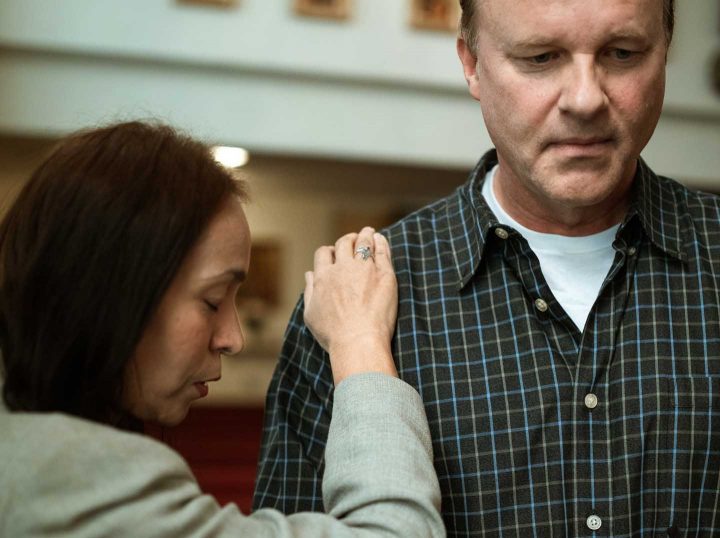
A woman forgiving a man - Photo by RODNAE Productions from Pexels

As for your health – letting go of anger and using the power of forgiveness can affect your blood pressure, immune system and heart. Depression is less likely to get you down and your self-esteem can be heightened.

When you forgive, a wonderful thing happens when your brain pathways aren’t trapped into letting in negative thoughts and emotions. You can choose what you want to think about and you’re not always obsessed with getting even or hating the person who hurt you.

Think about it. You owe it to yourself that the person who hurt you isn’t controlling you any longer – and that’s what the power of forgiveness can bring into your life.

Not forgiving can take away your joy in life and prevent you from moving on from paralyzed and hurt feelings to a happier and much more inspired life. Today, scientists and medical experts concur that holding on to a serious resentment can be toxic to your health – both mental and physical.

Rather than looking at forgiveness as a sign of weakness, it’s a sign of strength – that you’re in control of your own life. Maybe you say that you are not able to forgive the other person. If you are a Christian, ask God to give you strength to do that difficult step. You surely are not going to regret.

Channel Your Distress into Something Positive

Turning your hurt feelings and distress into a positive outcome is a challenge. But when you take action, everything changes. Remember the times when you had a work task that you kept procrastinating about.

If and when you took action to complete the task you gathered momentum and were successful. If you didn’t take action, you may have suffered consequences – maybe severe, such as losing your job or needing to pick up a broken relationship.

When you’re focusing on the past and all the ways you have been hurt from others, you’re not able to see all the positive things that are going on in your life. It’s a spiraling downturn of negativity that you may never get back if you don’t take steps to break this vicious cycle. Grudges, resentment and other types of pain limit what you can do and who you can be.

You may also be tolerating problems in your life that you think you can’t control. You have accepted it as a norm, but it drains your energy because you are unsatisfied with your status quo. More often though, you are able to make some kind of positive change. It may take some courage, but looking back after the fact, you will be thanking yourself for having done the right decision.

A woman happy for having done the right decision

Pursue greatness in your life rather than bend to controlling or distressful situations or people. When you’re caught in a web of feelings of revenge, toleration, grief and resentment, you may not realize the toll it’s taking. You better get over this and try to become the very best that you can be.

At the end of the day, you have a choice to make. You can decide to continue in something that is toxic to your health, your mind and your future. Or you can decide to let things go. Simply open your hands and drop this anger, hurt feelings, emotions of discontent and feelings of worthlessness of the past. Once your hands are empty, grab for something better, something that will bring you peace and happiness in your life.

Jesus says:

I have come that they may have life, and that they may have it more abundantly.

John 10,10 NKJV

God has some plans for your life. He wants to give you a new purpose, a new destination. He wants you to live your life to the fullest potential that you can possibly be. Are you ready to let things go?

Do you need a guide to help you understand how to cope with Stress in an all inclusive approach? Learn how to combat stress, mentally, physically, emotionally and strategically in your life.

Get Me the Guide

Filed Under: Mental Health, Psychosomatic Diseases, Stress Management

NAFLD – When the Liver Gets Inflamed

October 29, 2021 by Elen Duarte - [rt_reading_time label="Reading Time:" postfix="minutes" postfix_singular="minute"]

Liver

Bill((name changed by the redaction)) is 58 years old, obese, but feels perfectly healthy. During a routine check-up, Bill got the news that he has fat in the liver. However, Bill has no symptoms beyond his already known obesity, and does not feel pain or discomfort. Bill is worried because the doctor says it is a fatty liver, which if not taken care of, could turn into cirrhosis. However, Bill says that he never consumed a lot of alcohol, and for 5 years he was not even drinking socially. Bill is concerned and comes to us in search of nutritional advice to improve his health and contribute to the treatment of the disease.

NAFLD - When the Liver Gets Inflamed

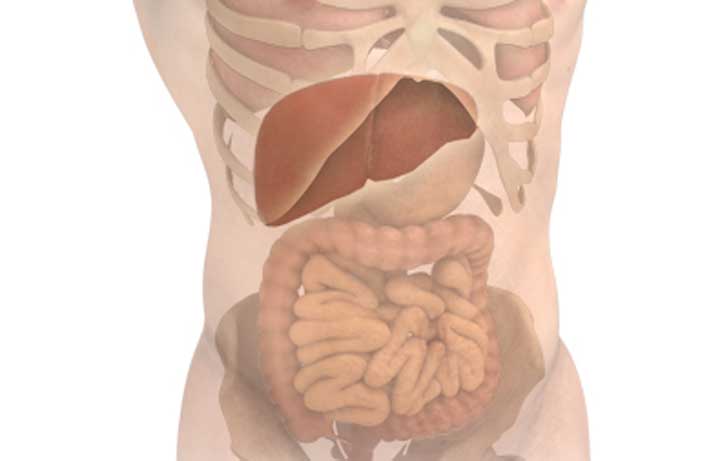
NAFLD (Non-Alcoholic Fatty Liver Disease) is caused by an inflammation in the liver due to the accumulation of triglycerides in the liver tissue. NAFLD is a very prevalent multi-factorial disease associated with metabolic factors. It is usually caused by poor eating habits together with physical inactivity or obesity. It can also arise as a consequence of diabetes, high cholesterol, high blood pressure, or the metabolic syndrome that is a compound of these symptoms.((Hepatologia SBd, Coelho HSM, Leite NC. Prevalência e importância da doença hepática gordurosa não alcoólica [internet]. Universidade Federal do Rio de Janeiro.; [Accessed on: 07 oct. 2021]. https://sbhepatologia.org.br/pdf/revista_monotematico_hepato.pdf))

NAFLD can be considered the first level of Hepatic Steatosis, a disorder characterized by the accumulation of fat inside liver cells. It silently affects a growing number of the population around the world. A more recent study conducted in the United States with 328 asymptomatic patients reported that 46% of individuals had steatosis, and of those 70% were obese and 26% diabetic. Studies show that a BMI > 30 and diabetes mellitus are considered risk factors for the evolution of steatohepatitis to cirrhosis.((Aray Nabuco e Wilson Vieira, COMO CONTROLAR A GORDURA NO FÍGADO – Coleção Saúde Essencial))

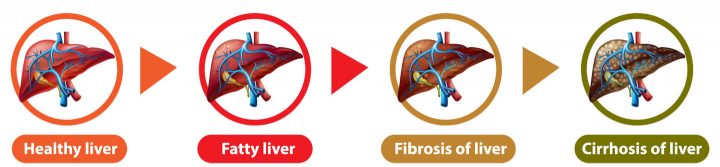
Progression of liver disease

Obesity has become more frequent around the world and in all age groups. Currently, there are one billion overweight adults in the world, 300 million of whom are obese with a BMI ≥ 30. In the US, around 30% of the population has non-alcoholic fatty liver disease (NAFLD). This is even clearer in morbidly obese patients, in which the prevalence of hepatic steatosis is around 76 to 91%, with 25 to 37% of the individuals progressing to hepatitis.

NAFLD prevalence increases with age, but children and adolescents are not spared. Obesity is the accumulation of triglycerides (blood fat) in adipose tissue. When the fat cells reach their limit of expansion, the accumulation of fats in other tissues, including the liver, begins to occur.((Aray Nabuco e Wilson Vieira, COMO CONTROLAR A GORDURA NO FÍGADO – Coleção Saúde Essencial))

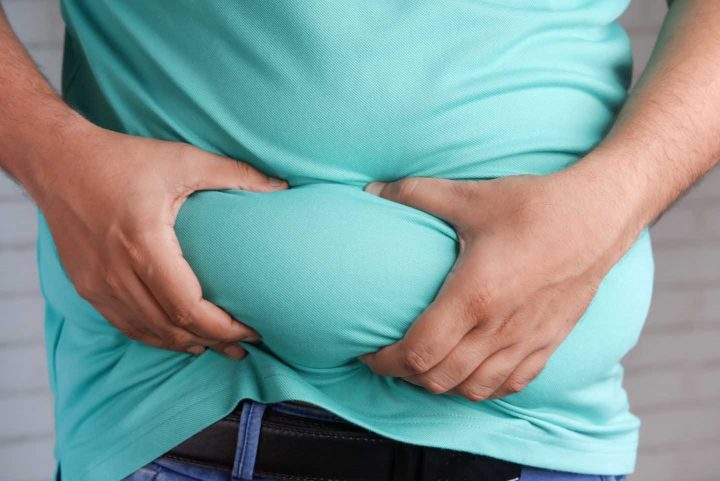
An obese man holding his belly. Photo by Towfiqu barbhuiya from Pexels

The prevalence of type 2 diabetes has been increasing exponentially. According to the World Health Organization (WHO), in 2030 there will be more than 300 million individuals with diabetes worldwide. Macro and microvascular complications can arise over the years, reducing the life expectancy and quality of diabetic patients. After obesity, diabetes mellitus was the risk factor that most correlated with the presence of non-alcoholic fatty liver disease (NAFLD).((Hepatologia SBd, Coelho HSM, Leite NC. Prevalência e importância da doença hepática gordurosa não alcoólica [internet]. Universidade Federal do Rio de Janeiro.; [Accessed on: 07 oct. 2021]. https://sbhepatologia.org.br/pdf/revista_monotematico_hepato.pdf))

In another study of 195 patients with cirrhosis due to Non-Alcoholic Liver Steatosis, who were followed for five years, 12.8% developed liver cancer. The risk was higher in elderly men with diabetes mellitus.((Ascha MS, et.al. The incidence and risk factors of hepatocellular carcinoma in patients with nonalcoholic steatohepatitis. Hepatology. 2010 Jun;51(6):1972-8. DOI: 10.1002/hep.23527)) Mortality from chronic liver disease is the third leading cause of death among patients with Non-Alcoholic Liver Steatosis.

Main Symptoms

Normally, there are no symptoms of any kind during the early stages of the disease, so NAFLD is often accidentally discovered through tests to diagnose other diseases. NAFLD, if treated at the beginning, can be reversible, but 30% of diagnosed patients suffer the progression of the disease.

Although in most cases it is an asymptomatic disease, in more advanced stages it is possible that some people feel pain in the right side of the abdomen, swollen belly, nausea, vomiting and general malaise. In the presence of these symptoms, a hepatologist should be consulted for tests that assess liver function and disease severity.((Aray Nabuco e Wilson Vieira, COMO CONTROLAR A GORDURA NO FÍGADO – Coleção Saúde Essencial))

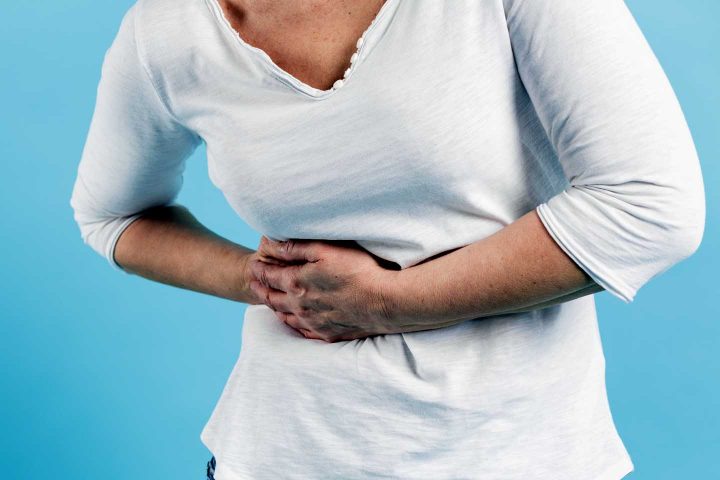
A woman with pain in the liver region - photo created by freepik - www.freepik.com

Liver steatosis has three stages, two of which are reversible (fatty and inflamed), and the third stage is Liver Cirrhosis, when the damaged parts of the organ form scar tissues and the disease becomes irreversible.

NAFLD Diagnosis

To assess the health of the liver, the doctor may order blood tests, imaging tests such as ultrasound, tomography and MRI, and even a biopsy, as these tests provide important information about alterations in this organ. The most used are imaging exams, due to their fast and high diagnostic accuracy. In the specific case of NAFLD, it is common to request the following blood tests:

The liver function test contains typically the markers ALT (Alanine Aminotransferase), AST (Aspartate  Aminotransferase) and GGT (Gamma Glutamyl Transferase), which assess the concentration of liver enzymes. They are complemented with Albumin, Bilirubin, Lactate dehydrogenase and prothrombin time. These tests are usually ordered together and provide important information about the liver’s condition.

Blood work to measure Glucose, Cholesterol and Hemoglobin are also part of the analysis.

Treatment

The treatment needs to be multidisciplinary. Lifestyle changes and control of risk factors should be encouraged.

It is important for the patient to seek a healthy, natural and wholesome diet, increasing the consumption of fruits, freshly prepared vegetables and whole grains rich in fiber.

A healthy breakfast

The intake of processed and ultra-processed foods, as well as refined carbohydrates, should also be reduced. These foods are harmful to the liver and have a high content of fat and sugars which contribute to excess weight, the main risk factor for hypertension, diabetes and NAFLD. It is good to avoid sweets, soft drinks, sugary drinks, margarine, cheese and fried foods in general.((https://www.sbhepatologia.org.br/pdf/FASC_HEPATO_31_FINAL.pdf))

Some herbs and teas can be useful for treatment. But beware of weight loss tea mixtures! In the search for weight loss to regain quality of life, patients diagnosed with fatty liver run the risk of complicating their condition. Although weight loss is considered the main pillar of treatment, it is important that weight loss is gradual. Rapid weight loss can aggravate steatosis because, before being “burned”, the fat stored in the body also passes through the liver, overloading it. The recommendation is to avoid rapid weight loss with these products, as even a natural product is not always harmless.

Some teas also have high detoxifying efficiency, but they must be inserted correctly in terms of dosage and timing of treatment, under the supervision of a doctor. Otherwise, the patient may progress to drug hepatitis, which occurs when the liver becomes inflamed by the action of the proper herbs.((Aray Nabuco e Wilson Vieira, COMO CONTROLAR A GORDURA NO FÍGADO – Coleção Saúde Essencial)) Always seek professional advice from a skilled doctor or nutritionist.

Drug hepatitis can occur from either herbal or regular prescription drugs. In this case, it is necessary to evaluate the cost-benefit and study the possibility of substitution. The use of anabolic steroids should be discontinued, and if steatosis is associated with other diseases, such as hypothyroidism or polycystic ovary, these conditions should be treated accordingly.((Hepatologia SBd. Doença Hepática Gordurosa Não Alcoólica: Consenso da Sociedade Brasileira de Hepatologia [internet]. Sao Paulo; 2017. [Accessed on: 07 out. 2021]. https://www.sbhepatologia.org.br/pdf/Consenso_DHGNA_da_SBH-2015.pdf))

There is no specific medication for steatosis, but some medications to control cholesterol, diabetes and obesity are indicated for some patients.

A very interesting herbal treatment is silymarin. It is an extract of the seeds of the herb Silybum Marianum, also popularly known as cardus marianus, milk thistle or Saint Mary’s thistle, and has been given for years to treat liver diseases.

Milk thistle flower - By Alvesgaspar CC BY-SA 3.0, https://commons.wikimedia.org/w/index.php?curid=10109722

Pre-clinical scientific studies indicate that silymarin can reduce oxidative stress and consequent cytotoxicity, thus protecting intact liver cells, or cells not yet damaged. Silymarin acts as a free radical scavenger and modulates enzymes associated with the development of cell damage, fibrosis and cirrhosis.((Gillessen A, Schmidt HH. Silymarin as Supportive Treatment in Liver Diseases: A Narrative Review. Advances in Therapy 37, 2020. DOI: 10.1007/s12325-020-01251-y))

In an analysis of treatment with patients that had diabetes and non-alcoholic cirrhosis combined, silymarin was also able to improve glycemic parameters. To obtain maximum benefit, treatment with silymarin should be started as early as possible, when the liver’s ability to regenerate is still high in patients with fatty liver disease.

Silymarin can be consumed as a tea or in the form of capsules and tablets, in order to complement the treatment indicated by the doctor, and must be accompanied by physical exercise and change of eating habits.

Getting rid of NAFLD mainly requires the patient’s commitment to change their unhealthy lifestyle. It is recommended to achieve a healthy weight, in a plan that combines physical exercise,((Hepatologia SBd. Doença Hepática Gordurosa Não Alcoólica: Consenso da Sociedade Brasileira de Hepatologia [internet]. Sao Paulo; 2017. [Accessed on: 07 out. 2021]. https://www.sbhepatologia.org.br/pdf/Consenso_DHGNA_da_SBH-2015.pdf)) using low and medium intensity activities, with changes in eating habits. Some scientific studies show benefits in using supplementation with Vitamin E, Omega 3, Vitamin D((Hepatologia SBd. Doença Hepática Gordurosa Não Alcoólica: Consenso da Sociedade Brasileira de Hepatologia [internet]. Sao Paulo; 2017. [Accessed on: 07 out. 2021]. https://www.sbhepatologia.org.br/pdf/Consenso_DHGNA_da_SBH-2015.pdf)) and herbal preparations such as silymarin. Treat your liver well, as it is essential for your health!

Healthy Fruits

Stay Always Up to Date

Sign up to our newsletter and stay always informed with news and tips around your health.

Sign Up Now!

Filed Under: Diseases, Metabolic Syndrome

Dysfunctional Relationships – How to Survive and Thrive

October 24, 2021 by Elizabeth Hall - [rt_reading_time label="Reading Time:" postfix="minutes" postfix_singular="minute"]

Dysfunctional Relationships

The simplest meaning of “dysfunctional” is “doesn’t work right.” Dysfunction comes in differing degrees. Some dysfunctional things or people grate on one’s nerves just a little bit—like a squeaky door. But when a situation involves people who must relate to each other or when circumstances are perceived as intolerable, you must do one of two things. You can modify this situation—at least partially—or remove yourself. For example, when a dysfunctional organ or system of your body results in disease, you had better see a doctor sooner rather than later if you want to survive.

Dysfunctional Relationships - How to Survive and Thrive

When families become dysfunctional, society becomes dysfunctional because the family is society’s foundational unit. Alcohol, drug abuse, “workaholism,” mental illness, parental neglect, indifference, abandonment, or the untimely death of a family member can contribute to personal dysfunction and dysfunctional group behavior. Even a physical disease like congestive heart failure can become so severe that significant cognitive impairment, cantankerous attitudes, and impaired interpersonal relationships result, all because the blood vessels supplying the brain are not receiving sufficient blood and oxygen for its needs.

Like a genetic disease, dysfunction is frequently passed on, in some form, from generation to generation. Its ripples can affect society in social costs, affecting non-familial relations. They sap our energy and resources, as would a chronic disease. The extent to which a specific family dysfunction influences us depends upon the degree, timing, and context in which we received the abuse, injustice, or injury, and our coping capacities.

Dysfunction Does Not Mean You Cannot Be Great!

When Eleanor Roosevelt was born, her gorgeous socialite mother, Anna, marveled that she could have produced such a homely child. “She was a sensitive, timid child, and from her earliest years, Eleanor knew she was a disappointment to her mother, who would look at Eleanor rather coldly, worrying that her daughter might never become beautiful. She would even discuss it in the presence of Eleanor and her friends. Even as an adult, memories of her mother’s attitude haunted her—echoing the painful realization, ‘I’m ugly.’ “((American Experience: Eleanor Roosevelt, PBS, transcript of film, Written by Sue Williams))

When Eleanor was eight, her mother died, and her father’s alcoholism prevented his caring for her. While under the care of a strict but concerned grandmother, she was exposed to two mentally ill relatives. One was an alcoholic uncle who would shoot at the neighbors and their children. For Eleanor’s protection, her grandmother sent her to boarding school as soon as possible. Homely as Eleanor was, even in her twenties her loveliness of personality was evident as she reached out to help the poor. Although betrayed in her marriage, distressed by a controlling mother-in-law, and struggling with depression, she persistently espoused social rights. Yes, indeed, Americans owe a lot to this daughter of a dysfunctional home, as she advocated the rights of the poor, the unfortunate, and women.

Eleanor Roosevelt with her dog

How about Winston Churchill? Although his parents provided for his physical needs, they were not there for him emotionally. They would often be away when he went home on vacation from his boarding school. In spite of his heavy drinking, smoking, and bouts of depression, God used him to save Western Europe from Hitler.

As a child, Dorie Van Stone’s mother would put her into a drawer and then close it. Eventually, she left Dorie at an orphanage, where a lesbian matron sexually abused her. At age 14, she entered a foster system that moved her from one home to another, where she was almost always abused. Fortunately, before she left the orphanage, this little terror of a teenager heard about and accepted the love of God. As a young woman, she finally located her father. However, her joy was short-lived, for, unfortunately, he too rejected her. In spite of all this, for decades she has been a successful, warm, and sometimes jubilant motivational speaker and missionary.((Dorie N. Van Stone (Author), Erwin W. Lutzer. No Place To Cry: The Hurt and Healing of Sexual Abuse Paperback – May 9, 1992))

Principle 1: Be Aware of Cognitive Distortions

An adage says, “You can’t prevent birds from flying over your head, but you can stop them from making nests in your hair.” This holds true for negative automatic thinking that is fueled by relational dysfunctionality. Their actions set up distorted thought patterns and emotional auras that contribute to depression, uncontrollable anger and rage, and paralyzing anxiety. Here are some detrimental patterns of thinking we need to recognize and replace if we are going to progress.

Personalization

In this distorted thought pattern we assume the blame for a problem outside of our responsibilities or capabilities. When parents divorce, for example, children often blame themselves. When my mom became mentally ill, I thought, “If I had washed the dishes and cleaned my room, she wouldn’t have suffered this mental illness. If I had been a better daughter, this wouldn’t have happened.” Perhaps Danny Smith’s parents are separated. Mr. Smith promised to take his son camping but does not show up. Danny thinks “He didn’t show again. Guess I don’t count!” So when someone disappoints him as an adult, Danny thinks, “I don’t count and spirals down” and sinks into a deep depression. When he cannot take this contempt any longer, he lashes out in anger or perhaps resorts to addictions. These are examples of unwarranted personalization

Any other kind of distorted thinking pattern is dangerous in that it usurps the true value that God places on us. The healing answer is: “The Scriptures reveal that God wants you; He loves you; and He has chosen you.((The Bible, Jeremiah 31:3)) This love, if accepted, is powerful enough to satisfy all love hunger. Of course, it takes time for increasing maturity to realize the possibilities of this healing love.

Labeling

Labeling is a jumping to conclusions in which one applies a negative term to a complex situation. Sammy fails math. His parents assume that Sammy is “lazy.” Do not get me wrong. As a teacher, I know laziness and procrastination contribute to poor grades. Perhaps, though, there are other contributing factors—distractions, discouragement, individual learning-styles, and others. All of these need to be explored.

It is much more accurate to say, “Sammy has problems with math,” than to call him “stupid.” Or maybe, someone refers to his father as “my old man, the drunk.” But the father is much more; he is a human being. He needs to be treated with respect. Loving respect usually, sometimes slowly and even awkwardly, awakens respect in others.

A drunk man - Photo by Nicola Barts from Pexels

Selective Filtering

Selective filtering is another distorted thinking pattern that must be recognized and replaced before any healing can be maintained. In this cognitive distortion, a person focuses on one aspect, usually negative, to the exclusion of the positive. To continue our scenario, Sammy’s parents focus on his poor math grades without praising him for his good grades in social science.

Children from dysfunctional homes often see their parents as being totally evil, wrong, mean, or cowardly, without any middle ground. In many cases, dysfunctional parents do love their children but are emotional kids themselves. They have not learned to fulfill their legitimate emotional needs in healthful ways, so they cannot help their child meet his needs. However, they do manifest care for their children by providing for their physical needs—the one thing they know how to do.

Robby was a handsome, talented, hard-working young man with a temper. Early in his childhood, his father deserted him and his two sisters. His mother worked two jobs and had little time for nonsense. Robby remembers her as a very strict parent. In being controlling, however, she lost control and would scream and occasionally whip her children for what Robby later would term ordinary childish adventures.

After establishing rapport with him, I asked him to make a list of the times that his mother did show that she cared for him, how he benefited from being her child. How did God turn the curse into a blessing? Here is what he came up with: He got his good looks from his mom. His smarts, too. He also remembers her working extra-long hours to send him and his siblings to camp one summer. Being the oldest, Robby learned how to take responsibility, cook and do laundry, and work hard—that was his blessing in disguise.

When selective thinking would ruin your life, remember the good and look for ways in which God can turn the curse into a blessing. Of course, this takes time and practice, but it makes our disappointments and grief manageable.

Overgeneralizing

This is assuming that the same negative events will happen repeatedly. Worried about losing her job that she loved so much, Jill had a few days of anxiety attacks. With several disabilities, Jill feared that she would not be able to find a suitable job. However, she had determined not to let a threat of possible loss discourage her, even though she had lost few jobs previously. Thinking about other possibilities, she pondered, “What is going on in my thinking?” Where did this emotional aura—this stabbing, jabbing, and oppression—come from?

Anxiety Attack - Photo by Kat Smith from Pexels

Then she remembered what her family’s long-time cook and the housekeeper had said when her mom developed manic-depression and practically disowned her, “Your mom doesn’t want you anymore,” these words had haunted her until she spiraled down into a deep depression. That assessment summarized her teenage years and perverted her discernment for years.

So, that even thirty years later, whenever she is threatened by a loss, the thought, “No one wants me” immediately intrudes into her mind.” Now Jill uses logic to overcome her cognitive distortions. “I do have friends and customers who do appreciate me.

All of us who are offspring of dysfunctional parents, and perhaps somewhat maladjusted ourselves, must accept the value God places upon us, realizing God wanted us or He would not have sent His Son on such an expensive errand to redeem us.

All-Or-None Distortion

Critical parents often leave their children with two sets of rigid cognitions. “All-or-none thinking” and “should-thinking.” In all-or-none thinking, we engage in labeling events or people as all good or all bad, with no shades of gray. For example:

If I don’t make straight A’s, I am a total failure.

If I do not marry, my whole life will be miserable.

Position and power are everything. I won’t get hurt if I have those.

All pain is bad. Pain is an emotion. Therefore, I won’t feel so that I won’t hurt.

I can’t trust anybody to understand my dysfunctional family.

All-or-none thinking nullifies God’s grace and graciousness in our lives and the lives of others. Then shame accrues more interest. Also, it promotes impatience, intolerance, and contempt. When applied to people, all-or-none thinking discounts the fact that people can learn from their mistakes. When applied to circumstances, all-or-none thinking helps us to lose sight of the fact that God has the ability to transform any curse into a blessing.

So, to summarize principle one: Recognize you distorted thinking patterns and replace them with healthier ones. Without doing this, you will certainly lose control.

Principle 2: Set Your Boundaries

Boundaries are essential for devastated individuals. One of the first boundaries to address is forgiveness. Unless we forgive our dysfunctional parents, they will forever exercise their power to contaminate our lives. Roots of bitterness poison our perceptions and pervert our judgment. We make poor choices. Shame then follows.

Forgiveness brings healing - Photo by RODNAE Productions from Pexels

When abuse-injuries and indifference surface, forgiveness is needed. It is a gradual process and requires commitment. We must acknowledge our pain, allow ourselves to cry, and receive some validation for our pain. We need to refuse to allow the past hurts to motivate us to be egocentric or excessively self-protective and distrustful. In forgiveness, one does remember but does not dwell on past hurts. For this reason, I cannot accept the advice of some counselors who suggest that I chronologically record the hurtful events of my life. If one does this, positive memories or present opportunities are lost—and one wanders in a graveyard of sadness, for “by beholding we become changed.”((The Bible, 2 Cor.3:18))

However, to a very real extent, the past helps to shape the present, and the present the future. As children we learned lessons which are seldom obliterated. Consciously or subconsciously, negative events can motivate us toward a stunted, suspicious manner. We develop strategies for protection that subtly rob our integrity and sabotage many of our contributions to society. It is therefore imperative that we are open to learning from the past. I like the way David prayed, if I can paraphrase the literal Hebrew, “Lord, search my heart, to see if there be any anger, pain, or anxiety in me—that could accumulate in wickedness in me.”(( Strong’s Analytical Concordance, Ps. 139:23,24))

Principle 3: Forgiveness Does Not Exclude Accountability

We might have survived the past, but we can’t live— live—in the present until we forgive those who have hurt us. In true forgiveness, I must reject the devaluation that the offender or abuser has placed on me. In its place, I must accept God’s estimation of me.((Hall E. The Healing Power of Forgiveness, wildwoodhealth.com. Nov. 2019. wildwoodhealth.com/blog/free-at-last-the-healing-process-of-forgiveness/)) He sees my weakness and wickedness as well as my strengths and successes. Because He sees all and it is His very nature to love, I can accept His unconditional love.((The Bible, Rom. 5:7-11))

Still, forgiveness and respect do not mandate that we absolve our parents from their accountability. By all accounts, Bill Ginglen, was an upstanding citizen—a former Marine, a loving husband, a devoted father, and grandfather. “Then on August 19, 2004, Jared, a Peoria, Illinois police officer read a story in the paper about a series of bank robberies in another part of the state. ‘The description just oddly matched my father to a ‘T,’! Jared says. ‘The description of the vehicle—the getaway car—was the same vehicle my father drove. And he spends time over in that area.’

As he continued reading, he noticed that the newspaper story referenced a website set up by local police authorities that contained surveillance photos of one of the robberies. ‘Just to clear up my mind, I decided to look to be sure that it wasn’t he,’ Jared says. ‘But it was.’ Jared immediately called his brothers.”((Oprah Winfrey, Facing their Father, January 2006 Proverbs 20:20)) They made a heart-wrenching decision to turn their Dad in to the authorities. They did not want anybody to get hurt.

Our family members are accountable when they have committed a crime, even a crime against us. To not report childhood abuse, sexual assault, or physical abuse because it is one’s family member—is irresponsible. Mothers who ignore their abusive husbands injuring or molesting their children jeopardize the lives of their children and sacrifice the self-respect and integrity of everyone involved. The dysfunction will only accrue terrible interest rates until we heartily face it.

Forgiveness also does not necessarily mean reconciliation. If our parents frequently put us down, we need to recognize that this is their problem. We are not obligated to require their acceptance. If we always try to win their approval, it sets us up for defeat. However, an occasional overture in the form of a letter or phone call might eventually lead to some healing. And forgiveness certainly does not mean a superficial acceptance of a superficial apology to be conciliatory and escape painful memories.

Principle 4: Do Not Project

Some of the attitudes I have regarding my parents can unwittingly be projected upon God and others. The promise and power of parenting must be recognized. Respect the power of parenting. In a perfect world, God designed parents to be as God to their children, to portray His character faithfully and accurately until the child can develop an independent concept of what a personal, loving God He really is. Our parents are to reflect the goodness of God. However, as a result of sin, individual or collective, even good parents fall short. Mark this point well. Whatever we think about our parents determines, to a great extent, our personal concept of God. This distortion, whether obvious or unconscious on our part, can profoundly impact our loved ones because it erodes our happiness, and contaminates our other important relationships.

Let me mention my background again, if I may. Our parents had separated by the time I was three. Dad, however, would faithfully visit us children every Saturday, but when the divorce was final, he dropped out of sight completely. He did not send any monetary support to our family. Even though I knew about the concept of love, I did not internalize it. In my core being I felt, because my earthly father was indifferent to me, my heavenly Father was too. He never seemed to answer certain prayers. It was as if I had certain black holes into which the grace of God could never seemed to penetrate.

Later I would recognize that genuine healing comes when we can discern and acknowledge how our parents negatively affected our concept of God and repent of projecting their deficiencies, anger, or indifference upon God. One of the first steps in this process is refusing to let what you do not know about God shake your confidence in His love. We all use electricity, for example, but most of us do not understand the deep scientific principles involved.

A man observing sunrise in the mountains - Photo by Abhiram Prakash from Pexels

Sometimes we misplace our anger upon others. Years ago there was a colleague and supervisor that I just did not like or trust. I finally realized that he had some of the same qualities of the distant grandfather that I lived with—small frame, frugal, avid gardener. Subconsciously I had projected the discomfort I felt with my grandfather upon my co-worker, when I realized this my relationship with him improved tremendously. Today, I regard him as a true friend and trusted advisor. I cannot help thinking that if grandfather had lived long enough, I might have had a meaningful relationship with him also. For us to develop and maintain healthy relationships, we must be aware and acknowledge that we have made unhealthful transfers of the negative qualities of our dysfunctional parents onto others and upon God.

Principle 5: Honor My father and My Mother?

King Solomon observed of one who curses his father or mother that “his light will go out in the time of darkness.”((The Bible, Proverbs 20:20)) Whatever we reflect to our parents will come back upon our heads—be it for good or for evil. “Indifferent” would be the one adjective that best summarizes my parents during our teen years. Although my mother was at first patient and gentle, by the time my twin sister and I entered our adolescence, my mother had developed paranoid schizophrenia. She thought we children were spies. Not only blinds and curtains covered the many windows of our house but also blankets snuffed out any possible penetrating light. Mom was indifferent, incapable, scary, and embarrassing.

As a teenager, I was ashamed of my mom and didn’t want to be seen with her. Clean, but unkempt in appearance, she would gyrate from the tactile hallucinations she felt. What teenager wants to go out and eat at a restaurant with her mother jerking and moving because she thought that someone was shocking her? She was so embarrassing to be with in public! However, I gained some insightful sympathy when, as a 30-something adult, I struggled with a severe social phobia which crippled my social life for a few years. I couldn’t even walk my dog! I would venture out only for work or groceries. It is a principle of life: what measure we give to others, will eventually, in some way, be reflected back upon us. Any contempt which we have regarding our parents will surely come back to us.

Another point to consider is, even if we cannot respect our parents as being deserving, we can respect them as human beings. We can also honor our parents by stopping the cycle of contempt—even self-contempt caused by an unhealthy sense of shame. There is no excuse for abuse, addiction, or worse yet, heartless abandonment. Many underlying factors contribute to various abusive behaviors and these need to be recognized.

Principle 6: Dysfunctional People Sometimes Make Great Contributions

We also need to consider that even dysfunctional parents can make genuine contributions to society. Take, for example, Abraham Lincoln. His father was such a hard taskmaster, even physically slapping his son around at times. Lincoln developed a significant sense of serious self-depreciation. However, both his mother and later, his stepmother, encouraged him.

By the time of his presidency, Lincoln had enough self-respect to invite his political rivals to be members of his Cabinet. To some extent, his family life was also dysfunctional. At times, his wife was mentally unbalanced and difficult. His biographers write that he was very distant toward his first two sons. When his second son died, he soon became overindulgent to a serious fault with his last two sons.((Abraham Lincoln, audio books, A & E Television Network, 1996))

Abraham Lincoln and his youngest son

This moderately dysfunctional dad, subject to difficulties, still did much to help his nation stop its expansion of slavery and later proclaimed its abolition in the South. My point is that, even in dysfunctional families, imperfect people can make significant contributions. Abraham Lincoln is great, in part, because he cared and worked diligently in the face of obstacles—some of which came from a dysfunctional home.

Principle 7: Learn to Accept Yourself

Usually when significant trauma happens in a child’s life, it leaves him vulnerable to stunted growth and development in important areas. These areas must be acknowledged, accepted, and corrected before one has total freedom from his parents’ blunders. But no one can achieve his best growth unless he is within a sphere of acceptance. The love of God provides this acceptance, even when our parents have rejected or ignored us. He says, I will not cast out anyone who comes to me. To the extent we refuse to acknowledge and squelch the undeveloped parts of our character, our personalities will never totally be integrated into love and integrity.

On the average, children have certain psychological tasks to master approximately every two years. Any grade-school teacher can tell you those aged 11 to 13 are in a very important stage of social development. So if a father, for example, deserts the family when his daughter is within that age group, that daughter, as an adult, might be stunted in social aspects in her life as an adult. Understanding the stages of childhood development, then, can be a useful tool and a valid approach to helping adult children of dysfunctional homes achieve integration and well-adjusted lives. In other words, if as children we did not learn a particular psychological task, such as trust, determination, industry, purpose, courage, or initiative, we will have to acknowledge our deficits and patiently work upon them as adults.(( Townsend, John; Hiding from Love, Zonderman, 1996
Cloud, Henry & Townsend, John, Changes that Heal, Zonderman, 1993))

Frequently, as children pass through different stages of development, they have fear, anxiety, anger, or sadness. It is better for them to be taught how to express their emotions, positive or negative, rather than bottle them up inside. They need guidance to progress into constructive thoughts and actions. If their parents are wise and available, the children learn healthful ways of coping. When parents are unavailable, indifferent, or angered by their children’s needs, and these needs are left unaddressed, the children’s personalities are not fully developed or integrated. Then the emotions of fear, anxiety, or dejection often result in addictions (to ease the pain) or even psychosomatic disease. For example, uncontrollable fear, devastating anger, and harmful habits and addictions are rooted in the limbic system (the middle portion of the brain concerned with lower emotions). One may be either aware or unaware of these manifestations.

If emotional pain, anger, confusion, and depression are kept inside, they often trigger disease, especially when they become attitudes. For example, anxiety and major depression increase pro-inflammatory agents that fuel chronic diseases. An epidemiological study has shown that severe bouts of anger are reported significantly more often than expected during the hour preceding myocardial infarction.((Therell, T., et al., Coping with critical life events and lack of control—the exertion of control, Psychoneuroendocrinology, 2005 Nov)) Other studies show that anxiety, impatience, and depression can increase the risk of even otherwise healthy men developing hypertension.

Principle 8: Don’t Be Afraid to Ask for Help

As some investigators believe, expression of such emotions to a wise counselor can help to transfer pain from the emotional and imaginative right side of the brain to the logical left side and also, somewhat, to the front brain. When a person can verbalize the situation and clarify it, he can start solving some problems. It is like the long-worded math problems most of us never enjoyed in high school. To solve the problem, you need to sort out the information pertinent to defining the problem, eliminate what you don’t know, and have resources available to look up what you forgot. An effective counselor might be compared with a good math teacher. He doesn’t solve the problems but helps provide the tools with which you can solve it. Reflective thinking, applying Biblical principles to one’s situation, and pouring out one’s heart to God, will help our front brain to process our problems successfully. It is the front brain, in cooperation with God, which enables us to focus, discern, and forgive.

Talking over a problem

However, just to express unbridled emotion for the sake of doing so, can be dangerous because expression deepens impression. What we say reacts back on our brain and in our minds more powerfully many times, than if left unsaid. It strengthens the circuit of anger and depression. It is when we express emotions in a safe environment to a godly counselor who distinguishes between giving wise sympathy and enabling crippling self-pity, that one can receive help. Expression by itself doesn’t necessarily heal; it is the connection, the support, the respect, and the perspectives that help to change and heal us.

Having said this, though, even legitimate needs can deteriorate into selfish, unrealistic demands. Legitimate needs can easily be degraded into uncontrollable selfishness as is seen when an adult child blames his parents’ divorce for his unhappiness as an adult and plunges into a self-destructive addiction. As important as childhood environment is, the will, strengthened by wise choices, contributes even more to adult happiness.

Principle 9: Meet Needs in Healthful Ways

There are many ways God can help us mature and meet needs healthfully. One is to find a father or mother in Israel (a mentor) to befriend us. They will teach you how to struggle fearfully, but bravely with life’s difficulties and unexpected problems. Many limitations can be overcome by teamwork, even those from childhood deprivations due to growing up in a dysfunctional family.

In His church, God has provided us with families and friends who stick closer than blood brothers. These individuals can help to mitigate the effects of our troubled past. By becoming involved with children or adolescents, we can become more acquainted with ourselves and develop in the areas in which we need to grow. Teaching part time at a grade school has sharpened my perception of my defects that needed to be remedied. Certain events there sometimes remind me of how I felt as a child or teenager and perhaps those emotions tap into a current dilemma. Many times I rejoiced over my leaps and my students’ taking leaps into maturity. Almost every time I correct or discipline, a still small voice breaks up the fallow ground of my heart.

A word of caution here: God’s church is also a hospital for sinners. Choose your mentors wisely and look for one person to take the place of your mom, dad, or family. Be careful not to fall into a co-dependent relationship where you get your self-worth from one person, one job, and one position. The balance here is essential. You need a variety of relationships and activities to achieve optimal mental health.

Don’t expect even the best friend or mentor to take the place of the parents you should have had. They can’t. If they are wise, they won’t try. God has reserved that privilege for Himself.

Two Absolutes

Undeniably, our parents have capriciously left some of us. Perhaps a cruel mental illness took them from our embrace. Sometimes they themselves, as children, were not truly loved. Having not received love, they did not know how to give it. For whatever reasons, we want some absolutes. If you, as I was, are in that position, you will have to search for them as in a treasure hunt. Perhaps you will pursue a wrong trail and will have to retrace your steps. You might have to go to unknown places and endure hardships as a courageous, but a tired adventurer. But the treasure is waiting for you.

As a child of a mentally ill mom and seemingly “deadbeat dad,” I discovered two dependable absolutes that radically changed my life for good in so many ways. In Romans 4:17, Paul describes God as “calling those things that are not as though they were.” This verse gives you the first absolute. Even if you had a cruel, or maybe an indifferent or abusive dad, God can give you, as an adult, the same benefits as if you really did have a loving, wise, and wonderful parent! This principle can be applied to any dysfunctional relationship.

Parents giving support to their child - Photo by Agung Pandit Wiguna from Pexels

Free at Last!

Remember Dorie? She was visiting California with her daughter and a friend when her daughter wanted to go and visit the orphanage that Dorie was in as a child. Unaware of the sexual abuse that occurred there, her daughter had heard Dorie’s interesting stories and wanted to see the place. Dorie wasn’t thrilled, to say the least, but with urging from her daughter and her friend, she consented. The orphanage had been transformed into an art museum. Occasionally, one of the orphans returned to reminisce. That person was given a special guided tour.

As the guide announced, “Now, we will go to the basement,” Dorie refused and abruptly replied that there was no need to do so. The guide gently placed her hand on Dorie’s shoulder and encouraged her. “I understand, but please come. I know what happened in that room downstairs. But come and see what it is now.”

As Dorie entered the room where so much abuse had taken place, it was totally different. Her guide explained that a terrible fire had swept through the basement, and they had had to totally remodel it. This fire seemed, in her mind, as if the justice of God had devoured the abusive years meted out to so many young orphans and had validated their pain.((Dorie N. Van Stone (Author), Erwin W. Lutzer. No Place To Cry: The Hurt and Healing of Sexual Abuse. May 9, 1992))

Perhaps you, too, have haunting memories of a variety of abuse or neglect. When I think of Dorie’s experience, I marvel in the truth of another verse, made especially for you. First Corinthians 1:28 says, “God has chosen the things which are not to bring to naught things that are.” The second absolute, then, is that God will create future events—people you do not presently know, places you haven’t been, capabilities you do not presently possess. He will create successive scenarios that will eventually nullify the detrimental effects of any abuse, neglect, or rejection you might have received in your family or from society. Like the fire that destroyed the room of Dorie’s abuse, God will destroy the effects of the abuse in your life, validate your pain, and in its place create a beautiful monument.

He has done this in my life to a large extent. I know God will continue to satisfy the demands of my craving soul. He will do that for you also. Skeptical? Raging? Hopeless? Whatever you feel, wherever you are, He understands and will definitely help you. This vertical connection with God is as vital as any horizontal connections with other human beings. With God, we can, as the psalmist encourages us, “pour out our hearts at all times.” (Psalm 62:8) And it is only God who can satisfy all the needs of a longing soul. In Him and with Him we can find peace, hope, love, healing from the past, and courage in the present.

Hope for You

Everyone can look to the future with hope for God made and loved us. He made the human brain to be plastic not stuck in cement. This is why good things “can come out of [even] Nazareth.” Our environment does not and cannot determine our behavior. The finest of white water-lilies can come out of the blackest mud. Josiah grew into spiritual excellence in spite of dysfunctional genetics and environment. Each individual can look to God, to truth, to the possibilities, and grow out and above the mud of the past into the sunshine of the future.

The will is the governing power. So instead of focusing on the negatives of the past, the will can aim high and, sparing no pains, reach the mark. Some people are trapped in negative vicious circles by dwelling on their private negatives instead of looking, thinking, even feeling the rewards—the new motives of faith, hope, and love. These can help them take hold of God, and the duties and opportunities of better promises He affords—better thinking, better service for God and humanity. The “victimization syndrome” claims, “Don’t blame me, I came from a dysfunctional home.” Faith and gumption rise up and say, “I am the architect of my destiny, for God can transform any curse into a blessing, and Christ will be everything we let Him be to us.” Let’s GO!

Healthy Fruits

Stay Always Up to Date

Sign up to our newsletter and stay always informed with news and tips around your health.

Sign Up Now!

This article was originally posted on the Wildwood Institute website and is used by permission.

Filed Under: Mental Health, Uncategorized

What You Ought to Know about the COVID-19 Vaccines

October 20, 2021 by Martin Neumann - [rt_reading_time label="Reading Time:" postfix="minutes" postfix_singular="minute"]

Vaccine

On December 2 the Medicines and Healthcare Products Regulatory Agency of the United Kingdom gave temporary authorization for the application of the Pfizer and BioNTech’s COVID-19 vaccine. Between 8 and 15 of December the first dose of the vaccine was applied to 137,897 people in the country.((Covid vaccine: More than 130,000 vaccinated in UK in first week. BBC News, December 16, 2020)) The United States followed soon after, approving the Pfizer vaccine on December 11 and the Moderna vaccine on December 18. In the meantime, 14 different vaccines were approved in a number of different countries.

What You Ought to Know about the COVID-19 Vaccines

The rapid pace of the development of those vaccines has made a number of critiques to raise their voices and speak up. Some are vehemently against any vaccination, others are very concerned about the speed of the approval process, and some have even assumed that the vaccines would be able to permanently modify the DNA of the human body. The discussion is very emotional on both sides.

There are some concerns that are for real. But how can we separate the fads from facts? And not all vaccines are made alike. In order to understand what is happening, we need to understand a bit deeper, how vaccines were made traditionally and which new technologies were applied for the COVID-19 vaccines.

Different Vaccine Approaches

Inactivated Vaccines

This approach is multiplying the virus on a cell culture and killing it afterwards with heat, radiation or chemicals. The entire dead virus or fractions of it are then injected into the human body in order to be presented to the immune system, which is able to create antibodies against the virus. Since the dead virus does not replicate and exposure is therefore limited, more than one dose is needed to create the desired effect. The efficiency of the vaccine often decreases over time, and a repeated vaccination may be necessary every few years. This category of vaccines is though the safest option available in relation to side effects, and is used for many years for Hepatitis, polio, influenza and rabies vaccines among others.

Inactivated vaccines for coronavirus are developed in India under the brand name Covaxin. In Brazil, Turkey and Indonesia CoronaVac was tested and approved. An alum adjuvant is supposed to increase the immune response in this candidate. The efficacy of 50,38% is not the best, but even those who get infected are normally not needing hospitalization. In China was developed the BBIBP-CorV vaccine, and with an efficacy of 80% it is the most effective candidate in this category that far. Another vaccine candidate in this category is being developed in Wuhan, China, which was named WIBP-CorV. In Russia the vaccine CoviVac was developed.((COVID-19 vaccine tracker on raps.org)) Since this technology is used for many years in the development of vaccines, it can be potentially just as safe as any other vaccine in use today. We will see later why they are still not as save as your flu shot.

mRNA Vaccines

The Pfizer and Moderna vaccines were the first two vaccine candidates being approved in the US, and both are in the category of mRNA vaccines. What does that mean?

A virus normally uses spike proteins on their surface to dock onto a human cell and release a messenger RNA sequence into the cell. This mRNA sequence hijacks the human cell and gives instructions to replicate the virus and multiply itself. This process is repeating itself until the immune system starts to recognize the virus and can do an efficient combat. If that process takes too long, the virus can make you pretty sick until the immune system is finally strong enough to win the battle.

In case of the mRNA vaccine, it is mimicking the replication mechanism of a virus in order to produce a part of the virus that the immune system is supposed to recognize. An RNA sequence is synthesized in the laboratory that instructs the human cell to produce just the spike proteins of the virus, which are released into the bloodstream. The immune system is that way exposed to the spike proteins and can therefore create antibodies against the virus.

In order to prevent the immune system from attacking the mRNA before entering the cell, it is encapsulated into a fat membrane, similar to a cell membrane. This allows also for a merging with the cell membrane that will release the mRNA substance directly into the cell. The difference to a real virus is that the resulting proteins are not capable to replicate themselves.

According to preliminary test results, the Pfizer vaccination showed a 90% effectivity to prevent from infection compared to placebo, while the Moderna vaccine showed 94.5% effectivity.((Moderna vs. Pfizer COVID 19 Vaccine. Medcram Episode 117)) Compared to the flu vaccines that were never reaching more than a 50% effective rate, this is pretty promising. But there is not enough statistical data available to determine how efficient the vaccine works in elderly people or other vulnerable groups.

Moderna Headquarters - Photo Wikipedia
Moderna Headquarters in Cambridge, Massachusetts, by Fletcher via Wikimedia CC BY 4.0

The phase III studies of those two vaccines did do a COVID-19 test only on the candidates that developed symptoms. It remains unclear, whether those who are vaccinated are only symptom-free and contribute to an asymptomatic infection of the virus. “In the worst-case scenario, you have people walking around feeling fine, but shedding virus everywhere,” says virologist Stephen Griffin at the University of Leeds, UK.((The UK has approved a COVID vaccine — here’s what scientists now want to know. Nature, December 3, 2020))

The advantage of this technology is that the vaccine can be produced on a large scale within the laboratory, while conventional vaccines depend on the reproduction of the virus in cell culture, which can be a little bit more time-consuming. The problem is just that this technology is for the first time being applied in human vaccines, and similar to genetically modified foods, the potential long-term side effects of this new technology are still not known. According to the Phase III trials those vaccines are supposed to be safe, but follow-up data is available only for a few weeks of the study period. So we know very little about potential long-term complications related to that technology. We know though that the genetic code of the mRNA for producing the spike protein needs to undergo several alterations in order to work efficiently, and the side effects of all those alterations are not fully known yet.((Seneff S, Nigh G. Worse Than the Disease? Reviewing Some Possible Unintended Consequences of the mRNA Vaccines Against COVID-19. International Journal of Vaccine Theory, Practice, and Research Vol.2 No.1(2021)))

Under normal circumstances, a RNA structure does not influence in any way the human DNA, and will not cause any genetic modifications of your body. However, in the presence of retroviruses like the HIV virus, it could happen that a RNA structure of the vaccine gets transcribed into the DNA of a cell. But even if this happens, the infected cell would be modified to produce spike proteins, but would not replicate to alter the DNA of other cells. A contamination of the human DNA from mRNA vaccines is though highly unlikely.

One problem arises with the fact that the mRNA structure needs to be packed into liponanoparticles. They are associated with a number of allergic reactions. A study in mice found also strong inflammatory responses from those nanoparticles.((Ndeupen S. et.al. The mRNA-LNP platform’s lipid nanoparticle component used in preclinical vaccine studies is highly inflammatory. https://doi.org/10.1101/2021.03.04.430128))

This problem came up after the Pfizer vaccine was released to the public. Within the first 2 weeks of vaccination, there were already 8 cases of anaphylactic shock reported. Suspicion arises, that the chemical compound polyethylene glycol may be the culprit. This substance is part of the Pfizer as well as the Moderna vaccine, and has never been applied in a vaccine before.((Jop de Vrieze. Suspicions grow that nanoparticles in Pfizer’s COVID-19 vaccine trigger rare allergic reactions. Science Magazine, December 21, 2020
COVID-19 Vaccines for People with Allergies. CDC, Updated Mar. 25, 2021)) A study found the rate of anaphylactic reactions to be at 2.47 cases per 10,000 vaccinations applied, and equally distributed between the Pfizer and Moderna vaccines. They also found that 2.1% of the subjects reported acute allergic reactions.((Blumenthal KG, Robinson LB, Camargo CA, et al. Acute Allergic Reactions to mRNA COVID-19 Vaccines. JAMA. 2021;325(15):1562–1565. doi:10.1001/jama.2021.3976))

Another challenge is the distribution of the vaccine. The Pfizer vaccine needs to be stored at -70°C, which is -94°F. After being thawed, it needs to be used in a short time, because it is not very stable at room temperature. The Moderna vaccine is a bit easier at this point, allowing storage at 25°F (-4°C) for a month.((Moderna vs. Pfizer COVID 19 Vaccine. Medcram Episode 117))

Recombinant Viral Vector Vaccines

In this technology, a virus, normally being an adenosine virus causing the common cold, is being genetically modified in order to lose the ability to replicate inside of humans. Instead of the replication genes, a modified DNA structure is inserted. The modified virus is still capable to attack a human cell and deliver its own DNA structure inside the nucleus of the cell. Similar to the mRNA vaccines, the modified DNA is submitting Messenger RNA structures to the cytoplasm of the cell with instructions to produce the spike proteins of the coronavirus. This again triggers the desired immune system response, so that antibodies are formed and are able to protect from future infections.

The AZD1222 vaccine developed by the University of Oxford and AstraZeneca is the best-known candidate of this vaccine. It is based on a modified chimpanzee adenosine virus, that is shuttling the DNA into the host cell. Here a video explaining the mechanism of the vaccine in detail:

According to the developers, the DNA is modified only on the few infected cells, that are used to replicate the virus, and it will not alter the human genome. But it obviously makes use of genetically modified viruses, and a technology that was never tested on a wide scale on humans. And some scientist do not exclude the potential risk of introducing exogenous DNA in the human genome by this technology.((C Zhang. et.al. Advances in mRNA Vaccines for Infectious Diseases. Front. Immunol., 27 March 2019 | https://doi.org/10.3389/fimmu.2019.00594))

Another problem could arise from the response of the immune system to the vector virus itself. If the immune system starts to attack the vector virus, it will be impaired to deliver its message to the host cells. Using the same vector in both vaccine doses could limit immune response to a certain degree, and in case that the immune system was exposed to the adenosine virus strain before, it could neutralize the efficiency of the vaccine. Using a vector virus that had limited exposure to humans avoids this problem, but brings also unforeseeable risks. And exposure to viruses vary greatly between countries, which means that efficiency could vary greatly between countries.

The vaccine was in the news since the clinical trials were put on hold two times after two participants were facing neurological adverse effects during the trial, something that showed up later on in real world application as well.((AstraZeneca’s quick Covid-19 vaccine trial restart splits experts. Clinical Trials. October 12, 2020)) The vaccine is know for its side effects. Some adverse side effects like pain, tenderness, fatigue, fever and headaches were reported by participants for about 60% for each of those symptoms on the day after the vaccine, although most of the symptoms subsided after a 7 day period.((Pedro M. Folegati et. al. Safety and immunogenicity of the ChAdOx1 nCoV-19 vaccine against SARS-CoV-2: a preliminary report of a phase 1/2, single-blind, randomised controlled trial. The Lancet, Volume 396, ISSUE 10249, P467-478, August 15, 2020)) Critiques mention that the placebo group received a meningitis vaccine, which is known for its adverse side effects, and even so the adverse reactions of the AZD1222 vaccine were quite higher.((Heated Vaccine Debate – Kennedy Jr. vs Dershowitz. Youtube, July 23, 2020)) In some study sites, antiinflammatory medications were applied together with the vaccine, which did not happen in real world applications of the vaccine.

More concerns were arising recently after it was discovered that the vaccine can cause in some cases blood clots and low platelet count within a 2 week period after vaccination. Denmark decided as a result to stop the administration of the vaccine, since they observer about 1 incidence in 40.000 persons vaccinated. Soon after Germany, Italy, France, Spain, Norway, Sweden, Latvia and The Netherlands followed with at least temporary suspension, among others.((Which countries have stopped using AstraZeneca’s COVID vaccine? Aljazeera, 15 Mar 2021
AstraZeneca vaccine: Denmark stops rollout completely. BBC News, April 14, 2021)) A German Scientist was able to pinpoint the mechanism how those blood clots are formed. He discovered that the adenovirus vector can cause a reaction of the platelets, which in turn can trigger a chain reaction that brings the entire immune system out of control, very similar to an autoimmune disease. He concluded that this reaction most likely applies to other viral vector vaccines as well.((Scientists Find How AstraZeneca Vaccine Causes Clots. WebMD, April 22, 2021))

Based on the negotiations with the Oxford University, the vaccine producer AstraZeneca promised to forgo initial profits in order to provide the vaccine at a near cost price. And since the vaccine does not require expensive refrigeration, it is likely to get popular in third world countries.

Another candidate in this category is the Sputnik V vaccine developed by Russia. It supposedly delivers a 91% efficiency rate due to the fact that a different adenosine virus is applied at each of the two doses as the vector virus. The vaccine has its own scandals. President Vladimir Putin has issued emergency authorization in August, when it had been tested only on a dozen of people. Vaccination was made available to the public for free, before the phase III trials were completed. But the public reacted with skepticism, and some vaccination sites had to throw away doses after defrosting, since not sufficient volunteers showed up for vaccination. And technical problems are making the production schedule lagging behind.((Coronavirus: Sputnik V vaccine rushed out to wary Russians. BBC News, December 8, 2020))

Meanwhile, the official site of Sputnik V is trying hard to sell the safety of their technology.((Adenoviral vaccines. Sputnik V website)) They claim that adenovirus-based drugs are widely used for more than 50 years, just this does not apply to the use of the adenovirus as a viral vector with all the genetic manipulation involved. The first experiments with DNA vaccines were not made until 1989.((The True Story of How mRNA Vaccination was Invented. R. W. Mallone)) They list a number of 254 clinical trials authorized in the US that were performed with adenovirus viral vectors. The first one was done in 1993, trying to treat cystic fibrosis, a rare respiratory disease caused by defective genes. No outcome is reported in the database, leading to the assumption that it was not completed successfully. The first larger study was done in 2004, where 1500 participants received a HIV vaccine to be tested. They cite also a cancer drug using this technology, which was used in China since 2004 in more than 30,000 patients. This was the very first time for this technology being applied on a larger scale, even though it was not in a vaccine setting.

The Sputnik V vaccine was rejected by the Brazilian authorities, since there exists a possibility that the messenger adenovirus starts to replicate inside the body and the vaccine causing an infection inside the body.((URGENTE: Anvisa reprova importação e aplicação da Sputnik V. Terra Brasil Notícias, 26 de Abril 2021)) Furthermore they identified flaws in the production process, in the conducted studies and even the final product. The European Union found also several documentary problems in their study and production process and rejected so far the approval of the vaccine.((Rose M. et.al. EXCLUSIVE European efforts to assess Russia’s Sputnik V vaccine stymied by data gaps. Reuters. July 14, 2021.))

Another vaccine candidate called EpiVacCorona was also authorized by Putin, without having yet entered Phase III trials. This shows how national pride is often a motive to override concerns for safety, and that not only in Russia. There is little data about this vaccine available so far, but it seems to be based on synthetically produced protein structures. But even being authorized, it will still take a while until being publicly available. Technically speaking, the production of synthetical proteins can be tricky, so the Russians may end up with two candidates falling behind in the production schedule.

A third candidate of a viral vector vaccine is developed by Johnson & Johnson which concluded in the meantime Phase III trials. The company had developed already an Ebola vaccine using the same technology. A safety trial in 2015 was temporarily suspended after two serious neurological adverse events were reported, one of which was considered as possibly related to vaccination.((Andrew J Pollard. et.al. Safety and immunogenicity of a two-dose heterologous Ad26.ZEBOV and MVA-BN-Filo Ebola vaccine regimen in adults in Europe (EBOVAC2): a randomized, observer-blind, participant-blind, placebo-controlled, phase 2 trial. The Lancet, November 17 2020)) The Astrazeneca trials were obviously not the first time that those complications arouse with viral vector vaccines. In 2019 they finally launched the Phase III trial, where they planned to enroll 500,000 candidates, but were able to vaccinate only about 60,000 candidates that far. In July 2020 they finally got an emergency authorization from the EU to market the ebola vaccine.((Johnson & Johnson Announces European Commission Approval for Janssen’s Preventive Ebola Vaccine, 1 July 2020))

On April 13 the US paused the application of their COVID-19 vaccine, after 6 cases of blood clots in the brain were reported just few days after applying the vaccine. All six cases occurred among women aged 18–48 years. In this age group it seems to appear at a rate of about 7 cases per 1 million vaccines applied.((Cases of Cerebral Venous Sinus Thrombosis with Thrombocytopenia after Receipt of the Johnson & Johnson COVID-19 Vaccine. CDC, April 13, 2021
CDC Recommends Use of Johnson & Johnson’s Janssen COVID-19 Vaccine Resume. CDC, April 25, 2021)) The EU and South Africa followed the US in pausing the program, while Denmark decided to stop its use altogether. They said that its risks do not outweigh its benefits, declaring therefore that there are safer vaccine candidates available.((Johnson & Johnson vaccine paused over rare blood clots. BBC News, April 13,2021
Denmark ditches J&J COVID-19 shots from vaccination programme. Reuters, May 3, 2021))

There seems to be a common thread among viral vector vaccines, with all of them sharing similar side effects. Cases of anaphylactic shock were also reported in a similar rate like in the mRNA vaccines. There is also the potential for the viral vector to mutate inside the human body and become infectious. This is something that happened with other viral vector vaccines in the past.((Stöhr K. Impfstoffe gegen COVID-19 – Stand März 2021)) Another concern is the use of genetically modified human cells to replicate the virus of the vaccine, which obviously cannot replicate on its own. This creates the potential of human DNA contamination as well as other possible contaminants.((Seneff S, Nigh G. Worse Than the Disease? Reviewing Some Possible Unintended Consequences of the mRNA Vaccines Against COVID-19. International Journal of Vaccine Theory, Practice, and Research Vol.2 No.1(2021)))Considering all the facts, viral vectors seems to be the most complicated and questionable technologies applied amongst the COVID-19 vaccines.

Vaccine Critiques

Initial data suggested, that the Pfizer and Moderna vaccines can give at least 90% protection against the virus. But we do not have enough statistical data to tell whether the protection is that good for elderly people, black and hispanic ethnicities who are disproportionally affected by the pandemic, as well as people with diabetes and other lifestyle diseases. That means, for the groups that are most vulnerable, we have not sufficient statistical data for vaccine efficacy available. Also we do not know how long this immunity will last, since we just started to apply them. A study from Israel suggests that protection for infection is reduced to 75% after 3 months and it dwindled to 16% after 6 months. However, it still showed a 91% efficacy to protect serious illness.((Jeffay N. Israeli, UK data offer mixed signals on vaccine’s potency against Delta strain. The Times of Israel, June 22, 2022)) Similar data comes from Quatar where efficacy was at 80% after one month of vaccination and dropped to 20% after six months. Protection against severe illness was again around 90%((Craig E. Pfizer’s Covid vaccine efficacy against infection plunges to just 20% after six months – but protection against severe illness barely dips, study concludes. Daily Mail, October 6, 2020)) Seems that antibody protection is waning over time, while beta cells are giving a more long lasting immune protection. That means that serious illness is still prevented by beta cells, but infection is possible due to waning antibodies. In clear language, a vaccine can prevent you from becoming seriously ill, but after some time does not prevent you from getting a light infection or spreading the disease. Pfizer has declared that efficacy of the vaccine is already reduced after 6 months and a booster shot will be needed.((Pfizer says it’s time for a Covid booster; FDA and CDC say not so fast. CNN, July 9, 2021))

Another concern is that most vaccines are exposing the immune system to only the spike proteins of the virus. If the virus mutates, it could change the shape of the spike protein and render most of the vaccines ineffective.

At the beginning, scientists were confident that mutations would not be significant enough to cause any problem. In the meantime, two-third of epidemiologist believe that our current vaccines will be rendered ineffective within a year or less.((Two-thirds of epidemiologists warn mutations could render current COVID vaccines ineffective in a year or less. Oxfam International. March 30, 2021)) It was shown already that the Astrazeneca vaccine has limited efficacy against the South African mutation of the virus, and the country has stopped applying this vaccine.((Jonathan Smith. Can Covid-19 Vaccines Keep up with an Evolving Virus? Labiotech.eu 11/02/2021)) A study in Israel suggests that the Pfizer vaccine is less effective against the South African Strand as well.((Kustin T et.al. Evidence for increased breakthrough rates of SARS-CoV-2 variants of concern in BNT162b2 mRNA vaccinated individuals. https://doi.org/10.1101/2021.04.06.21254882)) And other vaccines also showed a reduced efficacy.((Will SARS Cov-2 Become Resistant to Current Vaccines – Implications | Penny Moore, PhD, YouTube, March 9, 2021))

In the meantime the Delta variant is spreading, and being the dominant strain in Israel, it reduced the efficacy of the Pfizer vaccine to 39%, while serious illness was still prevented by 91%.((Jeffay N. Israeli, UK data offer mixed signals on vaccine’s potency against Delta strain. The Times of Israel, June 22, 2022)) We do not know though how much of this is due to limited efficacy of the vaccine, and how much due to the waning efficacy over time. Things seems to be worse in the UK where the AstraZeneca vaccine is more prevalent. An analysis of the data in the UK suggests that the effectiveness to protect against death during the spread of the Delta variant was reduced to 68.1%, which is quite lower than other statistics claim.((Jones W. Why is the ONS Claiming Just 1% of Covid Deaths Are in the Vaccinated When PHE Data Shows the True Figure For August was 70%? The Daily Sceptic, 14 September 2021)) Considering that the Delta variant is spreading around the world, we can already predict that the vaccine alone will not be sufficient to suppress the next wave of the coronavirus.

And we have not seen such a virus yet under selective pressure. When vaccinations are applied on a larger scale, if any significant mutations occur, the ones that are resistant to vaccines and going to spread.((The UK has approved a COVID vaccine — here’s what scientists now want to know. Nature, December 3, 2020)) The French firm Osivax as well as a few other companies are exploring vaccine candidates that will target more than just the spike proteins.((Jonathan Smith. Can Covid-19 Vaccines Keep up with an Evolving Virus? Labiotech.eu 11/02/2021)) All vaccines based on an inactivated virus as a whole will be quite a bit more reliable in this aspect as well.

When a virus is mutating, chances increase that antibody-dependent disease enhancement is taking place, where antibodies are wrongly attached to the virus, and are even enhancing the infection. This far this phenomenon was not observed with SARS-Cov2, but it was observed in several studies with the SARS-Cov virus.((Wikipedia: COVID-19 vaccine
Iwasaki A, Yang Y (21 April 2020). “The potential danger of suboptimal antibody responses in COVID-19”. Nature Reviews Immunology. 20 (6): 339–41. doi:10.1038/s41577-020-0321-6
W S Lee et. al. Antibody-dependent enhancement and SARS-CoV-2 vaccines and therapies. Nature Microbiology volume 5, pages1185–1191(2020) DOI: 10.1038/s41564-020-00789-5
Eroshenko, N., Gill, T., Keaveney, M.K. et al. Implications of antibody-dependent enhancement of infection for SARS-CoV-2 countermeasures. Nat Biotechnol 38, 789–791 (2020). https://doi.org/10.1038/s41587-020-0577-1)) This reaction may be more common in elderly people and other classes with an impaired immune system response. Future mutations of the virus could make all vaccinated persons more vulnerable for this phenomenon, especially if booster shots are involved.

The Danish Scientist Geert Vanden Bossche even theorized that our vaccines are not the right tool to use in the midst of a pandemic. He thinks that the suboptimal immune response after the first dose of the vaccine gives the virus the perfect breeding ground to form mutations while feeling the pressure of the vaccine, but still having enough possibility to replicate. He concludes that similar to bacteria that are antibiotic-resistant, the virus will form mutations that are vaccine resistant as well. He wrote an open letter to the WHO to have a scientific debate about the implications of mass vaccination during the pandemic.((https://www.geertvandenbossche.org/)) Critiques admit that in theory such a reaction is possible, but in practice our vaccines supposedly show a strong enough immune response already after the first dose.((Jarry J. The Doomsday Prophecy of Dr. Geert Vanden Bossche, McGill University, 24 Mar 2021)) They also argue that by reducing the number of infected people, which most governments try to achieve with vaccines, you will reduce the number of mutations. While the truth probably lies in the middle, it shows the need of an open scientific discussion about the global impact of vaccination programs.

Liability Questions

One big question will be the long-term safety of those vaccines. Phase III trials normally take several years, but were short-tracked to a few months. The technologies used for most of the vaccines are fairly new and we do not have much safety data except those short trials. Time will tell how safe they are in relation to long term adverse events as a result to the vaccines. And none of the vaccine manufacturer is willing to take the liability for that.

In the US the liability question was already clearly settled in favor of the producers. A swine flu in 1976 caused some fear that a pandemic similar to the 1918 flu would repeat itself and caused the CDC to issue the development of a nationwide emergency vaccination. Producers agreed to make the vaccine with the condition to be freed from liability. The vaccine was produced and administered within record time to 45 million Americans, but for some unexplainable reasons, the virus did not reappear the following winter. However, about 1 in 100,000 of the vaccinated population developed Guillain-Barré syndrome, and the State had to take care of liability compensation for those cases.((Liability for the Production and Sale of Vaccines. in Vaccine Supply and Innovation)) Due to increased pressure from the industry, since October 1988 all vaccine manufacturers are exempt from liability for any vaccine applied in the US. And during this recent crisis, in order to give an incentive, the Secretary of Health and Human Services has given a blanket immunity to all activities related to combatting the COVID-19 virus.((Legal Immunity: A Reward for Innovators Combatting COVID-19. JDSUPRA March 18, 2020
COVID-19 and PREP Act Immunity. The National Law Review. Volume X, Number 358.))

During the cold war, the vaccine department of the FDA included military officials in order to facilitate emergency preparation for biological weapons, and until today officials report in uniform. In this context, procedures for emergency authorization of vaccines were approved. Critiques mention also that the regulating authorities in the US are widely undermined by the vaccine production lobby, and that independent studies from universities showing the real side effects of vaccinations are deliberately suppressed. In this context of widespread distrust, it is no wonder that the anti-vaccine movement gained force especially within the United States.((Heated Vaccine Debate – Kennedy Jr. vs Dershowitz, Youtube, Jul 23, 2020))

Other countries have more stringent liability laws in relation to vaccines, but in the case of COVID-19 vaccines, no producer is willing to assume liabilities, and no-liability clauses are included in the contracts that are signed with governments. There are now debates going on, how recompensation should be managed for those who develop adverse events as result to the vaccine, especially in poorer countries that are unable to offer such recompensation.((Sam Halabi et.al. No-Fault Compensation for Vaccine Injury — The Other Side of Equitable Access to Covid-19 Vaccines. N Engl J Med 2020; 383:e125))

Safety Concerns

Those new technologies are a real concern. We have Genetically Modified Foods in use since 1994, and until today there are still studies being done on what kind of side effects this technology is causing on our health. If mankind is trying to improve the plants that God has created perfectly, something is always getting out of balance. Now humanity is going a step further and produces genetically modified viruses to be injected into our bloodstream. If that is going to be a blessing or a curse is still going to be seen. Certainly, we can expect a number of allergic reactions to occur, similar to the ones we see with genetically modified foods. What else they will bring, nobody is able to tell so far. For me, the inactivated vaccine candidates seem to be quite a bit more prudent.

Another problem consists that all studies are done on healthy people and carefully exclude people who show allergic reactions or other adverse health conditions. We have therefore no safety data on how vulnerable people groups react to the vaccine. The anaphylactic shocks happening after the application of the Pfizer vaccines appeared just after wider application, since vulnerable groups were excluded in the trials. An Israeli study found an incidence of 1.2% of cases of shingles appearing in a rheumatic study group after the application of the Pfizer vaccine.((Furer V et.al. Herpes zoster following BNT162b2 mRNA Covid-19 vaccination in patients with autoimmune inflammatory rheumatic diseases: a case series. Rheumatology, keab345, https://doi.org/10.1093/rheumatology/keab345)) And we have seen more frequently frail and elderly people dying as a response to the vaccine, so those risks should be carefully considered. Side effects that healthy people handle with ease, like fever, nausea and diarrhea can be contributing to a fatal outcome in frail patients.((Norway investigates 23 deaths in frail elderly patients after vaccination. BMJ 2021; 372 doi: https://doi.org/10.1136/bmj.n149))

It is interesting to note that in the Vaccine Adverse Effect Reporting System there are normally reported around 150 deaths per year for all 70 registered vaccines combined. Now for the COVID-19 vaccines we have already close to 6,000 deaths reported in the system, while about half of the American population was getting vaccinated.((Original VAERS dataset: https://wonder.cdc.gov/controller/saved/D8/D173F192)) According to data of May 2021 this translates to 3.4 deaths for every 100,000 vaccinations applied,((Rose J. A Report on the U.S. Vaccine Adverse Events Reporting System (VAERS) of the COVID-19 Messenger Ribonucleic Acid (mRNA) Biologicals. Science, Public Health Policy, and The Law Volume 2:59–80 May, 2021)) and the number was probably rising slightly in the meantime. There is no proof that all those cases were necessarily caused by the vaccine, but with about 80% of all adverse effects reported happening within the first 24 hours, the likelihood that they are caused by the vaccine is pretty high. And it is also a known fact that not all adverse effects are getting reported, and some people estimate that the real numbers could be five times higher. Exact numbers we probably will never know, but we can affirm that the COVID-19 vaccines are not as save as your common flu shot.

Because of the known limitations of the Adverse Effect Reporting System, the government has developed an app that allows an easy channel for vaccinated candidates to self report adverse events in a convenient fashion. The resulting data is stored in the V-Safe database. Just this data is not publicly available. Only a select group of the CDC and a few authorized researchers have access to this data. If you have an adverse event after taking the vaccine, you should definitely report it to the VAERS system as well under this link:
https://vaers.hhs.gov/reportevent.html

Robert Malone is a scientist that was involved in the development of the mRNA technology. He made on a LinkedIn post the following statement about the current COVID-19 vaccines:

Once again I feel it necessary to make a clear and unambiguous statement. The data strongly indicate that the experimental genetic vaccines, including the mRNA and recombinant adenoviral vaccines, have saved lives. Many lives.

But it is also increasingly clear that there are some risks associated with these vaccines. Various governments have attempted to deny that this is the case. But they are wrong. Vaccination-associated coagulation is a risk. Cardiotoxicity is a risk. Those are proven, and discussed in official USG communications, as well as communications from a variety of other governments.

Based on what I have seen, I believe that other toxicity risks will become more apparent. These include menstrual irregularities, development of thrombocytopenia, cerebrovascular effects, and reactivation of latent viruses such as clinical shingles.

But we do not know how prevalent these are, and the spectrum of severity is unknown and possibly unknowable because the V-Safe database is not being shared outside of CDC, the VAERS systems is deeply flawed, and we just do not have the comprehensive safety data necessary to accurately evaluate risk/benefit for the various cohorts – elderly, healthy normal adults, immunocompromised, pregnancy, adolescents, children, and infants. Particularly the long term safety data necessary to evaluate risks such as autoimmune complications that may manifest months or years post-vaccination. That is just a sciencefact.((LinkedIn Post, https://www.linkedin.com/feed/update/urn:li:activity:6812703149678243841/))

Robert Malone

According to Robert Malone, the main problem consists in the large quantity of spike proteins circulating in the body after the vaccine. A study has shown that the spike protein of the virus causes cell damage, independently of the action of the virus itself to attack cells to replicate.((Lei Y et.al. SARS-CoV-2 Spike Protein Impairs Endothelial Function via Downregulation of ACE 2. Circulation Research. 2021;128:1323–1326 https://doi.org/10.1161/CIRCRESAHA.121.318902)) Another study showed that spike proteins are able to influence cell signalling and could lead to PAH, a serious lung disease, blood clotting, coronary artery disease, hypertension and stroke.((Suzuki Y et. al. SARS-CoV-2 Spike Protein Elicits Cell Signaling in Human Host Cells: Implications for Possible Consequences of COVID-19 Vaccines. Vaccines (Basel). 2021 Jan; 9(1): 36. doi: 10.3390/vaccines9010036)) The spike protein can also damage the blood brain barrier and cause unpredictable brain damage, that shows up in several symptoms for the disease and the vaccine alike.((Buzhdygan TP et.al. The SARS-CoV-2 spike protein alters barrier function in 2D static and 3D microfluidic in-vitro models of the human blood-brain barrier. Neurobiol Dis. 2020 Dec;146:105131. DOI: 10.1016/j.nbd.2020.105131)) The mRNA and viral vector vaccines are inundating the body with a considerate amount of spike proteins, that seem to be causing in some susceptible people symptoms that are varied in nature and in some ways similar to the disease itself. It is interesting to note that 1/4 of the regular dose of the Moderna vaccine showed a sufficient immune response, indicating the the applied doses may be higher than necessary.((Mateus J et.al. Low dose mRNA-1273 COVID-19 vaccine generates durable T cell memory and antibodies enhanced by pre-existing crossreactive T cell memory. doi: https://doi.org/10.1101/2021.06.30.21259787))

A study analyzed the adverse effects recorded within the European Union. They found out that in Poland there were only 16 adverse events recorded for every 100,000 vaccines applied, while in Netherlands this number reached 706 events. They concluded that this extreme difference is due to different reporting standards. They also calculated that according to the the Dutch reporting data there were registered 4,15 deaths and 16,7 severe side effects for 100,000 vaccines applied. Comparing this data with some Israeli vaccination studies, they concluded that we are probably causing 2 deaths from the vaccine to avoid 3 deaths from COVID-19 infections.((Walach H. et. al. The Safety of COVID-19 Vaccinations—We Should Rethink the Policy. Vaccines, 2020, 9(7) 693. DOI:10.3390/vaccines9070693))

The study caused quite a bit of turmoil, being attacked from many sides. The journal finally decided to retract the paper.((Retraction: Walach et al. The Safety of COVID-19 Vaccinations—We Should Rethink the Policy. Vaccines 2021, 9, 693. Vaccines2021, 9(7), 729; https://doi.org/10.3390/vaccines9070729)) The main reason mentioned was, that it is not proven that all events recorded in the system were really caused by the vaccine. This is true and we have mentioned this already for the VAERS database. On the other hand, we cannot safely say, how much of under-reporting was happening, which means we are pretty much in the blind to confirm whether things are better or worse than depicted in this study.

We should fairly say that the number of saved lives from vaccinations is also proportional to the degree that a certain country is being hit by the pandemic. If we calculate the number of saved lives for Peru for example, the vaccine will show more benefit than in Israel, that had ten times less deaths during the entire pandemic. Even so there are many variables defining the benefit/risk ratio, we need to discuss more openly the question on how to protect vulnerable groups from possible vaccine side effects.

Analyzing the available data of the VAERS database, it can be seen that adverse effects of the immune system are the most common ones observed.((Rose J. A Report on the U.S. Vaccine Adverse Events Reporting System (VAERS) of the COVID-19 Messenger Ribonucleic Acid (mRNA) Biologicals. Science, Public Health Policy, and The Law Volume 2:59–80
May, 2021
)) That raises concerns about the safety of the vaccines for people with compromised immunity, and we can expect to see autoimmune diseases to be on the rise. This can be possibly caused by the spike protein, from the disease or the vaccine alike.((Seneff S, Nigh G. Worse Than the Disease? Reviewing Some Possible Unintended Consequences of the mRNA Vaccines Against COVID-19. International Journal of Vaccine Theory, Practice, and Research Vol.2 No.1(2021))) Even the CDC admits that we have not sufficient safety data of COVID-19 vaccines for people with autoimmune conditions.((Vaccine Considerations for People with Underlying Medical Conditions. CDC, Updated Apr. 23, 2021)) And an article from 2018 makes the following statement about mRNA vaccines:

A possible concern could be that some mRNA-based vaccine platforms induce potent type I interferon responses, which have been associated not only with inflammation but also potentially with autoimmunity. Thus, identification of individuals at an increased risk of autoimmune reactions before mRNA vaccination may allow reasonable precautions to be taken.((Pardi N. et.al. mRNA vaccines — a new era in vaccinology. Nat Rev Drug Discov 17, 261–279 (2018). https://doi.org/10.1038/nrd.2017.243))

In Israel was established that the Pfizer vaccine caused a risk of myocarditis in young men that was up to 25 times higher than normal.((Israel reports link between rare cases of heart inflammation and COVID-19 vaccination in young men. Science, Jun. 1, 2021)) Recently a study from the University of Ottawa Heart Institute found out that in an average 1 in 1000 vaccinated persons in all age groups developed myocarditis.((Kafil T. mRNA COVID-19 Vaccination and Development of CMR-confirmed Myopericarditis. doi: https://doi.org/10.1101/2021.09.13.21262182)) There are also questions about safety of the vaccine during pregnancy, especially during the first trimester.((A study concluded that the abortion rate in the first trimester would be 12.6% and the normal published rate 10-26%. The results are in table 4 of this study:
Shimabukuro TT, Kim SY, Myers TR, et al. Preliminary Findings of mRNA Covid-19 Vaccine Safety in Pregnant Persons. N Engl J Med. 2021;384(24):2273-2282. doi:10.1056/NEJMoa2104983
A reader of the journal found an error and commented the following:
In table 4, the authors report a rate of spontaneous abortions <20 weeks (SA) of 12.5% (104 abortions/827 completed pregnancies). However, this rate should be based on the number of women who were at risk of an SA due to vaccine receipt and should exclude the 700 women who were vaccinated in their third-trimester (104/127 = 82%). We acknowledge this rate will likely decrease as the pregnancies of women who were vaccinated <20 weeks complete but believe the rate will be higher than 12.5%. However, given the importance of these findings we feel it important to report these rates accurately. Additionally, the authors indicate that the rate of SAs in the published literature is between 10% and 26%. However, the upper cited rate includes clinically-unrecognized pregnancies, which does not reflect the clinically-recognized pregnancies of this cohort and should be removed.)) And some people have raised concerns that the vaccines could cause infertility,((Mowrey B. What Happened in Singapore? Unglossed, June 23, 20221)) which is a question that can be statistically proven only in a few years from now.

Conclusion

At the end the decision to vaccinate or not needs to be a personal choice. You need to decide whether you want to take the risk of taking the vaccine or whether you want to take the risk of getting the disease. Which of the risks is more prevalent surely depends on many factors that are individual for each person. People who are in at-risk groups for COVID-19 may tend to be inclined to get vaccinated, but at the other hand, they will be exactly the kind of people who are more vulnerable for adverse effects of the vaccines. For children, we can conclude that the risks outweigh the benefits, since they are rarely getting a severe form of COVID-19. In accordance to that, the vaccination commitee in Germany is speaking that far against a general vaccination of the 12 to 17 years age group.((COVID-19 und Impfen: Antworten auf häufig gestellte Fragen (FAQ) Robert Koch Institut, 5.08.2021
Sollten Eltern ihre Kinder nun impfen lassen? Deuschlandfunk 3.08.2021))

It is interesting to mention that a study has found that people who already were previously infected by the virus, showed a similar protection to somebody who got the vaccine, and this group did not receive any significant benefit from being vaccinated.((Shrestha N. et al. Necessity of COVID-19 vaccination in previously infected individuals. https://doi.org/10.1101/2021.06.01.21258176)) Sufficient antibody count was normally found even 9 months after the first positive test.((Dorigatti I. et. al. SARS-CoV-2 antibody dynamics and transmission from community-wide serological testing in the Italian municipality of Vo’. Nat Commun 12, 4383 (2021). https://doi.org/10.1038/s41467-021-24622-7)) And even though that the antibodies are diminishing in quantity within a few months after infection, it was shown that memory B cells can provide a long lasting immune response that should be effective for years to come.((Turner J et. al. SARS-CoV-2 infection induces long-lived bone marrow plasma cells in humans. https://doi.org/10.1038/s41586-021-03647-4)) In Israel they found immunity from a former infection even more effective than vaccination to protect against the delta variant.((Rosenberg D. Natural infection vs vaccination: Which gives more protection? Israel National News, Jul 13 , 2021)) If you already got infected by COVID-19, you can pass your dose to somebody else.

If you decide to get vaccinated, you should prepare yourself to the vaccination with a strong immune system. Be sure you have no flu, cough or other infection for a week before the vaccine. Studies have shown that sleeping well the night before vaccination improve the immune response to the vaccine and decrease possible adverse events. Besides your sleep, follow all other recommendations in the Coronavirus Immunity Challenge. You can minimize much of the inflammatory response by using a tablespoon of flaxseed oil starting 3 days before the vaccine and continuing for 3 weeks after the vaccine. If you feel necessary, you can use an anti-inflammatory drug. N acetyl cysteine can help you a lot to control spike protein damage as well.

I would recommend doing an antibody blood test before vaccination. If the result is positive, you don’t need to be vaccinated. And if you get a vaccine within 3 months of a COVID-19 infection, it may even aggravate your risk for vaccine side effects.((Noorchasm H. Death Of An Orthopod From COVID-19: Was It The Virus, Was It The Vaccine, Or Was It Both? medium.com Feb. 14 2021)) A study has shown a 3 times increase in adverse events in those who had a prior COVID-19 infection.((Knapton S. Covid vaccine side effects up to three times more common in those who have had virus. Telegraph, March 5 2021))

Looking at this picture of uncertainties, one may wonder why there is not more discussion about vaccine safety in government circles. What it looks like is that the vaccine is widely viewed as the only way to end the pandemic. Coming from this perspective, many safety concerns, that normally are causing a halt of a vaccination program, are received with much hesitancy, and any discussion that is seriously critiquing the safety of the vaccination programs is considered to be a threat to public safety. For these reasons, an open discussion of these questions is rarely taking place, even in scientific circles.

The driving force for this policy is the belief that getting at least 70% of the population vaccinated, will create herd immunity and will bring the pandemic to an end. In fact, there seems to be evidence that in countries like Israel, where a large enough percentage of the population is vaccinated, the pandemic is declining. But we have already shown that this is not the case for mutations, and until we have controlled the pandemic worldwide, mutations will continue to arise. I believe it is on the time to discuss alternative measures to complement vaccination programs, and to have an open scientific discussion about risk and benefit for certain people groups.

With that many questions still needing an answer, one may question why other protective measures are not being taken more seriously. We know for a long time that people with obesity, type II diabetes, heart disease or cancer are more susceptible to the disease.((People with Certain Medical Conditions. CDC)) Why are there no interventions to help those people groups to better control their lifestyle-related diseases? We know that most of those conditions can be prevented or even reversed with a healthier lifestyle. And why are early treatment protocols not being advocated?

Vitamin D Supplements - Photo by Pavel Danilyuk from Pexels

There is growing evidence that Vitamin D is playing an important role in improving the immune response against a COVID-19 infection. Studies show that near equator latitudes were affected much less from COVID-19 infections.((Gareth Davis et.al. Evidence Supports a Causal Role for Vitamin D Status in COVID-19 Outcomes. https://doi.org/10.1101/2020.05.01.20087965)) Many other studies are available on the correlation between Vitamin D levels and COVID-19 infection rates as well as disease outcome.((Vitamin D and COVID 19: The Evidence for Prevention and Treatment of Coronavirus (SARS CoV 2). Youtube. December 10, 2020)) Experts suggest, that a widespread supplementation with 4,000 UI of Vitamin D would be one of the cheapest and most effective interventions to limit the spread of the disease. But governments are still skeptical to accept this evidence, and most regulating agencies are still publishing RDA requirements that are way too low to combat the widespread deficiency.((Experts send Vitamin D and Covid-19 open letter to world’s governments. Nutraingredients.com December 21, 2020))

The eight dose Vaccine Program, available for free for every person on planet earth!

Vaccines can reduce your risk for being infected by the virus, but no vaccine can guarantee you a hundred percent protection. There are plenty of cases that persons who were vaccinated got infected and even died of COVID-19. So whether you decide to get vaccinated or not, one of the most important measures you can take to protect yourself is to invest in your immune system. And even for treatment, there is no drug around that can cure the disease. The only thing which will fight off the virus at the end is your immune system.

There are many measures available to strengthen our immune system, and we have it in our own hands to implement them into our lives. For this reason, we have launched the Coronavirus Immunity Challenge on our site. If you have not participated yet, I strongly encourage you to sign up and learn all the insights, so that you can do your part in protecting yourself against this disease.

We have a special opportunity just for you. If you want to receive practical and up to date advice on how to implement an immunity-boosting lifestyle, simply join the Coronavirus Immunity Challenge and prepare yourself to face the pandemic with a bullet-proof immune system.

Sign Up Now

Coronavirus Immunity Challenge

Filed Under: COVID-19, Diseases

Mushrooms Can Do More than We Think

October 17, 2021 by Esther Neumann - [rt_reading_time label="Reading Time:" postfix="minutes" postfix_singular="minute"]

Pilze können mehr als wir ahnen

I can hardly believe my eyes. Is there such a thing as mushrooms that grow through snow and ice? I came across them while walking through my garden. On a tree stump that barely protrudes from the ground, they grow in a nicely formed cluster. The ocher yellow hats and velvet brown stems stand out clearly against the snow.

Mushrooms Can Do More than We Think

My mushroom book confirms it: The velvet-foot, Flammulina velutipes, grows from autumn to spring on dead deciduous trees. A search on the Internet and browsing through textbooks reveal even more amazing things about mushrooms.

Fungi form a kingdom of their own. They are neither plant nor animal. They include single-celled organisms such as baker’s yeast and multicellular organisms such as mold and edible mushrooms. In the past, they were counted among the plants. But their metabolism is closer to that of animals, which they aren’t either, because they can’t move. So they put them into their own group without further ado.

They could belong to the animals because they build up their carbohydrate stores like animals as glycogen and not like plants as starch. However, they distinguish themselves from animals because their cell walls and vacuoles are more like plants. But the plants, in turn, possess chlorophyll. This allows them to carry out photosynthesis, which mushrooms are lacking. So they are best accommodated in their own group.

In the Realm of Fungi

About 140,000 species make up the realm of fungi. The edible mushrooms known to us make up only a tiny fraction of fungi. In the past, the genera Penicillium, from which penicillin comes from, the Aspergillus species, being the causative agent of a lung disease, and the Saccharomyces, to which baker’s yeast belongs, have been very well studied. Edible mushrooms have only had a tradition as medicinal mushrooms in Asia. But the interest in edible mushrooms and their medically active ingredients is growing around the world.

The mushroom as a fruiting body, i.e. what we call an edible mushroom, only grows when a female and a male gamete cell fuse together. Otherwise, fungi multiply asexually via spores or by dividing hyphae. There must also be enough moisture and there must be enough food for the mycelium, the actual, usually invisible mushroom body that is forming underground. With those correct conditions the long, microscopically thin cell threads, which are called hyphae, can compact, grow out of the soil or wood and create the typical fruiting body. Appearance and characteristics are crucial for a safe determination of the species. One observes the shape and color of the hat, the type of slats, pores or tubes, the stem, the environment in which the mushroom grows, the smell and much more.

Myccelium and fruiting body of  Champignons - Source: Wikimedia
Mycelium by Pradejoniensis via Wikimedia CC 3.0 BY

Edible Mushrooms

Our edible mushrooms grow either as symbionts with the roots of certain trees (porcini mushroom, chanterelles, truffles) or as saprophytes on wood or foliage (mushrooms, oyster mushrooms, shiitake). Saprophytic mushrooms are very easy to cultivate and are therefore important edible mushrooms for the market.

Composition and Nutrients

Like our various vegetables, the fruiting body of the mushrooms consists to a large extent of water. Also, the nutritional value is about the same. The protein content can be compared to that of legumes. The fat content is negligible. The high fiber content stimulates the bowel movement and increases the volume of the stool. It is precisely this fiber that is of great medical interest. They consist of soluble and insoluble components. The soluble ones have the same effect as the pectin from fruits. They form a gel-like substance in which some insoluble components are stored. In addition to stimulating intestinal activity, they can also lower cholesterol and blood sugar levels. They have an antiviral and antibacterial effect, thus fighting pathogens such as viruses and bacteria.

Be Healthy with Mushrooms

Ergosterol, a typical fungal sterol with a similar structure to our cholesterol, offers protection against colon cancer and can lower the cholesterol level. Mushrooms contain vitamin D and vitamin B12, two vitamins that are otherwise only found in animal foods. Vitamin D is particularly found in porcini mushrooms and morels, and B12 in champignon and some other species, although quantities are too low to meet your daily requirements. Mushrooms are also considered good sources of potassium, iron, phosphorus, manganese, copper and tin. In some mushrooms (oyster mushrooms, shiitake mushrooms) phenols have also been found that can scavenge free radicals. Mushrooms are therefore highly recommended foods that can be combined well with vegetables, cereals, rice or potatoes.

Preparing mushrooms - Photo by Paula from Pexels

Mushroom Intolerance

Mushrooms should not be eaten raw. They may contain hemolytic substances. These destroy red blood cells. However, they are eliminated by cooking. The digestibility of the mushrooms also increases by boiling them. However, some persons have congenital fungal intolerances. A rather rare type of sugar, trehalose, is found in many mushrooms. Some people do not have the appropriate enzyme to break down trehalose. They get diarrhea and stomach pain after eating mushroom dishes, even if they are not toxic.

Polysaccharides in Fungi

Fungi have cell walls made of polysaccharides, mostly made up of glucose chains. Pullulan is one representative, which is obtained on an industrial scale and used as a starch substitute. It is often added to energy-reduced foods, as it cannot be broken down by amylases, and therefore not being absorbed by the body. It can also be pressed into transparent foils, being used as a biodegradable packaging material. It is also used in oral care products, pharmaceuticals, photography, lithography and electronics.

Therapeutic Ingredients

Other polysaccharides such as Lentinan or Krestin are used in Japan and China in tumor therapy in combination with chemotherapy and radiation therapy. The mechanism of action is still being researched. We know that those substances have immune stimulating properties, which may contribute to their beneficial effect in cancer treatment.

In East Asia and the USA, mushroom extracts are advertised as “immunoceuticals”, orally available substances that benefit the immune system. However, most of the current research is done for cancer treatments, and knowledge for other immune stimulating applications is still rudimentary and safe doses of concentrated extracts are not clearly established. It is foreseeable that those products will reach popularity around the world, being sold in capsule form, often for exorbitant prices. Those who benefit the most will be probably the ones selling those lucrative products.

A basket of picked mushrooms - Photo by Irina Iriser from Pexels

Although specific species will have specific properties, I can still get a significant benefit by drying my porcini mushrooms collected in the woods, chopping them up in a kitchen grinder and using the powder to thicken soups and sauces. Often this mushroom powder can substitute a high-fat roux, which is popular in French Cuisine as a thickening agent. In addition, we should not underestimate the therapeutic value of our mushrooms. Take the time and make a search in your forest for some delicious mushrooms!

Healthy Fruits

Stay Always Up to Date

Sign up to our newsletter and stay always informed with news and tips around your health.

Sign Up Now!

Filed Under: Nutrition

How to Deal With Your Inner Stress

October 10, 2021 by Martin Neumann - [rt_reading_time label="Reading Time:" postfix="minutes" postfix_singular="minute"]

How to deal with inner stress

Somewhere on the way to the rest of your life, you realize that things aren’t going as planned.  You might suffer from money woes or realize your marriage is in turmoil.  It’s the kind of thing that makes you sit up and take notice – and seek help before it gets the best of you.

How to Deal With Your Inner Stress

Some things you can work on making better.  If you need to stop spending money, you can develop a savings plan.  But some stress is derived form the inside-out.  It’s the kind of anxiety you have about who you are as a person compared to who you always hoped you’d be.

As time passes, you’ll be facing your fair share of obstacles.  You may have to repair relationships, tweak your career, or learn some new coping skills to help you deal with being a parent.

But if you take this step first – the step to becoming the kind of person you want to be – it’ll make facing those stress factors a whole lot easier.  In fact, when you devote time to making your own self better, many of the things you’re stressed about now will dissipate. 

You don’t need an expensive therapist or rock climbing with an encounter group. You aren’t in denial about what’s bothering you. You just need a little help analyzing yourself and taking action to become a new you. 

Becoming Your Best Self

The Army is right with their slogan, “be all you can be.” Of course, you don’t have to go to boot camp to make that happen. You can create a self-care boot camp at home, which is gentler than the soldier’s version.

One aspect of boot camp that you want to copy is the intense personal training regimen, which focuses on building a better you.

Daydream on Paper

Take a page of lined notebook paper and fold it in half. Using the right side only, write a description of your ideal self. Don’t stop to be critical or analyze anything you write.

Be specific. Instead of saying, “I would weigh less,” say, “I would weigh 30 pounds less.”  Rather than, “I would have a better job,” say, “I would like to manage the sales department.”

Making a self description in a notebook

When you’ve listed everything possible on the Ideal Self side, turn to the left side and title it, Real Self. Again, without being critical, describe who you are today. What is your career?  Where do you live?  What motivates you to keep going every day? Describe yourself physically and emotionally.

Then open both sides and compare. With a bold pen or highlighter, draw lines between the items that are similar as if you were playing a matching game. Then look seriously at how far your Real Self is from your Ideal Self.

In some instances, the distance between Real and Ideal isn’t very far. In others, it’s a big stretch.  Choose two Real/Ideal comparisons as your self-help priorities and get to work on them. Save the list for later.

After completing one transformation, you can choose another goal. These priorities become self-improvement goals. You may be able to learn a new computer skill in a few weeks by attending a class because that skill will be important to earn a promotion to get a career that will provide less stress for you in life.

Losing weight takes more time. What’s important is that you have a goal and can plot a direction. Before you know it, your Real Self comes closer to your Ideal Self.  As you become the person you always wanted to be, you won’t have the stress of being dissatisfied with how your life’s unfolding.

Make a Future Timeline

Timelines are a great way to look back over your life and your career. Start by making a timeline of your personal life or career life, whichever is most pressing for you now and whichever causes more stress in your life.

One way to really see where you came from is to make the timeline on a poster board and add photos or other graphic images that reflect the events. You might be surprised as you recall strengths and abilities that you forgot you had from past experiences.

A picture timeline with major life accomplishments

Get another poster board and create a future timeline. Here’s where you plan the life you want – the life that provides deep satisfaction instead of extreme stress. Mark increments on the line for one to five years, then in five-year increments. 

Go ahead and dream. If money wasn’t an obstacle, what kind of career would you have in five years?  If the funds were magically available for you to return to college or graduate school, what would you study? What degree would you earn? What job would you have after earning that degree?

Once finished, set up the past timeline on the left and the future timeline on the right. Prop them up against a wall in your home where you can just look at them for a week.

As you mull over these ideas, you’ll find yourself focusing on a few areas over and over. Maybe one day you realize, “Hey, this is really what you want, so go for it!”

Save your future timeline and mark off the changes you choose to make in your life. In five years, you may be where you projected or even beyond that point. As long as you focus on being your best self and reaching your goals, you’ll make some progress in your future timeline. And if you are better aligned with the purpose for your life, then inner conflicts and stress because of your dissatisfaction with life will fade away.

Improving Your Body

When you’re trying to lessen the stress you feel, it’s important for your body to be able to help your mind relax.  Our modern lifestyles are so busy and crowded that fitness often takes a back seat to everything else on the daily to-do list. 

If nothing else will bolster your goal to exercise, think of it as the best all-natural stress reliever, which it is!  You may be used to working forty hours plus overtime – then rushing home to cook dinner and, if you have children, driving them to sports and activities.

A ten-minute uninterrupted shower may be the only relaxation time you get in a day before falling exhausted into the bed at night.

1. Take an honest look at your fitness

Most gyms are glad to give you a free week or month to try it out. During that trial period, ask for a fitness evaluation. Are you winded after ten minutes on the treadmill?

A man exercising on a treadmill - Photo by William Choquette from Pexels

Did the calipers measure more body fat than you realized was there?  Are you stretched to the limit with work but find no time to do muscle relaxing stretches?  Another fast-track approach to fitness is to hire a personal trainer for a series of personal workouts.  Once you learn which exercises are right for your fitness goals and practice the right way to do those exercises, you can work out on your own.

2. Curb harmful habits

If you think that going outside to smoke or chugging cans of highly caffeinated drinks are ways to deal with stress, you’re fooling yourself. These are likely to create more health problems and more stress.

Take an honest look at the ways you cope with stress. Smoking, drinking, drugs, caffeine and food binges are reckless choices with long-term health consequences. You’re setting out to reach new goals and dreams and you need to be in prime health to enjoy those positive life changes.

Start with learning all you can about your harmful coping method. Knowledge is power. While researching, look for local support groups. If you can’t find one, join an online support group. Your closest Seventh-day Adventist Church may be able to help you with materials or supportive courses for smoking cessation.

For some complex issues, self-help begins when you admit that you need help and seek others who can support your changes.  An important way to avoid negative coping methods is to nourish and train your body for optimal health. 

Improving Your Mental Outlook

The most physically fit body goes nowhere if your mental outlook is bleak. You have to believe in yourself to turn your goals into new realities. Even positive people are hit with difficulties that are hard to manage. That’s when you need stress busting approaches to bolster your mood.

Face your fears

Do your hands get clammy, your throat dry and your mind take you back to your worst day in sixth grade each time you have to speak in front of a group?  You might suffer from stress surrounding certain events.

People at work or in the civic group want to hear what you have to say. Sign up for a local Toastmasters group and take the first step to conquer your fear of public speaking.

A public speaking appointment - Photo by mentatdgt from Pexels

Did you turn down a great job because the office was on the 25th floor and you’re scared to ride elevators in tall buildings?  Climbing the stairs daily might be good for your legs, but it takes time and just isn’t practical.

You can work with a therapist to face this fear and get over irrational stress. Or you can do your own version of “systematic desensitization.”  That’s a therapy technique in which you gradually face a fear a little bit at time until you finally overcome it. 

Ask a trusted friend to go with you as you work on this.  Think about what the real fear is – that you’ll get stuck or that it will plummet to the ground floor when the cable suddenly snaps?

You’re feeling what you expected to feel based on past experience.  Once you have your “fear-feeling pattern” worked out, you know what to expect. Ask your friend to ride with you in an elevator to the second floor then back down again.

Repeat that trip. Then go up to the fourth floor. If you’re seriously in a stress-filled panic, take the stairs back down. Or if riding down is easier than riding up, start by walking to the fourth floor and riding down.

Little by little, increase your ability to handle the stress by pushing yourself a little farther each time.  You can conquer your fears when you name them, examine them, research them and set a plan to meet them.  Over time, you’ll notice your stress level doesn’t rise as high when you’re faced with this particular obstacle.

Learn to forgive

Sometimes we carry our baggage that makes us all emotionally wrapped up with something that has happened in the past. We cannot change what has happened, but we can choose to change our attitude towards the people who were involved in it. If you keep anger and bitterness in your heart, it is like drinking a poison, and expecting that the other person will die from it. You will do yourself a favor if you learn how to forgive, to let things go.

Forgiveness - Photo by Ketut Subiyanto from Pexels

Forgiveness does not always mean that things will be just as before, it does not always mean that you need to reconcile a broken relationship. But what you need is to let go of the feelings of resentment, the angry emotions that eat you up from within, just let it go! Do not allow yourself to continue to suffer about the things that happened to you in the past.

You may say that you are unable to forgive somebody, since they did something terrible to you. If you have no force to do it on your own, pray to God that he is giving you strength. Look to Jesus at the moment they were nailing him at the cross. He was able to say to his prosecutors: “Father, forgive them, for they don’t know what they are doing.” He can give you the force to do the same. Do whatever is needed to get over the feelings of anger and resentment, in order to experience the liberating power that forgiveness can give to you.

Conclusion

Improvements in our lives involve change. We may dread these changes first, but after we can look back at our progress, we are glad that we did it. Sometimes we need to step back and analyze the changes necessary in order to get us on the right track. When we are wrapped up in our stress, we often get short-sighted and do not see the obvious changes we need to make to resolve the obstacles that are in our way.

Take courage, see what you need to change in your goals, your health habits and your mental outlook of your life. Never settle for a life filled with stress when there’s something better waiting for you.

When you work on improving yourself, you will probably come closer to the purpose that was given to you in this world by your Creator. And when you know you are fulfilling not only your goals, but also your purpose, you will feel a satisfaction that will help a lot to melt your stress away.

Do you need a guide to help you understand how to cope with Stress in an all inclusive approach? Learn how to combat stress, mentally, physically, emotionally and strategically in your life.
Get Me the Guide

Filed Under: Mental Health, Stress Management

« Previous Page
Next Page »

Primary Sidebar

Social Channels

Coronavirus Immunity Challenge

Boost your immune system to be bullet-proof for the pandemic.

I Want to Participate

Recent Posts

  • 5 Habits to Live Longer
  • Better Sleep Can Protect Against Dementia
  • Finding Peace In Your Crazy-Busy World
  • Flaxseed – An Ancient Plant Rediscovered
  • Platelets – Triggers for Life or Death
  • Boderline Personality Disorder
  • In Praise of Almonds and Nuts
  • Are You Stuck in the Clutter Trap?

Categories

  • Body Systems (16)
    • Cell Function (2)
    • Circulatory System (1)
    • Digestive Tract (10)
    • Immune System (4)
  • Diseases (27)
    • Cancer (2)
    • Cold (1)
    • COVID-19 (11)
    • Dementia (1)
    • Diabetes (1)
    • Digestive Diseases (2)
    • Heart Disease (2)
    • Kidneys (1)
    • Metabolic Syndrome (2)
    • Skin (1)
  • Healthy Lifestyle (42)
    • Exercise (11)
    • Gardening (2)
    • Sleep (7)
    • Sunlight (2)
    • Temperance (14)
    • Water (4)
  • Mental Health (87)
    • Addictions (6)
    • Anxiety (7)
    • Burnout (1)
    • Depression (7)
    • Psychosomatic Diseases (6)
    • Stress Management (45)
    • Trust (6)
  • Nutrition (56)
  • Obesity (9)
  • Phases of Life (14)
    • Adults (3)
    • Babies and Infants (1)
    • Children (3)
    • Seniors (5)
    • Teenagers (3)
  • Therapies (7)
    • Herbs (5)
    • Hydrotherapy (1)
  • Uncategorized (3)

Archives

  • January 2025 (1)
  • March 2024 (5)
  • February 2024 (4)
  • January 2024 (4)
  • December 2023 (5)
  • November 2023 (4)
  • October 2023 (5)
  • September 2023 (4)
  • August 2023 (3)
  • July 2023 (2)
  • June 2023 (4)
  • May 2023 (4)
  • April 2023 (5)
  • March 2023 (4)
  • February 2023 (4)
  • January 2023 (4)
  • December 2022 (4)
  • November 2022 (4)
  • October 2022 (5)
  • September 2022 (4)
  • August 2022 (4)
  • July 2022 (5)
  • June 2022 (4)
  • May 2022 (5)
  • April 2022 (4)
  • March 2022 (4)
  • February 2022 (4)
  • January 2022 (5)
  • December 2021 (3)
  • November 2021 (4)
  • October 2021 (6)
  • September 2021 (4)
  • August 2021 (4)
  • July 2021 (5)
  • June 2021 (4)
  • May 2021 (3)
  • April 2021 (5)
  • March 2021 (4)
  • February 2021 (4)
  • January 2021 (5)
  • December 2020 (3)
  • November 2020 (4)
  • October 2020 (5)
  • September 2020 (5)
  • August 2020 (3)
  • July 2020 (1)
  • June 2020 (1)
  • May 2020 (1)
  • April 2020 (1)
  • March 2020 (1)

Copyright © 2026 · Abundant Health - Privacy Policy - Medical Disclaimer