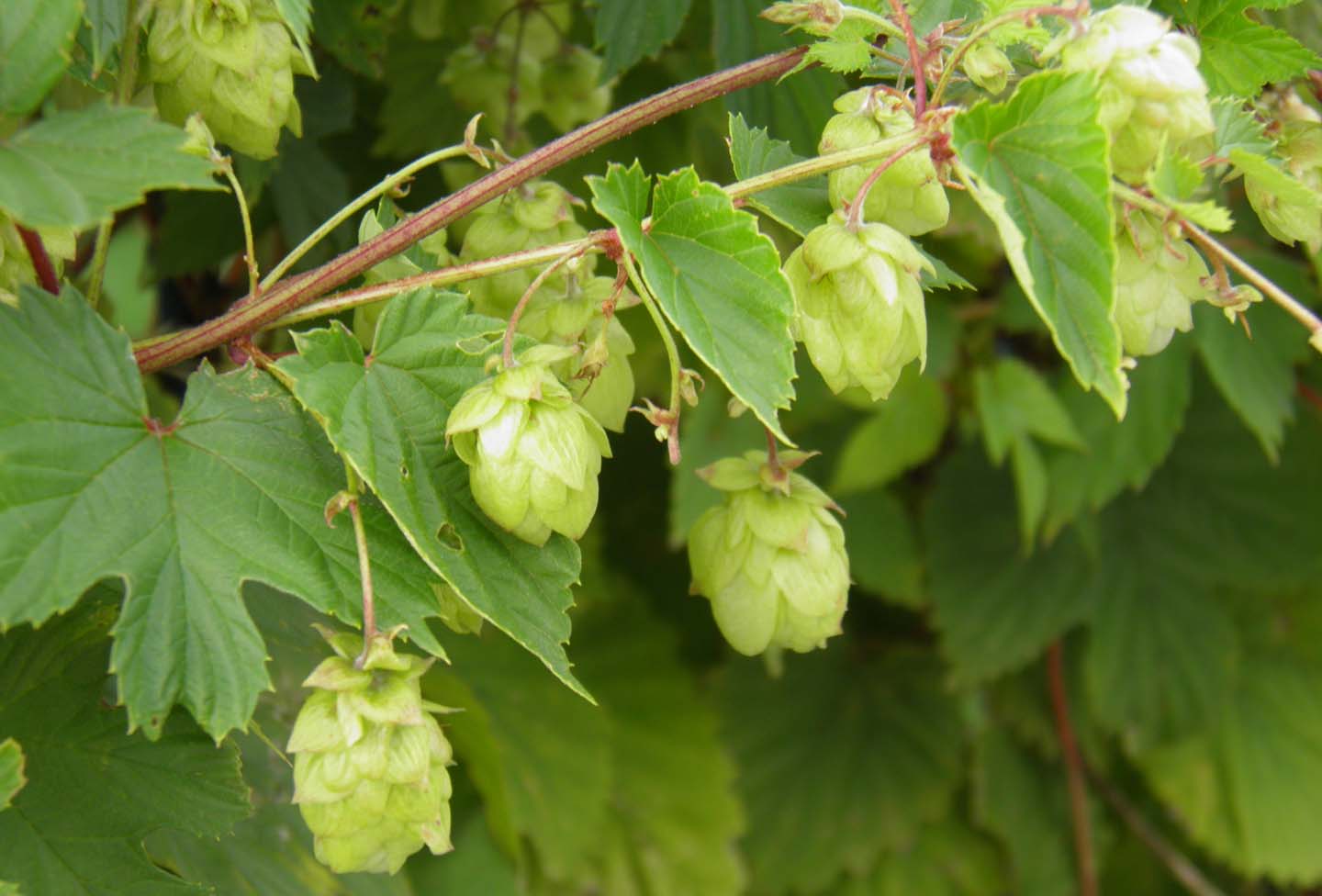
Abundant Health

Up to date health information tailored for you

  • Home
  • Blog
  • Recipes
  • Shop
  • Contact
You are here: Home / Archives for 2022

Archives for 2022

The Concept of Salutogenesis

May 29, 2022 by Esther Neumann - [rt_reading_time label="Reading Time:" postfix="minutes" postfix_singular="minute"]

Das Konzept der Salutogenese

The term salutogenesis comes from Latin. Salus means safety, health, well-being. Genesis is Greek and means origin. One could literally translate it as: the emergence or generation of health. The medical sociologist Aaron Antonovsky (1923 – 1994) does not see health or disease as an “either – or”, but as two opposite points on a straight line. The two end points are never quite reached. No living human being is completely sick or completely healthy. Even in a terminally ill patient, parts or individual organs are still healthy. On the other hand, everyone who seems perfectly healthy also has an infirmity. Just think of the short-sighted, who would be lost without their glasses but is otherwise healthy.

The Concept of Salutogenesis

The most important question now is: In which direction am I moving? Am I going towards health or towards disease? Each person takes their position between the two endpoints in a very individual way. Aaron does not see health as a condition, but as a process. Losing health is a natural process happening by itself. It is popularly said that dying begins at birth. From this point of view, health has to be built up again and again. Let’s now think about what promotes health.

Understanding and Trust

If I understand to a certain extent what is going on in my life and in my environment, then I can deal with it much better. When I know where I come from, what I live for and where I’m going, I have a lot more confidence in my life. This is good for my health. I can largely understand what is happening to me, it is mostly predictable and explainable. But I don’t have to understand everything, life is too complex for that. It presents me with great challenges; but I can handle them and it’s worth the effort.

But I can also set limits. And within these boundaries lie my feelings, my most important priorities, my relationships with other people and existential questions such as personal mistakes, failure, conflicts and dealing with death.

Let’s summarize: I should essentially understand my life, cope with it and recognize the meaning. But how many people suffer because they don’t understand what’s happening to them, because they can’t find a job, or because their most fulfilling occupation is not giving any meaning? If this happens to me, can I change something in my life, or do I need to reconsider my attitude? The serenity prayer fits very well for that: God grant me the serenity to accept the things I cannot change, the courage to change the things I can, and the wisdom to know the difference.

A thinking woman

Power Sources and Resources

It is very important for health to know where I draw strength from. Some tools lie within me. What can I do myself to stay healthy? Just it is often necessary to accept help from outside. Friends, relatives, therapists and doctors can help me. In concrete stressful situations, the help of a reliable support network is considered a very important health factor. This can mitigate the impact of stressful life events and has a positive effect on your well-being. Believers have the greatest source of power at their disposal: God! Am I ready to accept these sources of strength outside of me?

Joy and Cheerfulness

Joy of the heart and a happy mind work like medicine. The effectiveness of laughter has been scientifically proven. Cheerfulness and laughter are important protective factors for the cardiovascular system and the immune system. Constant worry and brooding makes you sick. A lack of joy goes hand in hand with a lack of drive and increased fatigue, as well as reduced concentration and alertness. Then it’s not far to the loss of self-confidence and self-esteem. Pessimistic future prospects and sleep disorders plague depressive people.

Healthy Sleep

Restful sleep is undoubtedly essential to good health. It is known that cell damage and even genetic material can be repaired during sleep and rest. Learned knowledge is also stored during sleep. A periodic change between mental and physical exertion and relaxation phases is vital.

A woman sleeping

Moderation in Eating Keeps You Young

On the Japanese island of Okinawa live many centenarians. When asked about the secret of their age, many of them reply, “Stop eating before you’re full.” Restricted energy intake does indeed keep you young and healthy. The body then produces substances called sirtuins, which affect cell metabolism. Cells live longer and there is more time to repair genetic defects. Our affluent society with their temptations in the spur of the moment would do well to eat slowly and in moderation. That would give the body enough time to inform the appetite center in the hypothalamus that enough food has arrived and that you are feeling full.

Health as a Human Right

Health is a fundamental human right. But it doesn’t come about by itself. When something is left to its own devices, it always tends toward chaos. Let’s think of rooms that are not cleaned up. Health is an integral part of daily life. It’s a positive concept that challenges the state as much as it challenges the individual. Let’s not primarily look at what makes you ill, but at what makes you healthy or keeps you healthy. That’s the principle of salutogenesis.

Healthy Fruits

Stay Always Up to Date

Sign up to our newsletter and stay always informed with news and tips around your health.

Sign Up Now!

Filed Under: Healthy Lifestyle

Dealing with Stress as a Young Adult

May 22, 2022 by Martin Neumann - [rt_reading_time label="Reading Time:" postfix="minutes" postfix_singular="minute"]

Dealing with Stress as a Young Adult

After you’ve settled into a career, you face a whole new type of stress in your late twenties and thirties. You’re well past the point now where you have to worry about stresses from school such as bullying or grades, but now you’re in a whole new situation: your job, your family, and to a greater extent, you’re now really on your own.

Dealing with Stress as a Young Adult

This stage in your life is full of figuring things out and having to put up with a lot of stuff that can be stressful. Most stresses around this age come from your job and finances. This can vary greatly depending on what job or career you’re in by this point, but let’s take the average office job for instance.

Chances are the work is a bit tedious and repetitive, meaning that after a few years, you’ll want a change so badly that you’ll start to worry that you’ve gone into the wrong field for your career.

These regretful kinds of stresses are the worst ones by far, because you feel as though you’re trapped and powerless to undo the path you’re on. You might feel stuck where you are.

For many people around this age, they start feeling as if they’re actually getting old for once. They’re no longer in school, no more being just silly in college, but just living a full adult life.

This can come as a sudden and bizarre revelation, but the concept of feeling old can stress some people out. Some might feel as though the best of their days have blown by, and now they have to be serious for the rest of their life.

A young adult being stressed working on a computer

Another factor that comes with getting a little older is that some people will start to feel as though their bodies aren’t as active as they used to be. As most people go into adulthood, they miss the unending activity and abundant energy they had in school.

But this process doesn’t happen all at once. It can start as early as your late twenties with simple things such as soreness and perhaps some back pain from moving around a certain way. This can take a serious toll on someone’s confidence and can be a major cause of stress.

One of the most serious stress factors around this age can come from having a family. By this time, most people are making decisions about a partner. Perhaps they’re married, and they might even have one or more kids. Parenting alone can cause immense amounts of stress for someone who’s just learning how to go about it, and this goes for all ages of kids.

A young couple struggling to control their kids

People around this age might be a lot more open about what they’re stressed out about than other age groups are, and in fact might be the most clear about it. They’ll often complain about their problems to close friends and family, whether they’re unhappy with their job or worried about feeling older and the responsibilities that go along with it.

Usually you can find out what’s wrong with them by listening to what they choose to complain about. Something many people might start to do around this age is make rash decisions for the sole purpose of breaking up the monotony.

Essentially, by doing something very different from what they’re used to, they feel “alive” again, and are just happy to be doing something different for once. This can vary between getting a new car, going on a vacation, or taking up some kind of strange obsession or hobby.Just something that they can enjoy and ignore work or the stresses of life for a little bit.

One unfortunate sign of stress from people in this age group is that they cease to do things that they used to do for fun. Getting rid of certain hobbies just because they either don’t have the time or money for it anymore is a sign that they’re not having a good time going through this stage in life. For example, if someone used to enjoy doing things with friends every weekend, but now never comes out, chances are they’re going through a lot and want to seclude themselves as a result.

This can lead to additional feelings of loneliness on the part of the person secluding themselves, which can in turn cause even worse stress. One of the best solutions for a lot of stressful problems at this age is to simply have some downtime.

It doesn’t have to be a lot, and it doesn’t have to be expensive, but just having an hour or so to do what you like each day to help decompress can turn someone’s life around really quickly.

If you can take some time to just do nothing for a bit, or something that really gives you joy, then you’ll be a whole lot happier as the day goes on. This can also come in the form of short breaks throughout work, just to revitalize.

Many people get stressed out at this stage over mindset issues, and having a change of attitude can mean the world to them. Switching their outlook from a negative one to a positive one can make things like work, parenting, and aging a whole lot more likable than just sitting there moping and looking on the bad side of everything. Everyone knows there are many drawbacks to those things, but there are also positive aspects that you have to embrace.

When it comes to helping with stress related to body issues, getting into a consistent workout schedule can help immensely. People start to experience things like aches and pains because they aren’t using their bodies as much as they should be – especially if they’re sitting in office chairs all day. By getting into a good workout routine, you’ll be in better shape and you’ll be a lot more mobile.

Stress will happen in every phase of your life, just the nature of the stressors will change over time. Make it a habit early in life to develop healthy coping skills for your stress, and you will be better off for the rest of your life.

Do you need a guide to help you understand how to cope with Stress in an all inclusive approach? Learn how to combat stress, mentally, physically, emotionally and strategically in your life.

Get Me the Guide

Filed Under: Adults, Mental Health, Phases of Life, Stress Management

Gas and Oil – For Our Body

May 15, 2022 by Esther Neumann - [rt_reading_time label="Reading Time:" postfix="minutes" postfix_singular="minute"]

Gas and Oil

Every driver knows what fuel his car runs best on. He also knows what kind of oil the engine needs. He is very well informed about the tire pressure and, of course, about the engine’s performance. Let’s be honest: do you know your body as well as you know your car? Which oil do you work best with?

Gas and Oil - For Our Body

Research has found that our lifestyle and diet have a huge impact on our genes. Put simply, we can turn genes on or off with our diet and lifestyle. Only after being switched on will they have any impact on our health. It is therefore very important to pay particular attention to these two factors. Not only our car needs optimal care. Our body needs them even more. We can replace a car after a few years, but not our body.

Clear Sight

We take good care that there is always enough water in our car’s windscreen washer system. And what about our bodies? Did you know that brain cells are extraordinarily sensitive to dehydration? The brain is no longer optimally supplied with blood and can no longer perform. Visibility is clouded, like in a car with a dirty windshield. Did you know that the kidneys can no longer produce sufficient dilution of the urine if you drink too little water? The concentration of the substances that have to be excreted is constantly increasing, and the risk of kidney stones is going up. The bladder can be impacted, since without sufficient liquid transport from the kidney, it is no longer sufficiently perfused. This is followed by a massive increase in disease-causing germs. A painful urinary infection is the consequence. If you drink enough, you flush your entire urinary system optimally.

A glass of water

Fill Up the Tank, Please

Everyone who drives away makes sure that there is enough fuel in the car, otherwise they won’t get to their destination. Be sure to fill up the tank of your body in the morning! Blood sugar levels are below normal after waking up. During the night, the glucose was used up for a great many energetic processes. That’s why you have to recharge your batteries with a hearty, wholesome breakfast. Fresh fruits, whole wheat bread bread with a tasty spread, an oatmeal or a granola are the right fuel to start the day.

Oil Change

How many types of oil are offered in the car accessories section! It’s the same in the grocery store. Most car owners know what kind of oil the engine needs. Who knows which oil is ideal for his body? Omega-3 fatty acids are not just empty buzzwords or good for advertising. Omega-3 fatty acids are the big stars protecting the heart and blood vessels. They reduce blood triglycerides, blood pressure and the risk of coronary heart disease. They probably also lower the risk of developing Alzheimer’s disease and reduce certain rheumatic complaints. They lower the cholesterol level and alleviate neurodermatitis.

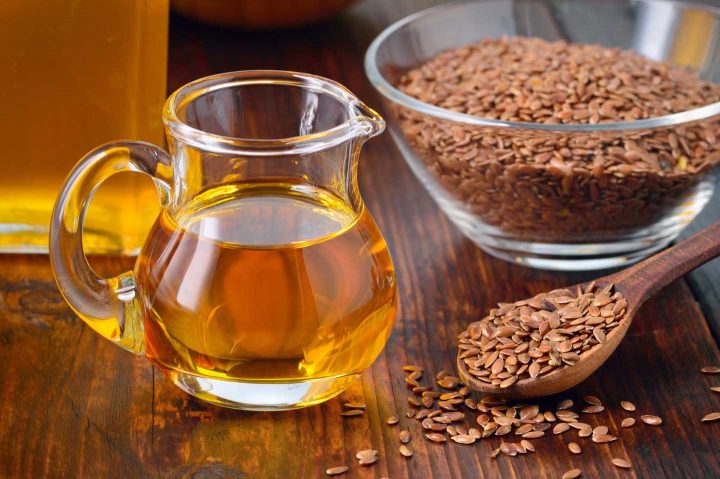
And where do we find omega-3 fatty acids? In a number of vegetable oils and in the fish oil of cold-water fish, i.e. salmon, herring, mackerel, tuna and sardines. Unfortunately, toxic heavy metals such as lead and mercury are very often found in fish. Therefore, it is more advisable to switch to good vegetable oils. Linseed, canola, chia, hemp, walnut and soybean oil contain many omega-3 fatty acids.

Flaxseed and linseed oil

Animal fats should be avoided, especially lard. They have a lot of arachidonic acid, which has an inflammatory effect. Unfortunately, fast food or store-bought baked goods frequently use industrial margarine containing trans-fatty acids, which are detrimental for our cells. However, the industry is trying to get rid of this flaw.

Pit Stop

In motorsport, a pit stop is a very short stop at a designated place where various interventions, small repairs and adjustments can be made at lightning speed. Our body also needs a pit stop – but a longer one than in sports. Rest and enough sleep are seen by many today as a luxury. On average, we now sleep about an hour and a half less than a generation before us did. Many adults and even children complain about the consequences of lack of sleep: susceptibility to colds, reduced performance, lack of concentration and a higher frequency of accidents.

In addition to healthy sleep, relaxation during the day is also very important. Lots of things distract us and steal what we need for ourselves – every now and then a few relaxing minutes after work is done. This can be something different for everyone. For some, it means closing your eyes and listening within; for the other to let their eyes wander outside the window. It’s good if they get to see flowers and green trees, just something different than in the working world.

If you can take a walk in nature, you have double the benefit. Feel the wind, breathe the fresh air, listen to the birds singing, enjoy the moment that is all yours and for a moment don’t think about the future or the past. This fills you with gratitude and calm for what you have just been able to accomplish in the past day.

A stroll in nature

When these pit stops are followed by the weekly day of rest after the six working days, you will experience an oasis in a stressed world. It is not for nothing that our Creator set this day for us. It is also good for our soul.

Our bodies are worth far more than a car. It is worth thinking about what kind of performance we expect from it and how we want to take care of it. However, it is also worthwhile to immediately put the knowledge gained into practice. You will reap the benefits for yourself.

Healthy Fruits

Stay Always Up to Date

Sign up to our newsletter and stay always informed with news and tips around your health.

Sign Up Now!

Filed Under: Healthy Lifestyle, Nutrition, Sleep, Water

Dealing with Bipolar Disorder: Causes, Symptoms and Treatments

May 8, 2022 by Dr. Cesar Vasconcellos de Souza - [rt_reading_time label="Reading Time:" postfix="minutes" postfix_singular="minute"]

Transtorno Bipolar

Do you suffer from bipolar disorder? Do you have anyone in your family who is bipolar? We need to know how to deal with it. Let’s review a few concepts about bipolar affective disorder.

Dealing with Bipolar Disorder: Causes, Symptoms and Treatments

About 1% of the general population suffers from bipolar disorder. It occurs more frequently among first-degree relatives, when one of them has had or is experiencing this suffering. Bipolar disorder generally begins between the ages of 18 and 20, affecting men and women equally. Bipolar disease is as the name says: bi-polar, that is, it has two poles. At one moment the person has euphoria, and at another moment, depression. Euphoria is at one pole and depression is at the opposite pole. A bipolar individual can be euphoric for a few months, agitated if left untreated, and then go into a depressive situation, with or without the normal interval between one phase and another.

There is bipolar type 1 and type 2. The main difference between one type and the other has to do with the severity of the episodes or crises. Bipolar type 1 has a severe euphoric phase, while type 2 has a milder euphoria. When a person is in the euphoria pole of bipolar disorder type 1, they often experience complications at work, school, and relationships. In some cases internment may be necessary. Bipolar type 1 people have periods of deep and long-lasting depression, which alternate with periods of very high, irritable mood, which we call mania or euphoria. The main symptoms of bipolar in the euphoric phase are: irritability, mood exaltation, euphoria, decreased need for sleep, talking too much or running over, great distraction, flight of ideas, that is, the person keeps talking about many exaggerated plans and changing ideas constantly. There is also a demand for compulsive pleasure activities, such as spending more money than you have. The bipolar in the euphoric phase also has a grandiosity, that is, he has an exalted posture, as if he were a king or a god who can do everything.

An euphoric woman in a shopping spree

In order to be diagnosed as bipolar in the manic or euphoric phase, this high mood must not be the result of substance use, or any medical illness.

In the depressive phase, the person with bipolar disorder presents five or more of the symptoms, one of which has to do with depressed mood or loss of pleasure, or interest in that person they liked, in which they were involved. So the symptoms are in the depressive phase: sleeping too much, or having insomnia, loss of energy, weight loss or gain due to appetite change, feeling of worthlessness, excessive guilt, decreased ability to concentrate, marked indecision and preoccupation with death, with suicide. In severe depressive episodes, the patient may contemplate suicide, or has already attempted suicide.

The euphoric or bipolar phase oversteps the boundaries of social life and disrupts relationships, and the agitation can turn into physical aggression. That’s why it’s important to consult a psychiatrist to prescribe medication that controls this. Often family members and medical staff are the targets of this aggression. The treatment of bipolar disorder should be done with a psychiatrist or psychologist, with the family being oriented on what to do to help. In euphoric crises, it’s no use talking, nor taking to the psychologist or psychotherapist. Medication is the priority treatment to try to get the person out of the symptoms of agitation, which prevents a productive dialogue. However in the depressive phase, in addition to medication, psychotherapy helps to improve.

A woman wearing two shirts of different color, symbolizing the bipolar disorder

There is no single theory about the causes of bipolar disorder. Some claim that the conscious area and the unconscious area can conflict, causing behavior changes. Failure to resolve these conflicts would actually be the cause of various mental illnesses. In the case of depression, there are theories that say that the person develops depressive symptoms as a manifestation of anger against himself.

One of these theories explains that parents with unhealthy behavior, who are inconsistent, that is, sometimes happy, sometimes angry and nervous with their children, without a good expression of affection towards them, who are driven by their selfish needs, create an unpredictable and hostile environment throughout childhood. As a result, the child feels alone, confused and helpless, and ultimately angry. But the child knows that his parents are his only means of survival. So out of fear, love and guilt, the child represses the anger towards the parents, who act badly towards him, thus turning the anger against himself and the thought of being despised arises in his mind, and he then starts to believe that he is an unlovable and bad person.

And at the same time, the child strives to present perfect behavior, acceptable to parents, as a way of compensating for the weaknesses that he perceives, and which becomes unacceptable to demanding and neurotic parents. So the child feels caught between the child he finds unacceptable and the one who needs to act perfectly to get his parents’ love. As a result of this conflict, the child becomes “neurotic,” or prone to experiencing exaggerated feelings of anxiety and depression. A constant feeling develops in the child’s mind that he is not good enough, no matter how hard he tries to get it right. This neurotic need to please, accompanied by a failure to do so, can spread throughout the child’s life, so that he or she may begin to feel an unhealthy need to be loved by everyone, peers, family, co-workers, and others.

A man with a rose pointed at his head like a gun, symbolizing the conflict of acceptance.

So, the goal of psychological treatment, which is psychotherapy in the psychodynamic approach, can help the child, now an adult, and suffering from depression or symptom, to obtain information about the mistaken foundations of his belief in his own badness and inadequacy, so that the need to punish himself and to be perfect diminishes. It is interesting that, for example, the husband who had a childhood in which his parents were too critical of him, who belittled him, did not show praise and affection, this boy grows up, becomes an adult, and marries a woman who repeats the role of his parents, belittling him, not valuing anything about him. A wife with a selfish, attention-sucking posture favors the emergence of depression in her husband.

In adult life, the person who had an emotionally painful childhood, having suffered due to the bad behavior of the parents, will have difficulties in their relationships with other people, besides their own spouse. For example, he may have a colleague or boss at work who repeats the derogatory role of parents, causing sadness in the sensitive individual. So imagine for a moment how painful it is for the individual who had a childhood lived with parents who did not know how to value him, and who in adult life interacts with a group that devalues him, criticizes more than praises, and on top of that still lives in a work environment with a similar situation, of being devalued. Difficult, isn’t it? So we can say that in depression, whether it’s bipolar disorder or not, there is an ongoing struggle that depressed people face in trying to maintain emotional contact with the important people in their life.

Some depressed people suffer because they feel dependent on relationships with others, and they grieve over the threatened or actual loss of that relationship. As a healthy affective bond between their parents and them was not formed in childhood, feelings of helplessness and weakness arose. These people experience intense fears of abandonment, and they struggle hard to maintain direct physical contact with the gratifying object of need.

So if you have a bipolar family member who is in the euphoric phase, you need medication to control this difficult attitude. If you are in the depressive phase, psychotherapy is very important along with medication, depending on the degree of depression.

Healthy Fruits

Stay Always Up to Date

Sign up to our newsletter and stay always informed with news and tips around your health.

Sign Up Now!

Filed Under: Depression, Mental Health Tagged With: Bipolar disorder

Bitter Herbs for Our Health

May 1, 2022 by Esther Neumann - [rt_reading_time label="Reading Time:" postfix="minutes" postfix_singular="minute"]

Bitter Herbs

Because many people do not like anything bitter, agricultural science has bred out many a bitter substance from wild plants. However, sweet and mild foods encourage us to eat more than we should, beyond a healthy appetite. Why do so many plants produce bitter substances? Can we humans take advantage of them?

Bitter Herbs for Our Health

Many a herb that grows by the wayside or in the herb patch tastes bitter. But only those medicinal plants whose active principle can be traced back solely to the presence of so-called bitter substances are called bitter substance drugs. As a drug we don´t name here an addictive narcotic, but a herbal substance that acts as a medicine. In the cultivated plants, the percentage of bitter substances is generally much lower than in the wild forms due to selective breeding to refine the taste.

Amara

Bitter substance drugs are called amara in phytotherapy. Now, bitter substances are not a uniform group. In some cases, we don’t even know their structure. However, it is known that terpenoids, phenols, alkaloids and purines can taste bitter. Certain types of sugar, such as β-mannose and gentiobiose, also taste bitter. Certain forms of amino acids, which are the smallest components of protein, can produce a bitter taste. Epsom salt (magnesium sulfate) is well known for its bitter taste from the group of inorganic compounds. It occurs naturally in mineral water and has a stimulating effect on the production of saliva and gastric juice, stimulates intestinal movements and pancreatic secretion and thus improves general well-being.

Depending on which other chemical compounds contribute to the formation of the bitter taste, the bitter substances are divided into three large groups.

Amara tonica

Medicinal herbs that belong to these pure bitter substance drugs cause an intensive stimulation of gastric juice and bile secretion. It therefore makes sense to take bitter substances as an “aperitif” before eating. Bitter substance drugs are often prescribed for people who lack appetite and for better digestion. They also have a toning, strengthening effect. They help in cases of weakness in convalescents, in anemic, nervous or simply exhausted people. Furthermore they have a strengthening effect on the immune system. Typical representatives of such medicinal plants are centaury or the yellow gentian.

Bitter drugs are easily soluble in the cold water extract. They are prepared cold and left to steep for a few hours, stirring occasionally. Then it is strained and heated to drinking temperature. The tea should be drunk unsweetened before the meal. A proverb says: “A medicine must taste bitter, otherwise it has no effect.”

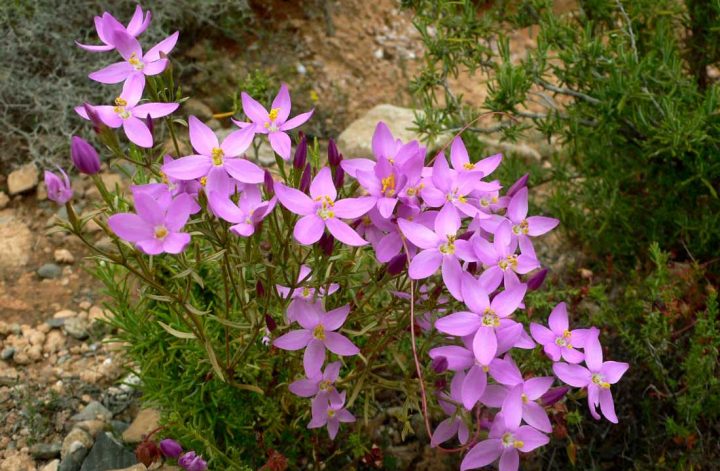
Centaury is protected in some countries. Pharmacies obtain the drug from countries where it is not protected. The bitter substances are found primarily in the flowers and stems. The drug is effective in case of appetite loss, insufficient gastric juice secretion, and stomach cramps. In the past, it was also used to treat fevers. You get used to the bitter tea over time. If you can’t adapt to it, you can mix it 1:1 with peppermint.

Centaury - Photo source: Wikimedia.org
Centaury

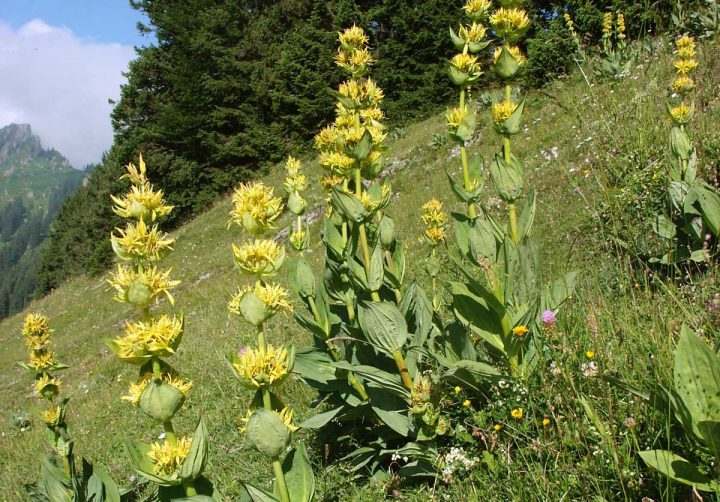
The yellow gentian (Gentiana lutea) is protected as well. It used to be an annoying weed for the alpine farmers. Because it was so popular for aperitifs, it was almost exterminated and had to be protected. The bitter substances are in the roots. The active ingredient with the highest bitterness is called Amarogentin. The substance still tastes bitter in a dilution of 1:20,000. In addition to stimulating the appetite, the most common areas of application for gentian are stomach, intestine, liver and gallbladder problems. However, gentian should not be used if the stomach is overly acidic and sensitive to irritation.

Yellow gentian - Photo by Bernd Haynold, Wikimedia.org
Yellow gentian

Amara aromatica

In addition to the bitter substances, this group also contains larger amounts of aromatic oils. Therefore, additional benefits are added by the essential oils. They have an anti-inflammatory, diuretic, expectorant (coughing up), antispasmodic and tonic effect.

Because essential oils are highly volatile, the infusion is a good choice when preparing them. Pour boiling water over the drug and let it steep for about 10-15 minutes. It makes often sense to take it after a meal.

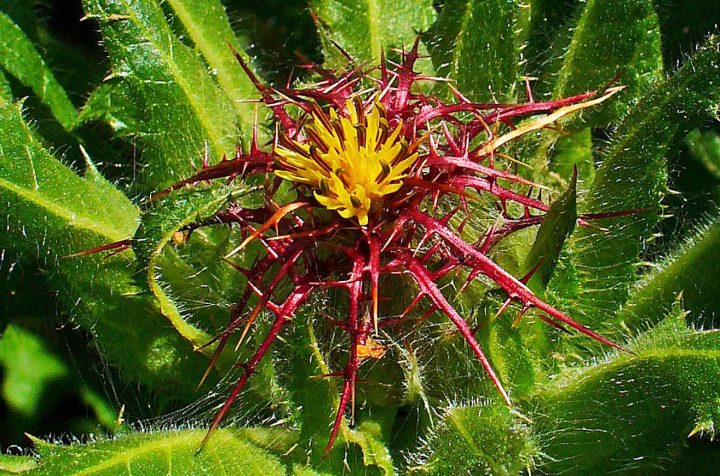
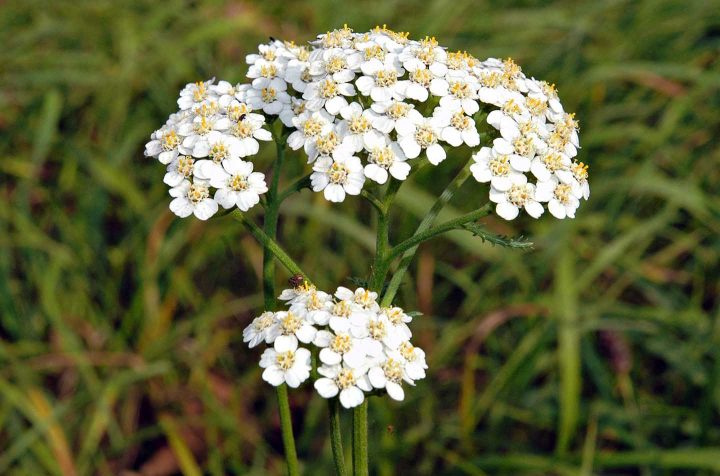
The aromatic bitter substance drugs include yarrow, wormwood, blessed thistle (Cnicus benedictus) or angelica.

The blessed thistle (Cnicus benedictus) got its name from the Latin benedictus = blessed. This medicinal herb was used in the past for many diseases. Today we know that the bitter substance cnicin stimulates the glands in the gastrointestinal tract responsible for producing digestive juices. Liver and pancreas function are also enhanced. Furthermore the thistle has mucilage, producing a healing effect on irritations of the mucous membranes. Poorly healing wounds can be cleaned with a decoction of the herb, as cnicin is effective against gram-negative germs and gram-positive bacteria. It can be used to take sitz baths for hemorrhoids.

 Blessed thistle - Photo by H. Zell, wikimedia.org
Blessed thistle

Yarrow (Achilea millefolium) is also used for gastrointestinal and gallbladder complaints and to stimulate the appetite. Because of the essential oil azulene, the herb also has a disinfecting, anti-inflammatory and antispasmodic effect. In girls and women, the tea works very well for painful menstrual bleeding and tightness in the breasts before the period. The high potassium content has a diuretic effect.

Yarrow - Photo by André Karwath, wikimedia.org
Yarrow

The young yarrow leaves can be finely chopped and used as a spice for salads, soups, stews and soft cheese preparations.

Amara acria

Bitter substances that also contain pungent substances are appropriately called amara acria. Such substances are rarely found in native medicinal plants. They are found in ginger, galangal, pepper and bell pepper. Such drugs also improve circulatory function. We now know that digestion puts a much greater strain on the circulatory system than was previously generally assumed. Therefore, it really makes sense not to eat dishes that are very difficult to digest if you already have circulatory problems.

Ginger (Zingiber officinalis) is traded primarily as a spice. The pungent substances gingerol and shogaol stimulate digestive juices and appetite. Recently, ginger powder has also been used to treat travel sickness. However, it should not be used for nausea during pregnancy. Ginger also has a warming effect. This is why it is a popular winter tea.

Recently harvested ginger plants with roots - Photo by Sengai Podhuvan, wikimedia.org
Ginger plants with roots

Galangal (Alpinia officinarum) is very similar to ginger in appearance and active ingredients. He is native to China.

The pungent alkaloid piperidine is found in the shell of peppercorns. Therefore, the black, unpeeled pepper seasons more than the peeled white. In India, pepper is known to aid in digestion and also to kill intestinal parasites. In the usual doses there, however, it can irritate the mucous membranes of the urinary and digestive tract, so it also has pretty significant side effects.

Conclusion

The little foray through various medicinal and spice plants has shown us that bitter substances do have a healing and health-promoting effect. We should therefore use them more often. Especially in spring and summer, when we find many herbs, often as weeds along the way or in the vegetable patch, we should consciously include them in our diet or, if necessary, make tea cures with them. “Our meadows and forests are the best pharmacies!” Paracelsus said already back in the 16th century.

The plants actually produce the bitter substances for their own protection. They do not want to be eaten by animals and insects, that’s why they are producing the bitter taste. As we have seen, the same bitter substances also serve us humans for our healing. Isn’t that a marvelous idea of our Creator God? He thought about the protection of our plants and the same time the protective substances for our health, and for the animals there are many other more salubrious herbs left.

Healthy Fruits

Stay Always Up to Date

Sign up to our newsletter and stay always informed with news and tips around your health.

Sign Up Now!

Filed Under: Herbs, Therapies

What is Getting Teenagers Stressed Out?

April 24, 2022 by Martin Neumann - [rt_reading_time label="Reading Time:" postfix="minutes" postfix_singular="minute"]

What is getting Teenagers stressed out?

One of the most prevalent times for stress to arise in one’s life is in the teenage years. This time involves a lot of changes that can be stressful for many. So what is getting a teenager really stressed out?

What is getting Teenagers stressed out?

At the earlier end, many kids are going through puberty and through their awkward years. This is the point in time when bullying can be the worst, as teens start to become a bit more grown-up, but not fully, and still make poor decisions by picking on people.

The stresses at this age vary greatly from person to person, but one of the most prevalent ones is bullying and harassment. By this age, many people are still kind of awkward, but they’re at the point where they are getting interested in people of the opposite sex.

This involves some kind of identity changes that can lead to some inner conflicts. While children tend to harass those of the opposite sex, teenagers start to feel to be attracted, and while some are showing their change in attitude, others might be teasing them for that.

As the attraction grows, teenagers tend to want to impress acquaintances of the opposite sex. This can mean showing the best side of themselves, maybe even showing off a facade that is not their true self, or others trying to impress by doing risky things they would not do if nobody was watching.

A teenager group

All of those is mixed with the quest of defining his own identity and self-worth. Some are stressed out and devastated when getting rejected from somebody else, especially being rejected from somebody of the opposite sex. Teenagers want to be accepted by their collegues and have a desire to belong to a group that values them in some way.

The teenage years involve a lot of changes that can be stressful. As a child, many decisions are being made for you. A teenager is exactly at the phase where he starts making lots of the decisions for himself, without having the prior experience on how to deal with this new reality in a proper way. Many times they do not want to rely on others in their decision making, in order to show their growing independence, but are still struggling to keep up with the stress of being responsible of the consequences of doing a right or a wrong choice.

Another problem, especially towards the later years of high school, is figuring out what they want to do with their lives. Often, teens are pressured about what they want to do for the rest of their lives, as if they have to have it all figured out by age 18.

This couldn’t be farther from the truth. They’re expected to make decisions about where they want to go to college, if they want to go at all, and if so, what they will major in. For many people, this is a stressful process of applications and trying to figure out what their passion is.

It’s certainly a lot to take in, and if they don’t have the right guidance, they’ll feel overwhelmed quickly. Finally, towards the tail end of this age group, you have the people who are in college.

College comes with a ton of stress factors that aren’t well known to everyone. In college, you have a lot more independence than you do in high school, but that comes with its fair share of drawbacks.

Students are often left out to dry by the university and their professors, who both assume the student is capable of doing everything on their own. They might find it hard to adjust, and with the realization that they’ll soon be working a full-time job, many can begin to panic from the get-go.

A perplexed student

Teens and young adults don’t show their stress very clearly, so it can be hard to pick up on it. Many don’t want people to worry about them too much, so they just suppress their stress and worries and just hope things go well.

Some will just try to act as though everything is fine, until one day they just kind of break down. Some show that they’re stressed out by secluding themselves from others, so as to not show off their problems to others.

You might notice that someone is spending a lot more time on their own, being reclusive by going home as soon as they get the chance to just be alone. This isn’t always a sign of stress, because some people are just naturally introverted.

But if someone is normally social and suddenly starts wanting to be on their own all the time, there’s clearly something wrong there. You also might want to watch their eating habits, since some people will either eat much more or a lot less when they’re stressed out.

This can lead to undesired weight fluctuations that can cause even more stress. Moving up into college, some students try to alleviate their stress by partying. Many students will resort to heavy drinking for the sake of getting the negative thoughts out of their head.

By using alcohol as a coping mechanism, they put themselves at risk to develop alcoholism. Some will even start using drugs, which can put them at risk of an overdose, addiction, and getting arrested.

No one solution will work for everyone’s problems, but there are common ways that you can go about trying to help people in this age range. As a rule of thumb, you should never, ever try to come at them aggressively to try to fix their problems for them with already predefined solutions.

Teenagers do not appreciate this kind of intervention. They’ll just deny anything’s wrong and seclude themselves further from you. You should always try to get them to open up a bit, and then casually move it towards thinking about solutions.

A teenage girl in a counseling session.

When it comes to teens, your first step should be to teach them to handle the situation as best as they can on their own. If that fails to work, then you might intervene yourself, instead of trying to get administrators or teachers involved, because they’ll feel really embarrassed if the teachers have to step in for a school bully problem – and it may make matters worse.

You need them to feel as if they can trust you as a parent, because if they don’t, they’ll never open up to you fully. Make it a point for them to know first and foremost they you have their back and support them fully, no matter what.

Then, you’ll have a much better shot at getting them to open up to you. When it comes to young adults, getting them to go to a counselor might be a good option. Many universities and high schools give free counseling, and sometimes just blowing off a good amount of steam can fix a lot of problems.

If the resource is there, why not take advantage of it? And there may be even other reference figures in the life of a teenager, whom they can trust and can serve them as a counselor. Be sure to explain to them that bottling up their emotions isn’t a good way to go about anything in life, and by just getting things off of their chest, they’ll find a lot more support and they’ll feel a lot better not having to brace against it on their own. Nothing creates additional stress quite like loneliness.

As a conclusion, there are quite a bit of stressors involved in the various changes taking place in a teenage life. Much of this can be mitigated if they know they have somebody they can trust and that will support them in their journey of finding their independence. Showing them acceptance and strengthening their feeling of self-worth can also go a long way to make this transition period less stressful. Avoid to be in a conflict course and give proper support to the teenagers in your life and you will see how grateful they are that you have made a difference in their lives when they needed it most.

Do you need a guide to help you understand how to cope with Stress in an all inclusive approach? Learn how to combat stress, mentally, physically, emotionally and strategically in your life.

Get Me the Guide

Filed Under: Mental Health, Phases of Life, Stress Management, Teenagers

« Previous Page
Next Page »

Primary Sidebar

Social Channels

Coronavirus Immunity Challenge

Boost your immune system to be bullet-proof for the pandemic.

I Want to Participate

Recent Posts

  • 5 Habits to Live Longer
  • Better Sleep Can Protect Against Dementia
  • Finding Peace In Your Crazy-Busy World
  • Flaxseed – An Ancient Plant Rediscovered
  • Platelets – Triggers for Life or Death
  • Boderline Personality Disorder
  • In Praise of Almonds and Nuts
  • Are You Stuck in the Clutter Trap?

Categories

  • Body Systems (16)
    • Cell Function (2)
    • Circulatory System (1)
    • Digestive Tract (10)
    • Immune System (4)
  • Diseases (27)
    • Cancer (2)
    • Cold (1)
    • COVID-19 (11)
    • Dementia (1)
    • Diabetes (1)
    • Digestive Diseases (2)
    • Heart Disease (2)
    • Kidneys (1)
    • Metabolic Syndrome (2)
    • Skin (1)
  • Healthy Lifestyle (42)
    • Exercise (11)
    • Gardening (2)
    • Sleep (7)
    • Sunlight (2)
    • Temperance (14)
    • Water (4)
  • Mental Health (87)
    • Addictions (6)
    • Anxiety (7)
    • Burnout (1)
    • Depression (7)
    • Psychosomatic Diseases (6)
    • Stress Management (45)
    • Trust (6)
  • Nutrition (56)
  • Obesity (9)
  • Phases of Life (14)
    • Adults (3)
    • Babies and Infants (1)
    • Children (3)
    • Seniors (5)
    • Teenagers (3)
  • Therapies (7)
    • Herbs (5)
    • Hydrotherapy (1)
  • Uncategorized (3)

Archives

  • January 2025 (1)
  • March 2024 (5)
  • February 2024 (4)
  • January 2024 (4)
  • December 2023 (5)
  • November 2023 (4)
  • October 2023 (5)
  • September 2023 (4)
  • August 2023 (3)
  • July 2023 (2)
  • June 2023 (4)
  • May 2023 (4)
  • April 2023 (5)
  • March 2023 (4)
  • February 2023 (4)
  • January 2023 (4)
  • December 2022 (4)
  • November 2022 (4)
  • October 2022 (5)
  • September 2022 (4)
  • August 2022 (4)
  • July 2022 (5)
  • June 2022 (4)
  • May 2022 (5)
  • April 2022 (4)
  • March 2022 (4)
  • February 2022 (4)
  • January 2022 (5)
  • December 2021 (3)
  • November 2021 (4)
  • October 2021 (6)
  • September 2021 (4)
  • August 2021 (4)
  • July 2021 (5)
  • June 2021 (4)
  • May 2021 (3)
  • April 2021 (5)
  • March 2021 (4)
  • February 2021 (4)
  • January 2021 (5)
  • December 2020 (3)
  • November 2020 (4)
  • October 2020 (5)
  • September 2020 (5)
  • August 2020 (3)
  • July 2020 (1)
  • June 2020 (1)
  • May 2020 (1)
  • April 2020 (1)
  • March 2020 (1)

Copyright © 2026 · Abundant Health - Privacy Policy - Medical Disclaimer