Abundant Health

Up to date health information tailored for you

  • Home
  • Blog
  • Recipes
  • Shop
  • Contact

Blog

Stop Hating on Pasta

September 10, 2023 by Emma Beckett - [rt_reading_time label="Reading Time:" postfix="minutes" postfix_singular="minute"]

Stop Hating on Pasta

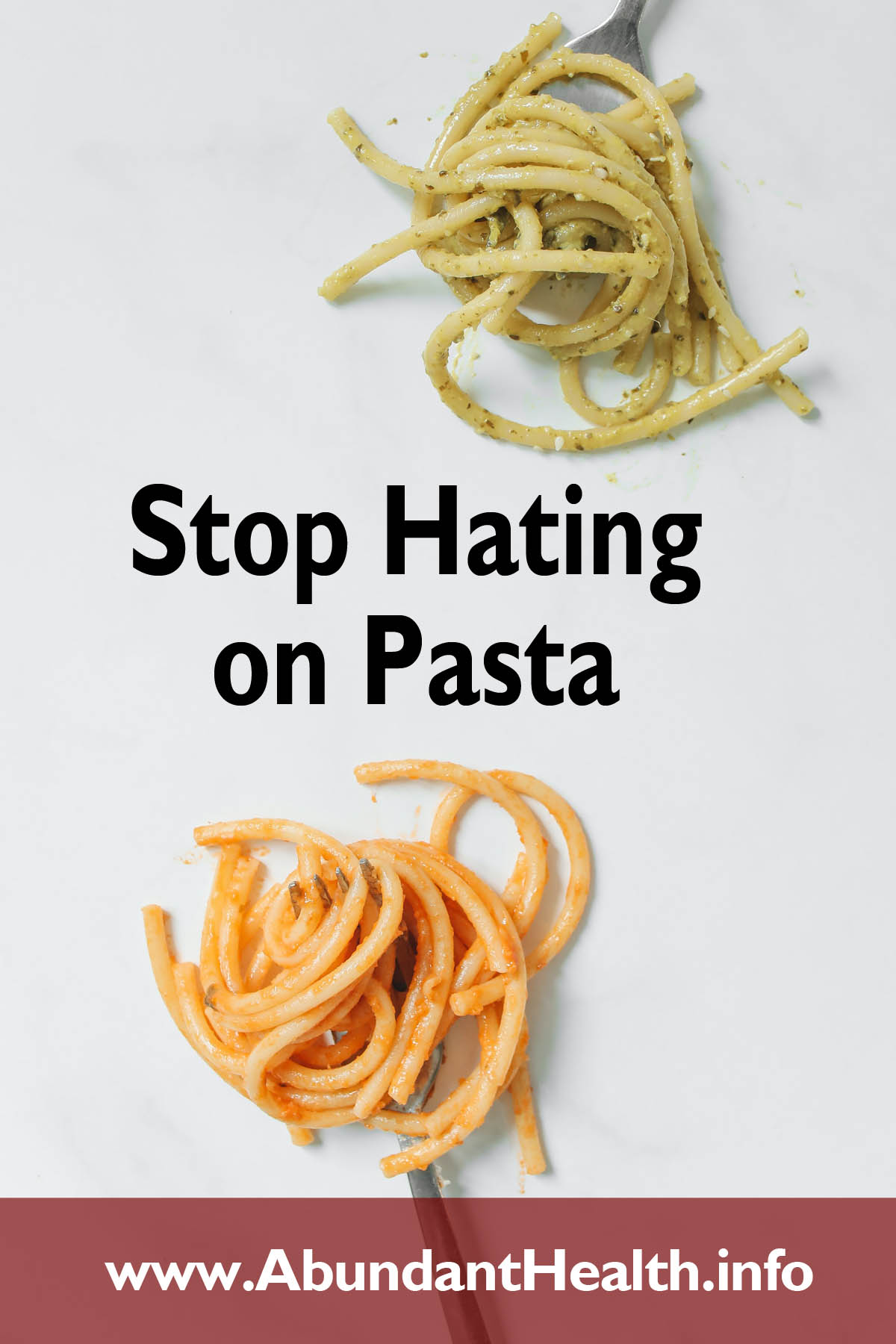
New year, new you, new diet. It’s a familiar refrain. One popular dieting technique is to create a food blacklist. Quitting “carbs” or packaged foods is common, which can mean avoiding supermarket staples like pasta. But do we really need to ban pasta to improve our diets?
Stop Hating on Pasta

This is what we call a reductionist approach to nutrition, where we describe a food based on just one of its key components. Pasta isn’t just carbohydrates. One cup (about 145 grams) of cooked pasta has about 38g of carbohydrates, 7.7g of protein and 0.6g of fats. Plus, there’s all the water that is absorbed from cooking and lots of vitamins and minerals.((Pasta, white wheat flour, boiled from dry, no added salt. Food Standards Australia & NZ))

“But pasta is mostly carbs!” I hear you cry. This is true, but it’s not the whole story. We need to think about context.

Your day on a plate

You probably know there are recommendations for how much energy (kilojoules or calories) we should eat in a day.((Nutrient Reference Values. eatforhealth.gov.au)) These recommendations are based on body size, sex and physical activity. But you might not realise there are also recommendations about the profile of macronutrients – or types of food – that supply this energy.

Fats, carbs and proteins are macronutrients. Macronutrients are broken down in the body to produce energy for our bodies.

Acceptable Macronutrient Distribution Ranges describe the ratio or percentage of macronutrients that should provide this energy.((Nutrient Reference Values. eatforhealth.gov.au)) These ranges are set by experts based on health outcomes and models of healthy eating. They aim to make sure we get enough, but not too much, of each macro. Consuming too much or too little of any type of food can have consequences for health.

The ratios are also designed to make sure we get enough of the vitamins and minerals that come with the energy in the foods we typically eat. We should get 45–65% of our energy from carbohydrates, 10–30% from proteins, and 20–35% from fats.

Mangia pasta

Macronutrient ratios mean it can be healthy to eat up to between 1.2 and 6.5 times more carbohydrates in a day than protein – since each gram of protein has the same amount of energy as a gram of carbohydrates.

The ratio of carbs to protein in pasta is 38g to 7.7g, which equates to roughly a 5:1 ratio, well within the acceptable macronutrient distribution range. Meaning pasta actually has enough protein to balance with the carbohydrates. This isn’t just because of the eggs in pasta either. Wheat is another source of protein, making up about 20% of the proteins eaten globally.((Erenstein, O., Jaleta, M., Mottaleb, K.A., Sonder, K., Donovan, J., Braun, HJ. (2022). Global Trends in Wheat Production, Consumption and Trade. In: Reynolds, M.P., Braun, HJ. (eds) Wheat Improvement. Springer, Cham. https://doi.org/10.1007/978-3-030-90673-3_4))

If you are worried about the calorie levels and weight gain, that’s not so simple either.

In the context of an otherwise healthy diet, people have been shown to lose more weight when their diet includes pasta regularly.((Chiavaroli L, Kendall CWC, Braunstein CR, et al. Effect of pasta in the context of low-glycaemic index dietary patterns on body weight and markers of adiposity: a systematic review and meta-analysis of randomised controlled trials in adults. BMJ Open 2018;8:e019438. doi: 10.1136/bmjopen-2017-019438))

And, a systematic review of ten different studies found pasta was better for post-meal blood glucose levels than bread or potatoes.((M. Huang, J. Li, M.-A. Ha, G. Riccardi, S. Liu, A systematic review on the relations between pasta consumption and cardio-metabolic risk factors, Nutrition, Metabolism and Cardiovascular Diseases, Volume 27, Issue 11, 2017, Pages 939-948, ISSN 0939-4753,
https://doi.org/10.1016/j.numecd.2017.07.005))
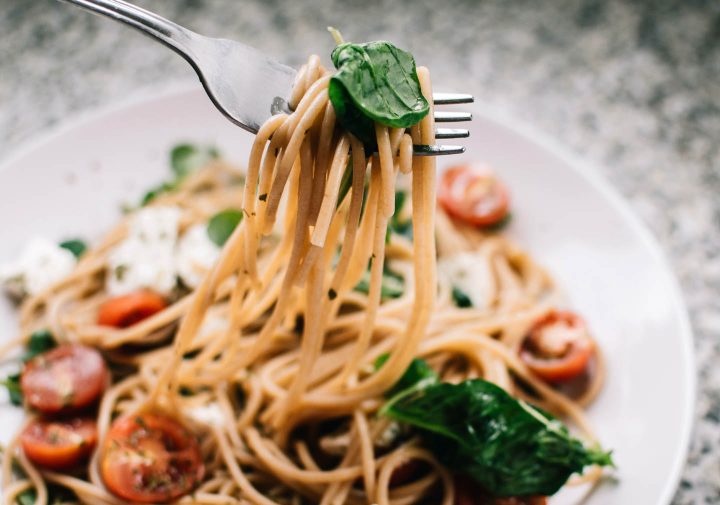
Pasta with basil and cherry tomatoes

Instead of quitting spaghetti, consider reducing portion sizes, or switching to wholegrain pasta, which has a higher fibre content which has benefits for gut health and can help you feel fuller longer.((Iolanda Cioffi et.al. Effects on satiation, satiety and food intake of wholegrain and refined grain pasta, Appetite, Volume 107, 2016, Pages 152-158, ISSN 0195-6663, https://doi.org/10.1016/j.appet.2016.08.002))

Gluten-free pasta has slightly less protein than wheat pasta. So, despite being healthier for people with gluten intolerance, there are no increased health benefits in switching to gluten-free pasta for most of us.((Pasta, gluten free. nutritionvalue.org))

Pass the pesto and the leftover bolognese

Pasta is also not typically eaten alone. So, while some warn about the dangers of blood sugar spikes when eating “naked carbs” (meaning just carbs with no other foods), this typically isn’t a risk for pasta.((Dressing Up Naked Carbs To Make More Filling Meals and Snacks. loseitblog.com))

When pasta provides the base of a meal, it can be a vehicle to help people eat more vegetables in smooth or chunky vegetable sauces. For kids (or fussy adults) pasta sauce can be a great place to hide pureed or grated vegetables.((Pasta with tomato & hidden veg sauce. BBC Good Food))

Not eating pasta alone is also important for the protein profile. Plant foods are typically not complete proteins, which means we need to eat combinations of them to get all the different types of amino acids (the building blocks of proteins) we need to survive.((Are ‘Incomplete’ Proteins a Myth? healthline.com))

But pasta, even though we often focus on the carbs and energy, packs a good nutritional punch. Like most foods, it isn’t just macronutrients it also has micronutrients.

One cup of cooked pasta has about a quarter of our daily recommended intakes of vitamins B1 and B9, half the recommended intake of selenium, and 10% of our iron needs.((Pasta, white wheat flour, boiled from dry, no added salt. Food Standards Australia & NZ))

The news for pasta gets even better when we eat it as leftovers. When pasta is cooked and cooled, some of the carbohydrates convert to resistant starch.((Canas S et.al. Effect of cooking, 24 h cold storage, microwave reheating, and particle size on in vitro starch digestibility of dry and fresh pasta. https://doi.org/10.1039/D0FO00849D)) This starch gets its name from being resistant to digestion, so it contributes less energy and is better for blood sugar levels.((Hodges C, Archer F, Chowdhury M, Evans BL, Ghelani DJ, Mortoglou M, Guppy FM. Method of Food Preparation Influences Blood Glucose Response to a High-Carbohydrate Meal: A Randomised Cross-over Trial. Foods. 2019 Dec 25;9(1):23. doi: 10.3390/foods9010023)) So, your leftover pasta, even if you reheat it, is lower in calories than the night before.

Look a little closer at ‘carb’ choices

There is a lot of talk about reducing intakes of carbohydrates for weight loss, but remember carbs come in different forms and in different foods.

Some of them, like pasta, bring other benefits. Others like cakes and lollies, add very little else. When we talk about reducing intake of refined carbohydrates, think first of sweets that are eaten alone, before you cut the staple carbohydrates that are often served with vegetables – arguably the healthiest core food group!
Healthy Fruits

Stay Always Up to Date

Sign up to our newsletter and stay always informed with news and tips around your health.

Sign Up Now!

This article is republished from The Conversation under a Creative Commons license. Read the original article.


The Conversation

Filed Under: Nutrition Tagged With: healthy carbs, pasta

Water Helps to Relief Anxiety

September 3, 2023 by Nikolaj Travica - [rt_reading_time label="Reading Time:" postfix="minutes" postfix_singular="minute"]

Water Helps to Relief Anxiety

Many can feel overwhelmed at some stage of their life with feelings of tension, nervousness and fear for the worst. In a 2020 Survey, 62% reported having some degree of anxiety, and around 31% will experience an anxiety disorder in some point in their life.((Anxiety statistics 2023, SingleCare))

Water Helps to Relief Anxiety

The growing field of nutritional psychiatry focuses on the effects of foods and drinks on our mental health.((F Jacka, Nutritional psychiatry: implications for public health, European Journal of Public Health, Volume 31, Issue Supplement_3, October 2021, ckab164.019, https://doi.org/10.1093/eurpub/ckab164.019)) Despite water constituting 60–80% of the human body, it is often overlooked as a significant nutrient. A recent tweet by federal health authorities suggesting water could help reduce anxiety was received with some online scepticism.((https://twitter.com/healthgovau/status/1492038209181728770))

In fact, the evidence shows water and hydration can play a role in preventing and managing the symptoms of anxiety.

A well-oiled machine

We all enjoy the cooling sensation a cold drink of water provides on a sweltering summer day. Our bodies are masterfully programmed to let us know when it’s time to rehydrate. We may be nourishing our brain too.

Several years ago, a group of researchers undertook a review that focused on the various ways hydration impacts health. The results were promising.((Benton D, Young HA. Do small differences in hydration status affect mood and mental performance? Nutr Rev. 2015 Sep;73 Suppl 2:83-96. doi: 10.1093/nutrit/nuv045.))

Overall, negative emotions such as anger, hostility, confusion and tension as well as fatigue were found to increase with dehydration. One trial induced mild dehydration and found increased reports of tension or anxiety and fatigue in participants.((McDermott BP, et.al. Mild dehydration impairs cognitive performance and mood of men. Br J Nutr. 2011 Nov;106(10):1535-43. doi: 10.1017/S0007114511002005.))

Researchers have also found people who usually drink lots of water feel less calm, less content, and more tense when their water intake drops.((Pross N, Demazières A, Girard N, Barnouin R, Metzger D, Klein A, Perrier E, Guelinckx I. Effects of changes in water intake on mood of high and low drinkers. PLoS One. 2014 Apr 11;9(4):e94754. doi: 10.1371/journal.pone.0094754.)) When researchers increased the participants’ water intake, people in the study felt more happiness, no matter how much water they normally drank.

Another large study found people who drink five cups or more of water per day were at lower risk of depression and anxiety.((Haghighatdoost F, et.al. Drinking plain water is associated with decreased risk of depression and anxiety in adults: Results from a large cross-sectional study. World J Psychiatry. 2018 Sep 20;8(3):88-96. doi: 10.5498/wjp.v8.i3.88.)) In comparison, drinking less than two cups per day doubles the risk. This link was less noticeable for anxiety alone (although feelings of depression and anxiety often influence each other).

A refreshing glass of water

More recently, researchers found water with electrolytes may prevent anxiety more than plain water, but it was noted that the placebo effect may explain this connection as study participants were aware when they were given the electrolyte drink.((Cousins AL, Young HA, Thomas AG, Benton D. The Effect of Hypo-Hydration on Mood and Cognition Is Influenced by Electrolyte in a Drink and Its Colour: A Randomised Trial. Nutrients. 2019 Aug 24;11(9):2002. doi: 10.3390/nu11092002.))

The link between dehydration and anxiety is also observed in children, who are a group at risk of dehydration.((Benton D. Dehydration influences mood and cognition: a plausible hypothesis? Nutrients. 2011 May;3(5):555-73. doi: 10.3390/nu3050555.)) Dehydration might also affect how well we sleep.((Rosinger AY, Chang AM, Buxton OM, Li J, Wu S, Gao X. Short sleep duration is associated with inadequate hydration: cross-cultural evidence from US and Chinese adults. Sleep. 2019 Feb 1;42(2). doi: 10.1093/sleep/zsy210.)) Poor sleep can exacerbate feelings of anxiety.

Water on the brain?

Almost every bodily function relies on water. Because 75% of brain tissue is water, dehydration reduces energy production in the brain and can change brain structure,((Biller A, et.al. Responses of the Human Brain to Mild Dehydration and Rehydration Explored In Vivo by 1H-MR Imaging and Spectroscopy. AJNR Am J Neuroradiol. 2015 Dec;36(12):2277-84. doi: 10.3174/ajnr.A4508.)) causing the brain to slow down and not function properly.((Pross. N. Effects of Dehydration on Brain Functioning: A Life-Span Perspective. https://doi.org/10.1159/000463060))

At the molecular level, if water levels are too low, our brain cells cannot function properly, with the brain showing signs of working harder to complete tasks.((Wittbrodt MT, Sawka MN, Mizelle JC, Wheaton LA, Millard-Stafford ML. Exercise-heat stress with and without water replacement alters brain structures and impairs visuomotor performance. Physiol Rep. 2018 Aug;6(16):e13805. doi: 10.14814/phy2.13805.))

Our cells recognize a state of dehydration as a threat to survival, leading to a state of anxiety. Serotonin is a neurotransmitter (a chemical messenger between brain cells) that stabilizes our mood and regulates emotions. During dehydration, we struggle to get the chemicals required to produce serotonin into our brain.((R.J. Maughan, S.M. Shirreffs & P. Watson(2007)Exercise, Heat, Hydration and the Brain,Journal of the American College of Nutrition,26:sup5,604S-612S,DOI: 10.1080/07315724.2007.10719666))

Being just half a liter dehydrated may also increase the stress hormone cortisol, which has been associated with a range of mental disorders, including anxiety.((Barry M Popkin and others, Water, hydration, and health, Nutrition Reviews, Volume 68, Issue 8, 1 August 2010, Pages 439–458, https://doi.org/10.1111/j.1753-4887.2010.00304.x))

The big picture

So, based on what is currently known and emerging evidence, the government health communication provides some good advice.((https://twitter.com/healthgovau/status/1492038209181728770)) Addressing lifestyle factors including your water intake in the context of your overall diet, physical activity levels, and sleep are important foundations that can support a person’s mental health. And there is evidence to suggest dehydration can affect our mood.

But it’s important to note there are a wide range of factors that affect an individual’s level of anxiety. No single thing is likely to be responsible for completely resolving those feelings. This is particularly true in people experiencing significant anxiety, where simply drinking more water is unlikely to be helpful on its own.

Healthy Fruits

Stay Always Up to Date

Sign up to our newsletter and stay always informed with news and tips around your health.

Sign Up Now!

This article is republished from The Conversation under a Creative Commons license. Read the original article.

The Conversation

Filed Under: Anxiety, Healthy Lifestyle, Mental Health, Water

10 Tricks to Deal with High Stress Days

August 27, 2023 by Martin Neumann - [rt_reading_time label="Reading Time:" postfix="minutes" postfix_singular="minute"]

10 Tricks to Deal with High Stress Days

We all have days that are considerably more challenging and stressful than others. Unfortunately, stress is hard on both the mind and body.

10 Tricks to Deal with High Stress Days

If stress passes pretty quickly, we normally recuperate fine. When the high stress days are lining up, then they really start to take its toll. And what’s worse, you could even become so used to being in this “high state of alert” that you start to feel like it’s normal! Don’t let this happen to you.

Maybe you are at this point that you know you need to take some action to control your stress. Although you certainly need some tools to figure out the root cause of your stress and deal with it, sometimes it is good to have some techniques that can help you relax and strengthen your self-soothing abilities.

When you’re struggling to stay calm, relaxed, and focused, try some of these strategies:

  1. Breathe deeply. Breathe in for 5 seconds and hold it for 5 seconds. While inhaling your belly should go out, which is called abdominal breathing and involves your maximum lung capacity. Now exhale for 5 seconds. Do this 10 times and focus only on your breathing, forgetting your problems around you. Oxygenating your brain can do wonders to get your emotions under control. Just don´t try so hard that you will tense up.
  2. Take a walk. Practice your deep breathing during your walk, focusing on your breathing, walking, and surroundings. Look what you can observe in nature around you so that you can take off your thoughts from your problems more easily.
  3. Get some good exercise. Any time of day is a good time to exercise. Comfortably tired is what you’re looking for. Work out your frustrations by going for a run or swim. Hit the weights and show them who is boss. Any exercise will do as long as there is some intensity involved. Shuffleboard isn’t going to cut it.
  4. Sit outside. A little time at the beach or park can work wonders. Find a relaxing spot with pleasant scenery. Pay attention to what’s going on around you, enjoy some warm rays of the sun and keep your mind off your challenges. Even 10 to 15 minutes can greatly reduce your stress.
  5. Take a day off. Everyone needs a break once in a while. Actually, in order to be productive, you need a weekly day of rest. However, on your day off, it’s important to avoid just sitting around and brooding about all of your current difficulties. Take your mind off of your world to something that lifts you up. Do some activities that you enjoy. Visit a friend. Volunteer at a homeless shelter. Helping others in their problems could make you realize that your problems are not that big after all.
  6. Read. Find something engrossing to read. The ideal book would be able to take your mind off of your world for a few hours. Ask your friends for some recommendations, or if you’re like most people, you probably have a couple of books on the shelf that you’ve never gotten around to. Now is the perfect time to read it.
  7. Listen to music. In order to go to sleep at night, you probably want some really relaxing music. At other moments of the day, it can be a bit more involving. Classical music is excellent in order to involve your mind, but other styles can do if you prefer. Avoid though aggressive beats, since they are able to increase your stress levels.
  8. Disconnect. No phone and no computer. Turn off everything that connects you to the outside world. Then you can really relax. Enjoy your day without distractions and find some other activities that are fulfilling to you.
  9. Take a nap. There’s no better way to start over than to take a nap. When you wake up, it feels like another chance to start your day over. What happened before your nap is in the past! Now you are energized to deal with your problems and move on.
  10. Get out with people that are fun. Get your buddies together and go for a walk. Or have dinner with a friend that has a happy upbeat. It’s easy to get caught up in our own little world. Being with others can jolt you out of that perspective, and having a healthy social network is key to good stress control.
A couple relaxing at sunset

Don’t let high stress get you down. The key is to actively do something about it. Some people develop a habit of being paralyzed when things start going sideways, but this does nothing to make you feel better or solve your stressful issues.

Actively relax so you’ll be better able to tackle your challenges. Use these tips to minimize the pressure and anxiety you’re feeling and take control of yourself and the situation. Dealing with your challenges effectively is crucial to living the peaceful and fulfilling life you deserve.

Do you need a guide to help you understand how to cope with Stress in an all inclusive approach? Learn how to combat stress, mentally, physically, emotionally and strategically in your life.

Get Me the Guide

Filed Under: Mental Health, Stress Management

Healthy Weight Helps

August 20, 2023 by Martin Neumann - [rt_reading_time label="Reading Time:" postfix="minutes" postfix_singular="minute"]

Healthy Weight Helps

Cindy had many challenges in her life. She made a positive choice to quit smoking but then gained 80 pounds. “I felt miserable and had a terrible self-image. I was plagued by headaches and stomach pain. I decided that it was time to change my attitude, my thinking, and my choices to turn my life around. I went from wanting to lose weight to winning my battle of the bulge.”

Healthy Weight Helps

Here’s how:

  1. I saw my need and potential as they really were. Knowing I had a problem was one thing — discovering that God had a purpose for my life gave me hope and helped me address my depression as well as my lifestyle choices.  “For I know the plans I have for you, declares the Lord, plans for welfare and not for evil, to give you a future and a hope” (Jeremiah 29:11 ESV)
  2. I chose to believe I could change. I stopped listening to the negative “failure-based” messages I had rehearsed for years. I stopped making excuses and feeling sorry for myself.
  3. I chose faith in God to activate my decision. My faith gave me the power to push through obstacles and learn new habits. “I will instruct you and teach you in the way you should go; I will counsel you with my eye upon you” (Psalm 32:8 ESV).
  4. I accepted the support I needed to persist in my decision. I joined a walking/jogging club with other positive-minded people. My husband, Brian, was a tremendous support, and he lost 45 pounds himself!  Daily exercise became a priority for me.
  5. I learned to daily accept responsibility. I daily rehearsed new positive choices instead of giving up on mistakes.  
  6. I chose to act on my decision every day. I made two key lifestyle decisions that were key to moving forward to reach my goals. I learned how to choose healthful, high-fiber fruits, vegetables, whole grains, and beans and stopped buying impulse “comfort” foods (See Five Shopping Secrets). I determined to exercise every day, and gradually increase the intensity and frequency, challenging myself to become stronger.
  7. I learned to see tomorrow’s reward in today’s discipline. Cindy lost 80 pounds and has kept it off for years now. Most importantly, her thinking and mindset were healed in the process, not just her body. Every good choice today yields a gift tomorrow. Now that’s something to look forward to!

Five Shopping Secrets for Successful Weight Loss

  1. Plan ahead.  Create a grocery list and stick to it. Go shopping right after a meal so you are satisfied and not hungry. Stay in the area of the store that has healthier choices.
  2. Go veggie! Focus on fresh fruits, salads with lots of leafy greens, crunchy raw veggies, and whole grains. Choose healthy fats like walnuts, avocados, and lemon and olive oil on salads.
  3. Beware of bottles, bags, and bars. Bottles: Soda pop and sweetened drinks are the number one source of added sugar in the American diet. Just one 12 oz. can of soda a day adds 75 cups of sugar to your diet in one year! Bags: A small bag of fried chips can be as much as 420 calories! A baked potato is only 110 calories. A savory ear of corn is just 60 calories!  What a difference in flavor as well as fill-up value! Bars: Candy bars, even so-called “health food bars” are often loaded with calories, low in fiber, and short on appetite satisfaction.
  4. Shift from calorie “dense” to calorie “sense.” When you take away the fiber and nutrition of whole plant foods, you get sugar, fat, and salt. You would have to eat 25 carrots to get the calories in just one 8 oz. chocolate bar! And how quickly does a bar like that disappear, only to leave you hungry and craving more?  When it comes to weight loss, the real question is, “Are you eating ENOUGH to lose weight?” “Are you eating enough fiber foods (at least 30-50 grams per day) that provide true satisfaction?”
  5. Watch for hidden calories. The closer you stick to the produce department, including wholesome beans, unrefined grains such as brown rice, oats, and whole wheat, and fresh vegetables, the less you have to be concerned about calories, fat, sugar, and salt!
A woman shopping at the fruit market

Each good choice makes way for another. Eating delicious, high-fiber foods eliminates the need for eating all day long.  Put a “fence” around mealtime and drink plenty of water between meals. This reduces cravings for snacks and sugary drinks, and improves digestion and energy.

More energy and fewer eating episodes mean more time, energy, and inclination for daily exercise!  And that means more muscle, better metabolism, and deeper, more refreshing sleep — all essential to balanced living, better mood, and successful weight management.

The Living Word

It takes time and perseverance to recover lost ground and form healthy habits. God will give you guidance, power, and the will to stick with it. Cindy won her battle of the bulge and learned to replace the negativity trap of failure-based thinking with positive, can-do thinking. She tapped into God’s power, promises, and plan, and so can you. “He satisfies your mouth with good things, so that your youth is renewed like the eagles” (Psalm 103:5) God knows your needs and understands the challenges you face. We all need His plan and power in life.

Call to Action

Would you like His renewing power in your life? Would you like to tell Him now, “I am ready — let’s do this!”

What is a powerful new habit that you would like to focus on or strengthen this week as your first step? God will give you the power and the will to make this positive choice so that you can reach and maintain your healthful weight — and enjoy better health, better habits, and a better life!

Healthy Fruits

Stay Always Up to Date

Sign up to our newsletter and stay always informed with news and tips around your health.

Sign Up Now!

Filed Under: Healthy Lifestyle, Temperance Tagged With: weight control

How to Deal with Personality Disorders in 6 Steps

August 13, 2023 by Dr. Cesar Vasconcellos de Souza - [rt_reading_time label="Reading Time:" postfix="minutes" postfix_singular="minute"]

Do you know people who have difficulties relating to each other in a healthy way? It is possible that this is a disorder, but it is possible to change, if the person desires. In order to change, he needs to stop denying that he has a personality problem. Stopping denial is the first big step towards change. To stop denying is to admit the existence of the problem, and this, in turn, is basic to find a solution.

How to Deal with Personality Disorders in 6 Steps

Many people present what we scientifically call a personality disorder, such as schizoaffective, schizotypal and others. They have an unhealthy ego above the limitations we all have in the way we are. For some authors, these people are individuals with an abnormal personality, without apparently showing brain injury. It is a way of being with a strong tendency to remain that way throughout life, and which compromises the performance of the person in their general relationships.

The personality disorder appears early in the person’s development, becoming deeply entrenched in him, making him develop strong personality traits. Those who suffer from this, present the exaggeration in some character traits that we all possess, only in a smaller dose. You may be prone to dramatization, jealousy, anxiety, melancholy, perfectionism. But it doesn’t have to dominate your life or your relationships.

In the individual with personality disorder, he is rigidly possessed by one of these characteristics, disturbing his relationship with himself and with other people, producing suffering for a long time, and perhaps for a lifetime if he does not seek help and if he does not strive to do something to improve his way of being.

If someone with a personality disorder makes an effort to analyze their unhealthy tendency to think, feel, and relate, it will make it possible to loosen the rigidity of their altered personality traits. This will reduce the suffering for the person and for those who live with him. You will learn to control your aggressive and explosive impulses, you will be able to discipline your distorted thoughts, you will be able to perceive your unhealthy beliefs about life situations and relationships, you will be able to reduce unhealthy jealousy that generates fights, you will be able to be more merciful with yourself and with others regarding expenses, among other changes.

A person reflecting on his attitudes

The World Health Organization (WHO) defines personality disorders this way: “These types of condition encompass permanent and deeply ingrained behavior patterns in the being, which manifest themselves as inflexible responses to a series of personal and social situations. They represent extreme or significant deviations from the way an average individual in a given culture perceives, thinks, feels, and particularly relates to others.”

Some steps for a person diagnosed with personality disorder to improve their mental health:

  1. Admit you have a problem.
  2. Decide to seek and accept help for a positive change.
  3. Understand and realize that there are distorted ways of thinking in your mind, based on erroneous beliefs developed in life; there is alteration of normal affective expression.
  4. Accept the mistakes in the current diet and correct them, because it helps to decrease anxiety and aggressiveness, emotional outburst, hostility, possible emotional coldness, which impair pleasant contact with people.
  5. Turn to spiritual help, such as meditation on biblical texts, prayer, socializing with friends who are spiritual people, committed to their religion and not extremists.
  6. Continue with specialized professional care.

We don’t need to get stuck in behaviors and habits acquired for many years. It is possible to change. Take a step in the right direction today!

Healthy Fruits

Stay Always Up to Date

Sign up to our newsletter and stay always informed with news and tips around your health.

Sign Up Now!

Filed Under: Mental Health Tagged With: Personality Disorders

Nine Vegetables that are Healthier for You when Cooked

July 9, 2023 by Laura Brown - [rt_reading_time label="Reading Time:" postfix="minutes" postfix_singular="minute"]

Cooked Vegetables

Raw food diets are a fairly recent trend, including raw veganism. The belief being that the less processed food is, the better. However, not all food is more nutritious when eaten raw. Indeed, some vegetables are actually more nutritious when cooked. Here are nine of them.

Nine Vegetables that are Healthier for You when Cooked

1. Asparagus

All living things are made up of cells, and in vegetables, important nutrients are sometimes trapped within these cell walls. When vegetables are cooked, the walls break down, releasing the nutrients that can then be absorbed more easily by the body.((Gibson R et.al. Improving the bioavailability of nutrients in plant foods at the household level. Proceedings of the Nutrition Society (2006), 65, 160–168))

Cooking asparagus breaks down its cell walls, making vitamins A, B9, C and E more available to be absorbed.

Asparagus

2. Mushrooms

Mushrooms contain large amounts of the antioxidant ergothioneine, which is released during cooking.((Rodriguez Estrada, A.E., Lee, HJ., Beelman, R.B. et al. Enhancement of the antioxidants ergothioneine and selenium in Pleurotus eryngii var. eryngii basidiomata through cultural practices. World J Microbiol Biotechnol 25, 1597–1607 (2009). https://doi.org/10.1007/s11274-009-0049-8)) Antioxidants help break down “free radicals”, chemicals that can damage our cells, causing illness and ageing.

3. Spinach

Spinach is rich in nutrients, including iron, magnesium, calcium and zinc. However, these nutrients are more readily absorbed when the spinach is cooked. This is because spinach is packed with oxalic acid (a compound found in many plants) that blocks the absorption of iron and calcium. Heating spinach releases the bound calcium, making it more available for the body to absorb.((Gibson R et.al. Improving the bioavailability of nutrients in plant foods at the household level. Proceedings of the Nutrition Society (2006), 65, 160–168))

Research suggests that steaming spinach maintains its levels of folate (B9), which may reduce the risk of certain cancers.((Neerja Rana, Arti Ghabru and Devina Vaidya. Defensive function of fruits and vegetables. Journal of Pharmacognosy and Phytochemistry 2019; 8(3): 1872-1877))

4. Tomatoes

Cooking, using any method, greatly increases the antioxidant lycopene in tomatoes. Lycopene has been associated with a lower risk of a range of chronic diseases including heart disease and cancer.((Sanjiv Agarwal and Akkinappally Venketeshwer Rao. Tomato lycopene and its role in human health and chronic diseases. CMAJ September 19, 2000 163 (6) 739-744;)) This increased lycopene amount comes from the heat that helps to break down the thick cell walls, which contain several important nutrients.

Although cooking tomatoes reduces their vitamin C content by 29%, their lycopene content increased by more than 50% within 30 minutes of cooking.((Dewanto V, Wu X, Adom KK, Liu RH. Thermal processing enhances the nutritional value of tomatoes by increasing total antioxidant activity. J Agric Food Chem. 2002 May 8;50(10):3010-4. doi: 10.1021/jf0115589.))

Cooked tomatoes

5. Carrots

Cooked carrots contain more beta-carotene than raw carrots, which is a substance called a carotenoid that the body converts into vitamin A. This fat-soluble vitamin supports bone growth, vision and the immune system.

Cooking carrots with the skins on more than doubles their antioxidant power.((Miglio C et. al. Effects of Different Cooking Methods on Nutritional and Physicochemical Characteristics of Selected Vegetables. J. Agric. Food Chem. 2008, 56, 1, 139–147. https://doi.org/10.1021/jf072304b)) You should boil carrots whole before slicing as it stops these nutrients from escaping into the cooking water. Avoid frying carrots as this has been found to reduce the amount of carotenoid.((Abdollah Ghavami, W. Andy Coward and Les J. C. Bluck. The effect of food preparation on the bioavailability of carotenoids from carrots using intrinsic labelling. British Journal of Nutrition , Volume 107 , Issue 9 , 14 May 2012 , pp. 1350 – 1366
DOI: https://doi.org/10.1017/S000711451100451X))

6. Bell peppers

Bell peppers are a great source of immune-system-boosting antioxidants, especially the carotenoids, beta-carotene, beta-cryptoxanthin and lutein. Heat breaks down the cell walls, making the carotenoids easier for your body to absorb.((Feng X. et.al. omparative analysis of carotenoids and metabolite characteristics in discolored red pepper and normal red pepper based on non-targeted metabolomics. https://doi.org/10.1016/j.lwt.2021.112398)) As with tomatoes, vitamin C is lost when peppers are boiled or steamed because the vitamin can leach out into the water. Try roasting them instead.

7. Brassica

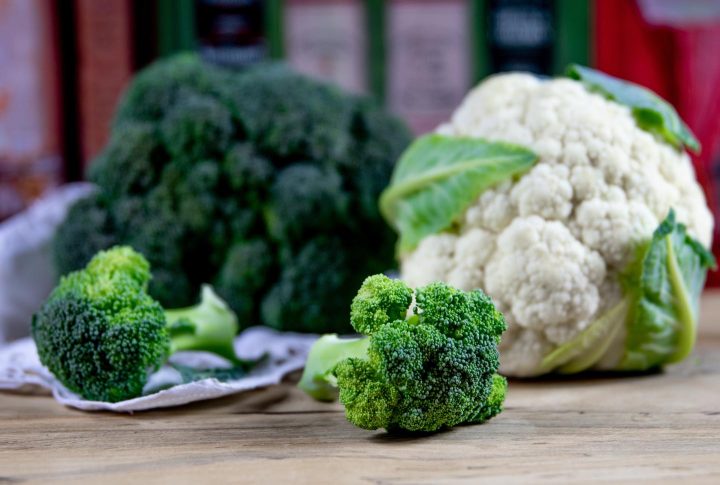
Brassica, which include broccoli, cauliflower and brussels sprouts, are high in glucosinolates (sulfur-containing phytochemicals), which the body can convert into a range of cancer-fighting compounds. For these glucosinolates to be converted into cancer-fighting compounds, an enzyme within these vegetables called myrosinase has to be active.

Research has found that steaming these vegetables preserves both the vitamin C and myrosinase and, therefore, the cancer-fighting compounds you can get from them. Chopping broccoli and letting it sit for a minimum of 40 minutes before cooking also allows this myrosinase to activate.((Vallejo, .F., Tomás-Barberán, .F. & García-Viguera, .C. Glucosinolates and vitamin C content in edible parts of broccoli florets after domestic cooking. Eur Food Res Technol 215, 310–316 (2002). https://doi.org/10.1007/s00217-002-0560-8))

Similarly, sprouts, when cooked produce indole, a compound that may reduce the risk of cancer. Cooking sprouts also causes the glucosinolates to break down into compounds that are known to have cancer-fighting properties.((Cieślik E et. al. Effects of some technological processes on glucosinolate contents in cruciferous vegetables. Food Chemistry, Volume 105, Issue 3, 2007, Pages 976-981, https://doi.org/10.1016/j.foodchem.2007.04.047.))

Broccoli and cauliflower

8. Green beans

Green beans have higher levels of antioxidants when they are baked, microwaved, griddled or even fried as opposed to boiled or pressure cooked.((Jiménez-Monreal A et. al. Influence of Cooking Methods on Antioxidant Activity of Vegetables. https://doi.org/10.1111/j.1750-3841.2009.01091.x))

9. Kale

Kale is healthiest when lightly steamed as it deactivates enzymes that prevent the body from using the iodine it needs for the thyroid, which helps regulate your metabolism.((Curley P. Dietary and Lifestyle Interventions to Support Functional Hypothyroidism. Inquiries Journal 2009, Vol. 1 No. 12))

For all vegetables, higher temperatures, longer cooking times and larger quantities of water cause more nutrients to be lost. Water-soluble vitamins (C and many of the B vitamins) are the most unstable nutrients when it comes to cooking because they leach out of vegetables into the cooking water. So avoid soaking them in water, use the least amount of water when cooking and use other cooking methods, such as steaming or roasting. Also, if you have cooking water left over, use it in soups or gravies as it holds all the leached nutrients.

Healthy Fruits

Stay Always Up to Date

Sign up to our newsletter and stay always informed with news and tips around your health.

Sign Up Now!

This article is republished from The Conversation under a Creative Commons license. Read the original article.

The Conversation

Filed Under: Nutrition Tagged With: raw food diet, vegetables, vitamins

« Previous Page
Next Page »

Primary Sidebar

Social Channels

Coronavirus Immunity Challenge

Boost your immune system to be bullet-proof for the pandemic.

I Want to Participate

Recent Posts

  • 5 Habits to Live Longer
  • Better Sleep Can Protect Against Dementia
  • Finding Peace In Your Crazy-Busy World
  • Flaxseed – An Ancient Plant Rediscovered
  • Platelets – Triggers for Life or Death
  • Boderline Personality Disorder
  • In Praise of Almonds and Nuts
  • Are You Stuck in the Clutter Trap?

Categories

  • Body Systems (16)
    • Cell Function (2)
    • Circulatory System (1)
    • Digestive Tract (10)
    • Immune System (4)
  • Diseases (27)
    • Cancer (2)
    • Cold (1)
    • COVID-19 (11)
    • Dementia (1)
    • Diabetes (1)
    • Digestive Diseases (2)
    • Heart Disease (2)
    • Kidneys (1)
    • Metabolic Syndrome (2)
    • Skin (1)
  • Healthy Lifestyle (42)
    • Exercise (11)
    • Gardening (2)
    • Sleep (7)
    • Sunlight (2)
    • Temperance (14)
    • Water (4)
  • Mental Health (87)
    • Addictions (6)
    • Anxiety (7)
    • Burnout (1)
    • Depression (7)
    • Psychosomatic Diseases (6)
    • Stress Management (45)
    • Trust (6)
  • Nutrition (56)
  • Obesity (9)
  • Phases of Life (14)
    • Adults (3)
    • Babies and Infants (1)
    • Children (3)
    • Seniors (5)
    • Teenagers (3)
  • Therapies (7)
    • Herbs (5)
    • Hydrotherapy (1)
  • Uncategorized (3)

Archives

  • January 2025 (1)
  • March 2024 (5)
  • February 2024 (4)
  • January 2024 (4)
  • December 2023 (5)
  • November 2023 (4)
  • October 2023 (5)
  • September 2023 (4)
  • August 2023 (3)
  • July 2023 (2)
  • June 2023 (4)
  • May 2023 (4)
  • April 2023 (5)
  • March 2023 (4)
  • February 2023 (4)
  • January 2023 (4)
  • December 2022 (4)
  • November 2022 (4)
  • October 2022 (5)
  • September 2022 (4)
  • August 2022 (4)
  • July 2022 (5)
  • June 2022 (4)
  • May 2022 (5)
  • April 2022 (4)
  • March 2022 (4)
  • February 2022 (4)
  • January 2022 (5)
  • December 2021 (3)
  • November 2021 (4)
  • October 2021 (6)
  • September 2021 (4)
  • August 2021 (4)
  • July 2021 (5)
  • June 2021 (4)
  • May 2021 (3)
  • April 2021 (5)
  • March 2021 (4)
  • February 2021 (4)
  • January 2021 (5)
  • December 2020 (3)
  • November 2020 (4)
  • October 2020 (5)
  • September 2020 (5)
  • August 2020 (3)
  • July 2020 (1)
  • June 2020 (1)
  • May 2020 (1)
  • April 2020 (1)
  • March 2020 (1)

Copyright © 2026 · Abundant Health - Privacy Policy - Medical Disclaimer