Abundant Health

Up to date health information tailored for you

  • Home
  • Blog
  • Recipes
  • Shop
  • Contact
You are here: Home / Archives for weight control

weight control

Fiber for Weight Control

December 24, 2023 by Christopher Damman - [rt_reading_time label="Reading Time:" postfix="minutes" postfix_singular="minute"]

Fiber for Weight Control

Fiber might just be the key to healthy weight management – and nature packages the carbs in perfectly balanced ratios when you eat them as whole foods. Think unprocessed fruits, vegetables, whole grains, beans, nuts and seeds. Research suggests that carbohydrates are meant to come packaged in nature-balanced ratios of total carbohydrates to fiber.((Fontanelli, M.M., Micha, R., Sales, C.H. et al. Application of the ≤ 10:1 carbohydrate to fiber ratio to identify healthy grain foods and its association with cardiometabolic risk factors. Eur J Nutr 59, 3269–3279 (2020). https://doi.org/10.1007/s00394-019-02165-4)) In fact, certain types of fiber affect how completely your body absorbs carbohydrates((Corbin, K.D., Carnero, E.A., Dirks, B. et al. Host-diet-gut microbiome interactions influence human energy balance: a randomized clinical trial. Nat Commun 14, 3161 (2023). https://doi.org/10.1038/s41467-023-38778-x)) and tells your cells how to process them once they are absorbed.((H. Douglas Goff, Nikolay Repin, Hrvoje Fabek, Dalia El Khoury, Michael J. Gidley, Dietary fibre for glycaemia control: Towards a mechanistic understanding, Bioactive Carbohydrates and Dietary Fibre, Volume 14, 2018, Pages 39-53, https://doi.org/10.1016/j.bcdf.2017.07.005.))
Fiber for Weight Control

Fiber slows the absorption of sugar in your gut. It also orchestrates the fundamental biology that recent blockbuster weight loss drugs like Wegovy and Ozempic tap into, but in a natural way. Your microbiome transforms fiber into signals that stimulate the gut hormones that are the natural forms of these drugs.((Silva YP, Bernardi A and Frozza RL (2020) The Role of Short-Chain Fatty Acids From Gut Microbiota in Gut-Brain Communication. Front. Endocrinol. 11:25. doi: 10.3389/fendo.2020.00025)) These in turn regulate how rapidly your stomach empties, how tightly your blood sugar levels are controlled and even how hungry you feel.((Deborah Hinnen; Glucagon-Like Peptide 1 Receptor Agonists for Type 2 Diabetes. Diabetes Spectr 1 August 2017; 30 (3): 202–210. https://doi.org/10.2337/ds16-0026))

It’s as if unprocessed carbohydrates naturally come wrapped and packaged with their own instruction manual for your body on how to digest them.

I am a physician scientist and gastroenterologist who has spent over 20 years studying how food affects the gut microbiome and metabolism. The research is clear – fiber is important not just for happy bowel movements, but also for your blood sugar, weight and overall health.

Carbohydrates without their wrappers

Unfortunately, most Americans get the majority of their carbohydrates stripped of their natural fibers. Modern processed grains like white rice and white flour as well as many ultraprocessed foods like some sugary breakfast cereals, packaged snacks and juices have removed these fibers. They essentially come unwrapped and without instructions for the body on how much it should absorb and how it should process them. In fact, only 5% of Americans eat the recommended amount of carbohydrates with enough of their natural packaging intact.((Quagliani D, Felt-Gunderson P. Closing America’s Fiber Intake Gap: Communication Strategies From a Food and Fiber Summit. American Journal of Lifestyle Medicine. 2017;11(1):80-85. doi:10.1177/1559827615588079)) Guidelines recommend at least 25 to 30 grams of fiber a day from food.((McKeown N M, Fahey G C, Slavin J, van der Kamp J. Fibre intake for optimal health: how can healthcare professionals support people to reach dietary recommendations?BMJ 2022; 378 :e054370 doi:10.1136/bmj-2020-054370))
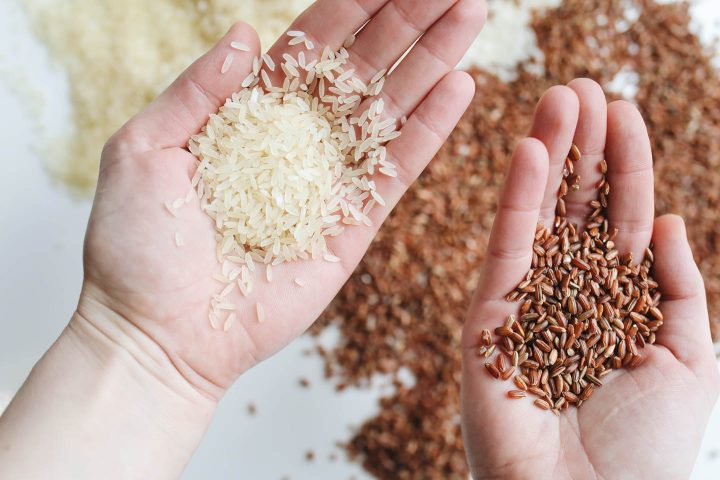
White and brown rice

It may not be surprising that lack of fiber contributes to diabetes and obesity.((Reynolds A et.al. Dietary fibre and whole grains in diabetes management: Systematic review and meta-analyses. https://doi.org/10.1371/journal.pmed.1003053)) What is surprising is that the fiber gap also likely contributes to heart disease,((O’Keefe S. The association between dietary fibre deficiency and high-income lifestyle-associated diseases: Burkitt’s hypothesis revisited. https://doi.org/10.1016/S2468-1253(19)30257-2)) certain types of cancer((Autumn G Hullings, Rashmi Sinha, Linda M Liao, Neal D Freedman, Barry I Graubard, Erikka Loftfield, Whole grain and dietary fiber intake and risk of colorectal cancer in the NIH-AARP Diet and Health Study cohort, The American Journal of Clinical Nutrition, Volume 112, Issue 3, 2020, Pages 603-612,
ISSN 0002-9165, https://doi.org/10.1093/ajcn/nqaa161.)) and maybe even Alzheimer’s disease.((Ticinesi, Andrea et al. ‘Interaction Between Diet and Microbiota in the Pathophysiology of Alzheimer’s Disease: Focus on Polyphenols and Dietary Fibers’. 1 Jan. 2022 : 961 – 982. DOI: 10.3233/JAD-215493))

One popular approach to mitigating some of the ill health effects of low fiber and high refined carbohydrates has been to limit carbohydrate intake.((Review of current evidence and clinical recommendations on the effects of low-carbohydrate and very-low-carbohydrate (including ketogenic) diets for the management of body weight and other cardiometabolic risk factors: A scientific statement from the National Lipid Association Nutrition and Lifestyle Task Force. https://doi.org/10.1016/j.jacl.2019.08.003)) Such approaches include the low-carb, keto, paleo and Atkins diets. Each diet is a variation on a similar theme of limiting carbohydrates to varying amounts in different ways.

There is scientific backing to the benefits of some of these diets. Research shows that limiting carbohydrates induces ketosis,((Crosby L, Davis B, Joshi S, Jardine M, Paul J, Neola M and Barnard ND (2021) Ketogenic Diets and Chronic Disease: Weighing the Benefits Against the Risks. Front. Nutr. 8:702802. doi: 10.3389/fnut.2021.702802)) a biological process that frees energy from fat reserves during starvation and prolonged exercise. Low-carbohydrate diets can also help people lose weight and lead to improvements in blood pressure and inflammation.((Zhu, H., Bi, D., Zhang, Y. et al. Ketogenic diet for human diseases: the underlying mechanisms and potential for clinical implementations. Sig Transduct Target Ther 7, 11 (2022). https://doi.org/10.1038/s41392-021-00831-w))

That said, some keto diets may have negative effects on gut health.((Paoli A, Mancin L, Bianco A, Thomas E, Mota JF, Piccini F. Ketogenic Diet and Microbiota: Friends or Enemies? Genes. 2019; 10(7):534. https://doi.org/10.3390/genes10070534)) It is also unknown how they may affect heart health, some forms of cancer and other conditions in the long term.((Mohammadifard N, Haghighatdoost F, Rahimlou M, Rodrigues APS, Gaskarei MK, Okhovat P, de Oliveira C, Silveira EA, Sarrafzadegan N. The Effect of Ketogenic Diet on Shared Risk Factors of Cardiovascular Disease and Cancer. Nutrients. 2022; 14(17):3499. https://doi.org/10.3390/nu14173499))

Keto diet food items

Even more confusing, research shows that people with diets high in plant-sourced carbohydrates, like the Mediterranean diet, tend to lead the longest and healthiest lives.((Capurso C. Whole-Grain Intake in the Mediterranean Diet and a Low Protein to Carbohydrates Ratio Can Help to Reduce Mortality from Cardiovascular Disease, Slow Down the Progression of Aging, and to Improve Lifespan: A Review. Nutrients. 2021; 13(8):2540. https://doi.org/10.3390/nu13082540)) How can this be reconciled with studies that suggest that low-carbohydrate diets can benefit metabolic health?

Is a carb a carb?

The answer may have to do with the types of carbohydrates that studies are evaluating.((Vanessa Campos et.al. Importance of Carbohydrate Quality: What Does It Mean and How to Measure It?, The Journal of Nutrition, Volume 152, Issue 5, 2022, Pages 1200-1206, https://doi.org/10.1093/jn/nxac039.)) Limiting simple sugars and refined carbohydrates may improve certain aspects of metabolic health, as these are some of the most easily digested and absorbed calories. But a more sustainable and comprehensive way of improving health may be increasing the percentage of unprocessed, more complex and slowly absorbed carbohydrates that come with their natural packages and instructions intact – those that have fiber.((P. NPV, Joye IJ. Dietary Fibre from Whole Grains and Their Benefits on Metabolic Health. Nutrients. 2020; 12(10):3045. https://doi.org/10.3390/nu12103045))

These natural carbohydrates can be found in whole grains, beans, nuts, seeds, fruits and vegetables. They come in ratios of total carbohydrate to fiber that rarely exceed 10-to-1 and are often 5-to-1 or lower.((Liu J, Rehm CD, Shi P, McKeown NM, Mozaffarian D, Micha R (2020) A comparison of different practical indices for assessing carbohydrate quality among carbohydrate-rich processed products in the US. PLoS ONE 15(5): e0231572. https://doi.org/10.1371/journal.pone.0231572)) Eating mostly whole foods is a simple way to ensure you’re consuming quality carbohydrates with the right ratios.
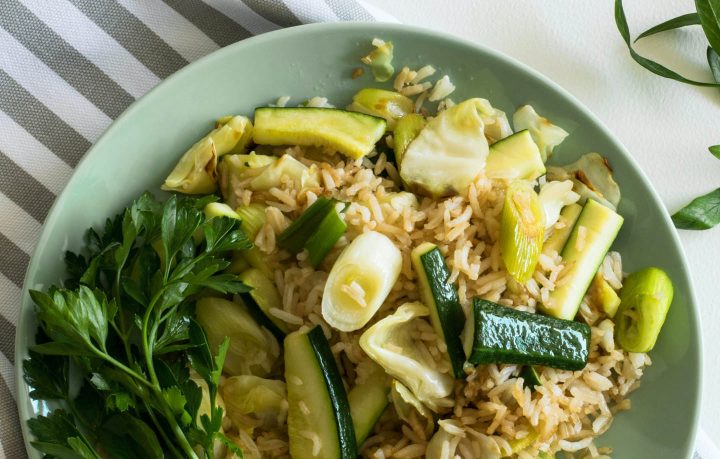
A rice plate with vegetables

But who doesn’t like to have a big bowl of pasta or cake with ice cream on occasion? Focusing on packaged processed foods that maintain carb-to-fiber ratios of at least as low as 10-to-1 or ideally 5-to-1 can help you make the best choices when picking more processed foods at the store. Take a look at the nutrition facts label and simply divide total carbohydrates by dietary fiber.

On occasions when you’re eating out or celebrating someone’s birthday, consider taking a fiber supplement with your meal. One pilot study found that a supplement containing a blend of fibers decreased the blood sugar spike((CHRISTOPHER J. DAMMAN, JUAN PABLO FRIAS, MARTIN L. LEE, LARS RIKSE, WING SHUN LAM, REN-HAU LAI, MARC WASHINGTON; 836-P: A Prebiotic Fiber Blend Improved Postprandial Glucose (PPG) and Time in Range (TIR) as Evaluated by Continuous Glucose Monitoring (CGM) in Healthy Subjects with Normal Glucose Tolerance. Diabetes 1 June 2022; 71 (Supplement_1): 836–P. https://doi.org/10.2337/db22-836-P)) (an increase in glucose levels in the blood that if too high can damage the body over time) after a meal in healthy individuals by roughly 30%.

Listen to your body

While almost all fiber is generally good for health in most people, not all fiber affects the body in the same way. Consuming a range of different types of fiber((O’Grady J, O’Connor EM, Shanahan F. Review article: dietary fibre in the era of microbiome science. Aliment Pharmacol Ther. 2019; 49: 506–515. https://doi.org/10.1111/apt.15129)) generally helps ensure a diverse microbiome, which is linked to gut and overall health.

But certain medical conditions might preclude consuming certain types of fiber. For example, some people can be particularly sensitive to one class of fiber called FODMAPS – fermentable oligosaccharides, disaccharides, monosaccharides and polyols – that are more readily fermented in the upper part of the gut and can contribute to symptoms of irritable bowel syndrome like bloating and diarrhea.((Gibson PR, Halmos EP. The FODMAP diet: more than just a symptomatic therapy? https://doi.org/10.1136/gutjnl-2021-326284)) High-FODMAP foods include many processed foods that contain inulin, garlic powder and onion powder, as well as whole foods including those in the onion family, dairy products, some fruits and vegetables.((Try a FODMAPs diet to manage irritable bowel syndrome. Harvard Health Publishing, March 15, 2022))

Listen to how your body responds to different high-fiber foods. Start low and go slow as you reintroduce foods like beans, seeds, nuts, fruits and vegetables to your diet. If you have trouble increasing your fiber intake, talk with your health care provider.

Tools like this online calculator I’ve created can also help you find the highest-quality foods with healthy fiber and other nutrient ratios. It can also show you what proportions of fiber to add back to sugary foods to help achieve healthy ratios.

I wouldn’t endorse eating sweets all the time, but as my three daughters like to remind me, it’s important to enjoy yourself every once in a while. And when you do, consider putting the carbs back in their fiber wrappers. It’s hard to improve upon nature’s design.
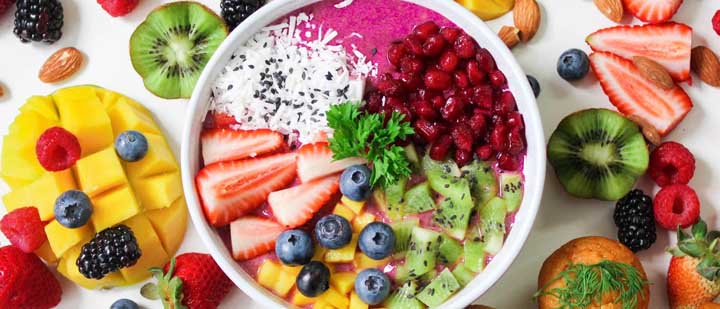
Healthy Fruits

Stay Always Up to Date

Sign up to our newsletter and stay always informed with news and tips around your health.

Sign Up Now!

This article is republished from The Conversation under a Creative Commons license. Read the original article.


The Conversation

Filed Under: Body Systems, Digestive Tract, Nutrition, Obesity Tagged With: Fiber, microbiome, weight control

Healthy Weight Helps

August 20, 2023 by Martin Neumann - [rt_reading_time label="Reading Time:" postfix="minutes" postfix_singular="minute"]

Healthy Weight Helps

Cindy had many challenges in her life. She made a positive choice to quit smoking but then gained 80 pounds. “I felt miserable and had a terrible self-image. I was plagued by headaches and stomach pain. I decided that it was time to change my attitude, my thinking, and my choices to turn my life around. I went from wanting to lose weight to winning my battle of the bulge.”

Healthy Weight Helps

Here’s how:

  1. I saw my need and potential as they really were. Knowing I had a problem was one thing — discovering that God had a purpose for my life gave me hope and helped me address my depression as well as my lifestyle choices.  “For I know the plans I have for you, declares the Lord, plans for welfare and not for evil, to give you a future and a hope” (Jeremiah 29:11 ESV)
  2. I chose to believe I could change. I stopped listening to the negative “failure-based” messages I had rehearsed for years. I stopped making excuses and feeling sorry for myself.
  3. I chose faith in God to activate my decision. My faith gave me the power to push through obstacles and learn new habits. “I will instruct you and teach you in the way you should go; I will counsel you with my eye upon you” (Psalm 32:8 ESV).
  4. I accepted the support I needed to persist in my decision. I joined a walking/jogging club with other positive-minded people. My husband, Brian, was a tremendous support, and he lost 45 pounds himself!  Daily exercise became a priority for me.
  5. I learned to daily accept responsibility. I daily rehearsed new positive choices instead of giving up on mistakes.  
  6. I chose to act on my decision every day. I made two key lifestyle decisions that were key to moving forward to reach my goals. I learned how to choose healthful, high-fiber fruits, vegetables, whole grains, and beans and stopped buying impulse “comfort” foods (See Five Shopping Secrets). I determined to exercise every day, and gradually increase the intensity and frequency, challenging myself to become stronger.
  7. I learned to see tomorrow’s reward in today’s discipline. Cindy lost 80 pounds and has kept it off for years now. Most importantly, her thinking and mindset were healed in the process, not just her body. Every good choice today yields a gift tomorrow. Now that’s something to look forward to!

Five Shopping Secrets for Successful Weight Loss

  1. Plan ahead.  Create a grocery list and stick to it. Go shopping right after a meal so you are satisfied and not hungry. Stay in the area of the store that has healthier choices.
  2. Go veggie! Focus on fresh fruits, salads with lots of leafy greens, crunchy raw veggies, and whole grains. Choose healthy fats like walnuts, avocados, and lemon and olive oil on salads.
  3. Beware of bottles, bags, and bars. Bottles: Soda pop and sweetened drinks are the number one source of added sugar in the American diet. Just one 12 oz. can of soda a day adds 75 cups of sugar to your diet in one year! Bags: A small bag of fried chips can be as much as 420 calories! A baked potato is only 110 calories. A savory ear of corn is just 60 calories!  What a difference in flavor as well as fill-up value! Bars: Candy bars, even so-called “health food bars” are often loaded with calories, low in fiber, and short on appetite satisfaction.
  4. Shift from calorie “dense” to calorie “sense.” When you take away the fiber and nutrition of whole plant foods, you get sugar, fat, and salt. You would have to eat 25 carrots to get the calories in just one 8 oz. chocolate bar! And how quickly does a bar like that disappear, only to leave you hungry and craving more?  When it comes to weight loss, the real question is, “Are you eating ENOUGH to lose weight?” “Are you eating enough fiber foods (at least 30-50 grams per day) that provide true satisfaction?”
  5. Watch for hidden calories. The closer you stick to the produce department, including wholesome beans, unrefined grains such as brown rice, oats, and whole wheat, and fresh vegetables, the less you have to be concerned about calories, fat, sugar, and salt!
A woman shopping at the fruit market

Each good choice makes way for another. Eating delicious, high-fiber foods eliminates the need for eating all day long.  Put a “fence” around mealtime and drink plenty of water between meals. This reduces cravings for snacks and sugary drinks, and improves digestion and energy.

More energy and fewer eating episodes mean more time, energy, and inclination for daily exercise!  And that means more muscle, better metabolism, and deeper, more refreshing sleep — all essential to balanced living, better mood, and successful weight management.

The Living Word

It takes time and perseverance to recover lost ground and form healthy habits. God will give you guidance, power, and the will to stick with it. Cindy won her battle of the bulge and learned to replace the negativity trap of failure-based thinking with positive, can-do thinking. She tapped into God’s power, promises, and plan, and so can you. “He satisfies your mouth with good things, so that your youth is renewed like the eagles” (Psalm 103:5) God knows your needs and understands the challenges you face. We all need His plan and power in life.

Call to Action

Would you like His renewing power in your life? Would you like to tell Him now, “I am ready — let’s do this!”

What is a powerful new habit that you would like to focus on or strengthen this week as your first step? God will give you the power and the will to make this positive choice so that you can reach and maintain your healthful weight — and enjoy better health, better habits, and a better life!

Healthy Fruits

Stay Always Up to Date

Sign up to our newsletter and stay always informed with news and tips around your health.

Sign Up Now!

Filed Under: Healthy Lifestyle, Temperance Tagged With: weight control

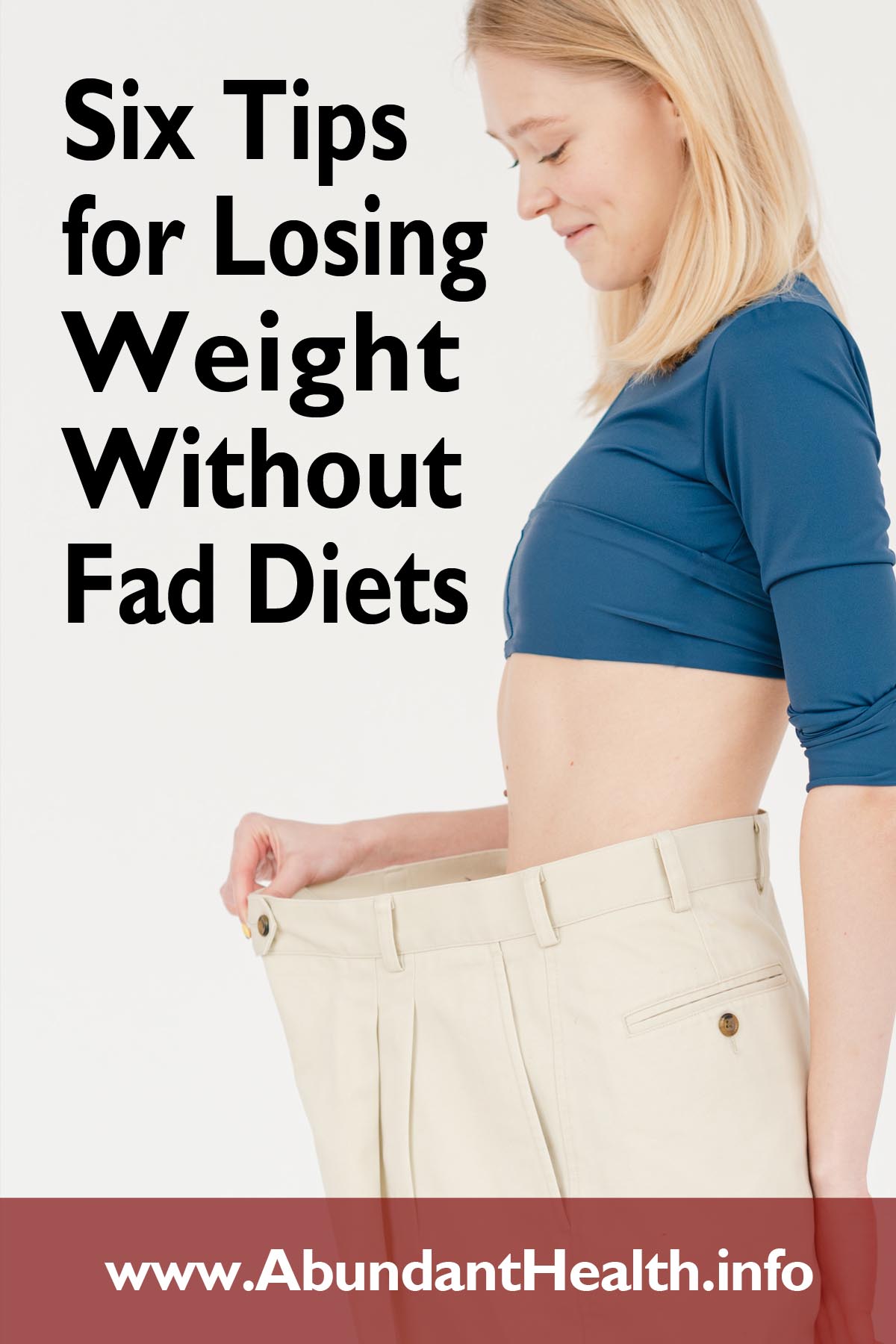
Six Tips for Losing Weight Without Fad Diets

January 8, 2023 by Clare Collins - [rt_reading_time label="Reading Time:" postfix="minutes" postfix_singular="minute"]

weight control

Monday – start diet. Tuesday – break diet! Wednesday – plan to start again next Monday. If this is you, it’s probably time to get off the diet roller coaster and make some bigger changes to the way you eat, drink and think about food.

Six Tips for Losing Weight Without Fad Diets

Here are six tips to help you get started.

1. Improve your diet quality score

When trying to lose weight, it might be tempting to quit carbs or another food group altogether.

But to stay healthy, you need to meet your requirements for important nutrients like iron, zinc, calcium, vitamins B and C, folate and fiber. These nutrients are essential for metabolism, growth, repair and fighting disease.

Our review of diet quality indexes used to rate the healthiness of eating habits found that eating nutritious foods was associated with((Aljadani, H., Patterson, A., Sibbritt, D. et al. Diet Quality and Weight Change in Adults Over Time: A Systematic Review of Cohort Studies. Curr Nutr Rep 4, 88–101 (2015). https://doi.org/10.1007/s13668-014-0115-1)) lower weight gain over time.((Fung TT, Pan A, Hou T, Chiuve SE, Tobias DK, Mozaffarian D, Willett WC, Hu FB. Long-Term Change in Diet Quality Is Associated with Body Weight Change in Men and Women. J Nutr. 2015 Aug;145(8):1850-6. doi: 10.3945/jn.114.208785.))

Improving your diet quality means eating more fruit and vegetables, tofu, nuts and seeds, legumes, dried beans, and whole grains.

2. Mum was right – eat your veggies

Fruit and veg are high in fiber, vitamins and phytonutrients, but low in total calories. So eating more can help you manage your weight.

A study of more than 130,000 adults found that those who increased their intake of fruit and vegetables over four years lost weight. For each extra daily serve of vegetables, there was a weight loss of 110 grams over the four years. It was 240 grams for fruit. Small, but it all adds up.((Bertoia M. et.al. Changes in Intake of Fruits and Vegetables and Weight Change in United States Men and Women Followed for Up to 24 Years: Analysis from Three Prospective Cohort Studies. https://doi.org/10.1371/journal.pmed.1001878))

Farmers Market - Photo by Michigan Municipal League on Pexels, CC2.0 license 
https://www.flickr.com/photos/michigancommunities/15168955986/

Drilling down to specific fruit and veg gets interesting. Increasing cauliflower intake was associated with a four-year weight reduction of about 620 grams, with smaller reductions for capsicum (350g), green leafy vegetables (230g) and carrots (180g). The reduction was 620g for blueberries and 500g for apple or pears.

It was not good news all round, though. Corn was associated with a weight gain of 920g, peas 510g and mashed, baked or boiled potatoes 330g.

3. Limit your portion size

If you are served larger portions of food and drinks, you eat more and consume more calories. That sounds obvious, yet everybody gets caught out when offered big portions – even when you’re determined to stop when you’re full.((Rolls BJ. What is the role of portion control in weight management? Int J Obes (Lond). 2014 Jul;38 Suppl 1(Suppl 1):S1-8. doi: 10.1038/ijo.2014.82.))

Research shows offering larger portions leads adults and children to consume an extra 600 to 950 kilojoules (150-230 calories). This is enough to account for a weight gain of more than seven kilograms a year, if the calories aren’t compensated for by doing more exercise or eating less later.((Hollands GJ, Shemilt I, Marteau TM, Jebb SA, Lewis HB, Wei Y, Higgins JP, Ogilvie D. Portion, package or tableware size for changing selection and consumption of food, alcohol and tobacco. Cochrane Database Syst Rev. 2015 Sep 14;2015(9):CD011045. doi: 10.1002/14651858.CD011045.pub2.))

4. Watch what you drink

A can of soft drink contains about 600 kilojoules (150 calories). It takes 30-45 minutes to walk those calories off, depending on your size and speed. Children and adolescents who usually drink a lot sugary drinks are 55% more likely to be overweight.((Hu FB. Resolved: there is sufficient scientific evidence that decreasing sugar-sweetened beverage consumption will reduce the prevalence of obesity and obesity-related diseases. Obes Rev. 2013 Aug;14(8):606-19. doi: 10.1111/obr.12040.))

Switch to lower sugar versions, water or diet drinks. A meta-analysis of intervention studies (ranging from ten weeks to eight months) found that adults who switched had a weight reduction of about 800 grams.((Morenga L T et.al. Dietary sugars and body weight: systematic review and meta-analyses of randomised controlled trials and cohort studies. https://www.ncbi.nlm.nih.gov/books/NBK116814/))

5. Cue food

Our world constantly cues us to eat and drink. Think food ads, vending machines and chocolate bars when trying to pay for petrol or groceries. Food cues trigger cravings, prompt eating, predict weight gain and are hard to resist.((Boswell RG, Kober H. Food cue reactivity and craving predict eating and weight gain: a meta-analytic review. Obes Rev. 2016 Feb;17(2):159-77. doi: 10.1111/obr.12354.)) They can make you feel hungry even if you are not.((Jansen A, Houben K, Roefs A. A Cognitive Profile of Obesity and Its Translation into New Interventions. Front Psychol. 2015 Nov 27;6:1807. doi: 10.3389/fpsyg.2015.01807.))

A lady snacking on popcorn inside a cinema - Photo by rpb1001 on Flickr https://www.flickr.com/photos/rpb1001/257368762/

Try to minimize the time you spend in highly cued food environments. Avoid food courts, take a list when you go to the supermarket and take your own snacks to places where highly palatable food is advertised, like the movies. This will reduce autopilot eating, which sabotages your willpower.

6. Resist temptation

A treatment for food cue reactivity is called exposure therapy.((Schyns G, Roefs A, Mulkens S, Jansen A. Expectancy violation, reduction of food cue reactivity and less eating in the absence of hunger after one food cue exposure session for overweight and obese women. Behav Res Ther. 2016 Jan;76:57-64. doi: 10.1016/j.brat.2015.11.007.)) With the help of a psychologist or health professional, you expose yourself to the sight and smell of favorite foods in locations that commonly trigger overeating, like eating chocolate when watching TV. But, rather than eat the chocolate, you only have a taste without eating it.((Jansen A, Houben K, Roefs A. A Cognitive Profile of Obesity and Its Translation into New Interventions. Front Psychol. 2015 Nov 27;6:1807. doi: 10.3389/fpsyg.2015.01807.))

Over time, and with persistence, cravings for chocolate reduce, even when cues such as TV ads or people eating chocolate in front of you are present.

You can also draw on your brain’s own self-management skills to resist temptation, but it takes conscious practice. Try this food cue acronym, RROAR (remind, resist, organized alternative, remember and/or reward), to train your brain to resist temptation on autopilot.

When you feel yourself pulled by cues to eat or drink:

  • Remind yourself that you are the boss of you, not a food cue.
  • Resist the tempting food or drink initially by turning your back on the cue. (This gives you time to think about next steps.)
  • Have a pre- Organized Alternative behavior to use against food cues. Grab a drink of water, walk around the block, check your phone messages, read, take a walk in the opposite direction. Diversion works.((van Dillen LF, Andrade J. Derailing the streetcar named desire. Cognitive distractions reduce individual differences in cravings and unhealthy snacking in response to palatable food. Appetite. 2016 Jan 1;96:102-110. doi: 10.1016/j.appet.2015.09.013.))
  • Remember what your big-picture goal is. Do you want to eat better to help you feel better, reduce medications, lower blood pressure, improve diabetes control or manage your weight?

You can add another R for Reward. Financial incentives help change behavior. Each time you complete your organized alternative behavior put $1 in a jar. When it builds up, spend it on something you really want.

You need a plan

The journey off the diet roller coaster needs a cunning plan. Here’s how you can put it all together.

  1. Start by assessing your diet quality using the Healthy Eating Quiz.
  2. Next, plan weekly meals, drinks and snacks. Write a grocery list and buy extra fruit and vegetables.
  3. Swap to small plates, cups and serving utensils. You’ll serve and eat less without thinking.
  4. Aim for half your plate covered with vegetables and salad, one-quarter protein (legumes, if meat, then lean) and one-quarter grains or starchy vegetables (potato, peas, corn).
  5. Change your food environment to avoid constant prompts to eat.
  6. Minimize the places you allow yourself to eat and drink to reduce food cue exposure (not in front of TV or computer, at a desk, or in the car).
  7. Keep food out of sight (unless it is fruit and vegetables). Store in opaque containers.
  8. Remove workplace food displays, such as food fundraisers.
  9. Plan driving and walking routes that do not take you past fast-food outlets or vending machines.
  10. Prerecord TV shows and fast-forward food ads.
Healthy Fruits

Stay Always Up to Date

Sign up to our newsletter and stay always informed with news and tips around your health.

Sign Up Now!

This article was republished from The Conversation under a Creative Commons license. Read the original article.

The Conversation

Filed Under: Obesity Tagged With: Fad Diets, weight control

Why Some People Overeat When They’re Upset

August 14, 2022 by Laura Wilkinson - [rt_reading_time label="Reading Time:" postfix="minutes" postfix_singular="minute"]

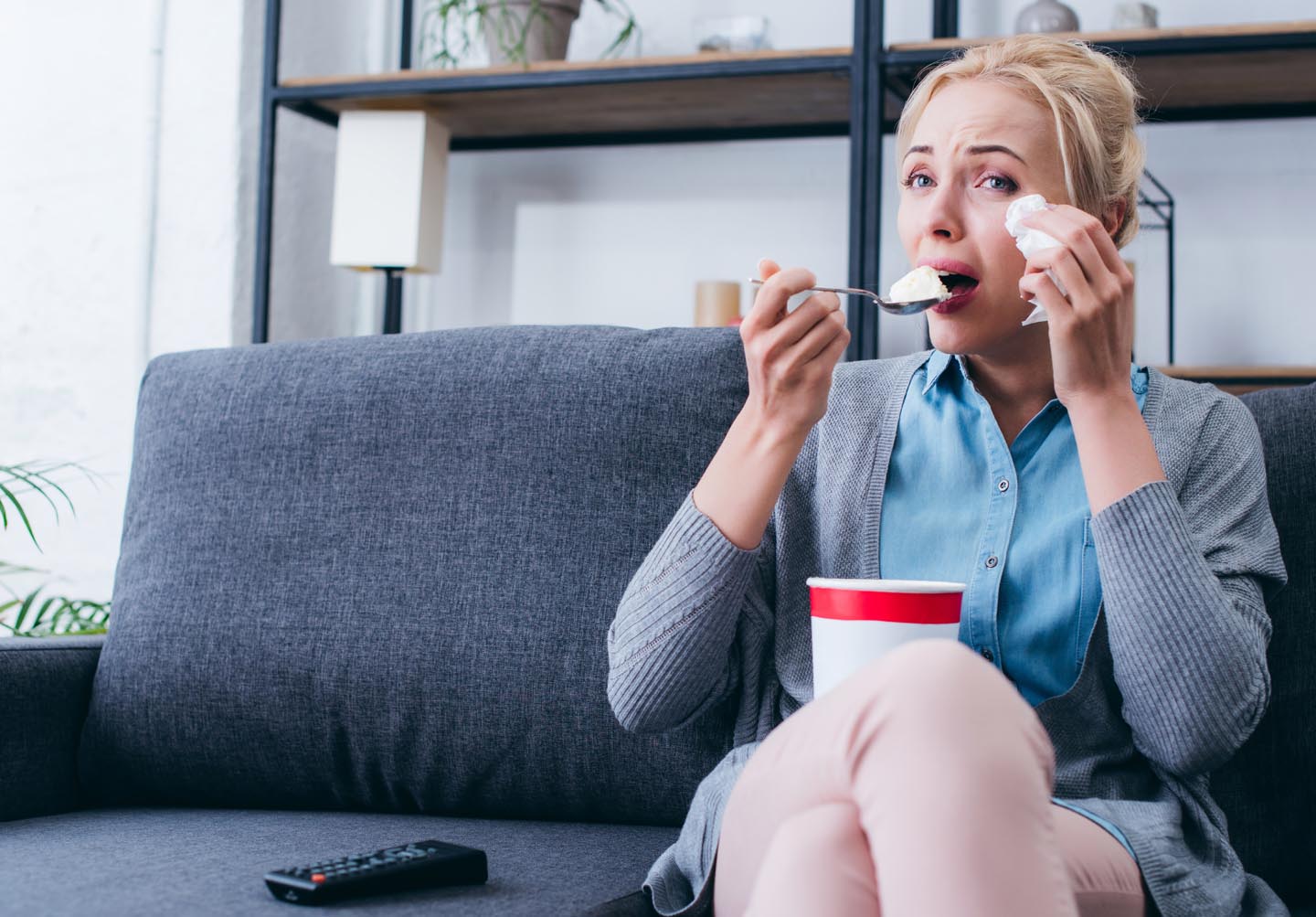
Overeating when upset

The idea of eating a tub of ice cream to cope with being upset has become a bit cliche. Though some might not need a tub of chocolate swirl to help perk themselves up again, there do seem to be systematic differences in the way that people cope with upsetting events, with some more likely to find solace in food than others.((Van Strien T. Causes of Emotional Eating and Matched Treatment of Obesity. Current Diabetes Reports (2018) 18: 35 https://doi.org/10.1007/s11892-018-1000-x))

Why Some People Overeat When They’re Upset

This matters because when eating to cope with negative feelings is part of a broader tendency to overeat, it is likely to be associated with obesity and being overweight.((Bryant E. J. et.al. Disinhibition: its effects on appetite and weight regulation. https://doi.org/10.1111/j.1467-789X.2007.00426.x)) More people than ever are now overweight and obese, with recent estimates suggesting that by 2025, 2.7 billion adults worldwide will be affected by obesity, risking health issues such as cardiovascular disease, type 2 diabetes and cancer.

So why do some people manage their emotions with food while others don’t? One psychological concept that helps to explain this difference is adult attachment orientation.((Lopez, F. G., & Brennan, K. A. (2000). Dynamic processes underlying adult attachment organization: Toward an attachment theoretical perspective on the healthy and effective self. Journal of Counseling Psychology, 47(3), 283–300. https://doi.org/10.1037/0022-0167.47.3.283)) Depending on the extent to which we fear abandonment by those we love, adults fall somewhere on the dimension of “attachment anxiety”. Where we fall on this dimension (high or low) determines a set of expectations about how we and others behave in personal relationships. These are developed as a response to the care we received as an infant and this can characterize your attachment style.

A recent meta-analysis – a study bringing together the results of many other studies – showed that the higher a person’s attachment anxiety, the more they engage in unhealthy eating behaviours, with a knock-on effect on body mass index (BMI).((Faber A. et.al. Attachment and eating: A meta-analytic review of the relevance of attachment for unhealthy and healthy eating behaviors in the general population,
Appetite, Volume 123, 2018, Pages 410-438, https://doi.org/10.1016/j.appet.2017.10.043.
Wilkinson, L., Rowe, A., Bishop, R. et al. Attachment anxiety, disinhibited eating, and body mass index in adulthood. Int J Obes 34, 1442–1445 (2010). https://doi.org/10.1038/ijo.2010.72)) Two other studies have also shown that patients undergoing weight loss surgery are likely to have higher attachment anxiety scores than a comparable lean population, and it is thought that this difference is partly explained by the tendency to overeat.((Nancarrow, A., Hollywood, A., Ogden, J. et al. The Role of Attachment in Body Weight and Weight Loss in Bariatric Patients. OBES SURG 28, 410–414 (2018). https://doi.org/10.1007/s11695-017-2796-1
Wilkinson, L., Rowe, A., Sheldon, C. et al. Disinhibited eating mediates differences in attachment insecurity between bariatric surgery candidates/recipients and lean controls. Int J Obes 41, 1831–1834 (2017). https://doi.org/10.1038/ijo.2017.157))

A woman overeating on junk food

Understanding attachment anxiety

For a long time, we have known that people who are have high attachment anxiety are more likely to both notice upsetting things and find it harder to manage their emotions when upset.((Mikulincer, M. (1998). Adult attachment style and affect regulation: Strategic variations in self-appraisals. Journal of Personality and Social Psychology, 75(2), 420–435. https://doi.org/10.1037/0022-3514.75.2.420)) This is because of how attachment orientations come about in the first place. The dynamics and feelings relating to our most important long-term relationships, including in early life, act as a templates that guide our behavior in subsequent relationships and in stressful situations.

If we receive consistent care from a caregiver, which includes helping us to cope with problems in life, we develop a secure attachment orientation. For people high in security, when a negative life event occurs, they are able to seek support from others or soothe themselves by thinking about the sorts of things that their caregiver or other significant person would say to them in that situation.

A mother with her baby

However, inconsistent care – where the caregiver sometimes responds to another’s needs but at other times does not – leads to attachment anxiety and a fear that our needs won’t be met. When negative life events occur, support from others is sought but perceived as unreliable. People with high attachment anxiety are also less able to self-soothe than people with a secure attachment.

We recently tested whether this poor emotional management could explain why people with attachment anxiety are more likely to overeat. Importantly, we found that for people high in attachment anxiety it was harder to disengage from whatever was upsetting them and to get on with what they were supposed to be doing. These negative emotions were managed with food and this related to a higher BMI.((Laura L. Wilkinson, Angela C. Rowe, Eric Robinson, Charlotte A. Hardman, Explaining the relationship between attachment anxiety, eating behaviour and BMI, Appetite, Volume 127, 2018, Pages 214-222, https://doi.org/10.1016/j.appet.2018.04.029))

It is important to note, however, that this is only one factor among many that can influence overeating and BMI. We cannot say that attachment anxiety causes overeating and weight gain. It might be that overeating and weight gain influences our attachment orientation, or it could be a bit of both.

Managing eating behavior

There are two approaches that appear promising for attachment anxious individuals seeking to manage their eating behavior. These involve targeting the specific attachment orientation itself and/or improving emotion regulation skills in general.

A woman with a positive attitude

To target attachment orientation, one possibility is a psychological technique called “security priming” designed to make people behave like “secures”, who cope well with negative life events.((Omri Gillath, Gery Karantzas, Attachment security priming: a systematic review, Current Opinion in Psychology, Volume 25, 2019,Pages 86-95, https://doi.org/10.1016/j.copsyc.2018.03.001)) It results in beneficial effects more generally, such as engaging in more pro-social behaviors. One study showed that priming is related to snack intake. When people are asked to reflect on secure relationships in their life they eat less in a later snacking episode than when asked to reflect on anxious relationships in their life (though this work is very preliminary and needs replicating and extending).((Wilkinson L. et.al. Eating me up inside: Priming attachment security and anxiety, and their effects on snacking. https://doi.org/10.1177/0265407512468371))

Looking at emotion regulation, a recently published paper highlighted the importance of emotional eaters focusing on skills such as coping with stress rather than calorie restriction, when seeking to lose weight. This study did not look solely at those with attachment anxiety, however, so further work is needed explore this further.((Van Strien T. Causes of Emotional Eating and Matched Treatment of Obesity. Current Diabetes Reports (2018) 18: 35 https://doi.org/10.1007/s11892-018-1000-x))

Of course, in an ideal world everybody would have relationship experiences that helped them to develop high attachment security, and perhaps this is a hidden third approach – facilitating better care-giving and interpersonal relationships for all.

Healthy Fruits

Stay Always Up to Date

Sign up to our newsletter and stay always informed with news and tips around your health.

Sign Up Now!

This article is republished from The Conversation under a Creative Commons license. Read the original article.
The Conversation

Filed Under: Mental Health, Obesity Tagged With: attachment anxiety, eating behavior, overeating, weight control

Primary Sidebar

Social Channels

Coronavirus Immunity Challenge

Boost your immune system to be bullet-proof for the pandemic.

I Want to Participate

Recent Posts

  • 5 Habits to Live Longer
  • Better Sleep Can Protect Against Dementia
  • Finding Peace In Your Crazy-Busy World
  • Flaxseed – An Ancient Plant Rediscovered
  • Platelets – Triggers for Life or Death
  • Boderline Personality Disorder
  • In Praise of Almonds and Nuts
  • Are You Stuck in the Clutter Trap?

Categories

  • Body Systems (16)
    • Cell Function (2)
    • Circulatory System (1)
    • Digestive Tract (10)
    • Immune System (4)
  • Diseases (27)
    • Cancer (2)
    • Cold (1)
    • COVID-19 (11)
    • Dementia (1)
    • Diabetes (1)
    • Digestive Diseases (2)
    • Heart Disease (2)
    • Kidneys (1)
    • Metabolic Syndrome (2)
    • Skin (1)
  • Healthy Lifestyle (42)
    • Exercise (11)
    • Gardening (2)
    • Sleep (7)
    • Sunlight (2)
    • Temperance (14)
    • Water (4)
  • Mental Health (87)
    • Addictions (6)
    • Anxiety (7)
    • Burnout (1)
    • Depression (7)
    • Psychosomatic Diseases (6)
    • Stress Management (45)
    • Trust (6)
  • Nutrition (56)
  • Obesity (9)
  • Phases of Life (14)
    • Adults (3)
    • Babies and Infants (1)
    • Children (3)
    • Seniors (5)
    • Teenagers (3)
  • Therapies (7)
    • Herbs (5)
    • Hydrotherapy (1)
  • Uncategorized (3)

Archives

  • January 2025 (1)
  • March 2024 (5)
  • February 2024 (4)
  • January 2024 (4)
  • December 2023 (5)
  • November 2023 (4)
  • October 2023 (5)
  • September 2023 (4)
  • August 2023 (3)
  • July 2023 (2)
  • June 2023 (4)
  • May 2023 (4)
  • April 2023 (5)
  • March 2023 (4)
  • February 2023 (4)
  • January 2023 (4)
  • December 2022 (4)
  • November 2022 (4)
  • October 2022 (5)
  • September 2022 (4)
  • August 2022 (4)
  • July 2022 (5)
  • June 2022 (4)
  • May 2022 (5)
  • April 2022 (4)
  • March 2022 (4)
  • February 2022 (4)
  • January 2022 (5)
  • December 2021 (3)
  • November 2021 (4)
  • October 2021 (6)
  • September 2021 (4)
  • August 2021 (4)
  • July 2021 (5)
  • June 2021 (4)
  • May 2021 (3)
  • April 2021 (5)
  • March 2021 (4)
  • February 2021 (4)
  • January 2021 (5)
  • December 2020 (3)
  • November 2020 (4)
  • October 2020 (5)
  • September 2020 (5)
  • August 2020 (3)
  • July 2020 (1)
  • June 2020 (1)
  • May 2020 (1)
  • April 2020 (1)
  • March 2020 (1)

Copyright © 2026 · Abundant Health - Privacy Policy - Medical Disclaimer