Abundant Health

Up to date health information tailored for you

  • Home
  • Blog
  • Recipes
  • Shop
  • Contact
You are here: Home / Archives for Mental Health

Mental Health

10 Tricks to Deal with High Stress Days

August 27, 2023 by Martin Neumann - [rt_reading_time label="Reading Time:" postfix="minutes" postfix_singular="minute"]

10 Tricks to Deal with High Stress Days

We all have days that are considerably more challenging and stressful than others. Unfortunately, stress is hard on both the mind and body.

10 Tricks to Deal with High Stress Days

If stress passes pretty quickly, we normally recuperate fine. When the high stress days are lining up, then they really start to take its toll. And what’s worse, you could even become so used to being in this “high state of alert” that you start to feel like it’s normal! Don’t let this happen to you.

Maybe you are at this point that you know you need to take some action to control your stress. Although you certainly need some tools to figure out the root cause of your stress and deal with it, sometimes it is good to have some techniques that can help you relax and strengthen your self-soothing abilities.

When you’re struggling to stay calm, relaxed, and focused, try some of these strategies:

  1. Breathe deeply. Breathe in for 5 seconds and hold it for 5 seconds. While inhaling your belly should go out, which is called abdominal breathing and involves your maximum lung capacity. Now exhale for 5 seconds. Do this 10 times and focus only on your breathing, forgetting your problems around you. Oxygenating your brain can do wonders to get your emotions under control. Just don´t try so hard that you will tense up.
  2. Take a walk. Practice your deep breathing during your walk, focusing on your breathing, walking, and surroundings. Look what you can observe in nature around you so that you can take off your thoughts from your problems more easily.
  3. Get some good exercise. Any time of day is a good time to exercise. Comfortably tired is what you’re looking for. Work out your frustrations by going for a run or swim. Hit the weights and show them who is boss. Any exercise will do as long as there is some intensity involved. Shuffleboard isn’t going to cut it.
  4. Sit outside. A little time at the beach or park can work wonders. Find a relaxing spot with pleasant scenery. Pay attention to what’s going on around you, enjoy some warm rays of the sun and keep your mind off your challenges. Even 10 to 15 minutes can greatly reduce your stress.
  5. Take a day off. Everyone needs a break once in a while. Actually, in order to be productive, you need a weekly day of rest. However, on your day off, it’s important to avoid just sitting around and brooding about all of your current difficulties. Take your mind off of your world to something that lifts you up. Do some activities that you enjoy. Visit a friend. Volunteer at a homeless shelter. Helping others in their problems could make you realize that your problems are not that big after all.
  6. Read. Find something engrossing to read. The ideal book would be able to take your mind off of your world for a few hours. Ask your friends for some recommendations, or if you’re like most people, you probably have a couple of books on the shelf that you’ve never gotten around to. Now is the perfect time to read it.
  7. Listen to music. In order to go to sleep at night, you probably want some really relaxing music. At other moments of the day, it can be a bit more involving. Classical music is excellent in order to involve your mind, but other styles can do if you prefer. Avoid though aggressive beats, since they are able to increase your stress levels.
  8. Disconnect. No phone and no computer. Turn off everything that connects you to the outside world. Then you can really relax. Enjoy your day without distractions and find some other activities that are fulfilling to you.
  9. Take a nap. There’s no better way to start over than to take a nap. When you wake up, it feels like another chance to start your day over. What happened before your nap is in the past! Now you are energized to deal with your problems and move on.
  10. Get out with people that are fun. Get your buddies together and go for a walk. Or have dinner with a friend that has a happy upbeat. It’s easy to get caught up in our own little world. Being with others can jolt you out of that perspective, and having a healthy social network is key to good stress control.

A couple relaxing at sunset

Don’t let high stress get you down. The key is to actively do something about it. Some people develop a habit of being paralyzed when things start going sideways, but this does nothing to make you feel better or solve your stressful issues.

Actively relax so you’ll be better able to tackle your challenges. Use these tips to minimize the pressure and anxiety you’re feeling and take control of yourself and the situation. Dealing with your challenges effectively is crucial to living the peaceful and fulfilling life you deserve.

Do you need a guide to help you understand how to cope with Stress in an all inclusive approach? Learn how to combat stress, mentally, physically, emotionally and strategically in your life.


Get Me the Guide

Filed Under: Mental Health, Stress Management

How to Deal with Personality Disorders in 6 Steps

August 13, 2023 by Dr. Cesar Vasconcellos de Souza - [rt_reading_time label="Reading Time:" postfix="minutes" postfix_singular="minute"]

Do you know people who have difficulties relating to each other in a healthy way? It is possible that this is a disorder, but it is possible to change, if the person desires. In order to change, he needs to stop denying that he has a personality problem. Stopping denial is the first big step towards change. To stop denying is to admit the existence of the problem, and this, in turn, is basic to find a solution.

How to Deal with Personality Disorders in 6 Steps

Many people present what we scientifically call a personality disorder, such as schizoaffective, schizotypal and others. They have an unhealthy ego above the limitations we all have in the way we are. For some authors, these people are individuals with an abnormal personality, without apparently showing brain injury. It is a way of being with a strong tendency to remain that way throughout life, and which compromises the performance of the person in their general relationships.

The personality disorder appears early in the person’s development, becoming deeply entrenched in him, making him develop strong personality traits. Those who suffer from this, present the exaggeration in some character traits that we all possess, only in a smaller dose. You may be prone to dramatization, jealousy, anxiety, melancholy, perfectionism. But it doesn’t have to dominate your life or your relationships.

In the individual with personality disorder, he is rigidly possessed by one of these characteristics, disturbing his relationship with himself and with other people, producing suffering for a long time, and perhaps for a lifetime if he does not seek help and if he does not strive to do something to improve his way of being.

If someone with a personality disorder makes an effort to analyze their unhealthy tendency to think, feel, and relate, it will make it possible to loosen the rigidity of their altered personality traits. This will reduce the suffering for the person and for those who live with him. You will learn to control your aggressive and explosive impulses, you will be able to discipline your distorted thoughts, you will be able to perceive your unhealthy beliefs about life situations and relationships, you will be able to reduce unhealthy jealousy that generates fights, you will be able to be more merciful with yourself and with others regarding expenses, among other changes.

A person reflecting on his attitudes

The World Health Organization (WHO) defines personality disorders this way: “These types of condition encompass permanent and deeply ingrained behavior patterns in the being, which manifest themselves as inflexible responses to a series of personal and social situations. They represent extreme or significant deviations from the way an average individual in a given culture perceives, thinks, feels, and particularly relates to others.”

Some steps for a person diagnosed with personality disorder to improve their mental health:

  1. Admit you have a problem.
  2. Decide to seek and accept help for a positive change.
  3. Understand and realize that there are distorted ways of thinking in your mind, based on erroneous beliefs developed in life; there is alteration of normal affective expression.
  4. Accept the mistakes in the current diet and correct them, because it helps to decrease anxiety and aggressiveness, emotional outburst, hostility, possible emotional coldness, which impair pleasant contact with people.
  5. Turn to spiritual help, such as meditation on biblical texts, prayer, socializing with friends who are spiritual people, committed to their religion and not extremists.
  6. Continue with specialized professional care.

We don’t need to get stuck in behaviors and habits acquired for many years. It is possible to change. Take a step in the right direction today!

Healthy Fruits

Stay Always Up to Date

Sign up to our newsletter and stay always informed with news and tips around your health.

Sign Up Now!

Filed Under: Mental Health Tagged With: Personality Disorders

Why Perfectionism is Causing You Stress

July 2, 2023 by Martin Neumann - [rt_reading_time label="Reading Time:" postfix="minutes" postfix_singular="minute"]

Why Perfectionism is Causing You Stress

Perfectionism is quite a common character trait, that affects about 30% of the general population and increases to almost 80% among the gifted population. Besides being pretty common, perfectionism is also on the rise. It can significantly interfere with your daily life and your stress response, so it is important to identify perfectionistic character traits and find some way to deal with them.

Why Perfectionism is Causing You Stress

A perfectionist has often some common traits with a high achiever. Both are people who are often pushing themselves to their limits and strive for excellence. They are very much goal oriented. But while the high achiever is celebrating his achievements, the perfectionist is only focusing on his failures, and that he missed hitting the mark he was supposed to achieve. While the high achiever strives to be the best he can be, the perfectionist just wants to avoid looking stupid because he has made a mistake. He is driven to give more than he can because he doesn’t feel to be good enough. Achieving more, looking perfect, and pleasing everyone becomes a way to define his self-worth.

Perfectionism is an effort to get a sense of self-worth through achievements. The problem is, that a perfectionist is never reaching the point of feeling that his accomplishments are sufficient or adequate, so he constantly feels bad about himself.  Perfectionism is normally linked to limited self-esteem.

The cause of perfectionism is often found in childhood and could be caused by the following parenting styles:

  • Having overly demanding parents, that expected their kids to be close to perfect, sometimes responding to any kind of shortcomings with some form of punishment. The child internalizes that it is only loveable if it is pleasing the parents and doing everything just right.
  • Having perfectionist, goal-oriented parents, that children tend to model. Sometimes parents are praising their kids excessively for achievements instead of commending them for their effort.
  • Having parents that were not emotionally available for their children, and the child trying to get the attention of parents with outstanding accomplishments or thinking to get appreciation by being perfect.
  • Having dysfunctional parents that may not know how to treat their kids appropriately. The child may not understand the reason for his parents to be alcoholic or depressed or with some other mental problems and often sees himself as the cause of the problem. In an effort to help their parents to improve, the child may try to behave and perform perfectly, thinking this will resolve their parent’s problem.
  • Growing up in a chaotical home, some children try to create an environment of control and predictability that is lacking in their home, by indulging in some perfectionistic rituals.

Perfectionists tend to hyper-focus on even the tiniest flaws. If you focus on the things you’re unable to do perfectly, you may end up doing nothing at all, out of fear of failure. When a minor setback feels like a major personal failure, that’s when perfectionism becomes a burden.

A woman being distressed about a mistake she has made

Perfectionists believe they’re committed to excellence, but they’re actually avoiding feelings of inadequacy. They define their worth according to their performance but are never satisfied with the result. Perfectionists aren’t trying to achieve something great. They’re trying to avoid failure. If you’re a perfectionist, ask yourself why. What do you gain? What does it cost you? Do you take pleasure in being perfect? How do you feel when you’re less than perfect?

Being a perfectionist has several disadvantages:

  1. You waste a lot of time. Some things don’t require a high level of attention. To spend more time than necessary is a waste of an important resource: your time. If success is important to you, allocating your time wisely is an important consideration.
  2. It creates a lot of stress. When you see only one way to be successful at something, there’s no room for error. Perfectionists aren’t happy people. There’s a constant anxiety that can’t be completely satisfied.
  3. You lose sight of the big picture. Bogging yourself down with trivial details can limit your awareness of the bigger objective.
  4. You can’t relax until you feel that everything is done and done perfectly.
  5. You’re never happy with your results. You might be satisfied, but you’re never happy.
A man typing on a typewriter and repeating the copy many times because of perfectionism

7 Signs That You’re a Perfectionist

There are some warning signs that could show that you have tendencies to perfectionism. If several of those apply to you, then you should work on your mindset and remove the root of perfectionism.

  1. You take things too far. No matter what you do, you take it to the limit. Everything has to be done as well as possible, whether it’s folding the laundry, parking the car, or doing something more meaningful.
  2. You long for your high school days. High school is perfect for perfectionists. The competition isn’t too great on average, and your achievements are witnessed by all. Your work is also clearly judged quantitatively. You know exactly where you stand.
  3. You’re judgmental of others. Your standards of acceptability are so high that no one can consistently achieve them. If you find yourself with fewer friends than you’d like, your commitment to be perfect might be the primary cause.
  4. You’re too hard on yourself. By the same token, you can’t live up to your expectations either. This leads to feelings of disappointment and shame. Are you more successful than most of the people you know, but less pleased with yourself than they are with themselves? Do you find it hard to be proud of yourself? Do you feel happy and proud when you’re successful, or do you merely feel a sense of relief?
  5. You have a hard time accepting help, because you think you can do everything by yourself. And if you delegate something, you feel the other person does not do it right, so you prefer to do it for yourself.
  6. You overthink any decision you need to make, to be sure you do the right thing.  You spend hours researching your options, decide on the best, and still regret it afterward if you find out there would have been a better option.
  7. You procrastinate excessively. The need to be perfect creates anxiety and makes it hard to get started. You know you’re in for a lot of work and self-induced drama. Under those circumstances, anyone would be hesitant to get started!

I guess you can see how a perfectionist is getting stressed out about any kind of mistake, because he is defining his self-worth by his achievements, and any mistake is considered to be fatal. If you are dealing with that problem, you need to find strategies to overcome your perfectionistic traits and define your self-worth in a healthier way.

A confident man having a healthy self-esteem

If you are a Christian, be sure to define your self-worth by the worth that your Creator has put on you. Be sure to internalize, that you have a loving Heavenly Father that takes care of you, no matter whether you have achieved to live up to your perfectionistic expectations or not. Take some Bible Promises to redefine your self-worth, like for example:

I have loved you with an everlasting love; I have drawn you with unfailing kindness.

Jeremiah 31:3

As you develop a new foundation for your self-worth, you can start to get more relaxed about your mistakes and enjoy the process of becoming the best version of yourself. Because you deserve it to put the self-constructed stress aside and live a more fulfilling life!

Do you need a guide to help you understand how to cope with Stress in an all inclusive approach? Learn how to combat stress, mentally, physically, emotionally and strategically in your life.

Get Me the Guide

Filed Under: Mental Health, Stress Management Tagged With: perfectionism

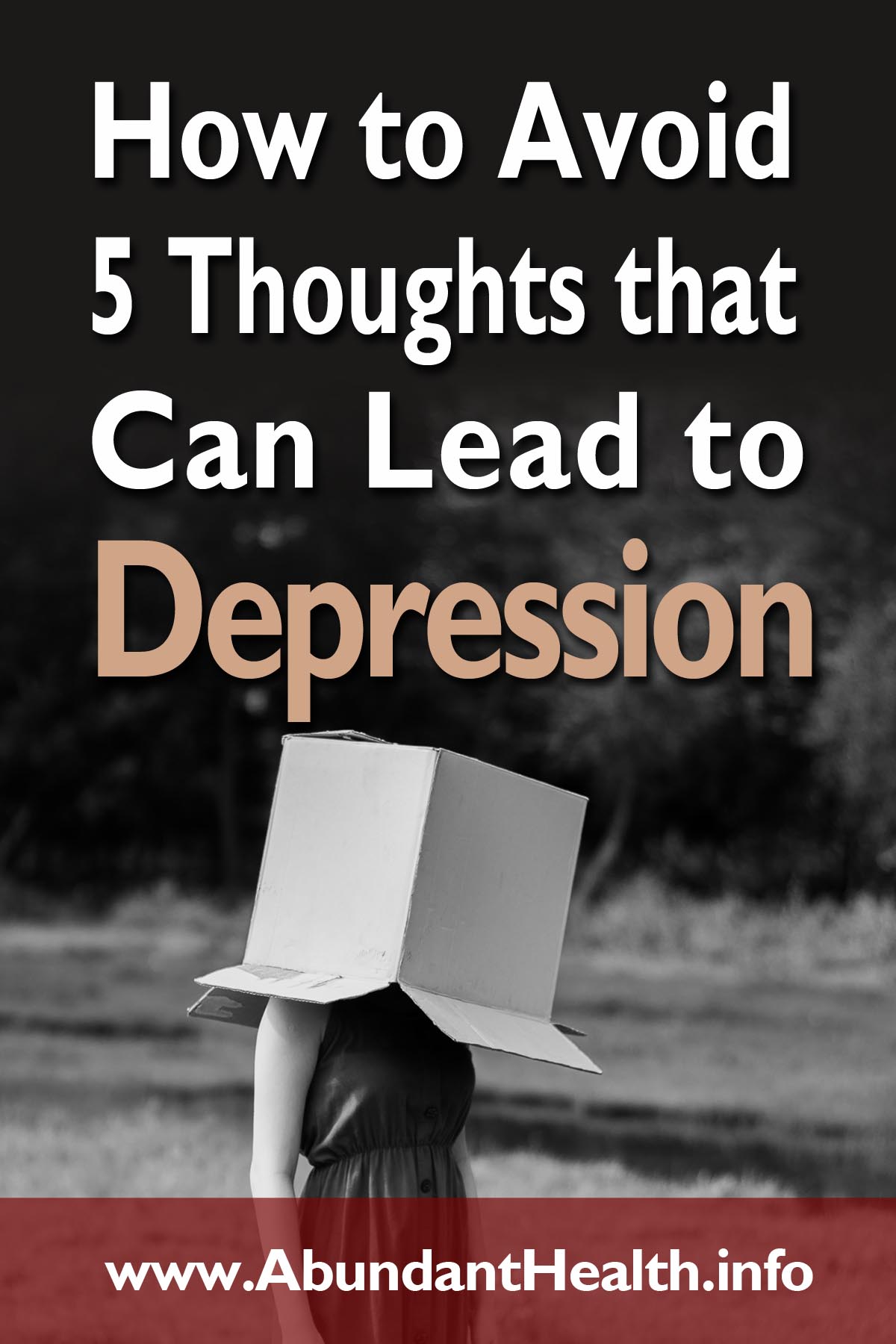
How to Avoid 5 Thoughts That Can Lead to Depression

June 18, 2023 by Dr. Cesar Vasconcellos de Souza - [rt_reading_time label="Reading Time:" postfix="minutes" postfix_singular="minute"]

How to Avoid 5 Thoughts That Can Lead to Depression

Depression is a very common mental illness in today’s reality. An estimated 21 million adults in the U.S. had at least one episode of depression in their lives. That represents 8.4% of all U.S. adults. Among women, that number was rising to 10.5%, and the age range of 18-25 years had a 17% prevalence of depression. We need to know how to deal with this disease more appropriately.

How to Avoid 5 Thoughts That Can Lead to Depression

A person experiencing sadness and decreased interest or loss of pleasure in day-to-day activities, which has been going on for at least two weeks straight, also having changes in appetite, sleep disturbances, lack of energy, difficulty making decisions, suicidal thoughts and feelings of guilt, indicates the presence of depression. The most important mental factor for someone depressed being at risk for suicide is hopelessness. That is, the person sees no way out of their suffering, so they start thinking about killing themselves to end the pain.

Before thinking that someone is depressed, if there are physical diseases, such as thyroid problems, chronic infections, tumors, and encephalitis, among others, it is necessary to treat them, because these diseases can produce depressive symptoms. In addition, it is common for people to have comorbidities, where they present more than one disease at the same time.

For example, it seems that about 50% of people diagnosed with depression also suffer from excessive anxiety. Some may have exaggerated anxiety, depression, and alcoholism, for example. A person may begin to become depressed because of already being a socially withdrawn person for years, as well as depression contributes to the individual withdrawing himself from social life.

Other people experiencing pressure at work, going into burnout syndrome, or suffering moral abuse in the company, can also become depressed. When a person has gone through a depression and the depressive state has produced important losses in his life, he may have been left with a negative signal in his mind, and when some triggering factor happens years later, he may go back into depression.

For example, if a person became depressed because he suffered from moral abuse in the company and when he could no longer bear this suffering at work, he ended up quitting, even though it was causing economic turmoil, it is a situation that could trigger a depression. By coming out of the situation that was causing the suffering and receiving effective treatment, he became well. But if after some time he has the feeling that some kind of abuse against him may occur again, the depressive state may begin to return. Therefore, it is important to be aware of the triggering factors that can trigger painful thoughts and feelings in the person’s mind.

A man being bullied at work

There are different types of depressive states, such as clinical depression, in contrast to dysthymia, which is a type of chronic depression, only milder. There is also bipolar affective disorder, in which the person, in addition to euphoric episodes, suffers from depressive periods. Another type of depression is seasonal, which occurs more in regions of long winter, with a long time without sunlight. Still another is postpartum depression which happens shortly after the baby is born. Some suffer from psychotic depression, which includes delusions, hallucinations, and important changes in the perception of reality.

One of the psychological factors that favors the onset of depression is the tendency to cultivate thoughts of complaint, pessimism, defeat, personal contempt, and hopelessness. Some are hard on themselves, blame themselves too much for failures that have occurred in life, and also attack themselves when they perceive flaws or mistakes in their behavior. In these cases, these individuals need to cultivate self-compassion instead of self-deprecation and learn to forgive themselves instead of blaming themselves all the time.

One factor that produces depression is the very sociable person, but who places too much emphasis on their self-worth in relationships. Thus, when problems arise, such as a financial loss or a divorce, he may fall into depression precisely because he had based his self-worth on something outside himself, on another person, or on some external acquisition. In these cases, the individual can be helped not to fall into depression, correcting this attitude in life of centering their self-respect and self-worth on objects, acquisitions, and external relationships.

It is well known that traumatic experiences throughout childhood greatly increase the risk of depression later in life. This includes the child being a victim of abuse, having suffered illnesses that required hospitalization, divorce from the parents, and death of one of the parents, especially the one with whom the child had more attachment, all happening until the third year of life. In addition, children of depressed mothers have a higher risk of depression in adulthood.

A young girl with marks of abuse

In therapy, it is common for a person to say that he started to have depression since, for example, he discovered that his son was using illicit drugs. But the truth is that this fact may be one of many problems that the person has been experiencing over the years and would then be the triggering factor of depression, but not the only cause of it. It may have been the last straw for him to become depressed.

He may have suffered from the death of loved ones in recent years before the depression hit, he may have been fired, he may live in a place of violence, he may have marital difficulties and all this may have accumulated and ended up bursting into depression.

Factors that can prevent going into depression are having good social support, having friends and relatives who give a helping hand, a healthy lifestyle with regular exercise, a healthy diet, the elimination of toxic substances from the brain, adequate water intake, sun exposure, the practice of faith and a purpose for life.

For the treatment of depression, it is important to understand that lifestyle change needs to be made, rather than just using medications. This includes personal work on the thought patterns the person nurtures most, battling tragic, dysfunctional and hopeless thoughts, and cultivating a mindset of gratitude, hope and meaning in life.

Some want to know which antidepressant works best. There is not one remedy that works best for everyone who suffers from depression. The same drugs produce different results for different people. Many depressed may improve with any antidepressant, while others do not improve long-term with any of them.

Some studies show that depressed people who have undergone psychotherapy with cognitive behavioral therapy may be less likely to have depression again than those who have only used antidepressants without psychotherapy. A challenge for us psychiatrists when treating a patient with depression who has, for example, a lot of insomnia and anxiety, is that by prescribing a tranquilizer, as it is a central nervous system depressant, the depressed person may sleep better and have their anxiety decreased, but may become more lethargic or sluggish.

Finally, if a person with depression says that they prefer psychotherapeutic treatment without medication, it is important to respect this and see how they will evolve when undergoing psychotherapy only.

A psycotherapy session

If you have always cultivated thoughts and negative beliefs about yourself, about your life, about trusting others, predominating in your mind the lack of hope and solutions, you are more likely to have a depressive state than the individual who is optimistic, who cultivates healthy thoughts, trust and hope.

Individuals who are emotionally dependent find themselves inadequate in almost everything, and so they feel they need to have someone to cling to in order to live. These people have a higher risk of developing depression. And when the person to whom you attach yourself in an exaggerated way, fails, leaves, cheats, or dies, this can be enough to trigger depression.

With this, we learn that, from an early age, the child needs to be taught to have some independence, rather than being raised too attached to the father, mother, or other caregiver. We need to release our children to life, otherwise they won’t believe they can face reality by themselves. So, whenever possible, encourage your children to do things that feed them the thought that they are smart, capable, and autonomous.

Of course, we educate children well, helping them not to go into depression later in life when we combine tasks for them, which they can solve on their own with other tasks that require the help of others to complete. And when it comes to activities in which it is normal to ask others for help, we pass them the idea that it is all right to ask for help and praise them for those they have done alone.

A good number of people develop depression because having failed to obtain love and acceptance from important people in their lives, they come to feel that they are full of flaws and unworthy of receiving love. This can become a pattern of thinking, which maintains the depressive state.

Some become very hung up on attention. This can be a trap that favors the depressive state because not everyone can pay attention all the time, and not receiving this, they depreciate themselves and become depressed, instead of looking at reality and thinking that the people around them are not responsible for what they lacked in childhood, and even the present people in their life cannot offer everything all the time, what they want in terms of affection.

In these cases, this person who consciously or unconsciously nurtures the idea that he needs attention from others all the time so as not to fall into depression, if he wants to get improve, he will need to change this psychological belief, understanding that he must be liked by some, but that it is not possible to receive from them a perfect love.

You need to lower your expectations of receiving attention, affection, and care from others. When the depressed person begins to think that in his mind there are negative beliefs such as wanting the attention of others all the time to feel good, it is his responsibility to fight against it instead of not wanting to think about these things, and thinking that the remedy, the medication will fix everything.

The depressed can learn to have new and better thoughts without having to stick with the old ways of thinking that push them into depression. Managing to change negative psychological core beliefs can be difficult without professional help, but it’s not impossible.

Changing thought patterns

If psychological treatment is needed, it will be useful in helping the depressed person to perceive his pessimistic or faulty way of thinking, encouraging him to resist it, and cultivating thoughts of gratitude, realistic optimism, compassion and forgiveness. This is important in the treatment of depression because the way a person interprets what happens to him is more important than what actually happens. When events are interpreted negatively, pessimistically with hopelessness, this produces anxious and depressive feelings and makes everything worse.

Of course, when there is a real painful loss, it is normal for negative thoughts of sadness, anger, and pain to arise, but this is different from keeping distorted thoughts in the mind by assessing reality in an unhealthy way. If you are a family member of the depressed and need to deal with that individual’s depression, it is important to understand that even if they say things that seem like they are strong to overcome the depressive state, talking is different from having the strength to do so. Some depressed people push themselves to please others by saying things that give the idea that they will know how to get out of depression, but that’s not always the truth.

In these cases, the family member, and of course, the professional who attends to the depressed, can teach some social or personal skills for the depressed to improve, and not only listen to what he says. Some depressed people are even experiencing very difficult situations, which do not seem to have a short-term solution. In these cases, there is no distortion of reality, but a real difficulty that can lead to hopelessness.

Then the person himself or someone else can help by remembering situations from their past, which seemed insoluble, but that solutions emerged, or remembering that those that did not have a good solution were faced and the person survived. Depressed people usually focus their attention on their feelings, which can be sadness, anger, fear, guilt, or shame. But it is important to force the mind to think about the kind of thinking that is causing the feeling.

A smilie inside a box, representing a positive change in emotions

Understanding thought is fundamental to the solution of what one feels because it all begins in the thoughts. What we think produces what we feel, and feelings lead to actions. If the thought has been distorted, then it needs to be corrected because it influences the feeling that the person will experience.

Taking medicine to improve the painful feeling without changing negative and tragic pessimistic thinking does not solve the underlying problem. Distortions of thoughts are based on exaggerated or unrealistic ways of reasoning. People can’t always find the thought that is behind what they feel, it’s true.

In these cases, he needs to better analyze what is going on in his mind to find the thought that produced that emotion, because it is there in the mind. Too bad a good part doesn’t want to think. You can reason like this: But what thought can be behind this feeling? Or you can think: Did something happen to me today that made me think something bad, and with that, I was left feeling bad? Could it be that I’ve been cultivating a way of thinking that is always negative and makes me depressed?

A problem that can harm the person and cause him not to improve from depression is that he may have become so accustomed to thinking in a bad, negative and pessimistic way, that on one hand, he says he wants to get better, but on the other hand, he feels it is difficult to change his way of thinking.

Incredible as it may seem, we can get used to suffering, and find it difficult to take action to get out of it. This happens even with people undergoing psychiatric and psychological treatment, which is when they sabotage the improvement they could have. Several times I gave the person tasks to do at home, and I put in writing what was to be done until the next appointment. In the next consultation, when I asked about what he had managed to do with that list I had given, some patients said that they had lost the list or forgotten about the tasks. Improving depression and other mental illnesses does not depend on the professional alone. The person needs to be committed to the treatment. And changing thoughts is often already half the way to healing.

Healthy Fruits

Stay Always Up to Date

Sign up to our newsletter and stay always informed with news and tips around your health.

Sign Up Now!

Filed Under: Depression, Mental Health Tagged With: Thought Patterns

7 Top Tips To Reduce Stress at Home

June 4, 2023 by Martin Neumann - [rt_reading_time label="Reading Time:" postfix="minutes" postfix_singular="minute"]

7 Top Tips To Reduce Stress at Home

Are you feeling the pressure at home? Do you find it hard to unwind? Stress affects us all in different ways and can be damaging to our health.

7 Top Tips To Reduce Stress at Home

Fortunately, there are several steps we can take to manage stress, especially in the home. This is important as we spend a vast amount of our time at home, and identifying how to reduce stress in our home life can make other areas of our lives more productive.

The small steps we take can make a big difference. A significant factor in beating stress is to have a plan of action and not let it overwhelm you.

Consider these top tips to reduce stress at home:

Clean, tidy rooms make a difference

When you are trying to reduce stress, having a clean, organized environment can be crucial. Whether you clean once a week or spend some time each day putting things together, keeping your space free from clutter and dirt will positively impact your mood.

  • Having a specific space for your essential items and ensuring they’re within easy reach can enhance productivity and reduce stress.
  • Having a calm, clean space to relax and entertain can keep anxieties at bay and provide you with a safe, calming haven to retreat to.

Write down your thoughts

Sometimes our thoughts race and our minds become jumbled. Write down your most pressing worries in a journal. You could write about relationship concerns, money, or construct a to-do list for the next day.

  • Writing your thoughts down is a brilliant way to release your worries and organize your mind, so you can see things more clearly.
  • You’ll find your thoughts are less cluttered and you have more time to enjoy the present moment.

Eat properly

When we are out on the go, we can neglect our stomachs, grabbing a quick pick-me-up here and there and not paying attention to our nutritional needs.

  • Whatever your schedule looks like, take time in the home to cook meals. Plan nutritious meals rich in fruits, vegetables, whole grains, and nuts.
  • The act of cooking alone can de-stress you, as you can have fun and focus all of your energies entirely on creating a delicious dish at that moment.
  • Cook with friends, your partner, children, or visitors you have for the weekend! If you take time out at home to fuel your body, you will fuel your mind.
Fruits - Photo by Karolina Grabowska from Pexels

Get a garden

You may think that you have already enough on your plate and do not need to add any to your workload. But getting out into the garden and having a workout digging at your soil can be very relaxing. And if you have no backyard, even putting some pots on your balcony or your windowsill can be a good start.

  • Spending time in nature can be very relaxing. Even if it is just a few minutes a day, find a moment to get out and take care of your plants. Watch like your tomatoes are growing, flowering, and getting fruits.
  • Enjoy the moment of being outside and involved in a different activity. Forget about the worries of the day and be present in the moment when you unleash your creativity in developing your gardening space. Notice the scents, colors, textures, and sounds around you and the calming effect they have on your soul.
  • Feel the satisfaction and accomplishment of harvesting some fresh and organic food that you have grown with your own hands. Start slow and with easy to care varieties and step up as your experience grows.

Create a relaxing sleep environment

Getting proper sleep is so important in controlling your stress. It gives your body and mind an opportunity to rest and rejuvenate.  It regulates your hormones and improves your mood. Good sleep is extremely crucial for stress control.

  • Set up your bedroom to be a relaxing, peaceful environment. Get rid of any distracting clutter and distractions like TV. Your bedroom should be reserved for relaxation.
  • Create an environment conducive to sleep. During the night the room should be completely dark and silent, have a comfortable bed, and a temperature slightly cooler than the rest of the house. If needed, consider using eye shades and earplugs, in case you cannot create the environment you need to relax.
  • Limit your screen time before going to bed. The blue light emitted by screens can interfere with the production of melatonin. Avoid using electronic devices like Computers, TVs, tablets, and cell phones for an hour before bedtime and engage in screen-free activities that help you to relax.
  • Develop a relaxing bedtime routine. Involve in activities that are relaxing and signal your body to wind down. That can include a warm bath, relaxing music with candlelight, reading a book, having a chat with your partner, or drinking a calming tea.
  • Be sure to sort out your thoughts before hitting the bed, like resolving a conflict with your partner or paying an unpaid bill. If you are worried, pray to God and ask Him to give you peace and calmness.
A woman sleeping

Decorate your space

Get your creative mind in gear and turn your home into a tranquil paradise. Buy matching furnishings with the colors you love. Fill the room with plants and a few accessories that represent you. Even a few tweaks in decorating your space can make a huge impact.

  • We can’t always control how our workspaces look or the dull, joyless spaces we sometimes find ourselves in. We can, however, control how our abode looks, and this calming project can help you feel in control as you spruce up your space!

Separate work and home spaces

In a world where we’re increasingly working from home, one way to banish stress is to have a section in your home dedicated to work and separate areas dedicated to relaxing.

  • Avoid taking your laptop to bed with you or eating in the same space you associate with work. Keep them separate to keep your mind clutter-free.
  • Have set time for your work and know to switch off when you are in your free time.

There are so many effective ways to manage stress at home. When your professional life is stressful, create a safe, supportive home life where you can banish stress, unwind, and make memories that you want to remember for many days to come.

Do you need a guide to help you understand how to cope with Stress in an all inclusive approach? Learn how to combat stress, mentally, physically, emotionally and strategically in your life.

Get Me the Guide

Filed Under: Mental Health, Stress Management

Changing Bad Habits — for Good!

May 28, 2023 by Vicki Griffin - [rt_reading_time label="Reading Time:" postfix="minutes" postfix_singular="minute"]

Changing Bad Habits

Habits — we all have them.  American author Elbert Hubbard said: “Habit is the great economizer of energy.” He was exactly right.  Habits are our friends — when they’re good ones. Habits are routines that help us repeat safe and effective behaviors and build consistency and security into our lives. 

Changing Bad Habits — for Good!

But bad habits can become addictions. In the past, the term addiction was used only to refer to problems with substances such as drugs, alcohol, or nicotine. But addictions can include many behaviors and activities including gambling, shopping, overwork, sex, internet abuse, and food.”((Substance Use Misuse 1997:32(11)1573.))

Brain on a Binge.  A hallmark of addiction is continued self-destructive behavior despite adverse consequences. When an addiction develops, what is happening in the brain? For one thing, the pleasure circuits in the brain become “hijacked” by the addictive substance or behavior, producing intense cravings. 

The Tangled Roots of Addiction. Addictions have many possible roots, including emotional, spiritual, physical, environmental, and genetic. Addictions are strong — but the weapons available to win the war against addiction are even stronger.  In any war, it is important to have a plan in order to achieve a decided victory.

If you think you have an addiction, work closely with a health care professional, and especially if the addiction includes drugs or alcohol.

The Learning Brain. Can bad habits be broken? God has designed the human brain — even in adulthood — with a powerful capacity to reshape itself according to what it learns and even grow new connections, or neurons.  Psychiatrist John Ratey explains:  “Experiences, thoughts, actions, and emotions actually change the structure of our brains. By viewing the brain as a muscle that can be weakened or strengthened, we can exercise our ability to determine who we become. Indeed, once we understand how the brain develops, we can train our brains for health, vibrancy, and longevity.”((Ratey J. User’s Guide to the Brain (New York, NY: Vintage Books, 2002) p. 17))

Illustration of the brain

Good habits can become just as strong as bad ones! Creating good habits works the same way as creating bad habits. Doing the same thing over and over sets a pattern in the brain that creates a habit.

Freedom Keys.  Potent, powerful, and protective weapons are available to help you make and maintain permanent change over time. They include:

Creating an Environment — Internally and Externally.  Pay attention to your internal environment — your thoughts.  Cultivate thankfulness in place of negativity. What you make up your mind to be, you will be. “As man thinks in his heart, so is he.” Proverbs 23:7. John Ratey states it this way: “We can actually change our brains. By altering the external environment or the internal environment of our bodies, we can take better advantage of our strengths and amend our weaknesses…One necessary precursor to change, though, is often a change in attitude.”((Ratey J. User’s Guide to the Brain (New York, NY: Vintage Books, 2002) p. 356))

Pay attention to your external environment — the things that surround you. Make sure your surroundings are helping you, not hurting you. Create an environment where it is easier to make the positive choice. Remove temptation. Practice new behaviors. For example, place a bowl of fresh fruit on the counter to replace the candy dish or ashtray. Keep your walking shoes by the door. Have your gym bag in the car for ready access.

Creating a Lifestyle. Positive lifestyle choices protect the brain and body, making it easier to cope with stress and enjoy new things to do in life. Daily exercise improves learning, increases energy, and lowers anxiety.  Eating plenty of fresh fruits, vegetables, and whole grains, beans, and nuts — builds mental strength and eases stress. Regular rest and plenty of water refresh the body and mind and prepare it for new challenges.

A senior woman getting a glass of water

Creating Connections.  Get connected with friends who will encourage you in your new choices.  Personal growth takes place as we interact with others. Connecting with church and community resources makes our world bigger than our circumstances.

It creates opportunities for giving, receiving, and learning communication skills, and building meaningful experiences. Connections can provide support and accountability that increase long-term success. 

Establish or strengthen your connection with God.  This will give you power to make positive choices and stick with them over time. God will help you discover your true value and purpose in life.  

Practice on Purpose!  We have all heard the expression “practice makes perfect.” Purposeful repetition builds good habits. The more times a positive thought or action is repeated, the more it is cemented in the brain. Successful people are not mistake-free — they just refuse to give up. Adopting healthful habits of living and thinking requires determination.  But knowing that the brain can recover from addictions and move forward provides hope.

Call to Action

“Trust in the Lord with all your heart, and do not rely on your own insight. In all your ways acknowledge Him, and He will direct your path.” Proverbs 3:5-6. You can trust your Redeemer who died to create a new heart in you; new desires, new motives, new strength.

“Don’t you be afraid, for I am with you. Don’t be dismayed, for I am your God. I will strengthen you. Yes, I will help you. Yes, I will uphold you with the right hand of my righteousness” (Isaiah 41:10 WEB). God sees your potential. You are here for a reason. Jesus is reaching out to you.  Will you take His hand right now and say, “Yes, Lord, I believe.  Help my unbelief.  Strengthen me and guide me in your way.”

Healthy Fruits

Stay Always Up to Date

Sign up to our newsletter and stay always informed with news and tips around your health.

Sign Up Now!

This article was originally published on the Time to Get Ready website.

This information is adapted from the book Living Free: Finding Freedom from Habits that Hurt.  Visit us at LifestyleMatters.com or call 1-866-624-5433 for your resources to build a better brain, body, and lifestyle.

Filed Under: Addictions, Healthy Lifestyle, Mental Health, Temperance

« Previous Page
Next Page »

Primary Sidebar

Social Channels

Coronavirus Immunity Challenge

Boost your immune system to be bullet-proof for the pandemic.

I Want to Participate

Recent Posts

  • 5 Habits to Live Longer
  • Better Sleep Can Protect Against Dementia
  • Finding Peace In Your Crazy-Busy World
  • Flaxseed – An Ancient Plant Rediscovered
  • Platelets – Triggers for Life or Death
  • Boderline Personality Disorder
  • In Praise of Almonds and Nuts
  • Are You Stuck in the Clutter Trap?

Categories

  • Body Systems (16)
    • Cell Function (2)
    • Circulatory System (1)
    • Digestive Tract (10)
    • Immune System (4)
  • Diseases (27)
    • Cancer (2)
    • Cold (1)
    • COVID-19 (11)
    • Dementia (1)
    • Diabetes (1)
    • Digestive Diseases (2)
    • Heart Disease (2)
    • Kidneys (1)
    • Metabolic Syndrome (2)
    • Skin (1)
  • Healthy Lifestyle (42)
    • Exercise (11)
    • Gardening (2)
    • Sleep (7)
    • Sunlight (2)
    • Temperance (14)
    • Water (4)
  • Mental Health (87)
    • Addictions (6)
    • Anxiety (7)
    • Burnout (1)
    • Depression (7)
    • Psychosomatic Diseases (6)
    • Stress Management (45)
    • Trust (6)
  • Nutrition (56)
  • Obesity (9)
  • Phases of Life (14)
    • Adults (3)
    • Babies and Infants (1)
    • Children (3)
    • Seniors (5)
    • Teenagers (3)
  • Therapies (7)
    • Herbs (5)
    • Hydrotherapy (1)
  • Uncategorized (3)

Archives

  • January 2025 (1)
  • March 2024 (5)
  • February 2024 (4)
  • January 2024 (4)
  • December 2023 (5)
  • November 2023 (4)
  • October 2023 (5)
  • September 2023 (4)
  • August 2023 (3)
  • July 2023 (2)
  • June 2023 (4)
  • May 2023 (4)
  • April 2023 (5)
  • March 2023 (4)
  • February 2023 (4)
  • January 2023 (4)
  • December 2022 (4)
  • November 2022 (4)
  • October 2022 (5)
  • September 2022 (4)
  • August 2022 (4)
  • July 2022 (5)
  • June 2022 (4)
  • May 2022 (5)
  • April 2022 (4)
  • March 2022 (4)
  • February 2022 (4)
  • January 2022 (5)
  • December 2021 (3)
  • November 2021 (4)
  • October 2021 (6)
  • September 2021 (4)
  • August 2021 (4)
  • July 2021 (5)
  • June 2021 (4)
  • May 2021 (3)
  • April 2021 (5)
  • March 2021 (4)
  • February 2021 (4)
  • January 2021 (5)
  • December 2020 (3)
  • November 2020 (4)
  • October 2020 (5)
  • September 2020 (5)
  • August 2020 (3)
  • July 2020 (1)
  • June 2020 (1)
  • May 2020 (1)
  • April 2020 (1)
  • March 2020 (1)

Copyright © 2026 · Abundant Health - Privacy Policy - Medical Disclaimer