Abundant Health

Up to date health information tailored for you

  • Home
  • Blog
  • Recipes
  • Shop
  • Contact
You are here: Home / Archives for Healthy Lifestyle

Healthy Lifestyle

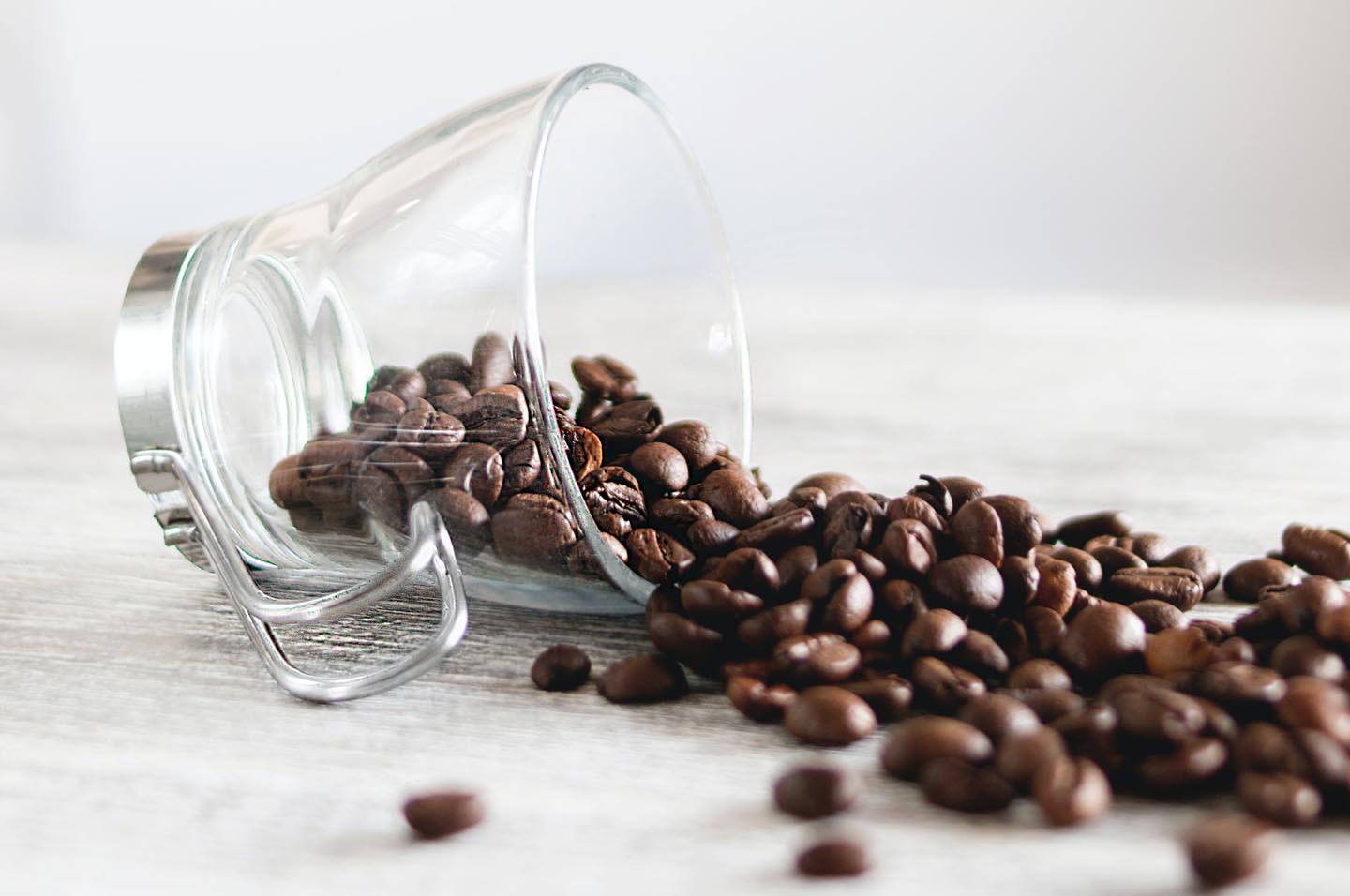
Caffeine Makes You Borrow Energy, But You Pay The Bill

May 14, 2023 by Emma Beckett - [rt_reading_time label="Reading Time:" postfix="minutes" postfix_singular="minute"]

Caffeine Makes You Borrow Energy, But You Pay The Bill

Many of us want (or should I say need?) our morning coffee to give us our “get up and go”. Altogether, the people of the world drink more than two billion cups of coffee each day.((Surma, S., Oparil, S. Coffee and Arterial Hypertension. Curr Hypertens Rep 23, 38 (2021). https://doi.org/10.1007/s11906-021-01156-3)) You might think coffee gives you the energy to get through the morning or the day – but coffee might not be giving you as much as you think.
Caffeine Makes You Borrow Energy, But You Pay The Bill

The main stimulant in coffee is the caffeine. And the main way caffeine works is by changing the way the cells in our brain interact with a compound called adenosine.((Timothy Roehrs, Thomas Roth, Caffeine: Sleep and daytime sleepiness, Sleep Medicine Reviews, Volume 12, Issue 2, 2008, Pages 153-162, https://doi.org/10.1016/j.smrv.2007.07.004.))

Getting busy, getting tired

Adenosine is part of the system that regulates our sleep and wake cycle and part of why high levels of activity lead to tiredness.((Tarja Porkka-Heiskanen, Lauri Alanko, Anna Kalinchuk, Dag Stenberg, Adenosine and sleep, Sleep Medicine Reviews, Volume 6, Issue 4, 2002, Pages 321-332, ISSN 1087-0792, https://doi.org/10.1053/smrv.2001.0201.)) As we go about our days and do things, levels of adenosine rise because it is released as a by-product as energy is used in our cells.((Huang Z et.al. The Role of Adenosine in the Regulation of Sleep. https://doi.org/10.2174/156802611795347654))

Eventually adenosine binds to its receptor (parts of cells that receive signals) which tells the cells to slow down, making us feel drowsy and sleepy. This is why you feel tired after a big day of activity. While we are sleeping, energy use drops lowering adenosine levels as it gets shuffled back into other forms.((Bjorness T et.al. Adenosine and Sleep. https://doi.org/10.2174/157015909789152182)) You wake up in the morning feeling refreshed. Well, if you get enough sleep that is.

If you are still feeling drowsy when you wake up caffeine can help, for a while. It works by binding to the adenosine receptor, which it can do because it is a similar shape.((Fredholm B. Adenosine, Adenosine Receptors and the Actions of Caffeine. https://doi.org/10.1111/j.1600-0773.1995.tb00111.x)) But it is not so similar that it triggers the drowsy slow-down signal like adenosine does. Instead it just fills the spots and stops the adenosine from binding there. This is what staves off the drowsy feeling.

No free ride

But there is a catch. While it feels energising, this little caffeine intervention is more a loan of the awake feeling, rather than a creation of any new energy.

This is because the caffeine won’t bind forever, and the adenosine that it blocks doesn’t go away. So eventually the caffeine breaks down, lets go of the receptors and all that adenosine that has been waiting and building up latches on and the drowsy feeling comes back – sometimes all at once.

So, the debt you owe the caffeine always eventually needs to be repaid, and the only real way to repay it is to sleep.

A woman sleeping

Timing is everything

How much free adenosine is in your system, that hasn’t attached to receptors yet, and how drowsy you are as a consequence will impact how much the caffeine you drink wakes you up. So, the coffee you drink later in the day, when you have more drowsy signals your system may feel more powerful.((Smith A. P. The effects of caffeine, impulsivity and time of day on performance, mood and cardiovascular function. https://doi.org/10.1177/026988119100500205))

If it’s too late in the day, caffeine can make it hard to fall asleep at bedtime. The “half life” of caffeine (how long it takes to break down half of it) is about five hours.((Caffeine for the Sustainment of Mental Task Performance. Formulations for Military Operations. Chapter 2. National Academies, 2001)) That said, we all metabolise caffeine differently, so for some of us the effects wear off more quickly.((Nehlig A. Interindividual Differences in Caffeine Metabolism and Factors Driving Caffeine Consumption. Pharmacol Rev. 2018 Apr;70(2):384-411. doi: 10.1124/pr.117.014407)) Regular coffee drinkers might feel less of a caffeine “punch”, with tolerance to the stimulant building up over time.((Ammon HP. Biochemical mechanism of caffeine tolerance. Arch Pharm (Weinheim). 1991 May;324(5):261-7. doi: 10.1002/ardp.19913240502.))

Caffeine can also raise levels of cortisol, a stress hormone that can make you feel more alert.((Lovallo WR, Whitsett TL, al’Absi M, Sung BH, Vincent AS, Wilson MF. Caffeine stimulation of cortisol secretion across the waking hours in relation to caffeine intake levels. Psychosom Med. 2005 Sep-Oct;67(5):734-9. doi: 10.1097/01.psy.0000181270.20036.06.)) This might mean caffeine feels more effective later in the morning, because you already have a natural rise in cortisol when you wake up. The impact of a coffee right out of bed might not seem as powerful for this reason.

If your caffeinated beverage of choice is also a sugary one, this can exacerbate the peak and crash feeling. Because while sugar does create actual energy in the body, the free sugars in your drink can cause a spike in blood sugar, which can then make you feel tired when the dip comes afterwards.
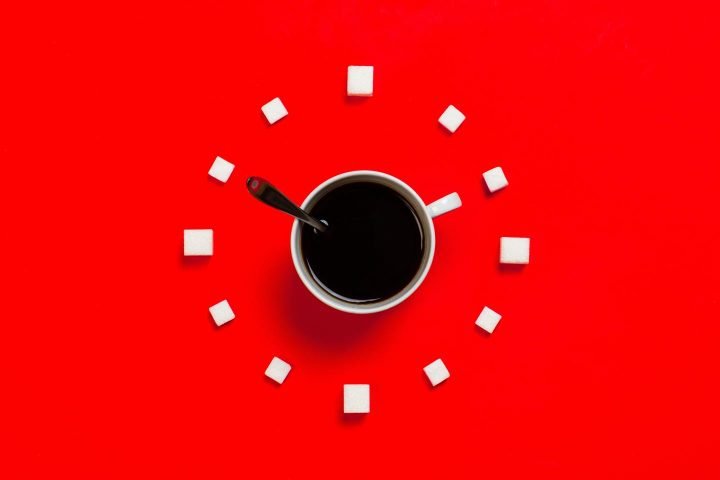
A clock symbolized by a coffee cup and sugarcubes.

While there is no proven harm of drinking coffee on an empty stomach, coffee with or after a meal might hit you more slowly. This is because the food might slow down the rate at which the caffeine is absorbed.((Caffeine. The Nutrition Source. Harvard School of Public Health))

What about a strong tea or fizzy cola?

Coffee, of course, isn’t the only caffeinated beverage that can loan you some energy.

The caffeine in tea, energy drinks and other beverages still impacts the body in the same way. But, since the ingredients mostly come from plants, each caffeinated beverage has its own profile of additional compounds which can have their own stimulant effect, or can interact with caffeine to change its impacts.((Barbara Penolazzi, Vincenzo Natale, Luigi Leone, Paolo Maria Russo, Individual differences affecting caffeine intake. Analysis of consumption behaviours for different times of day and caffeine sources, Appetite, Volume 58, Issue 3, 2012, Pages 971-977, ISSN 0195-6663, https://doi.org/10.1016/j.appet.2012.02.001.))

Caffeine isn’t magic. To create energy and re-energise our bodies we need enough food, water and sleep.


For more information on the negative impacts of caffeine, continue with this article:
What Caffeine is doing to You and Your Child?

Healthy Fruits

Stay Always Up to Date

Sign up to our newsletter and stay always informed with news and tips around your health.

Sign Up Now!

This article is republished from The Conversation under a Creative Commons license. Read the original article.


The Conversation

Filed Under: Healthy Lifestyle, Temperance

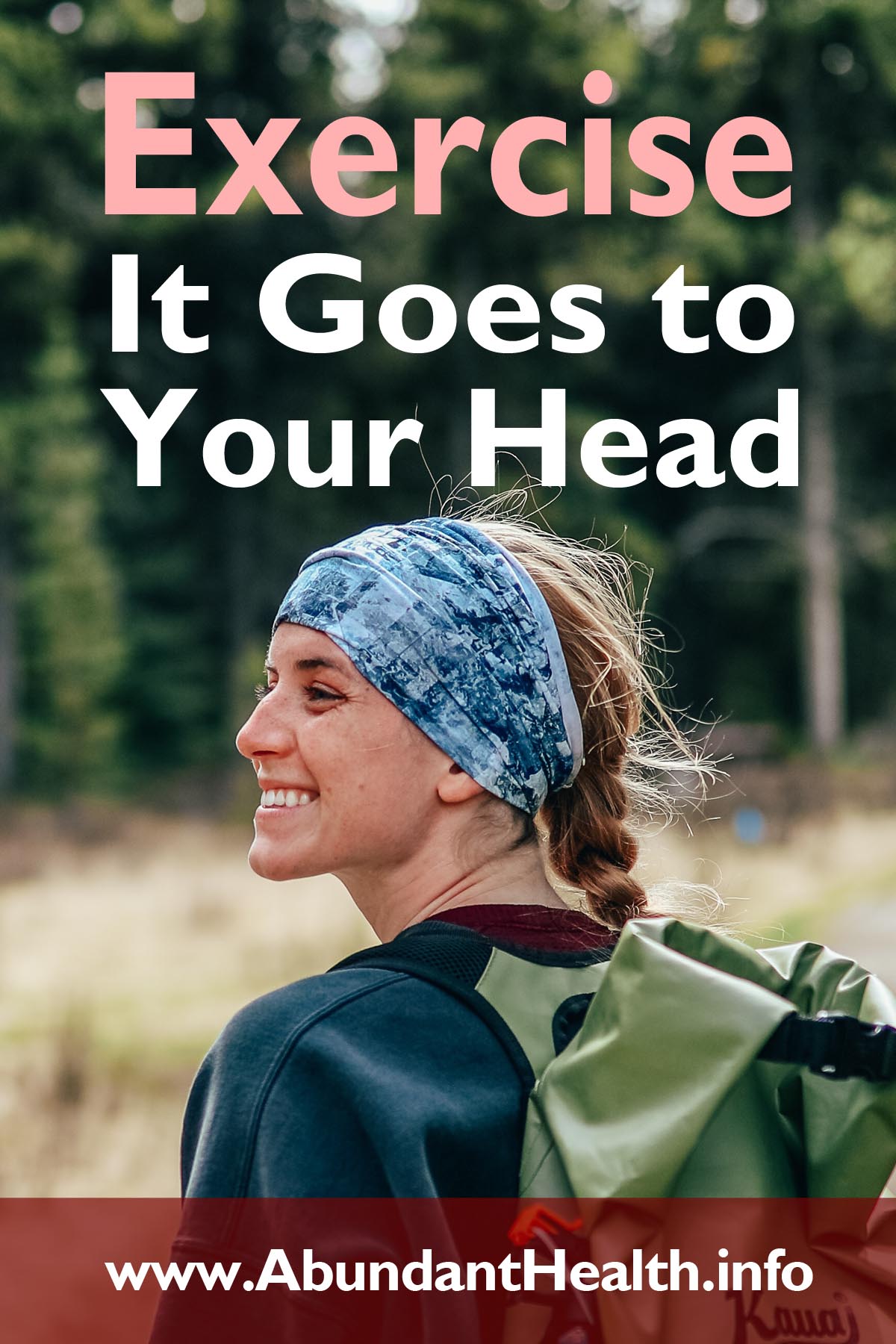
Exercise: It Goes to Your Head

April 30, 2023 by Vicki Griffin - [rt_reading_time label="Reading Time:" postfix="minutes" postfix_singular="minute"]

Exercise - It goes to your head

Hulda was depressed, overweight, sickly, and constantly fatigued. In her 60’s and suffering from the loss of her husband, her poor health aggravated her depression. Born in 1896 and reared on a Canadian farm, her diet was rich in meat, milk, cream, butter, eggs, and candy. She began walking to relieve her sadness — and set some new records in the process!

Exercise: It Goes to Your Head

Between the ages of 65 and 91, Hulda Crooks scaled 14,505-foot Mount Whitney 23 times, won eight world athletic records for women over the age of 80, and climbed 86 different Southern California peaks — all over 5,000 feet!  Affectionately known as “Grandma Whitney”, Crooks Peak near Mount Whitney was named in her honor in 1990.

Hulda described a typical day in her life at age 80: “Early to bed and early to rise. Out jogging about 5:30 a.m. Jog a mile and walk it back briskly. It takes me 12 minutes to jog the mile and 15 minutes to walk it. Do some upper trunk exercises, work in the yard, walk to the market, and work.”((Vibrant Life, Jan 1, 1989. Two Women with Zest and Vitality after Age 80.”))

At 91 she became the oldest woman to climb Mount Fuji in Japan. She hiked the entire 212-mile John Muir Trail in the High Sierras. She died at 101 — without depression.

Hulda Crooks climbing mount Fuji

A healthful diet, exercise, faith in God, and a positive mind-set proved a winning combination for Hulda.  She wrote: “I have an abundance of fresh raw fruits and vegetables as well as the cooked kind. . . .You need both a good diet and sufficient exercise. The exercise is absolutely essential in keeping up a good circulation. If we don’t exercise, the circulation is sluggish and that affects the entire body, the mental as well as the rest of the body.” She found that being in nature was a tranquilizer for her emotions. She called nature “the picture book of the Bible.”

Hulda believed that “mental attitude has so much to do with every function of the body. If we can develop an attitude of gratitude for the blessings that we have, we will be much better off.”

What if she didn’t feel like exercising? Hulda replied: “Usually I do it anyway. . . . If the brain is on top, it should be in charge and tell the rest of the body what to do. And so that’s what I do.”

Grandma Whitney “showed the world that mental, physical, and spiritual health is attainable at any age.”((Hulda Crooks passes away at 101. Loma Linda University news release, 1997.)) Hulda climbed more than mountains; she climbed out of poor health habits and depression into a positive, balanced lifestyle.

Do you need to climb mountains in order to obtain the exercise advantage? Actually, a daily regimen of modest exercise has a powerful effect on the mind as well as the body. When you feel better, you think better. Motion balances emotion. Exercise promotes physical health by reducing the risk and progression of heart disease, stroke, diabetes, and cancer. It also:

Improves Mood

  • Students who exercise show lower levels of anxiety, shyness, loneliness, and hopelessness than less active peers.((Adolescence 1994 Spring:29(113)183-91))
  • Moderate, regular exercise improves mood, vigor, psychological well-being, creativity, and self-esteem in all age groups.((J Cardiopulm Rehabil 1994:14:35-42.
    Obes Res 1998 May:6(3)208-18.
    Percept Mot Skills 2002 Jun:94(3 Pt 1)732-4.
    Percept Mot Skills 2001 Aug:93(1)311-6.))
  • Regular exercise can reduce symptoms of depression, and even alleviate major depression.((Psychosom Med 2000 Sep-Oct:62(5)633-8.
    J Clin Psychol 2001 Nov:57(11)1289-300.))

Reduces Stress

  • A single bout of exercise can be a valuable short-term therapy for reducing tension, depression, anger, and confusion.((J Psychosom Res 1996 Feb:40(2)123-41.
    Percept Mot Skills 1991 Jun:72(3 Pt 2)1203-9.))
  • A ten-minute brisk walk will yield one hour of increased energy and reduced tension, whereas a sugary snack can result in fatigue and tension.((Percept Mot Skills 1991 Jun:72(3 Pt 2)1203-9.
    J Pers Soc Psychol 1987 Jan:52(1)119-25.))
  • Moderate-intensity exercise is more beneficial than high-intensity exercise for anxiety reduction.((Med Sci Sports Exerc 1999 Mar:31(3)456-63.; Med Sci Sports Exerc 2000 Feb:32(2)549.))
  • Regular exercise increases the ability to handle stress by lowering stress hormones.((Am J Physiol Regul Integr Comp Physiol 2003 Feb:284(2)R520-30.))
A family walking in a park

Boosts Brain Power

  • Exercise stimulates neuronal growth and blood flow in the brain, and increases neurotransmitter availability and efficiency.((Sports Med 1995 Feb:19(2)81-5.))
  • Aerobic exercise improves mental fitness, particularly the ability to plan, coordinate, and filter out distracting information.((Nature 1999 Jul 29:400(6743)418-9.))
  • Physical activity enhances learning and memory.((Neuroscience 2003:117(4)1037-46.
    Neurobiol Aging 2002 Sep-Oct:23(5)941-55.))
  • Exercising children learn better.((Healy J. Endangered Minds: Why Our Children Don’t Think and What We Can Do About It (New York, NY: Simon and Schuster, 1991).))
  • Brisk walking for 45 minutes 3 times a week can improve mental processing abilities that normally decline with age.((Psychol Sci 2003 Mar:14(2)125-30.))

What is the best form of exercise? It’s the one you are willing to stick with! Have a plan for every season. Enjoy brisk walking, hiking, jogging, bicycling, swimming, golfing, skiing, or canoeing. Chores such as splitting wood, raking, and gardening provide many health benefits. Keep your gym bag packed and in the car to remind you to go to the gym as part of your work or school day. Work with your healthcare provider or educator to adopt a plan that will work for you.

Call to Action

“Blessed are those that keep My ways…For by Me your days will be multiplied, and years of life will be added to you” (Proverbs 8:32; 9:11). From the beginning, God linked exercise with lifestyle and nutrition. God blessed man with exercise as an antidote to many mental and physical maladies, and He will help both improve—as you get up and move! Movement creates positive changes in physical, mental, and emotional states. So when you feel down, get up and get moving.

What exercise are you going to enjoy today?

Healthy Fruits

Stay Always Up to Date

Sign up to our newsletter and stay always informed with news and tips around your health.

Sign Up Now!

This article was originally published on the Time to Get Ready website.

Visit LifestyleMatters.com for more resources.

Filed Under: Exercise, Healthy Lifestyle

Do Athletes Really Need Protein Supplements?

March 19, 2023 by Evangeline Mantzioris - [rt_reading_time label="Reading Time:" postfix="minutes" postfix_singular="minute"]

Do Athletes Really Need Protein Supplements?

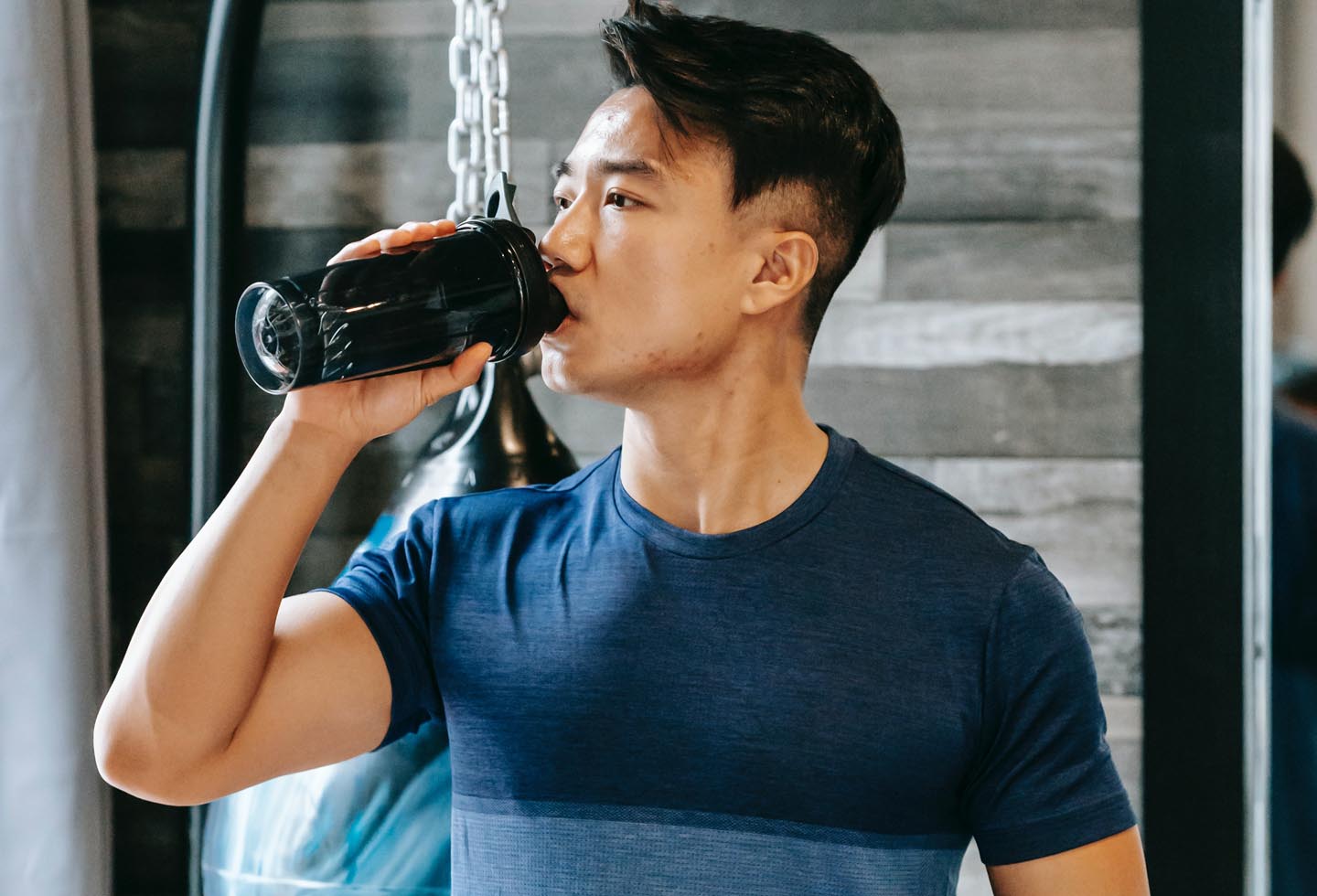
Protein supplements for athletes are literally sold by the bucketful. The marketing that accompanies them persistently promotes the attainment of buff biceps and six-pack abs.

Do Athletes Really Need Protein Supplements?

In 2021 the protein supplement market in the US was valued at 2.1 billion US Dollars, and is predicted to keep growing by about 8% per year.((Protein Supplements Market Size, Share & Trends Analysis Report By Source (Animal-based, Plant-based), By Product (Protein Powder, Protein Bars, RTD), By Application, By Distribution Channel, By Region, And Segment Forecasts, 2022 – 2030, Grand View Research)) But do athletes really need them?

First, let’s consider what protein is and why we need it. Protein is an essential macronutrient in the diet. This means it provides energy to fuel the body but also has structural properties.

Protein is formed by smaller units called amino acids. Amino acids are used by the body to make muscle and other essential body proteins that are used in the immune system, and also to regulate many of the processes in the body.

Protein and amino acids indirectly affect performance by building muscle to improve performance. There is little evidence to suggest consuming extra protein directly aids physical performance in either endurance or resistance exercise.((Jäger, R., Kerksick, C.M., Campbell, B.I. et al. International Society of Sports Nutrition Position Stand: protein and exercise. J Int Soc Sports Nutr 14, 20 (2017). https://doi.org/10.1186/s12970-017-0177-8))

Protein is fairly ubiquitous in the diet – it can come from animal sources (fish, meat, offal, eggs and dairy), and in slightly smaller amounts from vegetable sources (cereals and legumes).

How much protein do we need?

Protein requirements are based on our life stage and gender. The estimated average requirement for an adult aged 19-70 is 1.5g per pound (0.68g per kilo) of body weight for women and 1.65g per pound (0.75g per kilo) of body weight for men. This means a 140 lbs (65kg) woman will need about 45g of protein per day. An 180 lbs (80kg) man will need about 60g a day.((Protein. Nutrient Reference Values for Australia and New Zealand. eatforhealth.gov.au))

Athletes need more protein as they are building and/or repairing muscle as well as connective tissue. Their requirements are two to three times the amount of protein as normal people, or between 3-4.4g per pound (1.4-2g per kilo) of body weight per day.((Jäger, R., Kerksick, C.M., Campbell, B.I. et al. International Society of Sports Nutrition Position Stand: protein and exercise. J Int Soc Sports Nutr 14, 20 (2017). https://doi.org/10.1186/s12970-017-0177-8))

This is a large range, allowing variation for the sort of sport they play. An elite endurance male may be in the lower range, as they have a smaller body frame and less musculature. A power sportsman, such as a footbal player, would require more.

An athletic sprinter on the start line

Are we getting enough?

A 2011-12 survey found most Australians were consuming about double the recommended intake of protein per day. Almost all (99%) Australians met or surpassed the required intake.((Australian Health Survey: Usual Nutrient Intakes. Reference period 2011-12 financial year))

Evidence also indicates most athletes consume enough, and often more, protein than they require.((Burke, L. Clinical sports nutrition. North Ryde, N.S.W., Australia : McGraw-Hill Education (Australia) Pty Ltd, 2015.))

But actually it’s the timing of consuming the protein that is most important to building muscle. After any sort of exercise or performance activity that results in muscle resistance, the muscle has to be rebuilt. For maximal synthesis to occur there needs to be adequate levels of amino acids circulating in the blood. It’s been determined that, to achieve this, around 20-30g of protein must be consumed within 1-4 hours after exercise.

This doesn’t mean you need to down a protein shake as soon as you leave the gym. If you’re having a meal within this time frame, you can consume the 20-30g in that meal (which most people would anyway). This amount of protein from animal sources includes enough of the critical amino acid, leucine, that is needed for muscle resynthesis.

This is the equivalent of 4 oz (120g) of beef or chicken, three whole eggs, 2.4 oz (70g) of reduced fat cheddar cheese or 21 oz (600ml) of skim milk. However if we look at plant-based foods, you would need the equivalent of seven slices of bread, 12 oz (350g) of kidney beans or lentils, or 30 oz (900ml) of soy milk.

A lentil dish

So does anyone need protein supplements?

There may be situations where an athlete is traveling or can’t access a meal within a few hours of their training session. So they could either snack on one of the foods listed above, or take a protein supplement. Protein supplements will usually be lower in kilojoules, so if an athlete is on a kilojoule-restricted diet they’ll get more bang for their buck from a protein supplement. But of course protein supplements don’t have the other nutrients that natural foods contain.

Additionally, one needs to weigh up the risk of potential contamination with banned substances like anabolic agents, stimulants, and diuretics. This may be intentional by the producer (as their product will appear to be more effective in building muscle) or accidental due to an error in the manufacturing process or using ingredients that may have been contaminated.

Analytical studies have also shown there may be contamination with the heavy metals lead, mercury and arsenic.((Beach C. Heavy metals found in 40 percent of protein powders tested. Food Satefy News, February 28, 2018)) The other consideration for the athlete is the impact on the hip pocket and environment.

Is there any harm in taking extra protein?

The question of “protein overdose” partially depends on exactly how much extra protein is being consumed. We can be reasonably confident levels up to 4-6g per pound (2-3g per kilo) of body weight per day (so around 200g for a 160lbs person) have no major health risk.((Burke, L. Clinical sports nutrition. North Ryde, N.S.W., Australia : McGraw-Hill Education (Australia) Pty Ltd, 2015.)) But there has always been concern higher levels of protein may accelerate underlying kidney disease (particularly if there is a family history) leading to a progressive loss of kidney capacity.

Athletes and weekend warriors should exercise caution if they’re considering intakes of protein beyond 4-6g per pound (2-3g per kilo) of body weight per day. In these situations, athletes should seek advice from an accredited sports dietitian.

Healthy Fruits

Stay Always Up to Date

Sign up to our newsletter and stay always informed with news and tips around your health.

Sign Up Now!

This article is republished from The Conversation under a Creative Commons license. Read the original article.
The Conversation

Filed Under: Exercise, Healthy Lifestyle, Nutrition Tagged With: protein supplements

Chronic Pain: Roots and Remedies

March 5, 2023 by Vicki Griffin - [rt_reading_time label="Reading Time:" postfix="minutes" postfix_singular="minute"]

Chronic Pain

It all began with a slip on icy steps, a broken hip, an injured back, and a messy lawsuit. Surgery and medication had not resolved Jim’s pain.

Chronic Pain: Roots and Remedies

“I can’t believe it,” he complained: “Here I am, an executive being reprimanded for poor work. I am taking high doses of pain pills that are affecting my personality and performance, but not touching the pain.”

Jim was constantly stressed and used caffeine and sugary drinks to quench the fatigue and depression that dogged his steps. His anger and depression combined with his preoccupation with his pain affected his marriage; he and his wife were now separated.

He quit exercising and gained weight. His travel fare consisted of fast-food burgers, candy bars, and beer. He developed diabetes and obesity — which exacerbated his pain and depression.

Jim feels alone, but he isn’t. Chronic pain — pain that persists for more than six months — affects around 100 million Americans and is associated with conditions that include physical injury, headache, arthritis, cancer, and diabetes-linked nerve pain.((PNAS Oct 2001; 98 (21): 11845-11846)) Many pain therapies are either inadequate or cause side effects.

Jim’s story shows that chronic pain can involve physical insult combined with emotional, psychological, and social factors that affect the nervous system at the molecular level.

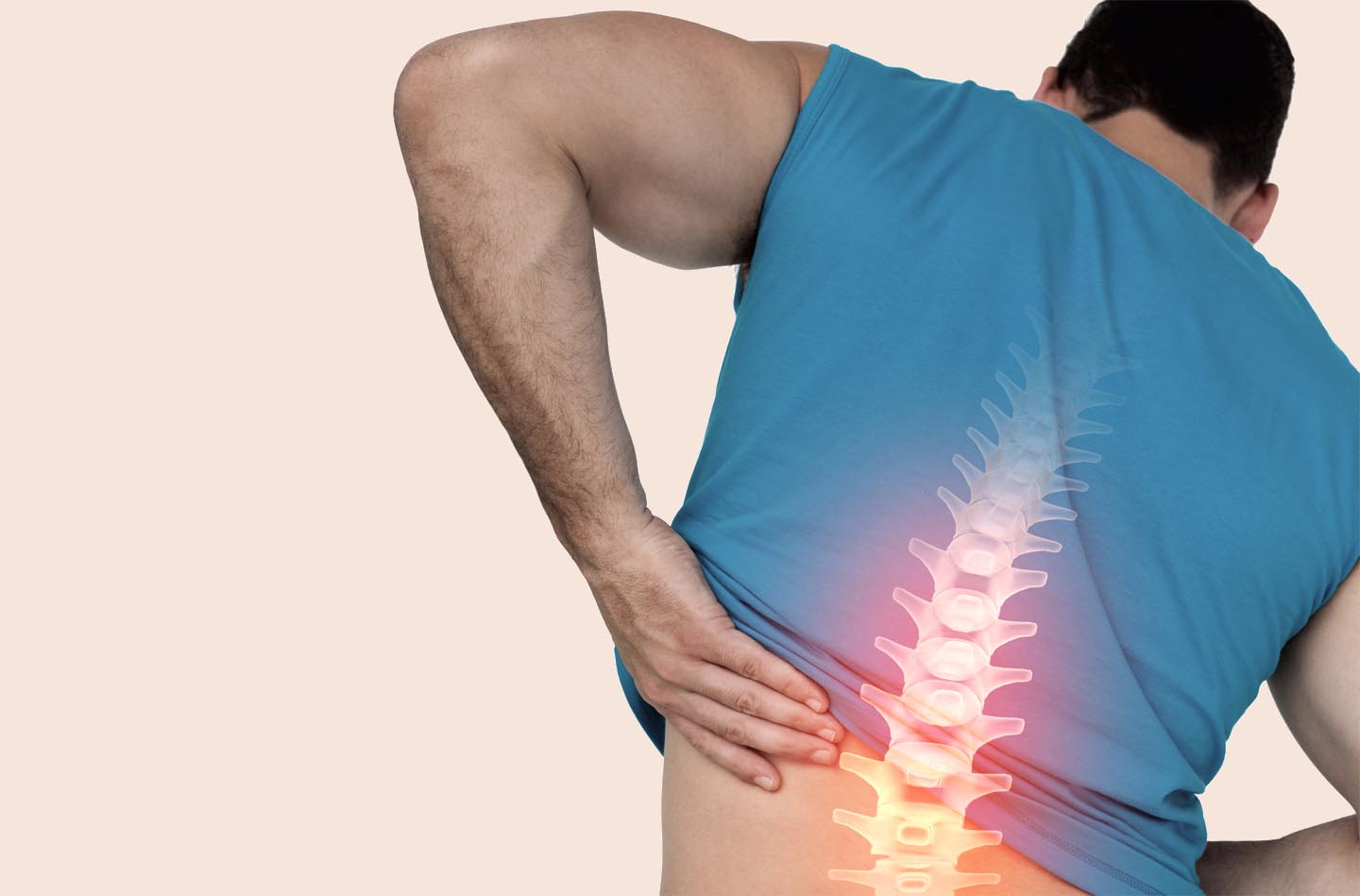
Pain can persist long after an injury is healed, so in one sense chronic pain can become its own self-perpetuating condition. This is particularly true of back, neck, and headache pain. Seven out of ten chronic back-pain patients have no detectible physical basis for their pain.((Deal R. Chronic Pain, 2nd ed. INR, Concord, CA 2009.)) Some patients have physical signs of injury or deterioration, but experience no pain.

For those who suffer, this does not mean their pain is imaginary; it represents telltale changes in neurons that heighten pain sensitivity without cause, somewhat like a faulty smoke detector that shrieks when there is no fire at all or shrieks at the mere strike of a match.

A smoke detector in maintenance

“Pain kindlers” are factors that increase pain, and “pain dampeners” turn down the “volume” on chronic pain. 

Avoiding pain kindlers and increasing pain dampeners can tip the pain scale toward relief — and may even help “reeducate” the nervous system to permanently turn down the “volume” on its own malfunctioning pain system. Here are a few:

Expectation: Anticipating pain can amplify the pain response.((Pain 2008 Apr;135(3):240-50.)) Psychological factors play a large role in pain perception.((Prog Brain Res 2000;122:245-53.)) Patients who expect a shot to hurt will experience more pain than those who do not. A pessimistic attitude increases suffering. Positive expectations and optimism increases mood-elevating chemicals and reduce a sense of helplessness. This leads to faster recovery from wounds, lower pain perception, and better coping abilities, even with severe injuries.((Rehab Psychol 2010 Feb;44(1):12-22.))

Stress and mood: Chronic stress raises a person’s risk of developing a pain disorder.((J Pers April 2004;72:2.)) Catastrophizing, anxiety, depression, guilt, and negativity all heighten the sensitivity and activity of pain circuits, causing the sufferer to attach negative emotional meaning to his or her pain.((J Pers April 2004;72:2.))

Depression is a major factor underlying chronic pain.((Biol Psych 2010 Mar 17, epub.)) Treating depression and expressing gratitude can lessen pain and help you cope with existing pain. Think about the positives in your life and verbalize thankfulness for them each day.

Nutrition: Soda pop, caffeine, refined sweets, fried food, and large amounts of animal fat increase the body’s production of pro-inflammatory chemicals that increase pain sensitivity. They also contribute to obesity and other chronic disorders that enhance pain, arthritis, joint stiffness, and slow recovery from injuries.

Meals rich in fresh fruits, vegetables, whole grains, beans, legumes, olives, avocados, and nuts (especially walnuts), lower inflammation. These foods contain many stress-reducing nutrients, including magnesium. Drinking plenty of fresh water is a great way to eliminate toxins associated with pain and injury. Supplementation with vitamin D3 may also alleviate some types of chronic pain.((http://pain-topics.org/pdf/vitamind-PPM-JulAug2008.pdf)) Have your vitamin D levels checked.

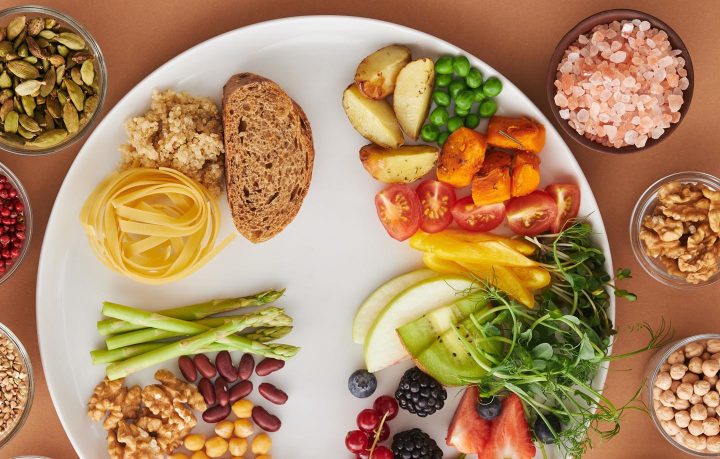
A plate of fruits, vegetables and whole grains

Exercise: Engaging in regular exercise suited to your ability improves mood, reduces anxiety, and increases flexibility, range-of-motion, muscle strength, oxygenation, and circulation. It can reduce pain and improve energy levels in chronic fatigue and fibromyalgia patients. Work with your doctor, but be persistent and consistent, and challenge yourself as you grow stronger! Exercise outdoors to get the sunshine advantage.

Sleep: Sunshine and exercise aid in developing a sound sleep pattern. Deep, regular sleep improves mood and can dampen pain perception. Caffeine, alcohol, and late-night eating can interfere with a good night’s rest.

Connections: Connect with others who are less fortunate than you. This is a great way to put your own challenges in perspective and turn your attention away from your pain. Surround yourself with encouraging people to gain strength during the ups and downs in your healing journey.

Connect with your doctor and other health care practitioners for guidance and available medical technologies.

Connect with God. He promises strength and comfort and has given us strategies for coping with and reducing pain. 

Looking for Answers

So, why do some face a life of chronic pain while others are healed?  We don’t have all the answers. But for all who come to Him for help, God promises “power to the weak, and to those who have no might He increases strength” (Isaiah 40:29). “The Lord will strengthen him on his bed of illness; (He) will sustain him on his sickbed” (Psalm 41:3).

Though your life here may be scarred by suffering, through faith you can look forward to a new life in heaven when Jesus returns. His promise is: “And God will wipe away every tear from their eyes; there shall be no more death, nor sorrow, nor crying. There shall be no more pain, for the former things have passed away” (Revelation 21:4).

No more pain! Guaranteed.

Healthy Fruits

Stay Always Up to Date

Sign up to our newsletter and stay always informed with news and tips around your health.

Sign Up Now!

This article was originally published on the Time to Get Ready website.

Filed Under: Diseases, Healthy Lifestyle Tagged With: chronic pain

Plea for a Simpler Life – Less is More

December 11, 2022 by Esther Neumann - [rt_reading_time label="Reading Time:" postfix="minutes" postfix_singular="minute"]

If my grandfather, born in 1890, were to come into my house, he would not find his way around, neither in my household nor in my office. Our present generation has so many more opportunities to shape our working world and our private lives. But life has also gotten more complicated. We need to be familiar with so many modern communication tools. So many machines and gadgets with complex procedures that we can’t figure out, do the heavy, tedious work for us. Actually, these modern technical achievements are supposed to give us more time for ourselves.

Plea for a Simpler Life – Less is More

When I’ve finished writing this article, I won’t have to write it clean on paper, put it in an envelope and take it to the post office for my editor-in-chief. I remain seated in my office chair and send it via the Internet. If the editor wants to, he can open and read it on his computer a few minutes later.

What do I do with the time I’ve saved? Am I going to fold my arms, be happy about the successful article, and reflect on the essentials? I have to watch over my time, my health, my thoughts. I don’t want to plunge into the next activity like the fast swimmer with a head dive into the cold water.

I want to take the liberty – and fortunately I can afford it – to structure my working hours for myself. Instead of getting dragged by the daily grind, I want to consciously take responsibility for my everyday life. After a few hours at the computer, it’s time to do some gardening or kitchen work. Every now and then a nature walk is allowed. During this time, I come up with all sorts of things.

Sowing seeds in the garden

Most people live outside of their “assets”. It’s not just about money, about consumption, but also about time, about food, about relaxation. It’s not about asceticism, but about simply doing without the superfluous, which we find difficult to deal with anyway.

Too many pounds make me short of breath. Why did I eat so much again? I have been wanting to lose a few pounds for a long time! Yes, I can afford a pumpkin pie with whipped cream every now and then. Tomorrow, however, there will be an apple for dessert – and I’ll simply enjoy it! Actually, a fruit day every now and then is good for my health. Or should I try just drinking tea for a whole day? That’s definitely good for me and I’m happy when I’ve grown beyond myself and my appetite.

While I’m tidying up, I can go through my closet. What has accumulated there, such an abundance! I haven’t worn this lovely piece in a year. That’s why my friend recently said to me: “I always see you in the same sweater.” Both pieces are still in good condition: so wash one of them and off it goes to the thrift store. There’s still enough in the closet.

A man struggles with a pile of clothes

What else can I get rid of in order to live a simpler life? How was it last night before falling asleep? I was worried and anxious about the future. The car is getting in his years, the roof of the house would need some repairs. The winter is still long and the wood supplies are running out. All this costs money. Where does it come from? How am I going to do this? Then even the past came into play. Do you still remember the mistake you made back then? You really weren’t fair to your child. Hopefully it hasn’t been hurt and is getting over that.

Fears and worries about the future, lingering in the past are robbing me the strength and time to simply live in the now. And I can only live in the now. Have I ever experienced anything in the past or done anything in the future? The answer is simple: I live in the now. I can cope with today, this attitude gives me strength, but today I don´t get what I need for tomorrow.

So I can also simplify my thoughts, I can remove the superfluous. Simply by not brooding too much over things I can’t change; but also, simply by looking forward to the new day every morning, to the sun that will rise again, even if the weather should remain cloudy, it’s still there. For me, every new day is an invitation to simply live – or live simply – simply in both senses.

It’s up to me to shape my day to be simpler, to find joy in the simple things of everyday life, in the opening of a flower, in the laughter of a child, in the surprised expression on my work colleague’s face when I have greeted him with enthusiasm and wished him a very good day.

An opening flower

No amount of possessions can buy me the joy of life. Proverbs 13:7 says, “There is one who makes himself rich, yet has nothing; And one who makes himself poor, yet has great riches.” If I give in to every wish and fulfill it, then I cannot be happy in the long run. Neither money nor confirmation, not even success can still my longing for a fulfilling life. True joy comes from living a simple life, enjoying nature, being accepted by my circle of friends and feeling safe with my God, Creator and Sustainer.

Healthy Fruits

Stay Always Up to Date

Sign up to our newsletter and stay always informed with news and tips around your health.

Sign Up Now!

Filed Under: Healthy Lifestyle, Mental Health, Stress Management, Temperance Tagged With: Minimalistic lifestyle, Simplifying

How Fasting Improves Mental Health and Stress Control

November 13, 2022 by Martin Neumann - [rt_reading_time label="Reading Time:" postfix="minutes" postfix_singular="minute"]

Fasting can improve Mental Health

There are many different motives why people choose to do fasting. Some will do it to lose weight, others to clean the body, and often it is done for religious purposes. While all of that can be achieved when done properly, many do not realize that fasting has a positive effect on our mental health and stress control.

How Fasting Improves Mental Health and Stress Control

What is Fasting?

Fasting is a routine whereby you decide not to eat food for a certain time. Several metabolic adjustments occur during fasting. Some forms of fast restrict even liquid intake, which can get detrimental to the health very quickly. A fast for health reason is often done in the form of intermittent fasting, where food intake is alternated with a few hours of fasting.

Skipping food for some hours can help increase the level of ketones in your body. They are produced when energy from carbohydrates is used up and the liver depends on breaking down fat to supply energy in form of ketones. They are not only influencing health and aging, but are also beneficial in improving brain health. However, fasting offers still some more advantages. It has a great benefit to our mental health in a way that is not well known by many people.

Common Types of Fasting

Before we go into full detail about how fasting helps mental health, it is important to state the different types of fasting. The most common types of fasting are:

16/8 fasting: 16/8 fasting is very common and is all about fasting and eating intermittently. Every day you eat within an allowed period of eight hours, after which you will fast for the next 16 hours.

5:2 Approach: The 5:2 approach is about eating regularly five days every week. For 2 days of the week (not in a row), you would then limit your food to a single very light meal of about 500-600 calories.

Alternate-Day Fasting: That is the toughest form of intermittent fasting, where you alternate between days where you eat what you want and days where you eat nothing at all. It can lead to weight loss and improved health, but it is hard to stick to this protocol for the long run.

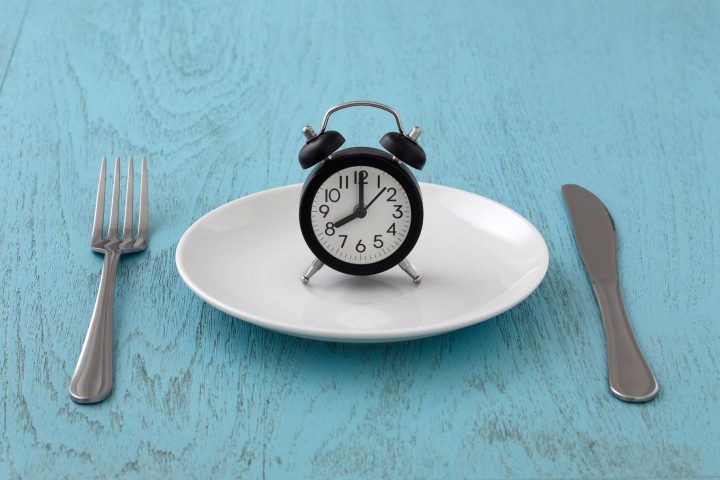
Intermittent Fasting Concept

The Dangers of Improper Fasting

Fasting is fine when done correctly, but if done in the wrong way, it can do more harm than good. If we go into long fasting periods, metabolism will slow down and make it more difficult to shed those extra pounds in the long run. Pregnant women, breastfeeding mothers, children and very frail people should be more cautious with fasting, and diabetics should be closely monitored to avoid complications. It is important to learn how to fast correctly in order to reap the maximum benefits.

Fasting to Help Increase Your Mental Health

Fasting can be used to increase your mental health in various ways. From improving brain function to reversing mild cognitive impairments in older people, fasting has several benefits to mental health.

Here are 6 ways fasting can improve your mental health:

Enhances mental functioning: Each time we fast, our bodies have fewer toxic materials passing through the lymphatic and blood systems. This way, we can think clearly. During fasting, the energy which the body usually uses for food digestion will then be used by the brain. Initially, you will not be able to detect any change until a few days into the fasting. This is because the body usually takes some time to adjust to the new routine. Also, when you first begin fasting, you may suffer headaches or other pains. But as soon as the body adapts to the new routine, your brain will begin functioning optimally. This will result in better memory, clearer thoughts, and enhanced functioning of other body senses.

Improves brain function among older adults: Fasting can improve specific parts of brain function as people grow older. This works especially with mild cognitive impairment, which is usually associated with seniors as this is a phase they experience before dementia. It can cause problems with thinking or memory and is reversible. Clinical studies have confirmed that mild cognitive impairment can be reversed with fasting.

A smart elderly person working on a computer

Empowers the brain: Fasting can lead to a short-term restriction on calories. This can help the brain produce more anti-depressant chemicals. Since fasting causes the body to produce ketones from available fats, our brains use this as fuel. With the brain being boosted by ketones, intermittent fasting can be used to treat the symptoms of Alzheimer’s disease, Parkinson’s disease, as well as many other neurodegenerative diseases.

Helps with autophagy: Fasting is also important to mental health due to its ability to trigger autophagy. This is a necessary process whereby the brain cleanses itself from all the trash it accumulates during the day. Autophagy is a process of self-cleaning whereby the all cells of the body, including the brain are cleaning themselves and get rid of old debris and damaged cells. Autophagy is a process that happens efficiently after a fasting period of 16-20 hours, which is easily achieved with intermittent fasting. It helps the brain to create healthier and newer cells.

Improve your memory: It has been proven clinically that our memory is improved significantly when we restrict the hours we eat. Some studies have shown that intermittent fasting can help improve memory in humans.

Reduce stress and anxiety: Fasting has been proven to help improve issues of mental health, which include depression, anxiety, and stress. A recent study conducted was able to prove that people who fasted during a certain period like Ramadan showed improvements in anxiety, stress, as well as symptoms of depression. Any kind of intermittent fasting will give you this benefit. The study revealed that the depression and anxiety levels of the participants went down after intermittent fasting.

Conclusion

Intermittent fasting is good for our health, increases longevity and is beneficial for our brain. When we are stressed, we should think more often about intermittent fasting as a way to deal with the challenges in a more efficient way. It is easy to implement and can give you a long-lasting benefit in your stress control. With that many benefits, what are you waiting for?

Do you need a guide to help you understand how to cope with Stress in an all inclusive approach? Learn how to combat stress, mentally, physically, emotionally and strategically in your life.

Get Me the Guide

Filed Under: Healthy Lifestyle, Mental Health, Stress Management, Temperance Tagged With: Intermittent Fasting, Stress Control

« Previous Page
Next Page »

Primary Sidebar

Social Channels

Coronavirus Immunity Challenge

Boost your immune system to be bullet-proof for the pandemic.

I Want to Participate

Recent Posts

  • 5 Habits to Live Longer
  • Better Sleep Can Protect Against Dementia
  • Finding Peace In Your Crazy-Busy World
  • Flaxseed – An Ancient Plant Rediscovered
  • Platelets – Triggers for Life or Death
  • Boderline Personality Disorder
  • In Praise of Almonds and Nuts
  • Are You Stuck in the Clutter Trap?

Categories

  • Body Systems (16)
    • Cell Function (2)
    • Circulatory System (1)
    • Digestive Tract (10)
    • Immune System (4)
  • Diseases (27)
    • Cancer (2)
    • Cold (1)
    • COVID-19 (11)
    • Dementia (1)
    • Diabetes (1)
    • Digestive Diseases (2)
    • Heart Disease (2)
    • Kidneys (1)
    • Metabolic Syndrome (2)
    • Skin (1)
  • Healthy Lifestyle (42)
    • Exercise (11)
    • Gardening (2)
    • Sleep (7)
    • Sunlight (2)
    • Temperance (14)
    • Water (4)
  • Mental Health (87)
    • Addictions (6)
    • Anxiety (7)
    • Burnout (1)
    • Depression (7)
    • Psychosomatic Diseases (6)
    • Stress Management (45)
    • Trust (6)
  • Nutrition (56)
  • Obesity (9)
  • Phases of Life (14)
    • Adults (3)
    • Babies and Infants (1)
    • Children (3)
    • Seniors (5)
    • Teenagers (3)
  • Therapies (7)
    • Herbs (5)
    • Hydrotherapy (1)
  • Uncategorized (3)

Archives

  • January 2025 (1)
  • March 2024 (5)
  • February 2024 (4)
  • January 2024 (4)
  • December 2023 (5)
  • November 2023 (4)
  • October 2023 (5)
  • September 2023 (4)
  • August 2023 (3)
  • July 2023 (2)
  • June 2023 (4)
  • May 2023 (4)
  • April 2023 (5)
  • March 2023 (4)
  • February 2023 (4)
  • January 2023 (4)
  • December 2022 (4)
  • November 2022 (4)
  • October 2022 (5)
  • September 2022 (4)
  • August 2022 (4)
  • July 2022 (5)
  • June 2022 (4)
  • May 2022 (5)
  • April 2022 (4)
  • March 2022 (4)
  • February 2022 (4)
  • January 2022 (5)
  • December 2021 (3)
  • November 2021 (4)
  • October 2021 (6)
  • September 2021 (4)
  • August 2021 (4)
  • July 2021 (5)
  • June 2021 (4)
  • May 2021 (3)
  • April 2021 (5)
  • March 2021 (4)
  • February 2021 (4)
  • January 2021 (5)
  • December 2020 (3)
  • November 2020 (4)
  • October 2020 (5)
  • September 2020 (5)
  • August 2020 (3)
  • July 2020 (1)
  • June 2020 (1)
  • May 2020 (1)
  • April 2020 (1)
  • March 2020 (1)

Copyright © 2026 · Abundant Health - Privacy Policy - Medical Disclaimer